
Over the past five years, equity has remained the dominant fuel for African startups, but debt financing has surged since 2020, climbing 111% by 2024 to USD 589 M, WT Elite data shows. Amid a global funding slowdown, founders are tapping venture debt to extend runways without diluting equity.
This shift has been driven by a drop in equity rounds amid global venture capital (VC) squeeze, improved revenue predictability in mature fintech and Software-as-a-Service (SaaS) firms, and the rise of non-bank lenders offering revenue-based and asset-backed loans.
Later-stage startups are increasingly turning to venture debt as they struggle to keep up with growth expectations from VCs, and as a way to avoid raising equity financing at lower valuations. Kenyan asset financier M-KOPA’s USD 250 M debt (plus equity) raise and Nigerian mobility fintech Moove’s mixed rounds reflect this shift.
However, debt requires stable cash flows and comes with covenants and a higher cost of capital; missteps can squeeze operations and strain cash flows. For savvy founders, layering the right mix of venture debt, convertible notes, and equity can preserve control while fueling growth.
Equity funding in Africa peaked at USD 3.7 B in 2021 but plunged to USD 1.35 B by 2023, per WT data, plummeting 72% as global LPs retrenched.
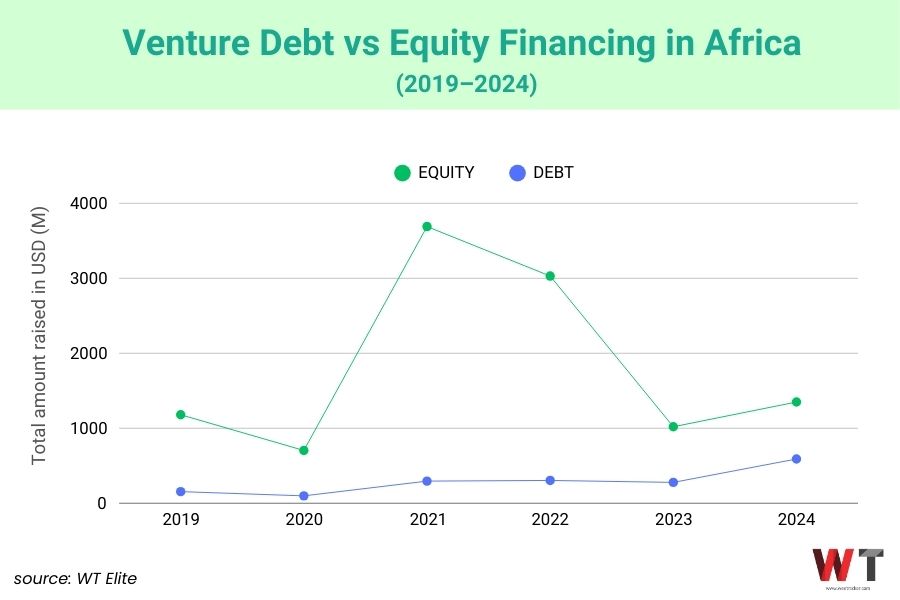
In contrast, debt rose from USD 98 M in 2020 to a record USD 589 M in 2024, tripling in four years. Meanwhile, as of Q1 2024, hybrid deals (those combining debt with equity) accounted for nearly 18% of funding rounds, up from 6% in 2021.
The trend mirrors global shifts. The U.S. saw debt hit USD 53.3 B in 2024, per PitchBook, up 94.5% on 2023, while private debt fundraising overall grew 41% in direct lending segments.