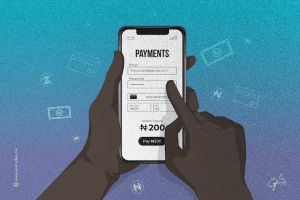
Startups Trade Trucks For Transactions As Africa’s B2B E-Commerce Boom Backfires
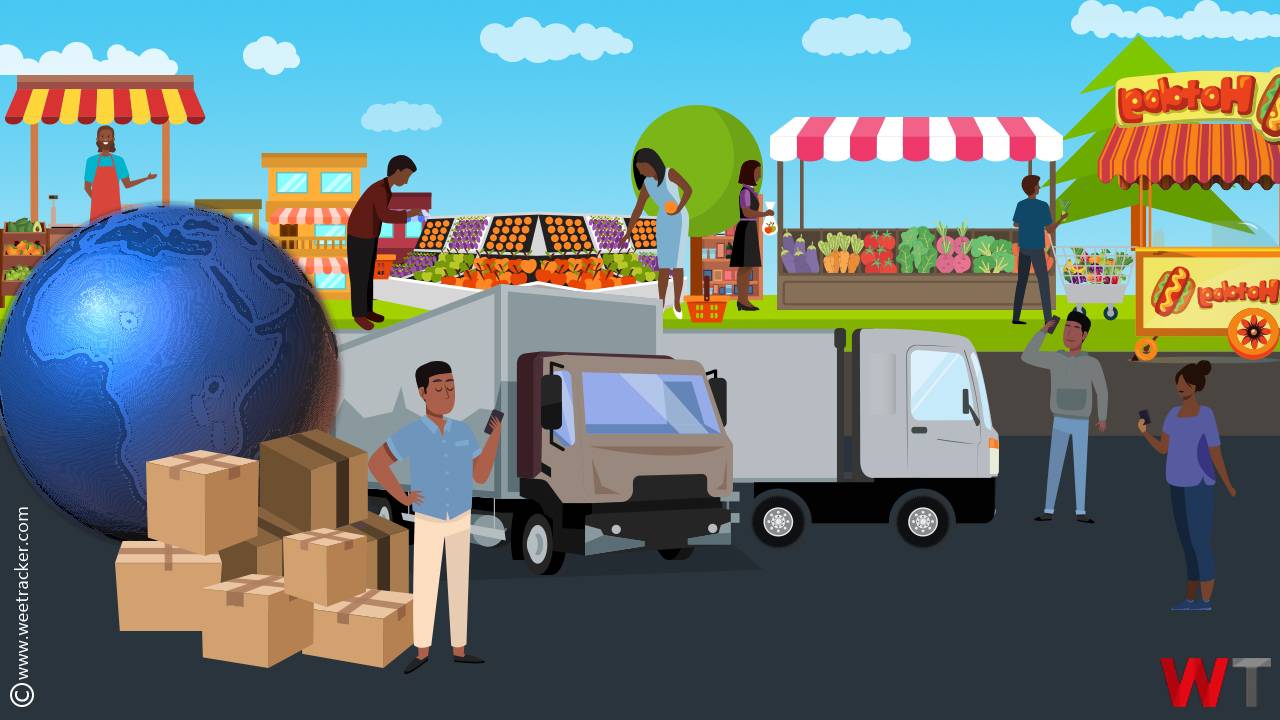
The recent move that saw MaxAB-Wasoko, Africa’s largest B2B e-commerce player, wind down its core online marketplace operations in Morocco to focus squarely on fintech is the latest and loudest signal of a profound sector-wide reckoning.
Across the continent, the once-celebrated model of “full-stack” business-to-business (B2B) e-commerce, built on buying, warehousing, and distributing fast-moving consumer goods (FMCG) to informal retailers, is being dismantled. The dream of replacing traditional middlemen by owning the entire supply chain has collided with Africa’s harsh economic realities: razor-thin margins, punishing capital intensity, and the sobering end of easy venture capital.
The initial pitch was compelling. Africa’s vast informal retail sector, estimated at over USD 1.4 T in annual spending, suffered from fragmented, inefficient supply chains. Startups like MaxAB (Egypt), Wasoko (Kenya, formerly Sokowatch), Sabi (Nigeria), MarketForce (Kenya), Alerzo (Nigeria), and Twiga (Kenya) raised a staggering USD 400 M+ between 2020 and 2022 alone.
They promised to digitise procurement, offer lower prices via bulk buying, provide credit, and ensure reliable delivery – all through sleek apps. They positioned themselves as tech-enabled replacements for layers of traditional distributors.
Flush with venture capital (VC) cash, they pursued aggressive growth, often fuelled by deep discounts to lure shopkeepers who initially enjoyed below-market prices. They built vast, expensive infrastructure: fleets of trucks, sprawling warehouses, and large workforces. Alerzo, at its peak, owned over 200 vehicles and 20 warehouses. Vendease invested heavily in trucks, cold storage, and bulk food procurement.

 Free Reads
The Top 4 Mobile Money Purchases Of The African Youth Has One Recurring ‘Disturbing’ Item

 Free Reads
Twitter CEO Jack Dorsey Is In Nigeria & He’s Already Speaking Yoruba – Plus Here’s Why He’s Visiting



Why the Wheels Came Off
This model quickly revealed fundamental flaws. The core FMCG distribution business is brutally low-margin, typically hovering between 2-5%. As MarketForce CEO Tesh Mbaabu succinctly puts it, this created “perfect competition.”
Startups, alongside traditional players, flooded the market with identical products from giants like Unilever and Dangote. Price wars ensued, driving margins towards zero. “We realised we were in a race to the bottom,” said MarketForce co-founder Tesh Mbaabu in a 2024 blog post.
“Perfect competition meant that even fintech differentiation was no longer enough. Everyone was doing it. And almost no one was making economic profit,” Mbaabu concluded. Discounts, initially a customer acquisition tool, became unsustainable cash burners once funding slowed.
Owning warehouses, fleets, and massive inventory is also capital-intensive. Maintaining this infrastructure devoured cash. “Every B2B e-commerce startup that operates an asset-heavy model will suffer, because the cost of maintaining these assets will always eat into its margins,” noted Edidiong Ekong, former Alerzo marketing head.
When the global “funding winter” hit in late 2022/2023, startups reliant on constant VC infusions to cover these high fixed costs were stranded. Zumi and Wabi shut down. Copia Global called it quits while MarketForce terminated its B2B e-commerce operation. Others like Alerzo, Twiga, Copia, Wasoko and MaxAB all conducted significant layoffs and warehouse closures (Alerzo shuttered 14 warehouses and fired 400 in one round).
To differentiate and boost margins, many layered in working capital loans; a seemingly logical move given their transaction data. However, lending proved a tough beast to master, as evidenced by Vendease’s struggles. At least two major players suffered significant losses and paused lending entirely, per one publication. RejaReja (MarketForce’s platform) faced loan repayment difficulties from shopkeepers, impacting cash flow.
While MaxAB-Wasoko, on its part, boasts impressive 99%+ repayment rates in Egypt (USD 20 M disbursed last year), this requires proprietary, sophisticated credit scoring models built atop transaction data not easily replicated everywhere.
It is for all these reasons that Ismael Belkhayat, Cofounder and CEO of Chari, which operates in Francophone Africa, curiously describes African B2B commerce as a “terrible business, but a fantastic Trojan Horse.”
Shedding Old Skin
Facing unsustainable models, survival has demanded radical change. MaxAB-Wasoko’s Moroccan retreat epitomises this. The merged entity is doubling down on fintech as a lever for profitability. In Egypt, fintech already generates over USD 180 M annually for them, a figure that “more than doubled in the past year,” according to co-CEO Daniel Yu.
“We’ve seen strong performance in fintech that’s giving us confidence,” said Yu. “Our strategic priority is to grow sustainably and achieve profitability across all our markets.”
MaxAB-Wasoko’s recent acquisition of Fatura, Egypt’s asset-light digital marketplace-cum-fintech connecting over 626 wholesalers to retailers in 16 cities, further cements this. Fintech offers recurring revenue, better unit economics, and higher margin potential than moving physical goods. “At least for the next year, our primary focus is expanding our fintech offerings across existing markets,” Yu declared.
While others floundered, Nigeria’s OmniRetail thrived, named Africa’s fastest-growing company twice by the Financial Times (USD 120 M revenue in 2023). Its secret? Steadfast adherence to an asset-light model.
“Just buying from distributors and selling to retailers didn’t have enough margin,” CEO Deepankar Rustagi previously disclosed.
OmniRetail owns no warehouses or delivery vehicles. Instead, it connects retailers to distributors via its app (OmniBiz) and leverages a third-party logistics network of 1,100+ vehicles and 85 warehouse partners.
At the time of announcing its USD 20 M Series A in April, OmniRetail revealed its fintech engine, OmniPay, processed over NGN 1.3 T (USD 810 M) in transactions in 2024 and now disburses NGN 19 B (USD 12 M) in buy-now-pay-later (BNPL) inventory credit, achieving near-zero defaults – becoming the true profit driver. Its 2024 acquisition of Traction Apps, a payment solutions provider for small merchants, furthers its fintech interests.
“Engaging with distributors on the platform and embedding working capital tools like OmniPay increased the value chain margin for us to hit profitability,” explained Rustagi. The result? EBITDA positive in 2023, net profitable in 2024.
A New Dawn?
Meanwhile, some B2B e-commerce players have abandoned the core model entirely. Sabi, after claiming USD 1 B Gross Merchandise Value and 200,000 merchants, laid off staff and pivoted to a commodity export platform via its TRACE product, seeking better margins.
In the same vein, MarketForce, after shutting down its RejaReja B2B platform (which served 270,000 merchants and processed USD 160 M) due to unsustainable FMCG margins, is now building “Chpter,” a social commerce platform leveraging AI. Vendease shed its warehouses and fleet, retreating to a pure “platform” play.
With standalone survival difficult, mergers and acquisitions offer another path. The landmark merger of Wasoko and MaxAB (creating a USD 50 M GMV entity, albeit with ~400 job cuts) is the most prominent example. As MarketForce’s Mbaabu noted, options now include “consolidation, vertical integration… or pivoting… to differentiated products… (mostly fintech).”
Earlier, TradeDepot acquired Ghana’s Green Lion. Morocco’s Chari made three acquisitions in under a year, including Ivorian player Diago. Industry players expect this trend to accelerate.
As it stands, however, the initial vision of African B2B e-commerce startups as tech-driven, full-stack distributors – owning inventory, warehouses, fleets, and sales – has largely crumbled under the weight of economics. As the MaxAB-Wasoko move in Morocco illustrates, the focus has decisively shifted. And the winners are those shedding costly physical assets, leveraging third-party networks, and embedding high-margin financial services deeply into the merchant experience.