A cloud of despair hangs over Nigeria's economic landscape as citizens grapple with the implications of sweeping tax reforms signed into law in June 2025, set to take effect January 1, 2026, with many individuals expressing concerns about increased financial burden on struggling masses.
The new legislation represents the country's most significant tax overhaul in decades, aiming to broaden the tax base and increase government revenue, but has sparked widespread anxiety among Nigerians already battling a severe cost-of-living crisis.
The four new laws – the Nigeria Tax Act, Nigeria Tax Administration Act, Nigeria Revenue Service Act, and Joint Revenue Board Act – consolidate multiple tax statutes into a unified code and introduce fundamental changes to how individuals and businesses are taxed.
While the government argues the reforms will streamline compliance and boost revenue for development, many Nigerians fear they will further erode dwindling disposable incomes.
What's Changing for the Average Nigerian
At the heart of public concern are changes to personal income tax that will see more Nigerians brought into the tax net. The new law introduces a progressive tax system for a range of income brackets.
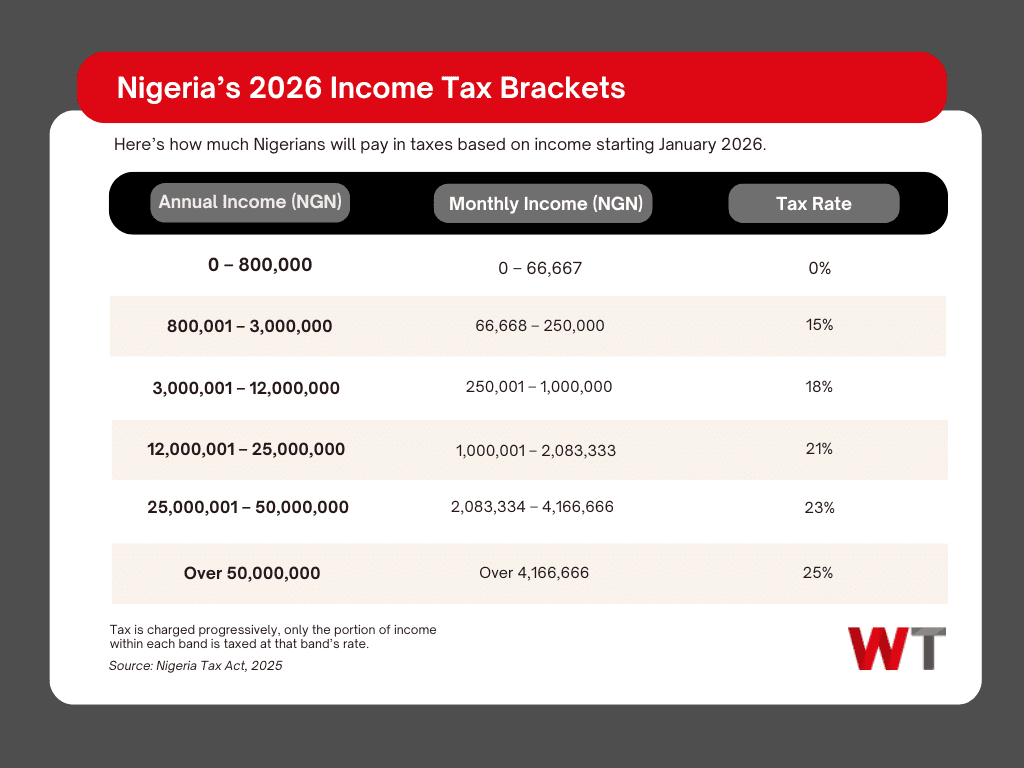
While the government emphasises that those earning NGN 800 K (~USD 535.00) annually (approximately NGN 66.6 K or USD 44.50 monthly) or less will be exempt from income tax, critics note that this threshold still captures a significant portion of Nigeria's working population who are already struggling with inflation that reached 34% last December before reducing over the last five months, notably after the stats body rebased data points used in its calculations.