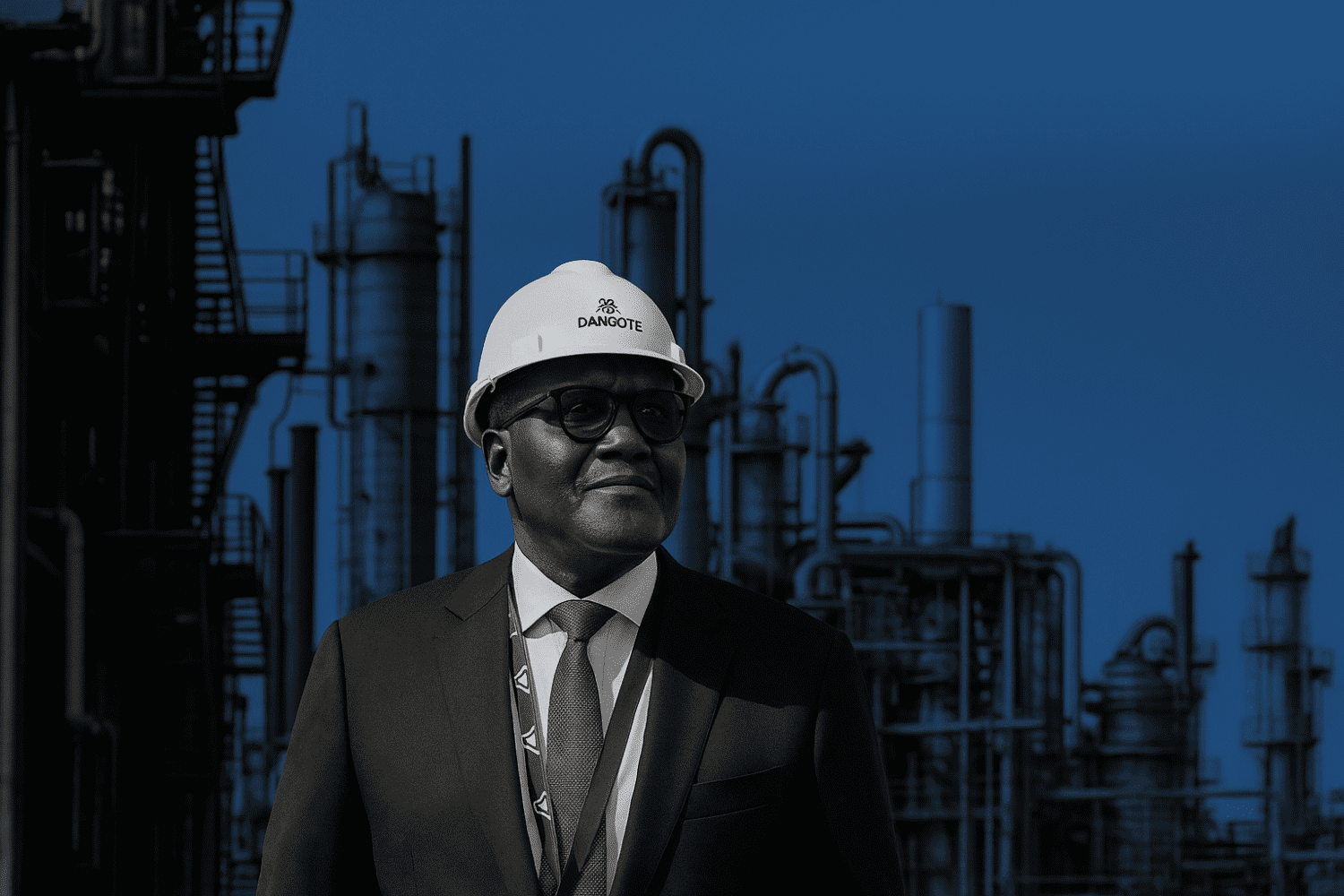
The Dangote Refinery, a USD 20 B project hailed as the engine of Nigeria's economic independence, has become a cauldron of industrial strife, legal battles, and a nationwide strike that threatens to paralyse Africa's largest oil producer.
In the industrial outskirts of Lagos, a sprawling complex rises from the landscape, a monument to ambition. The Dangote Petroleum Refinery and Petrochemicals plant, the brainchild of Africa's richest man, Aliko Dangote, was conceived as a game-changer for Nigeria. With a massive capacity of 650,000 barrels per day (bpd), it promised to end the nation's bizarre reliance on imported fuel, conserve foreign exchange, and transform the continent's top crude oil producer into a self-sufficient refining hub.
Now, just months after beginning operations, however, the refinery is not only processing crude but also brewing a perfect storm of conflict. What was meant to be a national pride has become a battleground, embroiled in a bitter war with labour unions that has escalated into a nationwide strike, shutting down key government institutions and threatening to cripple the nation's fuel supply and power grid.
The roots of the current crisis go back to June, when Dangote Group unveiled a strategy that sent shockwaves through Nigeria's established oil and gas stakeholders.
The company announced plans to import a fleet of thousands of Compressed Natural Gas (CNG) tanker trucks—a number later raised to 10,000—to distribute fuel directly to filling stations and industrial users, free of any transportation charge. While seemingly a boon for consumers, competitors saw it as a declaration of war.
The Nigeria Union of Petroleum and Natural Gas Workers (NUPENG) labelled the move "economic sabotage," warning it was a "trap" designed to drive out competitors and establish a monopoly. The union argued that once Dangote controlled the market, it would be free to charge extortionate prices.
The Nigerian Association of Road Transport Owners (NARTO), whose members own over 30,000 trucks that form the backbone of the national distribution network, joined the chorus. They called the strategy "unsustainable" and an attempt to "eliminate the thousands of independent transporters".