The Radical Startup Paying 500 Africans For A Year To Work For Others

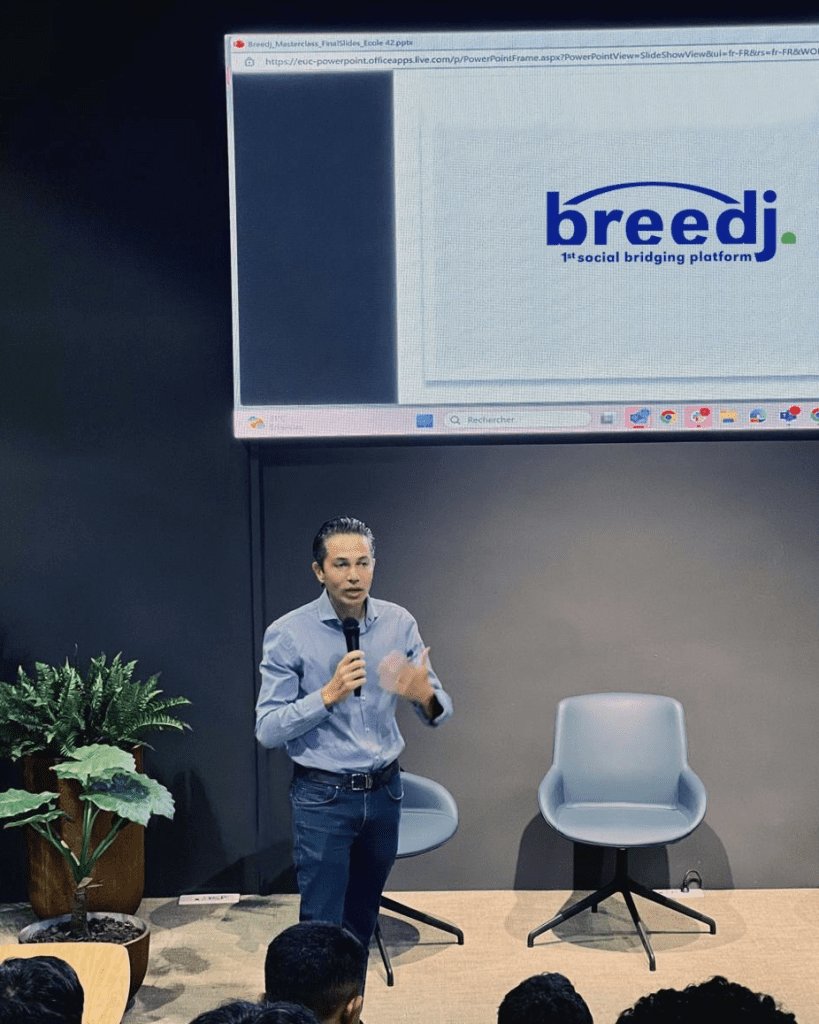
When Nicolas Goldstein talks about remote work, he does so with the blunt optimism and raw resolve that one would come to expect from someone in the ‘people’ business. His newest plan is somewhat radical: to pay hundreds of people a year to work for others and make remote work great again.
Goldstein is the co-founder of Breedj, the Mauritius-based HR tech platform formerly known as Talenteum. Recently, he announced something that sounds like an experiment and a challenge at once: Breedj will fully fund 500 twelve-month remote internships for African graduates, covering stipends, onboarding and HR support while employers simply open a remote seat and mentor the intern.
The idea lands at an awkward moment. Since the pandemic, many large employers have been moving in the opposite direction, pulling staff back to offices and sounding sceptical about remote talent.
Headlines have tracked that U-turn. Big names from retail to tech have tightened remote policies, and some companies have ended fully remote work entirely.
At the same time, employers say they cannot find enough people. Recent talent-shortage surveys show three-quarters of firms struggling to hire the right skills.








“HR leaders are facing a growing shortage of young talent who are truly job-ready,” Goldstein shared with WT. “76% of employers worldwide report struggling to hire due to a lack of qualified talent.”
Breedj’s pitch to companies is that if they are desperate for entry-level talent and African universities keep graduating people at scale, why not meet in the middle, remotely, for a year, in a low-risk trial?
There are encouraging signs as the Breedj, across its previous and present iterations, now boasts a 15,000-strong talent network and 3,500+ positions secured with 120+ business partners, and more than 54 countries covered.
Make remote work great again
Breedj’s model borrows from the playbooks of talent platforms that grew up under the same premise — train, vet and then place. Think Andela, which started by paying and training aspiring developers and then placing them as full hires on global teams, who then pay the employee while Andela earns commission.
That model helped change how some firms view talent in Africa, proving quality could be delivered at a distance. But Breedj is trying to flip the unit economics again, asking employers to supervise rather than pay the initial risk costs while Breedj buys the runway for the intern.
Goldstein frames the move as a response to two stubborn facts. “Western labour markets are producing fewer young professionals while employers face inflationary hiring pressures and changing skills needs,” he explains.
Meanwhile, Africa’s tertiary cohorts are expanding fast, Goldstein says the continent has the world’s youngest population and a growing pipeline of degree holders who nevertheless often struggle to land a first professional job.
“The number of young people in Africa completing secondary or tertiary education is expected to more than double between 2020 and 2040, from 103 million to 240 million,” he notes.
“Many of these graduates possess strong technical and digital capabilities, yet many struggle to secure their first professional role. In Kenya, for example, it is estimated that a graduate takes an average of five years to secure a job.”
Breedj argues the gap is about access and structure rather than talent. That logic makes sense on paper, but it also exposes hard questions. Who pays for a year of stipends at scale and why?
Breedj is the sponsor, but the programme’s long-term success depends on conversion. Do mentors turn into hirers, and do these remote juniors convert into durable, productive team members? Goldstein says each placement is a “low-risk, high-impact way to assess real talent in real time.”
A challenging prospect
The test for Breedj will be whether employers treat the placements as cheap labour, an experiment to be shelved, or a genuine pipeline that feeds mid-career roles.
There are practical traps, too. Hiring across borders still runs into payroll, tax, and compliance minefields, though Goldstein points out that those obstacles have narrowed thanks to global HR tooling, but they have not disappeared.
Integrating a junior remote worker requires proper onboarding, time invested by mentors, and a team that can absorb a learner without productivity penalties. Breedj says it will shoulder onboarding and HR support; that is the key operational claim to watch.
Goldstein maintains that the human stories matter more than the spreadsheets. “For employers, the promise is access to motivated people who often speak English or French, and who have technical or professional training but no practical experience,” he asserts.
“For graduates, the offer is clarity; a paid way to gain workplace habits, references, and something concrete on a CV.”
The approach echoes other scalable initiatives across Africa, from Andela’s fellowship model, which was ultimately discontinued, to newer training-to-hire schemes such as Gebeya’s partnerships to upskill developers at scale. Those programs show both upside and complexity in that graduates can launch careers, but the systems that support them must be robust.
Timing is relevant, too
Immigration rules and geopolitical shifts are nudging companies to look beyond traditional talent pools. Visa headaches, higher wages, and demographic decline in some Western markets make a borderless approach more than a novelty.
But the optics are sensitive: firms must avoid the perception of exploiting cheaper labour. Goldstein pushes the messaging that “this is strategic hiring, not a CSR move.” The claim is credible if employers treat placements as real investments in talent rather than a temporary arbitrage.
There are early signals that companies will test hybrid solutions. Some will insist on near-shore or hub models. Others will treat remote juniors as apprentices who require structured mentorship. Breedj’s bet is that once a few cohorts succeed, conversion and confidence will spread, and reluctance will fade.
Where Breedj can surprise is in measurement. If the company publishes conversion rates, retention figures and performance metrics, it would invite rigorous judgment instead of goodwill. If the numbers are opaque, scepticism will grow. That scrutiny is healthy as it keeps the experiment honest and helps employers and policymakers decide whether to scale similar efforts.
There is a moral and economic argument for trying
African graduates need pathways into stable careers. Global firms need reliable pipelines in a tighter labour market. If Breedj’s 500 placements deliver real hires and solid work, it will be easier for other firms to accept remote juniors as part of their future workforce. If the experiment falters, it will still expose the operational gaps that must be fixed.
Either way, the story matters because it tests a thesis about the future of work in terms of whether structure and sponsorship can overcome geography and bias. Goldstein is offering one answer, backed by money and a year of runway. Now the real work starts.