Top 10 Africa Countries Poised For EV Investment and Evolution
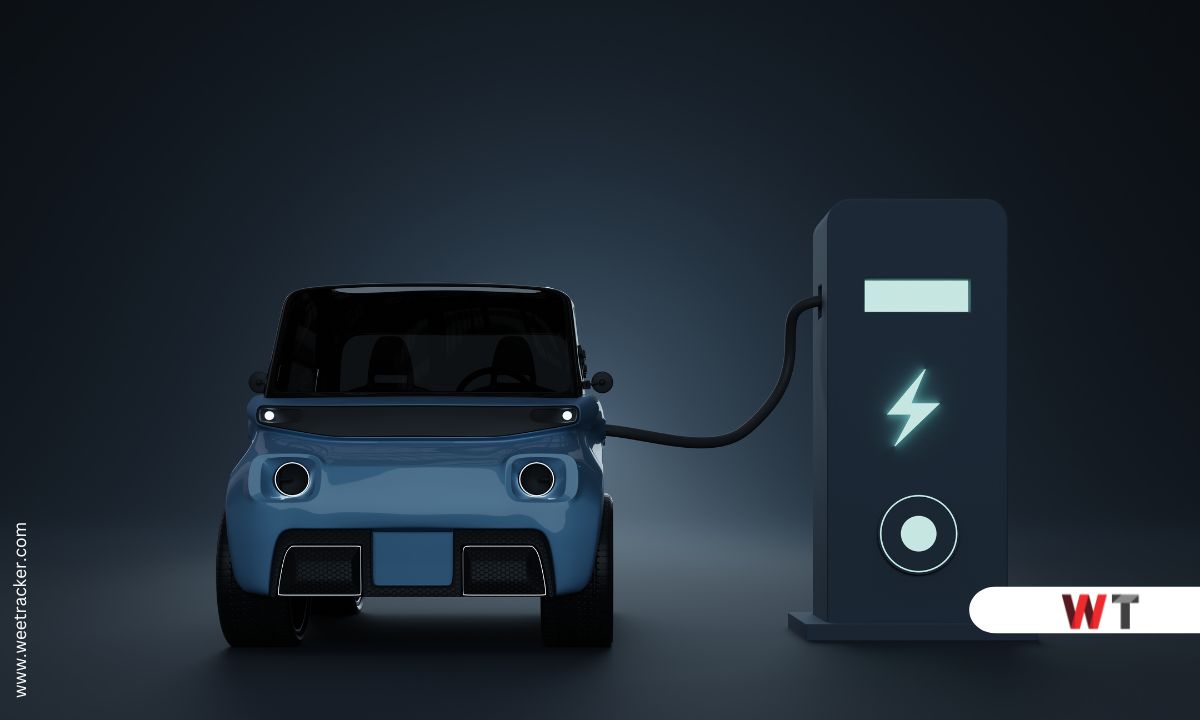
While often overlooked in global EV outlooks, the African continent is rapidly positioning itself as a key player, both as a burgeoning market for electric mobility and as a source of critical battery minerals.
With volatile global oil prices and aggressive global decarbonization goals, several African nations are implementing proactive policy changes and are emerging as a compelling investment frontier. At the same time, rising foreign and local middle-class demand is driving industrialisation in North and Southern Africa, while low-cost, high-volume mobility solutions are reshaping transport elsewhere on the continent.
According to Mordor Intelligence, the African EV market size is projected to soar from an estimated USD 0.45 B in 2025 to over USD 4.2 B by 2030. That represents a 56.3% compound annual growth rate. This growth is anchored in two fundamentals: industrial capacity and mineral wealth. Together, they form a compelling, dual-track investment thesis.
Below are ten African countries with the strongest potential for electric vehicle investment and evolution.
1. South Africa: The Manufacturing Gateway
As the most industrialised economy on the continent and home to a long-established automotive manufacturing sector, South Africa is a natural hub for EV development. Meanwhile, its highly developed automotive sector, which contributes over 7% to its GDP, is undergoing a crucial pivot to support EV adoption.


 Free Reads
Ghana’s Gov’t Goes Full ‘Ghostbusters’ – Now Using Tech To Sniff Out Ghost Workers In The Payroll
 Free Reads
This Is How Much Nigeria Spends Importing Fish Yearly Despite Abundant Water – And It’s A Lot


- Key Potential: The government has introduced a landmark incentive: a 150% tax deduction on qualifying investments in electric and hydrogen-powered vehicle production assets. This incentive, signed into law and effective from March 2026, aims to unlock billions in private funding by subsidising capital expenditures for new buildings, plants, and machinery.
- Investment Angle: Focus on local assembly, battery manufacturing, and advanced component supply to serve both domestic and global export markets (especially the EU and UK).
2. Morocco: The Production Pioneer
Morocco is arguably the most advanced country in terms of its pivot to EV manufacturing, positioning itself as a gateway to the European market. It has successfully courted firms like BYD, Tesla, Stellantis, and Gotion High-Tech Co., which committed a USD 5.6 B investment for a battery Gigafactory with an annual capacity of 100 Gigawatts (GWh).
- Key Potential: With significant government support, Morocco is attracting major global automakers and suppliers. It has a robust industrial base and a strategic goal to produce up to 100,000 electric vehicles by 2025, alongside the establishment of battery factories.
- Investment Angle: Manufacturing and export-focused assembly, leveraging its proximity to Europe and its existing automotive ecosystem.
3. Egypt: The North African Nexus
Further east, Egypt, with its large population and a government keen on reducing carbon emissions and fuel subsidies, is aggressively pushing for electric mobility. The government has prioritised a rapid electrification effort of its public transportation to combat the intense air pollution in Cairo and Alexandria.
- Key Potential: Strategic partnerships with Chinese firms for electric bus production, a financing program to help consumers access EVs, a solid industrial base, and plans for significant infrastructure development. Egypt aims to achieve a 65% industrialisation share in its EV manufacturing value chain by 2030.
- Investment Angle: Electrification of public transit (buses and taxis) and the rollout of charging infrastructure across its major urban centres.
4. Kenya: The E-Motorcycle and E-Tuk-Tuk Leader
Kenya’s EV potential is defined by its innovative, homegrown ecosystem focused on two- and three-wheelers, which are the backbone of its public and commercial transport. This segment is attracting major investor attention, with two-wheeler startups like ARC Ride, BasiGo, and Enzi Mobility attracting significant foreign direct investment.
- Key Potential: Aggressive policy targets, including aiming for 5% of all newly registered vehicles to be electric by 2025. Furthermore, the National Building Code 2024 now mandates that all new commercial buildings must reserve at least 5% of parking spaces for EV charging infrastructure, creating a guaranteed baseline for investment. There are also reduced import duties on EVs and a focus on local assembly and battery-swapping models.
- Investment Angle: Battery swapping technology and local assembly of electric motorcycles (Boda-Bodas) and tuk-tuks, driven by numerous local startups.
5. Rwanda: The Policy-Driven Innovator
Despite its size, Rwanda is punching above its weight by creating one of the most favourable policy environments for e-mobility in Africa.
- Key Potential: Under the National Strategy for Transformation (NST2), the government offers comprehensive tax breaks, waiving VAT, import, and excise duties on electric cars, spare parts, and charging equipment. It is a testing ground for innovative business models like ultra-fast charging hubs. For instance, Rwanda is the home of Ampersand, which recently opened its battery swap network to global manufacturers
- Investment Angle: Logistics, fleet electrification, and the development of charging infrastructure and services in a supportive regulatory environment.
6. Nigeria: The West African Scale Giant
Nigeria is the newest heavyweight on this list, with a fast-growing adoption rate, especially in the e-motorcycle and e-tricycle segments. The recent passing of the Electric Vehicle Transition and Green Mobility Bill in late 2025 has moved the country from passive interest to aggressive industrialisation.
- Key Potential: The 2025 Bill mandates that foreign automakers establish local assembly plants within three years and source at least 30% of components locally by 2030. With an estimated 15,000 to 20,000 EVs already on the road, Nigeria’s market is projected to grow at 6.8% annually through 2031, according to Climate Scorecard.
- Investment Angle: Importation, distribution, and maintenance services for electric two- and three-wheelers, and investment in renewable-powered charging solutions.
7. Ethiopia: The Bold Policy Mover
Ethiopia has fundamentally reshaped its market with a single, aggressive policy move: banning the import of all non-electric internal combustion engine (ICE) vehicles. This policy has created an immediate demand for EVs, making it one of the continent’s fastest-growing EV markets.
- Key Potential: This ban, driven by a need to cut costly fossil fuel imports and leverage its substantial hydroelectric power capacity, creates a guaranteed demand for EVs. This has had an immediate, dramatic effect, reportedly lifting electric vehicle registrations to above 60% of new sales by early 2025 per EV24.africa. The nation’s EV market is consequently projected to show the fastest growth in Africa at a 58.92% CAGR through 2030 per Mordor Intelligence.
- Investment Angle: Immediate local manufacturing and assembly to meet the policy-driven demand, leveraging Ethiopia’s extensive, low-cost hydroelectric power capacity for operation.
The Mineral & Value-Chain Powerhouses
The next three countries are crucial not just for EV adoption but for their role in the global EV battery value chain. Investment here is focused on mineral processing and value addition.
8. 🇨🇩 Democratic Republic of Congo (DRC)
The DRC holds a strategic, non-negotiable position in the global EV transition.
- Key Potential: The DRC possesses approximately 48% of the world’s proven cobalt reserves, according to the African Green Minerals Observatory. It accounts for 70% of global cobalt production and is a major copper producer—both essential battery components.
- Investment Angle: Shifting from raw export to local processing and refining of Cobalt and Copper to create a complete regional battery value chain, moving beyond raw material export.
9. Zimbabwe
Zimbabwe is rapidly becoming a global player in a different critical mineral.
- Key Potential: Zimbabwe is home to Africa’s largest known reserves of Lithium, a non-negotiable component for all current EV batteries. The government banned the export of raw Lithium ore in 2022 (S.I. 213 of 2022), compelling miners to invest in processing plants to produce higher-value Lithium concentrates domestically before export
- Investment Angle: Financing and developing local processing plants to produce battery-grade Lithium carbonate and hydroxide, moving up the value chain from mining. Following the government’s directive to ban raw lithium ore exports.
10. Tanzania
Tanzania rounds out the list with significant potential in graphite, a key component for battery anodes.
- Key Potential: The country holds major reserves of Graphite, which is used to manufacture the anode materials in lithium-ion batteries. It also has potential for other battery minerals. Meanwhile, the nation is also seeing a surge in electric e-bikes and tuk-tuks (3-wheelers).
- Investment Angle: Graphite mining and processing, as well as the import and local assembly of two- and three-wheeled electric transport.
Bridging the Infrastructure Gap
Africa is rapidly positioning itself as a key player in the global EV transition, both as a source of critical battery minerals and as a fast-emerging market for electric mobility.
While the infrastructure and funding gap across the continent remains significant, it also represents one of the highest-return frontiers for early movers.
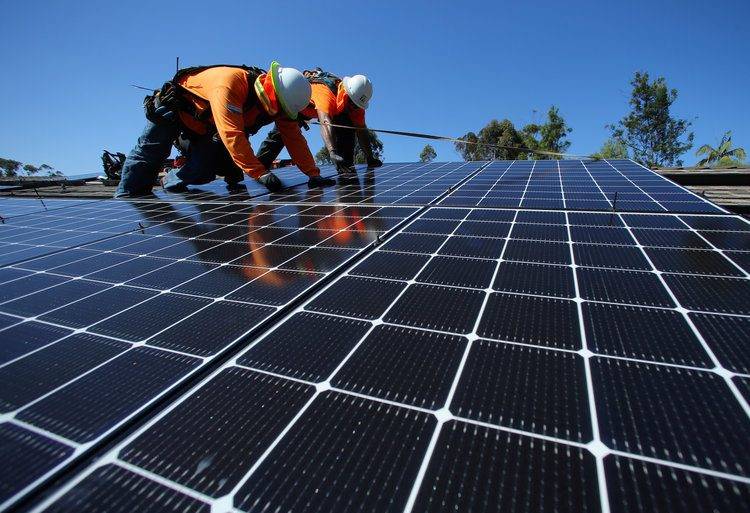
The truth is the continent continues to face real constraints: grid instability, high upfront vehicle costs, and limited access to financing. However, these challenges simultaneously present opportunities. These constraints create investment opportunities for decentralised, solar-powered charging infrastructure and battery-swapping networks that reduce reliance on unstable grids. They also support the case for localised assembly plants, which lower import costs, improve vehicle affordability, and generate jobs. Continued policy support, including tax incentives, import waivers, and local manufacturing mandates, is further de-risking the market for early movers.
Although progress is uneven and many gaps remain, momentum is clearly building across policy, industrial capacity, and investment.
Overall, Africa’s path to relevance on the global EV stage will not come from copying established markets. It will come from developing localised, affordable, and resilient solutions—and the countries highlighted above are already setting that direction.