How Nigeria Made Its Ugly Inflation Problem Look Less So With New Math
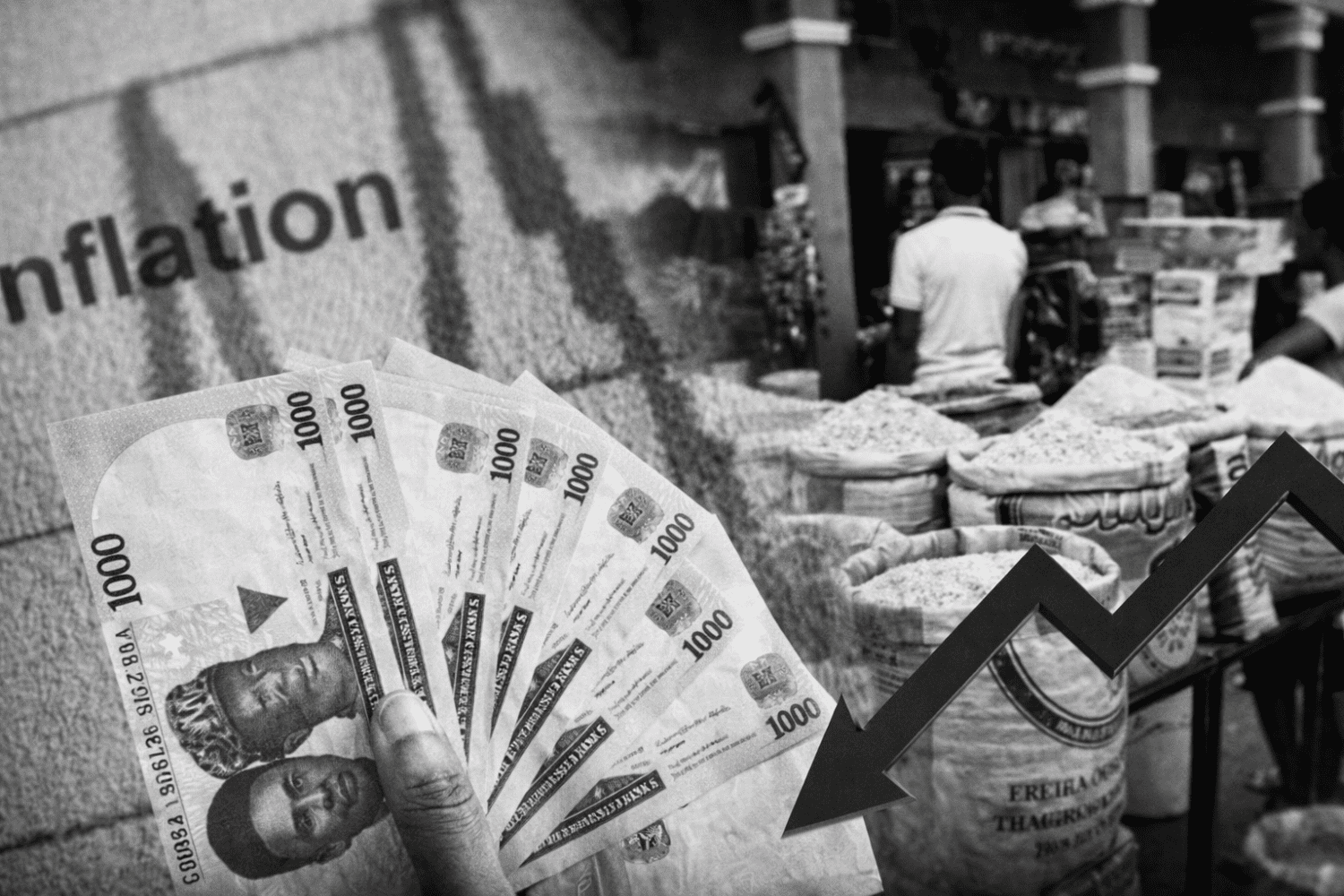
Nigeria’s official inflation rate has undergone a statistical transformation, a technical process that has drastically changed the headline number millions use to gauge their cost of living.
The latest data from the National Bureau of Statistics (NBS) reported that inflation fell sharply to 15.15% in December. This was down from 34.80% a year earlier and seemed to signal a dramatic cooling of prices. But the journey to this number involved more than just prices coming down; it came about by changing the ruler used to measure them.
At the heart of this change is a process called “rebasing.” Simply put, Nigeria had been measuring price changes for a 2025 economy using a shopping list and spending habits from 2009. After 15 years—far beyond the recommended five-year update cycle—that list no longer reflected reality.
In a nationwide survey, the NBS discovered Nigerians no longer bought 201 outdated items. Gone from the official inflation basket are relics like black-and-white televisions and Nokia 3310 phones. In their place, statisticians added 404 new products and services that people actually spend money on today, expanding the total basket to 934 items from about 740. This update, based on 2023 spending patterns, aims to make the index mirror modern life.
The new math, which was adopted at the start of last year, promptly saw Nigeria’s headline inflation drop to 24.48% in January 2025 (from 34.80% in December 2024) after the methodology and base year were changed. That headline metric largely eased throughout last year as some measure of stability was achieved. It is worth noting, however, that even as the wild price shocks from the period prior subsided, prices remained elevated.
 Free Reads
Announcing Our First Flagship Conference, ‘Bridge’- East Africa, Brace Yourself, We Are Coming!



 Free Reads
Nigeria Inches Closer To Social Media Law Which Comes With Jail Terms & NGN 10 Mn Fine For Offenders



Updating the basket was just one step
The NBS then faced a mathematical hurdle. By setting the new base year to 2024, comparing December 2025 directly to December 2024 would have created a misleading spike. Officials projected that under the old calculation, inflation would have appeared to jump to 31.2%. The NBS described this as an “artificial spike” caused by the base effect’ a technical distortion, not a real surge in prices.
To avoid this, the bureau changed its calculation method. Instead of comparing this month to the same month last year, it used a 12-month average of 2024 prices as its reference point. This “normalised” the figure and prevented the one-off distortion, resulting in the reported 15.15%.
The government and international bodies have endorsed the overhaul. The International Monetary Fund (IMF) stated the new method aligns Nigeria with international best practices and the ECOWAS framework. Central Bank Deputy Governor Muhammad Sani Abdullahi called it a fix for a “purely mathematical issue,” not an attempt to disguise higher prices.
However, the sudden shift has drawn scrutiny from prominent economists. Yemi Kale, who led Nigeria’s statistical agency for a decade, warned the transition may have been rushed, creating a gap in year-on-year comparisons that undermines analysis.
“How do you calculate year-on-year when you say the previous numbers are not comparable?” he asked, highlighting concerns about consistency and transparency.
For the average Nigerian, the disconnect between the new, lower headline rate and daily market prices remains palpable.
While the NBS reports a significant drop in food inflation to 10.84%, the cost-of-living pressure cited by groups like the Nigerian Economic Summit Group (NESG) has not disappeared overnight. The new math provides a revised benchmark, but for many, the feeling in their wallet is the ultimate measure.