Nigeria’s Population Boom Draws Investor Rush In Billion-Dollar Data Centre Bet
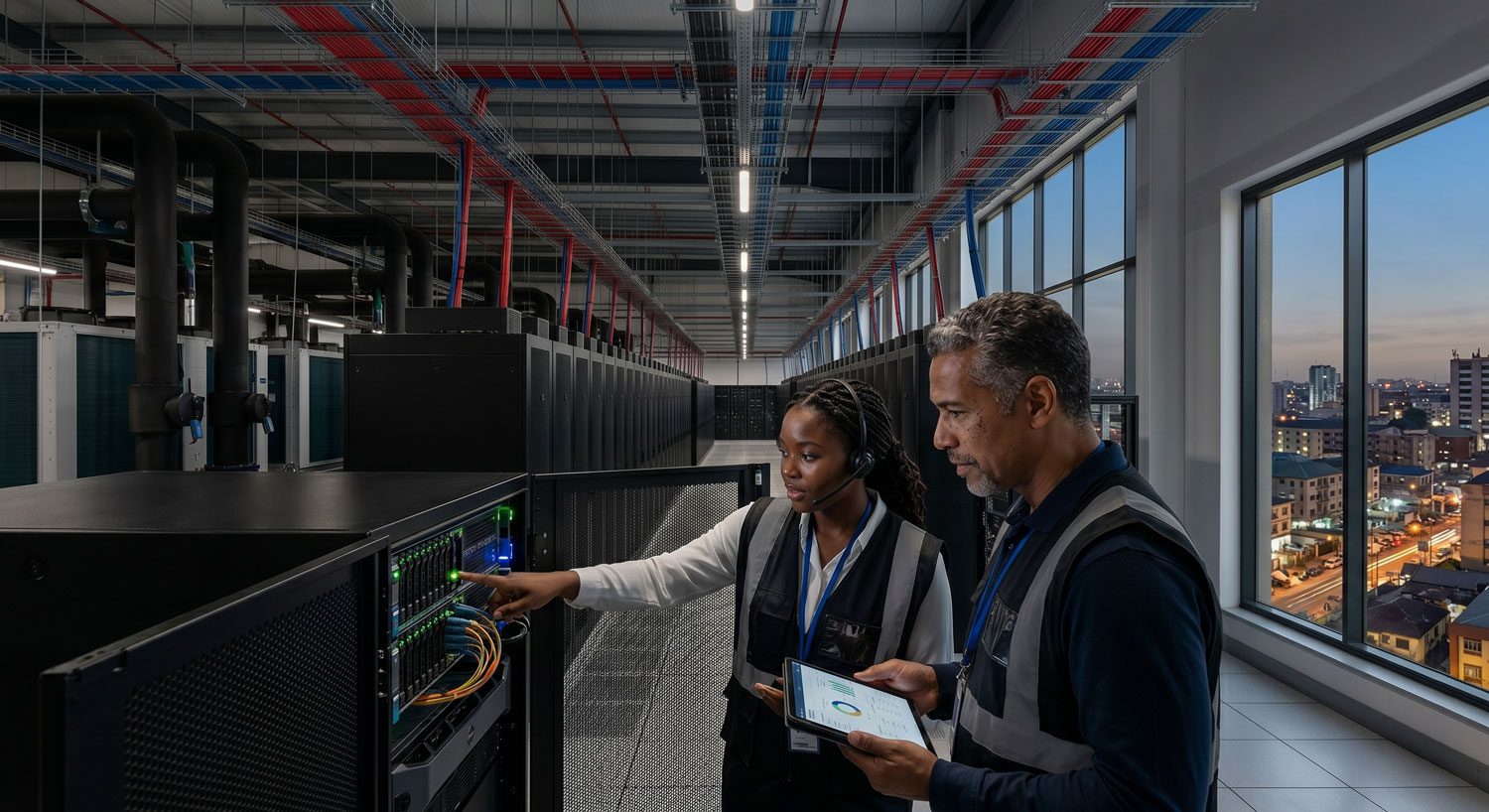
Nigeria’s data centre expansion is being driven by demographics as much as technology, with investors betting that the country’s rapidly growing population will transform it into one of the world’s largest digital economies over the next three decades, the African Energy Chamber said in a report.
Africa’s most populous nation is already home to more than 240 million people, with U.N. projections indicating the country could surpass 400 million by 2050, making it the world’s third most populous country after India and China. Nigeria’s median age of around 18, combined with internet penetration above 50%, is creating a rapidly expanding base of mobile-first consumers entering the digital economy each year, the report said.
That demographic trajectory is reshaping the long-term case for digital infrastructure investment. Nigeria’s data centre market, valued at roughly USD 288 M in 2025, is projected to surpass USD 1 B by 2031, according to the report. Other estimates put the market at USD 322.65 M in 2025, forecasting growth to USD 782.82 M by 2031.
Major players, including Equinix, MTN, Rack Centre and Open Access Data Centres, are scaling infrastructure to capture what they see as long-term structural growth rather than a short-term market cycle, the chamber said.
In 2025, MTN announced a more than USD 240 M investment into a new Lagos data facility designed to support AI and cloud demand. Equinix committed USD 22 M to develop its LG3 data centre in Lagos, initially scheduled to open in early 2026.
Rack Centre brought online a 12MW LGS2 data centre in Lagos, touting it as hyperscale and AI-ready. Open Access Data Centres approved a USD 240 M investment to expand its Lekki facility to 24MW by 2027. Recent reports suggest nearly USD 1 B in broader data centre investments flowing into Nigeria as companies race to expand cloud and AI infrastructure capacity.
Still, the opportunity comes with challenges. Reliable electricity supply remains one of the biggest constraints on large-scale data centre expansion in Nigeria, where operators often rely heavily on backup generation and hybrid power systems.
“Data centres are becoming critical infrastructure for Africa’s economic future, but none of this growth happens without energy,” said NJ Ayuk, Executive Chairman of the African Energy Chamber.
“Countries like Nigeria are seeing rising demand because of demographics, connectivity and digital adoption, but investors also need confidence that long-term power supply can support that expansion”.
Nigeria’s population growth alone does not guarantee digital infrastructure success, the chamber said. But when combined with rising internet penetration, fintech adoption, cloud usage and AI-driven computing demand, it creates a scale opportunity few emerging markets can match.