African Remittances Shift From Lifeline To Infrastructure As Sender Profile Changes
The image of a lone migrant worker wiring money home once a month is giving way to something more complex. A new report from Zepz, the payments group behind WorldRemit and Sendwave, shows that 70% of senders now support multiple recipients and more than one in eight send money to multiple countries, reflecting a fundamental shift in how cross-border payments are used across Africa.
The findings, based on five years of data from more than 5.5 million unique senders, challenge the traditional view of remittances as emergency support. Almost half of all transfers are under USD 50.00, and nearly three-quarters fall below USD 100.00. They are regular, recurring transfers that have become as routine as paying a utility bill.
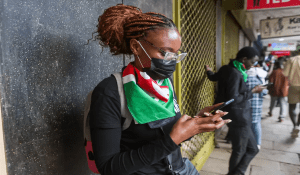
Adults aged 25 to 34 now represent the largest sender group, accounting for 30% of all active users. Having grown up with mobile banking, this generation expects cross-border finance to match the speed and simplicity of the apps they use daily. Women have also reached near parity, accounting for 45.9% of transactions and representing 49.9% of senders aged 35 to 44. The gap between what men and women send per transfer has more than halved in five years.
The numbers are reshaping how African economies think about diaspora finance. Sub-Saharan Africa received USD 54 B in officially recorded remittances in 2023, according to the World Bank, surpassing foreign direct investment and official development assistance in many countries. Nigeria receives roughly USD 19-20 B annually, while Kenya and Ghana each receive about USD 4-5 B. In smaller economies like The Gambia and Lesotho, remittances exceed 20% of GDP.
But the infrastructure that moves this money is changing. Traditional remittance fees to Africa have historically ranged from 7% to 12% per transaction. Fintech platforms including Sendwave, LemFi and Grey have compressed costs to between 1% and 3%, delivering funds directly to mobile wallets used by millions of Africans without bank accounts. LemFi now handles more than USD 1 B in monthly payment volume.
Zepz, which transferred USD 17 B for customers in 2025, is pushing further into digital infrastructure. In October 2025, it launched the Sendwave Wallet, built on the Solana blockchain, allowing customers to hold and send USDC stablecoins across more than 100 countries. The wallet lets users store value in digital dollars rather than converting immediately to local currency, a feature that matters in regions facing currency volatility.
The company has partnered with Fireblocks to scale stablecoin settlement and with TRM Labs for blockchain intelligence to manage financial crime risk. In January 2026, Zepz acquired a credit product from Pomelo, extending into lending and cards.
Governments are taking notice. Nigeria’s Central Bank is targeting USD 1 B in monthly diaspora remittances by the end of 2026, up from more than USD 600 M currently. The bank has removed regulatory bottlenecks for international money transfer operators and adopted a “free entry and free exit” foreign exchange approach. Kenya’s central bank, meanwhile, has revised its 2026 remittance forecast down to USD 5.11 B, citing pressure from the Middle East conflict and a new 15% VAT on transfers in Saudi Arabia.
The shift is also generational. Older remitters, those aged 55 and over, send an average of 36.8 transfers a year, more than three per month. But it is the younger cohort entering the market that are shaping its future, bringing expectations of speed, transparency and integration with the digital financial tools they already use.