M-Pesa’s Dominance and Kenya’s digital payments landscape

Around the world Kenya is largely known as the home of innovations in digital payments.
This is mainly due to Safaricom’s flagship offering, M-Pesa. Since its launch in 2007, M-Pesa has allowed more Kenyans to swiftly send and receive money through the convenience of their mobile phones. In March 2026, exactly 19 years after M-Pesa’s launch, Safaricom announced that the mobile money platform had hit the milestone of 40 million customers.
In a research paper on mobile money payments, the World Bank described the service as follows: “M-PESA’s original core offering was the P2P payment – enabling customers to send money to anyone with access to a mobile phone. It opened up a market for transactions which previously were handled largely informally – through personal trips, friends, and public transport networks.”
Africa still remains the region with the highest fees for sending money.
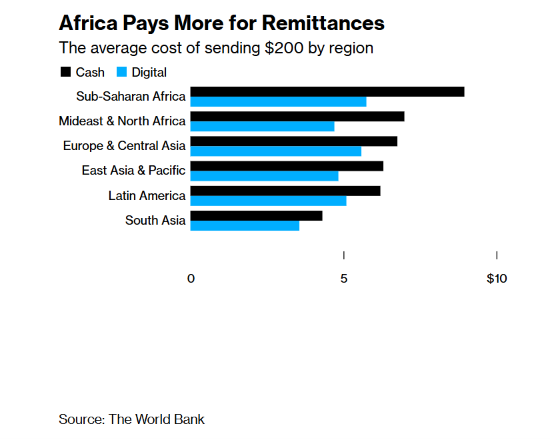
Just as M-Pesa has transformed the financial landscape in Kenya, it is also an expensive product from a consumer point of view. This has led to increased competition from banks, neobanks and fintechs. The banking sector, through various Kenyan Banks has tried to curb M-Pesa’s market dominance through various offerings. I&M Bank removed all charges for bank-to-mobile-wallet transfers. Loop DFS has been hailed for maintaining free transfers before it was rebranded by NCBA and the charges were reintroduced.
In 2009, TEAMS (The East African Marine System), connecting Mombasa with Fujairah, greatly reduced the cost of internet access. This opened up access to the digital space, and this transition saw the financial needs of the population expand from simple P2P payments to digital commerce, BNPL solutions, stock market trading, overseas money transfers and offshore investments. Safaricom itself has also noted the growing needs and has developed new products. In a statement, Safaricom noted “investment and wealth management through Ziidi MMF, Ziidi Trader, credit services like Fuliza and KCB M-PESA.” . It continued to state, “business solutions such as Lipa na M-PESA, Pochi la Biashara and Global Pay.”
Indecisive government action:
In July 2022, the Asset Recovery Agency sought court orders prohibiting Flutterwave from doing business in Kenya. In March 2021, following a US$170 million Series C funding round, Flutterwave officially became a unicorn, surpassing the billion-dollar mark. Iyinoluwa Aboyeji, Adeleke Adekoya and Olugbenga Agboola founded the company in 2016. Flutterwave’s mission was to become a payment gateway that would revolutionise the speed of transactions within Africa. The Asset Recovery Agency claimed that Flutterwave had breached the country’s anti-money laundering laws. The firm’s funds in Kenya, amounting to $43 million, were frozen.
ARA dropped the charges after a couple of months, coinciding with a new government taking over just a few months earlier. Flutterwave CEO Olugbenga Agboola later made a public plea for a renewed licence, promising to expand the company’s footprint in Kenya.
In addition to this, the Central Bank of Kenya issued a directive pausing banks from doing business with Flutterwave and Chippercash. The CBK directed banks not to deal with the two entities due to a lack of proper licensing. The directive read in part: “It has come to the attention of the Central Bank of Kenya (CBK) that Flutterwave Payments Technology Ltd and Chipper Technologies Ltd have been engaging in the money remittance business without licensing and authorisation by CBK.”
Market entrants:
Newer players have recently pivoted to digital currencies and stablecoins, thereby avoiding regulations by central banks and oversight authorities. Kenya’s President assented to the Virtual Asset Service Provider Bill, and it officially became law on 4th November 2025. The law placed numerous requirements on companies planning to venture into the space. Under the requirements that took effect from November 2026, a stablecoin issuer needs a minimum capital of ksh 300 million. A virtual wallet provider needs a minimum capital of ksh 150 million. This sets a precedent as the first of its kind in East Africa.
Kenya’s bank-to-bank solution:
The Kenya Bankers Association (KBA) through its subsidiary, Integrated Payment Services Limited owns PesaLink, an instant payment network . The instant payment service recently announced a partnership with the Pan-African Payment and Settlement System (PAPSS). The partnership aims to “ease cross-border payments and speed up regional financial integration.”
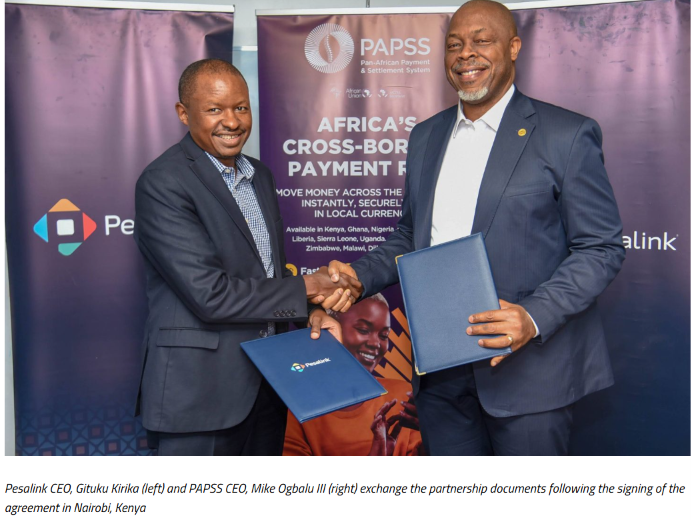
PesaLink has been acknowledged at home as having lower rates than Safaricom’s M-Pesa. The bank-to-bank system also enjoys the support of Kenya’s banks, as the nation’s major banks are connected via PesaLink.
Kenya’s financial landscape is constantly evolving and M-Pesa’s relevance is slowly being eroded thanks to cheaper digital solutions in the market. What sets M-Pesa apart is it’s domination of mobile money payments, In contrast, the battle for instant account transfers is being led by PesaLink.