Japan And AfDB Commit USD 5.5 B To Boost Private Sector In Africa At TICAD9
Japan and the African Development Bank (AfDB) have strengthened their nearly two-decade partnership with a new USD 5.5 B financing deal aimed at driving private sector growth across Africa.
Last Thursday, the Japan International Cooperation Agency (JICA) and the AfDB signed a Memorandum of Understanding launching the sixth phase of the Enhanced Private Sector Assistance initiative (EPSA6), setting a joint financing target of up to USD 5.5 B for African development projects.
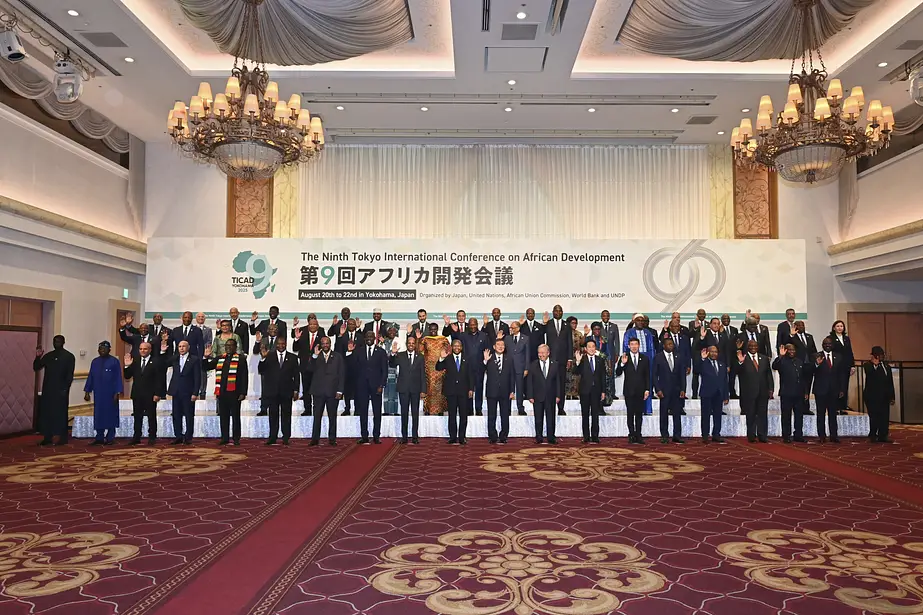
The agreement was formalized during the Ninth Tokyo International Conference on African Development (TICAD9), with Japan’s Finance Minister Katsunobu Kato witnessing the signing ceremony.
The EPSA6 initiative will channel concessional financing from JICA to the AfDB to support private sector operations across African member states. Set to run from 2026 to 2028, it raises the ambition of the program by half a billion dollars compared to the previous phase, EPSA5.
Established in 2005, EPSA is one of the AfDB’s longest-running bilateral partnerships and a key tool for advancing the Bank’s private sector development strategy. Its priorities include power, connectivity, health, agriculture, and nutrition. It supports the implementation of the Bank’s Strategy for Private Sector Development
Over the years, the initiative has provided USD 12 B in joint financing, supporting key infrastructure and development projects across the continent, including Uganda’s Bujagali Hydropower Plant, the East Africa Submarine Cable System, Nigeria’s Lekki Toll Road, Rwanda’s Kigali Bulk Water Supply system, and RASCOM, Africa’s first pan-continental communications satellite.
At the TICAD9 signing, Dr. Tanaka noted that the new USD 5.5 B target is more than five times the level set when EPSA was first introduced 20 years ago. He also announced that “resilience” would be added as a priority under EPSA6, reflecting a focus on helping African economies withstand climate change and also strengthening African economies against a wider range of external shocks.
Tanaka also acknowledged the role of outgoing AfDB President Dr. Akinwumi Adesina, who has overseen much of EPSA’s growth. “Thanks to his strong ownership and support, EPSA5 is now almost reaching its USD 5 B target by the end of this year,” he said.
The previous phase, EPSA5, launched at TICAD8 in 2022 with a USD 5 B financing commitment for 2023–2025. According to AfDB Vice President Kevin Kariuki, the initiative has already mobilized USD 4 B, with a further USD 1.6 B in projects at advanced stages of financing that are expected to be finalized by the end of 2025.
Kariuki praised Japan’s continued backing, describing EPSA as a cornerstone of the bank’s collaboration with development partners. “The Government of Japan is one of the strongest shareholders of the African Development Bank and a major contributor to the African Development Fund,” he said. “EPSA is the largest and longest-running bilateral partnership we have, and it has played a crucial role in strengthening Africa’s private sector.”
Minister Kato added that the renewed focus on resilience would be particularly valuable for African countries struggling with high debt burdens while also attracting greater private investment. “Africa has tremendous opportunities for significant market expansion,” he told delegates.
With EPSA6, Japan and the AfDB are not only raising their financial commitment but also broadening the scope of their cooperation. The new phase underscores the role of private sector development as a driver of growth, resilience, and long-term prosperity across the continent.