Ethio telecom Vs. Safaricom: World Bank Sounds Alarm Over Monopoly Grip
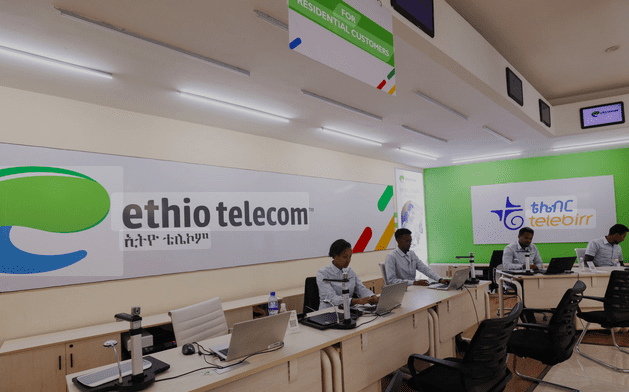
Safaricom, Kenya’s leading telecommunications provider, is making good ground in Ethiopia despite stiff competition from Ethio telecom, according to a new World Bank report. However, the report warns that deep-seated anti-competitive practices by the state-owned incumbent threaten to derail the country’s digital transformation.
The Ethiopia Telecom Market Assessment recently released by the World Bank highlights a paradox: Safaricom Ethiopia’s aggressive network rollout and innovative pricing have been a “catalyst for change,” significantly lowering data prices and doubling 4G coverage since 2021. However, this progress has come at a steep financial cost for the new entrant, as the playing field remains heavily tilted in favour of the dominant state player, Ethio Telecom.
Since its commercial launch in late 2022, Safaricom has rapidly acquired over 10 million active subscribers and built over 3,100 new cell towers, covering approximately 42% of the population. The new competition has driven remarkable consumer benefits, with mobile data prices in Ethiopia becoming among the cheapest in Africa, and average data consumption per Safaricom customer surpassing levels in its home market, Kenya. The World Bank estimates that the liberalisation, sparked by Safaricom’s entry, has contributed roughly USD 3.1 billion to Ethiopia’s GDP.
Despite this operational success, the report exposes the financial strain on Safaricom. The company recorded a significant loss of USD 325 million in 2024, with its revenue of USD 53.6 million not even covering the annual amortisation cost of its massive USD 1 billion license fee.
The core of Safaricom’s troubles, according to the World Bank, lies in Ethio telecom’s dominant market position and alleged anti-competitive behaviour. The state-owned enterprise, which did not pay the equivalent license fee, controls six of the market’s seven
Ethio telecom is reportedly pricing voice calls below the regulated mobile termination rate (MTR). This forces Safaricom to match these tariffs, resulting in the company losing an estimated USD 1.6 million a month on calls terminating on Ethio telecom’s network.
The absence of independent tower and infrastructure companies is also forcing Safaricom to rely on its rival and other state-owned entities for leased infrastructure, adding to its operational costs.
The report has also flagged a lack of interoperability between Safaricom’s M-Pesa and Ethio telecom’s telebirr mobile money platforms. Furthermore, the incumbent has been accused of blocking access to Safaricom’s apps on its network and benefiting from preferential arrangements for handling government mobile money transactions.
To ensure Ethiopia’s digital future remains on track, the World Bank has issued a blueprint for reform, emphasising the urgent need to create a “level playing field,” including establishing clear, cost-based pricing for essential infrastructure sharing, such as fibre and towers. The World Bank also recommends loosening government control over Ethio telecom by installing an independent board and aligning regulatory fees.
In conclusion, the report calls for decisive action from the Ethiopian Communications Authority (ECA) to prevent the incumbent’s market power from suffocating investment and stalling the hard-won gains of liberalisation, and seeing whether Ethiopia can transition from a partially liberalised market to a truly fair and competitive digital ecosystem.
Image Courtesy: Reuters