Uganda Falls Silent Online, But A New ‘Bluetooth’ Lifeline Rises From The Streets
On Tuesday, January 13, as the sun set over Kampala, Uganda’s digital heartbeat flatlined. Following a directive from the state regulator, the Uganda Communications Commission (UCC), mobile network operators were ordered to suspend public internet access nationwide from 6 p.m., plunging approximately 27 million users into online silence just 48 hours before a pivotal presidential election.
The official justification, citing the prevention of “misinformation, disinformation, [and] electoral fraud,” was a stark reversal of the government’s own assurances. Only a week prior, on January 5, senior officials had held a press briefing to label rumours of a shutdown as “false and misleading,” intended to cause “unnecessary fear and tension”. This pattern of pre-election blackouts is now a familiar one; a similar five-day shutdown marred the 2021 election.
For the opposition, led by pop star-turned-politician Bobi Wine, the move was a predictable act of repression aimed at stifling organisation and independent verification of results. It was a move they had anticipated and, crucially, had prepared for.
Offline Messenger Becomes Lifeline
In the weeks leading up to the vote, Bobi Wine had a recurring message for his supporters: “HAVE YOU DOWNLOADED BITCHAT YET?”. His advocacy triggered a digital scramble. According to the app’s developer, downloads in Uganda surged past 400,000 as the blackout loomed, making it the country’s most downloaded application.
Bitchat, a “weekend experiment” launched in July 2025 by Twitter (now X) co-founder Jack Dorsey, is a peer-to-peer encrypted messenger with one defining feature: it requires no internet connection.
Instead, it uses Bluetooth Low Energy (BLE) to create a “mesh network.” A message on one phone can hop to another device within a 30-meter range, which then relays it onward, potentially weaving a communication web across a city block or a protest crowd without ever touching a cell tower.
This makes it a powerful tool for censorship resistance. As Human Rights Watch and other watchdogs condemned Uganda’s shutdown as a violation of fundamental rights, Bitchat offered a technological workaround. UCC Executive Director Nyombi Thembo downplayed the app as “a small thing,” but its developer fired back: “You can’t stop Bitchat. You can’t stop us”.
The Unstoppable Signal
Uganda is not an isolated case. Bitchat and similar apps are becoming standard tools for communication in the most restrictive environments. The technology itself is not new; apps like FireChat and Bridgefy pioneered offline mesh networking years ago.
Their utility has been proven repeatedly; in Hong Kong during the 2019-2020 protests, and in Myanmar following the 2021 military coup, where Bridgefy saw over a million downloads. More recently, in Nepal and Madagascar during 2025 civil unrest, where Bitchat downloads spiked by tens of thousands as protesters sought ways to organise.
The showdown in Uganda is a microcosm of a global conflict between state control and decentralised technology. While governments can flick the switch on centralised internet infrastructure, they cannot as easily disable the short-range, ad-hoc networks that form between devices in a crowd.
The shutdown in Uganda, part of a broader crackdown that included the suspension of critical NGOs, may achieve its immediate goal of disrupting the online flow of information. However, the explosive rise of Bitchat demonstrates a determined public will to communicate.
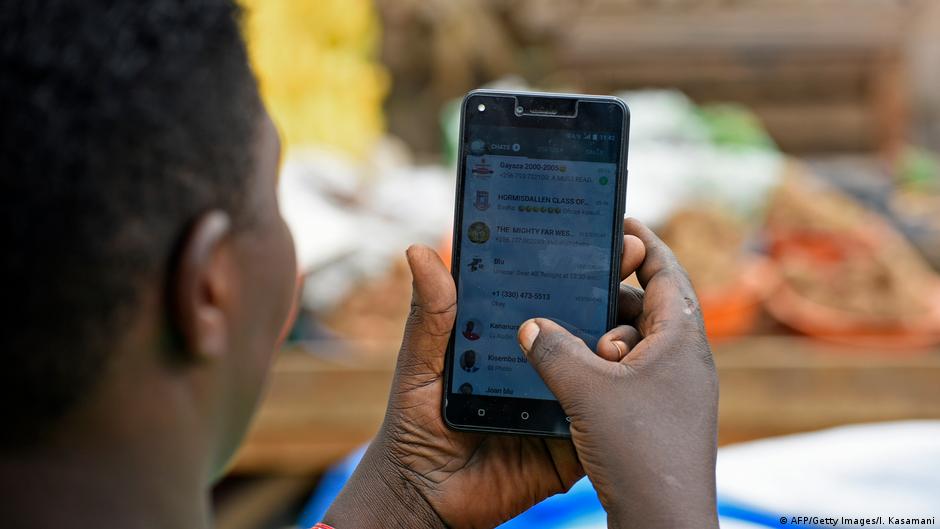
Feature Image Credits: AFP/Getty Images/I. Kasamani