Nigeria’s Youngest Adults Worst Hit By Financial Strain, Report Shows
Nigeria’s youngest adults are bearing the heaviest burden of the country’s prolonged economic crisis, with most earning little or nothing and lacking any financial buffer against emergencies, according to the Piggyvest Savings Report 2025.
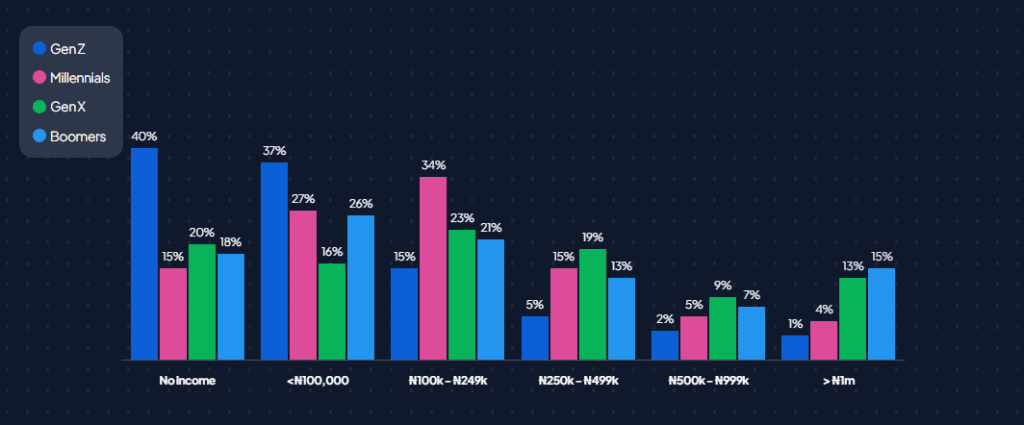
Gen Z Nigerians are the most likely to report having no monthly income or earning below NGN 100 K (~USD 70.00), reflecting their early position in the labour market and unstable employment conditions. Millennials show a more even income distribution, while Gen X and baby boomers are the most likely to appear in higher income brackets.
The generational divide extends to financial security. Older adults are significantly more likely to have emergency savings, with Gen X and boomers reporting the highest rates. Gen Z are the least financially protected, with only a small share holding any emergency funds. Overall, six in ten Nigerians have no funds set aside for unexpected expenses like medical bills or job loss.
Piggyvest, Nigeria’s foremost online savings and investment platform, says it arrived at the findings by deploying 90 data collectors across all six geopolitical zones in Nigeria to speak with 26,000+ Nigerians of different ages, genders, and income brackets about income, spending, debt, and savings. The company’s latest report is its biggest and most comprehensive study yet.
Nearly three in five Nigerians report having no monthly income or earning below NGN 100 K, the report finds, with the share of those earning nothing holding steady at 28 percent for the second consecutive year. While nominal incomes have risen in some brackets, purchasing power has not kept pace. Inflation remains elevated, and the number of poor Nigerians rose from 81 million in 2019 to 139 million by October 2025, according to World Bank data.
Savings habits have declined sharply. The share of Nigerians saving monthly fell from 64 percent in 2023 to 40 percent in 2025, while those who do not save more than doubled to 53 percent. Among those who do not save, 57 percent say they simply do not earn enough.
Family obligations compound the pressure. More than half of income earners provide financial support to extended family members, a burden carried most heavily by middle and oldest children.
Only 7 percent of Nigerians report feeling confident and ahead in their financial goals. More than one in three feel far behind or stuck. The gap between macroeconomic indicators and household reality remains wide. While headline inflation has slowed, prices remain significantly above pre-reform levels, and incomes have failed to keep up.