Zipline’s African Drone Network Finds Gains Beyond Delivering Medical Supplies
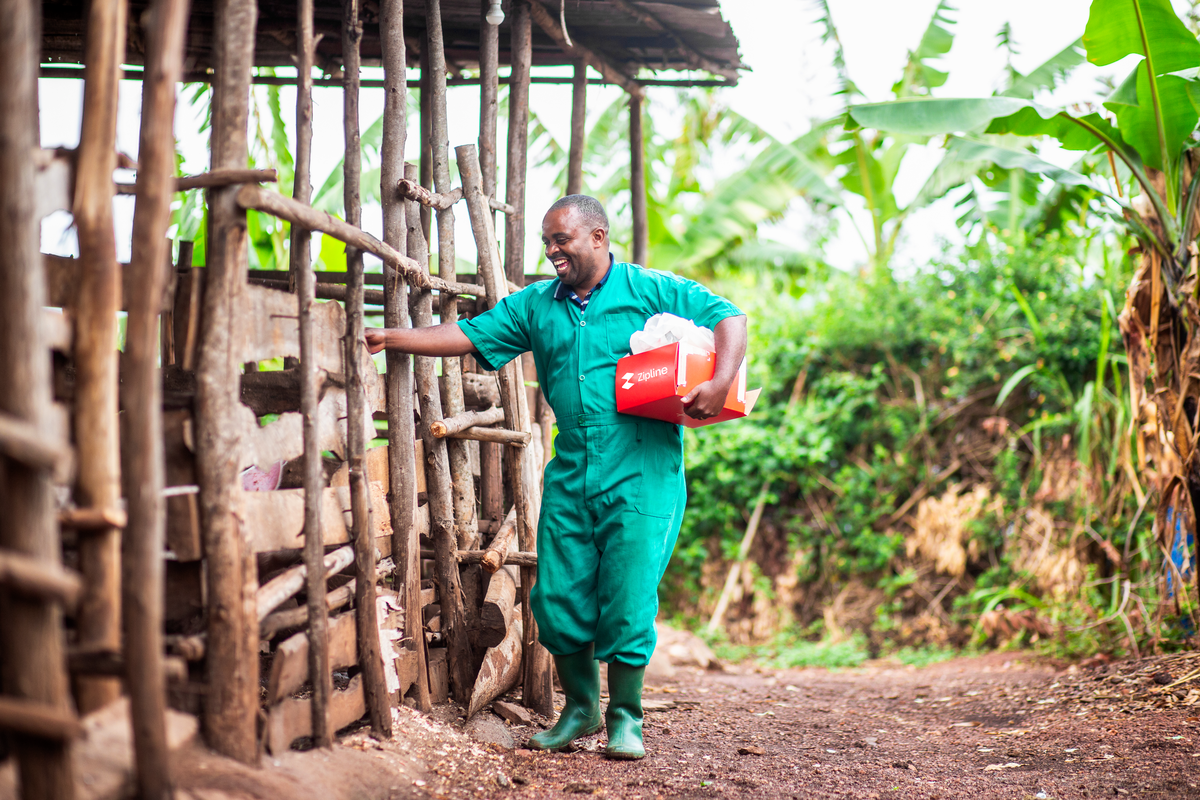
Zipline’s rise in Africa began with the promise of delivering blood and vaccines to remote clinics faster than any road could manage. Nearly a decade later, new peer-reviewed research shows the drones are doing far more than restock medical fridges.
Drone delivery networks operated by Zipline in Africa are linked to lower child mortality, higher farmer incomes and stronger local economic activity, according to three new studies examining operations in Rwanda and Ghana.
In a set of findings released on Wednesday, the autonomous logistics company documented that the same infrastructure built to bypass broken supply chains is now generating measurable returns in farming productivity, child nutrition, and household wealth.
One study, published in Frontiers in Veterinary Science, evaluated a programme in rural Rwanda that used drone-delivered, temperature-controlled pig semen combined with community training. The model increased farmers’ annual income by 17%, generating a 68% return on investment for smallholder pig producers, Zipline said.
Success rates for artificial insemination rose from 48.8% to 74.8% after drone logistics were introduced, the company reported, citing research data.







A separate study, focused on severe acute malnutrition, compared Zipline-served and non-served health facilities in Rwanda over five years. At sites where ready-to-use therapeutic food was delivered by drone, in‑hospital childhood deaths from severe malnutrition fell 22%, the findings show. Visits for severe anaemia in young children dropped 46%.
“The protocol for treating malnutrition has not changed. What changed was whether supplies were there when clinicians needed them,” said Pedro Kremer, Zipline’s head of impact and research. “That is the variable these studies are measuring.”
Another piece of evidence came from a third study examining Zipline’s GH3 distribution centre in northern Ghana. Researchers combined a household survey with satellite analysis of nighttime light intensity, a recognised proxy for local economic activity, and benchmarked the area against 82 comparable locations across the country.
It was found that households within two kilometres of the Zipline hub earned an additional USD 850.00 to USD 1.2 K per year. Liquid asset ownership fell about 27% with every additional 1.5 km from the hub, and improvements in drinking‑water access followed the same proximity pattern. Furthermore, nighttime light intensity near the hub was “significantly higher” than at the 82 comparable locations.
The results come as Zipline accelerates its buildout across the continent. In Nigeria, the company announced plans last month to grow from three distribution centres to 15 by 2028, potentially giving nearly 100 million people faster access to medical supplies. Rwanda is adding an urban delivery system, Platform 2, in Kigali, while Ghana, Kenya and Côte d’Ivoire continue to expand.
“This research shows what communities and governments across Africa have seen firsthand: when essential supplies reliably reach the people who need them, outcomes change,” said Caitlin Burton, Zipline’s chief executive for Africa and emerging markets.
However, an on-and-off debate over cost remains a sticky point. Ghana’s Health Minister Kwabena Mintah Akandoh told a press conference in Accra in December that an audit of Zipline’s contract revealed that only 12% of areas served qualified as “hard-to-reach” and only 4% of deliveries could be classified as emergencies.
The minister said the government owes Zipline GHC 174 M (USD 12.5 M) and has raised questions about whether high operational costs are justified.
Majority Leader Mahama Ayariga called the contract a “drain on national resources” and argued the health service should have developed its own drone capacity. Opposition has also come from Parliament’s Health Committee chairman, Dr. Mark Kurt Nawaane, who described Zipline as “a solution to a problem the country does not have” and said the real challenge is a shortage of voluntary blood donors, not transportation.
The company maintains that it runs one of the highest-impact, most cost-effective interventions ever studied, across multiple domains, including immunisations, maternal mortality, and nutrition. The Country Manager of Zipline Ghana, Daniel Kwaku Merki, pushed back against claims that the company’s drone delivery service is being misused to transport non-essential items, insisting that such non-medical deliveries are “extremely rare.”
Zipline’s CEO for Africa and emerging markets, said in Wednesday’s press release that the research shows measurable results across multiple sectors. “Zipline began by improving access to critical health supplies. Today, the same infrastructure is strengthening nutrition systems, agricultural productivity and local economies,” she said.