The Startup That Built Its Name On Gig Drivers Is Now Betting On A Future Without Drivers At All
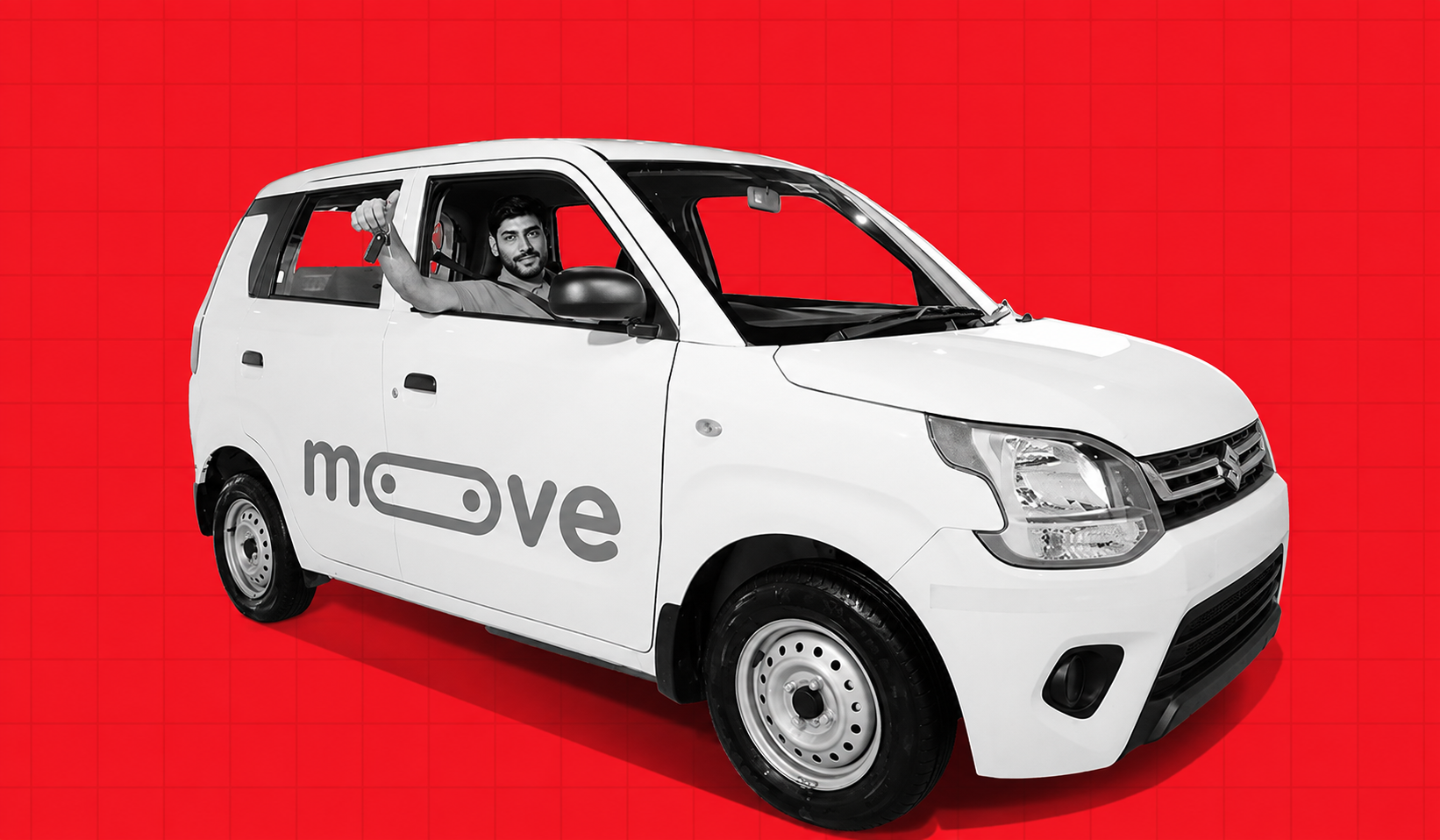
When Moove launched in Lagos in 2020, its simple pitch was to help Nigerian drivers get cars. The company would finance vehicles, drivers would repay from their Uber earnings, and eventually they’d own the metal.
Six years and 42,000 vehicles later, Moove is Africa’s most valuable mobility startup at USD 2.1 B. But its latest USD 250 M Series C round, led by Abu Dhabi’s Mubadala, has Africa’s newest unicorn shaping up to escape arguably the very thing that made Moove: drivers.
The company’s autonomous vehicle push, which began in early 2023, is built on a brutally shrewd observation that nobody in the robotaxi ecosystem wants to own the cars. AV developers like Waymo are software companies, and marketplaces like Uber are matchmakers.
Neither wants to deal with charging, cleaning, maintenance, or lost property, Moove’s co-founder, Ladi Delano, pointed out, resolving to “create a product where we own, operate, and orchestrate autonomous vehicles”.
Moove is now Waymo’s fleet operations partner in Phoenix, Miami, and soon London. It plans to grow its autonomous vehicle workforce from 150 to 500 people by year-end and is developing robotics-enabled depots called “Nests” to automate charging and maintenance around the clock. The company claims it already owns robotaxis from an undisclosed AV developer and ultimately wants to own “hundreds of thousands of vehicles”.
The irony is evident in Lagos, Moove’s original market, where the “drive-to-own” model that built the company has become a source of intense conflict. Last year, the Amalgamated Union of App-Based Transporters of Nigeria threatened indefinite industrial action against Uber and Moove over alleged exploitative practices.
Drivers have accused the company of seizing vehicles and manipulating repayment records. The Nigeria Labour Congress has weighed in, planning what it called the “mother of all protests”. Uber has publicly distanced itself, saying the decisions rest with Moove alone.
The autonomous vehicle play notably sidesteps all of this. Moove’s hard-won operational discipline, learned in the chaos of Lagos traffic, currency volatility, and drivers with no credit history, is exactly what robotaxi rollouts demand. But the company that emerged from those streets is now deploying its capital almost entirely outside Africa, targeting the US, Europe, and Asia.
Moove insists its traditional mobility business is on track to reach full profitability this year. It generates USD 420 M in annual recurring revenue and operates across 29 cities in 13 countries. But the company is betting that the real prize, and the real capital, is elsewhere. The Series C funds will scale autonomous fleet ownership and “Nest” infrastructure globally, not expand car financing for gig workers in Nigeria and similar markets.
“Every major technology revolution becomes an infrastructure race,” Delano said in a statement. “Autonomy requires fleets, charging, maintenance, data systems and 24/7 operations in every city,” which are only feasible in markets outside Africa at present.
Mubadala’s Ali Eid AlMheiri put it more bluntly: “As autonomous mobility moves from innovation to scaled deployment, the infrastructure supporting it becomes increasingly important”.
Moove would now look to double down on applying the lessons learned in African markets to a more lucrative geography, gradually leaving behind the very drivers who taught them. The company that built its reputation on putting drivers behind the wheel is now betting that the future of mobility has no drivers at all.