The USD 8 M Bet That Africa Can Win The Space Data Centre Race Without Launching A Single Satellite
Rama Afullo pitched orbital data centres inside Google and SpaceX. Both said no. So he raised USD 8 M to build what they wouldn’t.
Satlyt, his Sunnyvale and Nairobi-based startup, closed a seed round this week led by Houston’s Non Sibi Ventures, with participation from TLCOM, Antler, Launch Africa Ventures, and others. The company’s software launched Thursday on a SpaceX rocket, riding alongside Google’s first Project Suncatcher prototype.
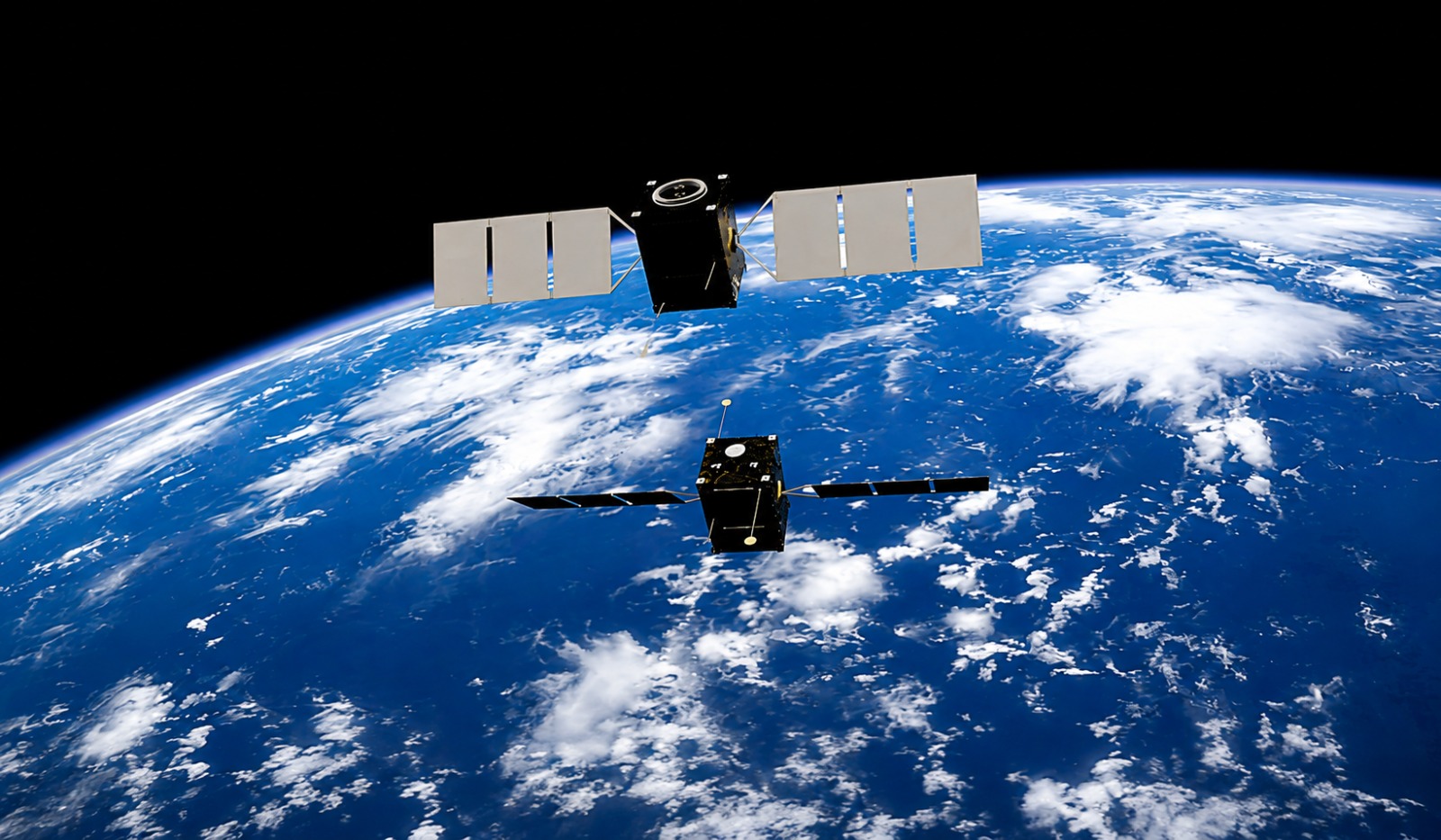
Most satellites already carry unused computing power. Satlyt’s software turns that idle hardware into a distributed AI network. Instead of building new spacecraft, the company makes existing ones smarter. Afullo compares it to VMware or Snowflake, a software layer that abstracts away the infrastructure. “If SpaceX is the iPhone, we’ll build Android,” he told TechCrunch.
This matters because the orbital data centre race is heating up. SpaceX has pitched investors on up to 1 million AI satellites that could generate trillions in revenue. Google is testing its own hardware. But building data centres in orbit remains brutally expensive.
A 1-gigawatt orbital facility would cost roughly USD 170 B, more than three times a comparable ground-based facility. Space compute currently runs at about four times terrestrial costs. Bain & Company estimates orbital data centres won’t reach commercial scale until the early 2030s and will capture only a modest share of global compute by 2040.
Satlyt sidesteps that capital trap. By focusing on software for satellites already in orbit, the company avoids launch costs, radiation hardening, and thermal management challenges that plague hardware-first approaches. Its earlier deployment of Google’s Gemma model on a Momentus spacecraft cut data transmission sizes by more than 60%, a direct cost saving for operators paying for downlink bandwidth.

Satlyt team: Leina Moli (Senior Space Software Engineer), Rama Afullo (Founder & CEO), Junn Wangari (Senior Space Systems Engineer), and Nelson Psenjen (CTO)
Satlyt’s leadership team is entirely Kenyan-American, with engineering concentrated in Nairobi. The company has signed memoranda with the Kenya Space Agency and Angola’s GGPEN to deploy AI-driven Earth observation for agriculture, climate monitoring, and disaster response. For a continent that spends billions importing satellite data it cannot process locally, onboard AI offers a path to sovereignty over its own geospatial intelligence.
The risks are real. Satlyt has not yet demonstrated its most ambitious claim, a cloud network spanning multiple satellites. Besides, high-performance GPUs remain scarce in orbit, and the economics of orbital compute may never favour generalised workloads. But Satlyt says it’s going beyond compute to sell efficiency to operators who already own the hardware.
Afullo wants Satlyt’s software on 20% of satellites by 2030. That is an ambitious target. But if the satellite industry follows the trajectory of terrestrial cloud computing, winning will likely be less about building the biggest data centres and more about making the existing ones work harder.
For a continent largely absent from the first space race, that is a more plausible route to relevance than waiting for Starship to deliver a hyperscaler to low Earth orbit.