AFD Commits Additional EUR 3 M Into ADFI To Boost Digital Financial Inclusion In Africa

By Staff Reporter  |  April 11, 2025

The Agence Française de Développement (AFD) has committed an additional EUR 3 M to the Africa Digital Financial Inclusion Facility (ADFI) in a move that signals France’s continued support for expanding access to digital financial services across Africa.

This new contribution brings AFD’s total support for ADFI to over EUR 5 M. The funds aim to support innovative, technology-driven financial tools that can reach people typically excluded from traditional banking. These include services such as digital credit, savings, insurance, and mobile payments—tools that are increasingly essential for economic resilience and growth across the continent.

The funding will support ADFI’s efforts to develop and scale digital solutions that connect underserved populations—particularly women, youth, and small businesses—with credit, insurance, and other essential financial tools.

Despite progress in digital infrastructure and mobile money penetration, nearly half of Africa’s adult population remains excluded from the formal financial system. ADFI targets this gap through strategic investments in digital public infrastructure, policy and regulatory frameworks, and product innovation, with a cross-cutting focus on gender inclusion and institutional capacity building.

Launched in 2019, ADFI was established by the African Development Bank in partnership with AFD, the Bill & Melinda Gates Foundation, and Luxembourg’s Ministry of Finance.

Structured as a blended finance facility composed of a multi-donor Special Fund, ADFI is comprised of a USD 100 M target envelope and USD 300 M in partner grant money and debt-funding from the African Development Bank.

Since its inception, the initiative has grown into a multilateral platform, later joined by France’s Ministry for the Economy and Finance, the Women’s Enterprise Finance Initiative (We-Fi), and India’s Ministry of Finance.

Together, these partners are working to make digital financial services more accessible, secure, and affordable, particularly in rural and climate-vulnerable areas that traditional banking systems have struggled to reach.

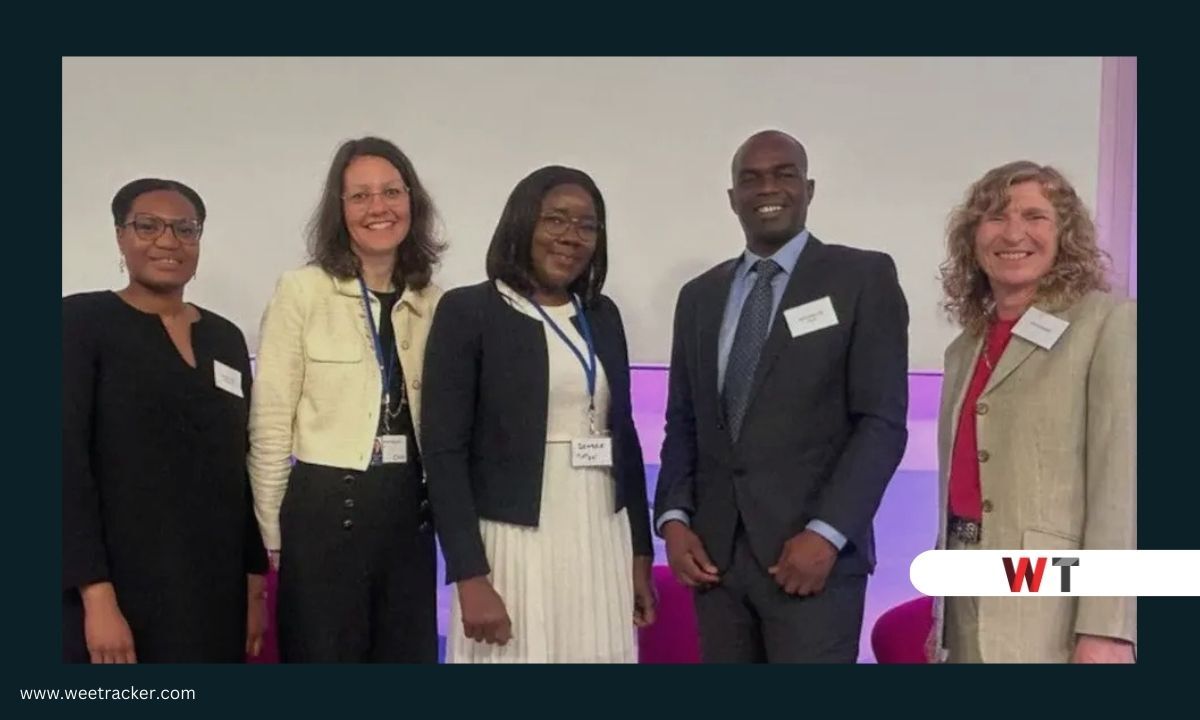
AFD expects its contribution to help scale projects that have demonstrated early success, with a focus on replicability across countries and regions. “Developing digital financial services is a key pathway to reach financially excluded populations in Africa,” said Audrey Brule-Françoise, Head of AFD’s Financial Systems Division. “Through our continued collaboration within ADFI, we aim to promote access to digital financial services that are tailored to diverse needs and delivered in a responsible manner.”

The African Development Bank sees this funding as a timely boost. “Digital financial solutions are key to improving the quality of life of people in Africa and reducing the gender access to finance gap,” said Mohamadou Ba, Manager of the Bank’s Financial Intermediation and Inclusion Division. He added that the Bank plans to expand ADFI’s reach and deepen its impact, especially in areas most affected by poverty and climate vulnerability.

AFD’s involvement in ADFI is part of a broader commitment to international solidarity and sustainable development. With projects in over 115 countries, AFD plans to continue supporting public institutions, NGOs, and private actors working to reduce inequality and improve access to opportunity. Its support for financial inclusion is aligned with its strategic focus on social equity and climate resilience.

As Africa’s digital transformation, AFD and its partners aim to accelerate the progression by closing the inclusion gap, unlocking potential, and making financial systems more accessible, equitable, and future-ready.

2025 African Startup Review: Unpacking Key Trends and Events

2025 African Startup Review: Unpacking The Business Stories That Defined the Year

By Emmanuel Oyedeji  |  December 19, 2025

As the third week of our 2025 retrospective unfolds, the narrative shifts from Shutdowns and Controversies of the startup world to the heavier forces reshaping Africa’s economy at scale. This week, infrastructure, capital markets, global trade, and industrial power take center stage.

From landmark IPOs in Morocco to the impact of US tariffs on Africa’s trade economy, and from Big Tech’s deepening infrastructure bets to Chinese manufacturers accelerating into Africa, Week 3 tries to capture moments in the continent’s business story. These were signals of how Africa is being rewired into global supply chains, media empires, energy systems, and trade corridors.

These are the developments that quietly but decisively shaped the continent’s business landscape.

1. Cash Plus Becomes Morocco’s First Listed Fintech

In a historic landmark for North Africa, Moroccan fintech Cash Plus completed its IPO on the Casablanca Stock Exchange with a valuation of USD 550 M. The offering raised USD 82.5 M in a mixed capital raise and partial private equity exit, making it the first listed fintech in the region. Mediterrania Capital Partners sold down its stake while founding families retained control under a seven-year lock-up. With 5,000 physical branches and 2 million app users, Cash Plus positioned itself as a profitable, dividend-paying fintech, resetting expectations for North African exits.

2. Nigeria’s Taxation: The “Small vs. Large” Reckoning

Nigeria confirmed that its most comprehensive tax overhaul in decades would take effect from January 2026, following the passage of multiple tax and finance bills in 2024. Called the 2025 Tax Reform Act, it introduces a simplified but aggressive tiered system. The reforms broaden VAT coverage, tighten enforcement, and formalize the taxation of digital services, with exemptions for individuals earning below roughly NGN 800 K (USD 500) annually. Meanwhile, companies under NGN 100 M turnover are largely exempt from CIT and the new 4% Development Levy, while larger corporations will feel the squeeze.

With inflation hovering above 30% for much of 2025, social media campaigns against the tax have surged. Surveys show that only 18% of Nigerians trust the government to use tax revenue effectively, underscoring the deep legitimacy crisis surrounding the reform.

3. OmniRetail Acquires Traction Apps to Build a B2B FMCG Fintech Giant

OmniRetail acquired Nigerian payment startup Traction Apps in a deal backed by Ventures Platform, integrating Traction’s POS and merchant tools into OmniPay. The combined platform now serves 180,000 retailers, processes over NGN 2 T annually, and facilitates more than NGN 200 B in loans using transaction-driven credit scoring. The acquisition strengthened OmniRetail’s push to dominate Africa’s informal FMCG supply chain by merging commerce, payments, and credit under one infrastructure layer.

4. Canal+ Completes USD 3 B Takeover of MultiChoice

In September 2025, the long-teased marriage between French media giant Canal+ and MultiChoice became official. Canal+ finalized the USD 3 B deal, securing over 94% ownership of MultiChoice after regulatory clearance across multiple jurisdictions. The deal ended MultiChoice’s JSE listing, triggered leadership changes, and consolidated more than 40 million subscribers across 70 countries under one media group. It marked Africa’s largest media acquisition and signaled a shift in control of sports rights, content production, and pay-TV economics to global conglomerates.

5. Optasia Lists on the JSE at a USD 1.3 B Valuation

AI-driven credit platform Optasia debuted on the Johannesburg Stock Exchange in October 2025, raising ZAR 1.3 B and achieving a valuation of roughly USD 1.3 B. Operating across 40 markets through telco partnerships with MTN and Orange, Optasia used proprietary AI to extend digital credit to unbanked users. The IPO positioned Johannesburg as a viable public-market exit for pan-African fintechs as private funding tightened.

6. Microsoft Commits USD 300 M to South Africa’s Cloud and AI Stack

Microsoft announced a USD 300 M investment to expand South Africa’s cloud and AI infrastructure by 2027, adding to the USD 1.1 B that has been deployed since 2022. The investment targeted Azure capacity, data centers, and AI tooling, alongside funding for 50,000 technical certifications. The move reinforced South Africa’s role as a continental digital hub amid rising global demand for localized AI infrastructure.

7. Dangote Refinery Becomes Nigeria’s Biggest Industrial Flashpoint

Africa’s USD 20 B Dangote Refinery descended into crisis months after operations began, as disputes over fuel distribution, unionization, crude supply, and pricing spiraled into nationwide strikes. The refinery’s plan to deploy 10,000 CNG trucks to bypass fuel marketers triggered labor backlash, leading to worker dismissals, shutdowns of oil-sector regulators, and power generation losses exceeding 1,000 megawatts. Despite nearing 650,000 bpd capacity and sourcing up to 60% of its crude from the US, the refinery exposed how a single private asset had become systemically and politically indispensable.

8. Shoprite’s Decline Becomes Visible on the Ground

Once the undisputed king of African retail, empty shelves, store closures, and shrinking footprints across Nigerian cities made Shoprite’s struggles impossible to ignore in 2025. After its South African parent exited Nigeria in 2021, the local operator was forced into a restructuring, abandoning large-format stores and imported supply chains in favor of smaller outlets and 80% local sourcing. Once Africa’s retail expansion gold standard, Shoprite became a case study in how inflation, FX volatility, and changing consumer behavior can hollow out even the strongest brands. It is now attempting to “re-brand” its way out of a slump, but it feels like a zombie shuffle to some analysts.

9. Walmart Steps Out From Behind Massmart in South Africa

Walmart confirmed plans to open its first Walmart-branded stores in South Africa, ending years of operating quietly through Massmart. After acquiring full control of Massmart for USD 366 M and delisting it in 2022, Walmart positioned the new rollout as a test of whether its low-price global model can compete against entrenched local giants like Shoprite, Pick n Pay, and Woolworths in one of Africa’s toughest retail markets.

10. Chinese EV Makers Take Early Lead in Africa’s Electric Transition

2025 is officially the year Chinese EV manufacturers “arrived” in Africa with a bang. Chinese manufacturers, including BYD, Chery, BAIC, SAIC (MG), and GAC, accelerated their African expansion in 2025, announcing dealerships, assembly plants, and fleet rollouts across South Africa, Kenya, Egypt, and Morocco. BAIC is committed to producing 50,000 vehicles annually in Egypt, BYD expanded dealer networks, and Chinese-backed startups are electrifying buses, taxis, motorcycles, and tuk-tuks. With US and EU tariffs blocking Western markets, Africa emerged as China’s fastest-growing EV frontier.

11. Tesla Chooses Morocco Over South Africa for Its African Entry

Tesla incorporated Tesla Morocco in May 2025 and began recruiting for Casablanca-based operations, bypassing Elon Musk’s home country. Morocco’s EV-friendly policies, VAT exemptions, nearly 1,000 public chargers, proximity to Europe, and strong auto manufacturing base outweighed South Africa’s larger car market but weaker EV incentives and power reliability. The decision cemented Morocco’s rise as Africa’s EV manufacturing hub.

12. Morocco Accelerates Infrastructure Ahead of AFCON and the 2030 World Cup

Morocco officially entered “construction overdrive” as it gears up to host AFCON 2025 and co-host the 2030 World Cup. Morocco launched a USD 15 B infrastructure drive tied to hosting both competitions. Investments spanned stadiums, 60 training centers, airport expansions worth USD 2.8 B, high-speed rail extensions costing USD 9.6 B, road upgrades, and port expansions. The strategy aimed to convert football into a long-term tourism, logistics, and employment engine, targeting 26 million visitors annually by 2030.

13. Starlink and Airtel Bring Direct-to-Cell Satellite Coverage to Africa

Starlink partnered with Airtel Africa to deploy direct-to-cell satellite connectivity across all 14 Airtel markets, reaching 174 million subscribers. The service allows standard smartphones to connect directly to satellites without towers, with commercial rollout targeted for 2026. The partnership marked Africa’s most ambitious attempt yet to bypass traditional telecom infrastructure and close rural connectivity gaps.

14. Google Deepens Its Africa Commitment

Beyond Microsoft’s infrastructure bet, Google committed USD 37 M to AI development in Africa, funding food security tools, AI education across four countries, African language models, and university research hubs. The investments signaled a shift from Africa as a technology consumer to an emerging contributor to global AI systems.

15. Meta Activates the 2Africa Subsea Cable

Meta and partners activated the 45,000-kilometer 2Africa subsea cable in November 2025, delivering more capacity than all existing African cables combined. Connecting 33 countries, the system introduced up to 180 Tbps of capacity on some segments and is projected to add USD 36.9 B to Africa’s GDP by enabling cheaper bandwidth, cloud services, 5G, and AI workloads.

16. China–Africa Trade Surges as US Tariffs Bite

In April 2025, the return of reciprocal trade tensions saw the US administration slap up to a 30% tariff on countries across the world. Africa wasn’t spared. Affected by the US tariff policies, China increased efforts in Africa, with exports to Africa jumping 25% year-on-year to USD 122 B in the first seven months of 2025, putting total trade on track to exceed USD 200 B. As US tariffs tightened, AGOA access also narrowed; meanwhile, China removed duties on imports from African countries, deepening trade ties and positioning Africa as China’s fastest-growing export destination.

The third week of our 2025 review captures a pivotal shift where infrastructure and industrial scale take center stage. While the earlier parts focused on the reckoning with governance and integrity, this part focuses on the regional economic integration and digital expansion. Whether through landmark IPOs on the Casablanca Stock Exchange or the activation of the world-record-breaking 2Africa subsea cable, the continent is building the physical and digital rails necessary to support its next decade of growth.

PayPal’s Push For African Markets It Once Shunned Reopens Old Wounds

By Henry Nzekwe  |  December 19, 2025

Kenneth Nwakanma, a Nigerian tech entrepreneur doing freelance gigs for foreign clients at the time, received the email from PayPal in 2020. His account, which held USD 15 K from freelance work for high-net-worth clients abroad, was suddenly restricted.

After months of appeals, PayPal’s final decision arrived: the account was permanently closed. The funds, he was told, would be held for 180 days and then used “to solve the harm against PayPal.” When the waiting period ended, his balance was USD 45.00.

“I broke down,” Nwakanma shared. “That money was going to solve three major issues: relocating to a new apartment, paying for my mum’s medical bills, and a certification I was chasing. So if there’s anyone who understands PayPal loss, it’s me.”

Nwakanma’s story is a troubling entry in a long, bitter ledger of grievances between the global payments giant and African users. For over a decade, residents in key markets like Nigeria—Africa’s most populous nation—were largely barred from receiving money through the platform, relegated to a “send-only” status that crippled freelancers and stifled online businesses.

Now, PayPal is making a concerted, expensive push to capture the continent it once sidelined. In September 2025, the company announced a USD 100 M commitment to invest in and acquire startups in Africa and the Middle East. More strategically, PayPal World—a new global digital wallet platform enabling cross-border interoperability—is slated for an African launch in 2026, according to Otto Williams, PayPal’s Head of Middle East and Africa.

The initiative promises seamless payments, allowing users of local wallets to shop overseas via a PayPal button without needing a traditional PayPal account. It represents a significant technical and philosophical pivot. But for many African professionals, the ambitious overture feels profoundly belated, reopening old wounds of exclusion and financial loss.

“PayPal wants to quietly sneak back into Africa and Nigeria like nothing happened,” said Mayowa, a Nigerian YouTuber who lost nearly USD 1 K in ad revenue when his account was abruptly closed in 2022. “I would rather stay jobless than work and have PayPal eventually swallow the money. You can’t treat us like garbage and then walk back into our lives as if nothing happened.”

***

The roots of this distrust stretch back years. In 2011, Nigerian writer Mfonobong Nsehe, then a contributor to Forbes, detailed how his PayPal account was frozen when he tried to pay for a domain name from Lagos. He had opened the account while studying in Switzerland.

“PayPal replied to me, saying that they suspected illegal activity was going on with my account since it was being accessed from Nigeria,” Nsehe wrote. Despite providing his passport and utility bills, his funds remained locked, with PayPal stating it did “not accept Nigerian residents into its network.”

This policy is widely attributed to concerns over fraud risk, an association crystallised by the infamous “Nigerian prince” email scam trope. PayPal generally refrains from commenting on specifics around this issue, often choosing to blame it on the “complexities of global expansion” while talking up efforts to extend its services to neglected parts. Besides fraud fears, speculation also points to regulatory and security risk and uncertainties over exchange controls.

The impact, however, is felt by legitimate workers. Stella Inabo, a freelance content writer, lamented in a 2020 essay how the exclusion cost her opportunities. “I stopped laughing when I realised the [Nigerian Prince] joke was on me. And any other Nigerian freelancer that wants to open a PayPal account,” she wrote.

“I had just confirmed my worst fear. Nigeria was not on the list of countries eligible to receive payments through Paypal. I could not help but reflect on the losses incurred because of my nationality. A 22-year-old freelance content writer in Brazil would not need to spend hours wondering how to get paid through PayPal or Stripe. There would be no Google search results confirming her fears that yes, she can’t receive money for her hard work.”

Notably, Rukky Kofi, one of many Nigerians that have lost opportunities because of PayPal’s strict rules, launched a change.org petition in 2014 to “Bring PayPal to Nigeria.”

“I applied to a job online that would allow me earn a full-time income by Nigerian standards (about USD 1 K a month). I qualified for this job after a rigorous screening process, but when it was time to setup my work info, I found out that the company makes payments only via PayPal..,” Kofi shared.

“The internet presents willing Nigerians with opportunity. The opportunity to earn their living legitimately online. However, PayPal, the ‘industry standard’ for online payments, makes this opportunity inaccessible to Nigerians in most cases.”

The frustration was not confined to Nigeria. In South Africa, users have long complained about unfavourable exchange rates and high fees when integrating PayPal with local banks. “It’s all South African banks that are part of the PayPal pact,” wrote commentator Freddie McClure in 2024, detailing stories of users losing significant percentages of their money to fees and conversion costs.

***

PayPal’s tentative steps toward inclusion often felt incomplete. A 2014 partnership with Nigeria’s First Bank only enabled outbound payments, not inflows. The 2021 collaboration with African fintech unicorn Flutterwave was a breakthrough, allowing global PayPal users to pay merchants in select African countries. Yet it was a merchant-centric solution, not the peer-to-peer functionality individuals craved, and came with transaction fees.

During PayPal’s absence, Africa’s own fintech ecosystem erupted. Startups like Flutterwave and Paystack in Nigeria, and a host of others, built robust infrastructure for local and cross-border payments, solving the very problems PayPal’s restrictions had created.

Oo Nwoye, a Nigerian tech industry stalwart, offers a counterintuitive perspective. He believes PayPal’s historical reluctance was a catalyst for this local innovation. “I doubt Shola would have had the confidence to start Paystack then if there was PayPal,” Nwoye opined, referring to Paystack co-founder Shola Akinlade. “And without Paystack launching then, no Flutterwave would have come soon after… So THANK YOU PayPal for NOT coming to Nigeria then. And I really mean it.”

Today, PayPal is signalling a change in posture. The new investment fund is aimed at taking minority stakes and funding acquisitions. Its planned PayPal World platform seeks to partner with, rather than compete directly against, local wallet providers, leveraging networks like M-Pesa in Kenya.

“We’re looking to enable as many markets as possible on the continent through partnerships,” Otto Williams said at an industry event in December 2025. He highlighted that announced partners in India, China, and Brazil already represent a pool of two billion wallet users.

Africa has the world’s youngest population, rapidly increasing internet penetration, and a booming digital economy. A 2025 report by McKinsey & Company estimates that Africa’s fintech market revenue could grow at double the global rate. For PayPal, capturing a slice of this future is imperative.

But the road back is paved with scepticism. Social media reactions to the expansion news have been fiercely critical. “PayPal thinks they’re smart reopening Nigeria. Nigerians survived without them,” wrote one user on X. Another stated, “If Nigerians have any sense of self-worth, they should actually boycott PayPal.”

The sentiment underscores the challenge ahead. PayPal is not entering a vacuum, but a sophisticated, competitive market dominated by homegrown players who earned trust by filling the void PayPal left.

For entrepreneurs like Ayoola Daniel, an SEO expert, the scars remain. “PayPal suspended my account when I had a chance at making USD 5 K a month from e-commerce,” he shared. “They asked me to refund clients’ money, and I couldn’t fulfil over 50 orders. There was nothing else I could do at that time in 2021. Just regrets and insane hatred for PayPal.”

PayPal’s new Africa play is a story of corporate strategy reckoning with human memory, a bet that the utility of a globally connected wallet will eventually outweigh the enduring resentment of those who were locked out for years.

Its potential users, however, are remembering a past where that door was firmly shut, sometimes locking their funds inside. The success of PayPal’s long-delayed embrace of Africa will hinge on which of these two forces proves stronger.

Top 10 Africa Countries Poised For EV Investment and Evolution

Top 10 Africa Countries Poised For EV Investment and Evolution

By Emmanuel Oyedeji  |  December 17, 2025

While often overlooked in global EV outlooks, the African continent is rapidly positioning itself as a key player, both as a burgeoning market for electric mobility and as a source of critical battery minerals.

With volatile global oil prices and aggressive global decarbonization goals, several African nations are implementing proactive policy changes and are emerging as a compelling investment frontier. At the same time, rising foreign and local middle-class demand is driving industrialisation in North and Southern Africa, while low-cost, high-volume mobility solutions are reshaping transport elsewhere on the continent.

According to Mordor Intelligence, the African EV market size is projected to soar from an estimated USD 0.45 B in 2025 to over USD 4.2 B by 2030. That represents a 56.3% compound annual growth rate. This growth is anchored in two fundamentals: industrial capacity and mineral wealth. Together, they form a compelling, dual-track investment thesis.

Below are ten African countries with the strongest potential for electric vehicle investment and evolution.

1. South Africa: The Manufacturing Gateway

As the most industrialised economy on the continent and home to a long-established automotive manufacturing sector, South Africa is a natural hub for EV development. Meanwhile, its highly developed automotive sector, which contributes over 7% to its GDP, is undergoing a crucial pivot to support EV adoption.

  • Key Potential: The government has introduced a landmark incentive: a 150% tax deduction on qualifying investments in electric and hydrogen-powered vehicle production assets. This incentive, signed into law and effective from March 2026, aims to unlock billions in private funding by subsidising capital expenditures for new buildings, plants, and machinery.
  • Investment Angle: Focus on local assembly, battery manufacturing, and advanced component supply to serve both domestic and global export markets (especially the EU and UK).

2. Morocco: The Production Pioneer

Morocco is arguably the most advanced country in terms of its pivot to EV manufacturing, positioning itself as a gateway to the European market. It has successfully courted firms like BYD, Tesla, Stellantis, and Gotion High-Tech Co., which committed a USD 5.6 B investment for a battery Gigafactory with an annual capacity of 100 Gigawatts (GWh).

  • Key Potential: With significant government support, Morocco is attracting major global automakers and suppliers. It has a robust industrial base and a strategic goal to produce up to 100,000 electric vehicles by 2025, alongside the establishment of battery factories.
  • Investment Angle: Manufacturing and export-focused assembly, leveraging its proximity to Europe and its existing automotive ecosystem.

3. Egypt: The North African Nexus

Further east, Egypt, with its large population and a government keen on reducing carbon emissions and fuel subsidies, is aggressively pushing for electric mobility. The government has prioritised a rapid electrification effort of its public transportation to combat the intense air pollution in Cairo and Alexandria.

  • Key Potential: Strategic partnerships with Chinese firms for electric bus production, a financing program to help consumers access EVs, a solid industrial base, and plans for significant infrastructure development. Egypt aims to achieve a 65% industrialisation share in its EV manufacturing value chain by 2030.
  • Investment Angle: Electrification of public transit (buses and taxis) and the rollout of charging infrastructure across its major urban centres.

4. Kenya: The E-Motorcycle and E-Tuk-Tuk Leader

Kenya’s EV potential is defined by its innovative, homegrown ecosystem focused on two- and three-wheelers, which are the backbone of its public and commercial transport. This segment is attracting major investor attention, with two-wheeler startups like ARC Ride, BasiGo, and Enzi Mobility attracting significant foreign direct investment.

  • Key Potential: Aggressive policy targets, including aiming for 5% of all newly registered vehicles to be electric by 2025. Furthermore, the National Building Code 2024 now mandates that all new commercial buildings must reserve at least 5% of parking spaces for EV charging infrastructure, creating a guaranteed baseline for investment. There are also reduced import duties on EVs and a focus on local assembly and battery-swapping models.
  • Investment Angle: Battery swapping technology and local assembly of electric motorcycles (Boda-Bodas) and tuk-tuks, driven by numerous local startups.

5. Rwanda: The Policy-Driven Innovator

Despite its size, Rwanda is punching above its weight by creating one of the most favourable policy environments for e-mobility in Africa.

  • Key Potential: Under the National Strategy for Transformation (NST2), the government offers comprehensive tax breaks, waiving VAT, import, and excise duties on electric cars, spare parts, and charging equipment. It is a testing ground for innovative business models like ultra-fast charging hubs. For instance, Rwanda is the home of Ampersand, which recently opened its battery swap network to global manufacturers
  • Investment Angle: Logistics, fleet electrification, and the development of charging infrastructure and services in a supportive regulatory environment.

6. Nigeria: The West African Scale Giant

Nigeria is the newest heavyweight on this list, with a fast-growing adoption rate, especially in the e-motorcycle and e-tricycle segments. The recent passing of the Electric Vehicle Transition and Green Mobility Bill in late 2025 has moved the country from passive interest to aggressive industrialisation.

  • Key Potential: The 2025 Bill mandates that foreign automakers establish local assembly plants within three years and source at least 30% of components locally by 2030. With an estimated 15,000 to 20,000 EVs already on the road, Nigeria’s market is projected to grow at 6.8% annually through 2031, according to Climate Scorecard.
  • Investment Angle: Importation, distribution, and maintenance services for electric two- and three-wheelers, and investment in renewable-powered charging solutions.

7. Ethiopia: The Bold Policy Mover

Ethiopia has fundamentally reshaped its market with a single, aggressive policy move: banning the import of all non-electric internal combustion engine (ICE) vehicles. This policy has created an immediate demand for EVs, making it one of the continent’s fastest-growing EV markets.

  • Key Potential: This ban, driven by a need to cut costly fossil fuel imports and leverage its substantial hydroelectric power capacity, creates a guaranteed demand for EVs. This has had an immediate, dramatic effect, reportedly lifting electric vehicle registrations to above 60% of new sales by early 2025 per EV24.africa. The nation’s EV market is consequently projected to show the fastest growth in Africa at a 58.92% CAGR through 2030 per Mordor Intelligence.
  • Investment Angle: Immediate local manufacturing and assembly to meet the policy-driven demand, leveraging Ethiopia’s extensive, low-cost hydroelectric power capacity for operation.

The Mineral & Value-Chain Powerhouses

The next three countries are crucial not just for EV adoption but for their role in the global EV battery value chain. Investment here is focused on mineral processing and value addition.

8. 🇨🇩 Democratic Republic of Congo (DRC)

The DRC holds a strategic, non-negotiable position in the global EV transition.

  • Key Potential: The DRC possesses approximately 48% of the world’s proven cobalt reserves, according to the African Green Minerals Observatory. It accounts for 70% of global cobalt production and is a major copper producer—both essential battery components.
  • Investment Angle: Shifting from raw export to local processing and refining of Cobalt and Copper to create a complete regional battery value chain, moving beyond raw material export.

9. Zimbabwe

Zimbabwe is rapidly becoming a global player in a different critical mineral.

  • Key Potential: Zimbabwe is home to Africa’s largest known reserves of Lithium, a non-negotiable component for all current EV batteries. The government banned the export of raw Lithium ore in 2022 (S.I. 213 of 2022), compelling miners to invest in processing plants to produce higher-value Lithium concentrates domestically before export
  • Investment Angle: Financing and developing local processing plants to produce battery-grade Lithium carbonate and hydroxide, moving up the value chain from mining. Following the government’s directive to ban raw lithium ore exports.

10. Tanzania

Tanzania rounds out the list with significant potential in graphite, a key component for battery anodes.

  • Key Potential: The country holds major reserves of Graphite, which is used to manufacture the anode materials in lithium-ion batteries. It also has potential for other battery minerals. Meanwhile, the nation is also seeing a surge in electric e-bikes and tuk-tuks (3-wheelers).
  • Investment Angle: Graphite mining and processing, as well as the import and local assembly of two- and three-wheeled electric transport.

Bridging the Infrastructure Gap

Africa is rapidly positioning itself as a key player in the global EV transition, both as a source of critical battery minerals and as a fast-emerging market for electric mobility.

While the infrastructure and funding gap across the continent remains significant, it also represents one of the highest-return frontiers for early movers.

The truth is the continent continues to face real constraints: grid instability, high upfront vehicle costs, and limited access to financing. However, these challenges simultaneously present opportunities. These constraints create investment opportunities for decentralised, solar-powered charging infrastructure and battery-swapping networks that reduce reliance on unstable grids. They also support the case for localised assembly plants, which lower import costs, improve vehicle affordability, and generate jobs. Continued policy support, including tax incentives, import waivers, and local manufacturing mandates, is further de-risking the market for early movers.

Although progress is uneven and many gaps remain, momentum is clearly building across policy, industrial capacity, and investment.

Overall, Africa’s path to relevance on the global EV stage will not come from copying established markets. It will come from developing localised, affordable, and resilient solutions—and the countries highlighted above are already setting that direction.

Starlink Goes From Rival To Ally With Africa’s Top Telcos In Surprise Shift

By Henry Nzekwe  |  December 17, 2025

When SpaceX’s Starlink first launched, many industry observers braced for a showdown. The satellite internet venture, led by Elon Musk, was seen as a classic disruptor poised to bypass traditional mobile operators and connect millions of people beyond the reach of terrestrial networks. But in a strategic pivot, Starlink is now joining forces with the very companies it once seemed likely to challenge, in Africa and elsewhere.

Over the past few weeks, two of Africa’s largest telecom groups, Airtel Africa and Vodacom, have struck separate deals to integrate Starlink’s satellite technology into their services. Rather than clashing with incumbents who initially also mounted a fightback upon Starlink’s arrival, the space-based network is becoming a back-end ally, helping telcos extend coverage into rural and remote areas where laying fibre or building masts is economically unviable.

This week, Airtel Africa announced a partnership with SpaceX to introduce Starlink Direct-to-Cell connectivity across its 14 African markets, including Nigeria. The service, scheduled to begin in 2026, will allow customers with compatible smartphones to connect directly to Starlink satellites in areas without ground-based coverage.

“Starlink’s Direct-to-Cell technology complements terrestrial infrastructure and even reaches areas where deploying terrestrial network solutions is challenging,” said Airtel Africa’s MD and CEO Sunil Taldar. He added that the collaboration would “establish a new standard for service availability” across its markets.

The move could significantly expand mobile access for Airtel’s 174 million customers. Initially supporting text and data services, the upgraded satellite system is expected to offer data speeds up to 20 times faster than earlier satellite-to-mobile solutions, according to the company.

Similarly, in November, Vodacom—South Africa’s largest mobile operator—confirmed it would integrate Starlink satellite backhaul into its network and resell Starlink terminals and services in markets where regulators permit. The partnership allows Vodacom to expand coverage without bearing the full cost of ground infrastructure, supporting its ambition to reach 260 million customers by 2030.

“Adding low-earth orbit satellites will speed up coverage expansion and lift performance in rural pockets where signal quality and capacity are poor,” Vodacom noted.

***

The tie-ups reflect a pragmatic recognition of geography and economics. More than 40% of Africa’s population remains unconnected to the internet, with many living in regions where rugged terrain, low population density, or insecurity make traditional network rollout prohibitively expensive.

Starlink’s constellation of low-earth orbit satellites offers lower latency and higher speeds than traditional geostationary satellites, enabling applications like cloud services, video conferencing, and digital payments in previously disconnected communities.

“For the first time, people across Africa will stay connected in remote areas where terrestrial coverage cannot reach,” said Stephanie Bednarek, Starlink’s Vice President of Sales.

Yet the partnerships also navigate complex regulatory landscapes. In South Africa, Starlink has been unable to obtain a direct licence due to rules requiring 30% local ownership by historically disadvantaged groups. By partnering with Vodacom, which holds existing spectrum and operating licences, Starlink gains a pathway to market without needing to comply with equity requirements directly.

Other African operators are pursuing similar space-based partnerships. MTN Group, the continent’s largest mobile operator, has been testing satellite services with multiple providers, while Kenya’s Safaricom has partnered with AST SpaceMobile for direct-to-cell testing.

Analysts reckon the collaborations reveal a maturation of Starlink’s strategy in emerging markets. A popular sentiment is that going solo in Africa is both regulatorily and commercially challenging, and partnering with entrenched telcos provides Starlink with scale and local expertise, while giving operators a leap forward in coverage without the need for decade-long infrastructure investments.

The partnerships are not without caveats. Satellite capacity is finite, and service quality depends on complementary ground investments in towers, power, and last-mile links. Pricing will also determine whether these services truly drive digital inclusion. Starlink’s standalone retail offerings remain out of reach for many low-income Africans, with hardware costs often exceeding USD 300.00 and monthly subscriptions around USD 50.00 in markets where they are available.

Nevertheless, the shift from potential rival to ally signals a wider trend in global telecoms showing convergence between terrestrial and non-terrestrial networks. In February 2024, Starlink successfully sent its first direct-to-cell text messages using T-Mobile spectrum in the United States, proving the technical feasibility ahead of deployments in emerging markets.

As Airtel, Vodacom, and possibly others fold satellite links into their networks, the narrative of disruption is being rewritten from a battle for the market to a coalition for connectivity.

Africa’s Smartphone King, Rocked By Rivals, Seeks IPO With EVs In Its Sights

By Henry Nzekwe  |  December 15, 2025

The Chinese phone maker that conquered Africa is making a bold financial move. Transsion Holdings, the company behind the Tecno, Itel, and Infinix brands, has filed for a share listing in Hong Kong that could raise up to USD 1 B. This comes as the world’s fourth-largest phonemaker by shipments looks beyond a slowing smartphone business to its next big bet: leading Africa’s shift to electric transport.

Transsion is already valued at about USD 13 B on the Shanghai stock exchange. The new listing in Hong Kong is designed to tap into a wider pool of international investors and capital. The timing appears strategic, as Hong Kong has recently reclaimed its position as the world’s top venue for initial public offerings (IPOs) after several quiet years.

However, the company is not coming from a position of peak strength. Transsion’s financial performance has been weakening. In the first half of 2025, its revenue fell 15.9% from the previous year, and profit plunged by 56.6%. Its stock on the Shanghai market has fallen more than 25% this year. Some analysts suggest the billion-dollar IPO is less about an urgent cash need—the company holds significant cash reserves—and more about securing strategic flexibility and buying time to pivot its business.

Transsion controls roughly half of Africa’s smartphone market. It achieved this not by selling the most advanced technology, but by perfecting the art of localisation.

While global giants focused elsewhere, Transsion tailored phones for African consumers. It developed camera software optimised for darker skin tones and offered models with multiple SIM slots, a practical need in a region with many mobile networks. It built phones with long-lasting batteries suited for areas with unreliable electricity.

Perhaps most importantly, it built an unparalleled distribution and service network. The company’s Carlcare service brand operates over a thousand repair stations across the continent, a commitment to after-sales support that was unprecedented when it began. This deep, localised system became a formidable barrier for competitors.

That barrier is now being tested. Transsion’s reign in Africa is facing its most serious challenge yet. Competitors like Xiaomi and HONOR are aggressively targeting the continent. Data from research firm Omdia shows Transsion’s share of Africa’s smartphone segment fell from 61.5% in 2024 to 51% by the third quarter of 2025.

***

The company’s heavy reliance on hardware sales, which account for nearly 90% of its revenue, is also a vulnerability. For years, Transsion aimed to copy the successful “ecosystem” model of companies like Xiaomi, where profits come from internet services and software tied to the devices. This strategy has largely failed to take off in its markets.

Transsion earns only about 3 yuan (USD 0.43) per user annually from internet services, a fraction of what Xiaomi generates, the reason being the markets Transsion serves often have limited digital payment systems and price-sensitive consumers, making such services hard to monetise.

With its phone business under threat, Transsion is revving up a new engine for growth. It has launched an electric vehicle division and is rapidly expanding sales of its TankVolt brand of electric two-wheelers and three-wheelers across Uganda, Nigeria, Kenya, Tanzania, and Ethiopia.

It’s a familiar playbook that sees the company leveraging its deep understanding of African consumers, its manufacturing scale, and its established distribution networks. It is targeting both private fleet operators and government contracts, promoting EVs as part of clean mobility agendas. In one early success, the government of Niger state in Nigeria placed an order for 5,000 units.

Africa’s EV market is estimated to be worth about USD 17 B this year and is projected to grow to USD 28 B by 2030, signalling significant potential. Transsion already ranks among the continent’s top three EV brands by units sold and aims for market leadership by 2026.

***

Industry watchers see clear logic in the move but acknowledge major hurdles. “Transsion understands how to do business in Africa and clearly knows how to scale across the continent,” Niko Kadjaia, co-founder of an EV startup in Tanzania, told Rest of World earlier this year. “But it has to prove it can use the same playbook across product categories”.

The biggest challenge will be infrastructure. Unlike phones, EVs need charging. Building a continent-wide network of battery-swapping or charging stations is a massive, capital-intensive undertaking that requires local partners in every market. Transsion will also face stiff competition from established players like Spiro, which has a head start in building charging infrastructure.

Despite the obstacles, Transsion holds an advantage in vertical integration. Unlike many African EV startups that assemble bikes from imported parts, Transsion designs and manufactures its own vehicles in China. This control over the supply chain can lead to significant cost advantages.

The billion-dollar IPO in Hong Kong is expected to provide the capital and global investor attention to fund Transsion’s EV push. The company that became a king by connecting Africa now aims to transport it, betting that the same principles of localisation and scale can win a new and even larger market.

Morocco’s Flagship Airline Plans 2026 Expansion as World Cup Momentum Builds

By Staff Reporter  |  December 15, 2025

Morocco’s flag carrier, Royal Air Maroc, is embarking on a major expansion of its international flight network as it prepares for a pivotal World Cup year. The airline is advancing its long-term plan to position Casablanca as a global aviation hub connecting Africa, Europe, and the Americas.

From 2026, the airline has announced it will launch a new wave of direct routes across three continents, marking one of the most ambitious growth phases in its history. The expansion comes as global tourism demand continues to recover and as Morocco steps into the international spotlight ahead of major sporting events, including the 2030 FIFA World Cup, which the Kingdom will co-host with Spain and Portugal.

Royal Air Maroc Chief Executive Officer Hamid Addou said the upcoming route launches represent a defining moment in the airline’s development. Since 2023, the carrier has taken delivery of around ten additional aircraft, strengthened frequencies on several strategic destinations, and opened nearly twenty international routes.

In 2026, the airline plans to add at least ten more destinations, further reinforcing Morocco’s connectivity with key global cities while supporting tourism and economic growth.

Building Casablanca into a global hub

Casablanca sits at the center of Royal Air Maroc’s expansion strategy. By widening its route network and increasing capacity on existing services, the airline aims to strengthen Mohammed V International Airport’s role as a competitive hub for intercontinental traffic. Its geographic position allows the carrier to efficiently link Africa with Europe and the Americas, a role Royal Air Maroc intends to deepen as new routes and frequencies come online.

The expansion focuses on reinforcing medium-haul services across Europe and Africa while extending long-haul routes to high-potential markets.

A flagship example of this strategy is the launch of a nonstop Casablanca–Los Angeles service in June 2026. Operated by Boeing 787 Dreamliner aircraft, the route will become the first direct air link between Africa and the U.S. West Coast, highlighting the airline’s growing transatlantic ambitions and Casablanca’s rising hub status.

Alongside new destinations, Royal Air Maroc is set to increase frequencies on several long-haul routes, particularly to the Americas and the Middle East. These capacity increases are designed to improve connectivity and offer smoother transfer options for passengers traveling through Casablanca.

Tourism boom and global positioning

The airline’s expansion aligns closely with Morocco’s tourism surge. The country welcomed a record 14.5 million visitors in 2023, surpassing pre-pandemic levels, and tourism continued to grow strongly in 2024, with arrivals exceeding 17 million, according to official figures. Tourism now contributes around 7% of Morocco’s GDP directly and supports millions of jobs across hospitality, transport, and services.

The timing of the network’s growth is also closely aligned with anticipated surges in global travel demand linked to major international events. The 2026 FIFA World Cup in North America is expected to drive increased transatlantic traffic, while preparations for the 2030 tournament are already shaping long-term aviation and tourism strategies in Morocco.

To support its growing network, the airline is introducing new long-haul aircraft with upgraded cabins, improved comfort, and enhanced onboard connectivity, aligning its product with international standards. These upgrades form part of a long-term plan to expand the fleet from around 60 aircraft today to as many as 200 by 2037.

As Morocco continues to strengthen its position on the global tourism and business map, Royal Air Maroc’s expansion underscores the airline’s evolving role as both a national carrier and a strategic economic tool. By deepening connectivity and scaling up its Casablanca hub, the airline is positioning itself at the center of Morocco’s rise as a global destination during a defining decade for the country.

AI Boom On Track To Supply USD 1 T GDP Boost In Africa

By Staff Reporter  |  December 15, 2025

Artificial intelligence could add USD 1 T to Africa’s economy by 2035, the African Development Bank (AfDB) estimates, but it warned the continent must urgently develop data infrastructure, skills, and regulation to capture the potential gains.

The projection, outlined in a new bank-commissioned report, equates to nearly a third of Africa’s current annual economic output. The benefits, however, are expected to be concentrated in a handful of sectors, including agriculture, retail, and manufacturing.

“The Bank is ready to release investment to support these actions,” said Nicholas Williams, an AfDB ICT operations manager. “We expect the private sector and the government to utilise this investment.”

The report, produced by consulting firm Bazara Tech, identified five key areas where AI could drive growth: agriculture, wholesale and retail, manufacturing, financial services, and healthcare. Together, these sectors could account for about USD 580 B of the projected USD 1 T gain.

Achieving this, the bank said, depends on improving five fundamental “enablers”: the availability of reliable data, sufficient computing power, a skilled workforce, trustworthy governance frameworks, and adequate capital.

“Africa’s challenge is no longer what to do; it is doing it on time,” said Ousmane Fall, the AfDB’s Director of Industrial and Trade Development.

The report asserts that reliable and interoperable data forms the foundation for AI insights, while scalable compute infrastructure ensures solutions can be deployed efficiently across the continent.

It notes that a skilled workforce is essential to develop, implement, and maintain AI systems, and trust—built through governance, and regulatory frameworks—underpins adoption. The report also notes that the enablers, together with adequate capital investment  to de-risk innovation and accelerate deployment,  would “foster a cycle of AI-driven growth.”

The AfDB, Africa’s premier development finance institution, proposed a three-phase roadmap from 2025 to 2035 to build the necessary infrastructure and regulations to support widespread AI adoption.

Fixing Africa’s Supply Chains: What the Logistics Marketplace Reveals
African Supply Chain

Fixing Africa’s Supply Chains: What the Logistics Marketplace Reveals

By Partner Content  |  December 12, 2025

Africa’s logistics and supply chain sector is expanding rapidly, yet the continent continues to face persistent structural inefficiencies that undermine this growth. The broader African logistics industry is currently valued at an estimated USD 160 B, driven by rising trade volumes, rapid urbanisation, growing e-commerce activity, and significant infrastructure investments. Regional markets reflect similar momentum: West Africa’s logistics industry reached USD 45.7 B in 2024 and is projected to grow to USD 71.5 B by 2033; South Africa’s market stands at USD 64.09 B in 2025 and is expected to double to USD 113.70 B by 2035 nearly; and East Africa’s market is set to expand from USD 23.9 B in 2024 to USD 36.8 B by 2033. Weak supply chain visibility, fragmented market information, and slow procurement processes often mean that medicines, vaccines, and essential supplies fail to reach the people who need them on time. Despite the availability of capable logistics providers in many countries, health programmes, NGOs, and governments frequently struggle to identify and engage the right partners. This gap creates delays, increases transport costs, and limits the continent’s ability to respond quickly to emergencies.

In recent years, outbreaks, floods, and supply disruptions have exposed the fragility of existing systems. The challenge is not simply the absence of infrastructure but the absence of structured, transparent ways to find logistics partners and match them with operational needs. In this context, the emergence of the Logistics Marketplace—a platform funded by the Global Fund and in partnership with the Gates Foundation—signals an attempt to rethink how the continent connects logistics demand and supply. Scott Dubin, Supply Chain Private Sector Engagement Advisor at the Global Fund and the creator of the platform, outlines why the tool was needed and what it hopes to change.

Scott Dubin

The Persistent Visibility Crisis in African Logistics

Africa has logistics capacity, but it is invisible. 

For years, organisations working in health and humanitarian supply chains have faced the same obstacle: logistics capacity exists, but no one has a clear way to find it. Dubin has seen this pattern repeat across multiple countries and programmes. Governments and NGOs often rely on personal networks, outdated spreadsheets, or expensive consultants simply to answer basic questions about who operates in a region or whether they have the right equipment and experience.

He recalls spending years “knocking on doors” across different states, calling contacts, compiling lists, and creating market maps that quickly became outdated. This inefficient approach creates delays during routine delivery and becomes even more problematic during emergencies, when quick mobilisation is critical. According to Dubin, the cost of continuing with the ad-hoc processes became too high: essential programmes were slowed down not because capacity was absent, but because it was hidden.


Introducing the Logistics Marketplace

It reduces the friction that slows down health delivery by giving both sides a shared place to connect.

The Logistics Marketplace was designed as a simple, structured website where buyers and logistics providers can find each other. Providers create profiles detailing their fleet, warehouse space, cold-chain assets, licenses, and geographic coverage. Buyers—including governments, NGOs, manufacturers, distributors, and humanitarian programmes—also maintain profiles to ensure transparent communication.

For buyers, the platform replaces guesswork with structured search tools that filter providers by state, service type, or asset class. Opportunities can be posted in a standardised format, and all communication—from clarifications to document uploads—is centralised. For providers, the Marketplace serves as a visibility tool that allows them to compete more effectively, particularly in regions where they were previously overlooked.

Dubin describes it as a way to “replace friction, fragmentation, and invisible capacity with a single transparent interface.” By simplifying engagement, it reduces delays that traditionally slow down procurement and distribution.


Addressing Costly Inefficiencies in African Transport

In many African markets, logistics is far more expensive than it needs to be.

What distinguishes the Logistics Marketplace from existing platforms is its purpose and design. It is not tied to a single organisation’s supply chain, nor does it operate as a commercial platform. Instead, it is intended as a public digital good accessible to ministries, implementing partners, and logistics companies of all sizes.

Dubin explains that most supply chain tools in Africa are built by private companies for their own operations, making them inaccessible to governments or smaller transporters. None provides a shared, structured view of logistics markets. The Marketplace fills this gap by creating a common space where buyers and providers can interact transparently, without financial or administrative barriers.

This neutrality, he notes, is essential for strengthening entire markets rather than isolated supply chains.

Transport costs across African health programmes can reach 30–40 cents per dollar of goods, significantly higher than in mature markets. Dubin argues that these costs are driven less by fuel or infrastructure costs and more by inefficiencies stemming from poor visibility and weak competition.

He identifies three recurring problems:

  1. Delays in finding the right provider due to a lack of visibility.
  2. Misalignment between buyer needs and provider capabilities, often caused by outdated information.
  3. Administrative friction, with communication scattered across emails, messaging apps, and in-person meetings.

The Marketplace is designed to reduce these inefficiencies by giving buyers a clear view of real-time provider capability and centralising engagement. By improving competition and reducing discovery costs, the platform aims to lower transport costs and eliminate operational waste that weakens supply chains across the continent.


Improving Cold Chain Reliability and Reducing Vaccine Wastage

The Marketplace makes a direct difference by helping buyers see which firms have the right cold chain assets.

WHO estimates that nearly 50% of vaccines are wasted due to supply chain failures. While not all of these failures are logistical, Dubin highlights areas where logistics plays a critical role—particularly in cold chain preservation.

He points out that wastage often occurs when buyers select providers without the right cold-chain capacity or when redistribution movements cannot be arranged in time to prevent expiry. The Marketplace reduces these risks by offering structured visibility into which providers can maintain specific temperature ranges and have relevant experience with vaccines.

While the system cannot fix upstream forecasting issues, Dubin believes it can strengthen the part of the chain where logistics matters most: matching the right provider to the right job at the right moment.


Early Adoption Patterns and Country-Level Engagement

Interest is high—but onboarding requires presence.

Since its launch in July 2025, the Marketplace has attracted strong interest across countries. But Dubin says widespread adoption depends on in-country presence. In Nigeria, for example, the hiring of MEBS as the national partner rapidly accelerated uptake because it enabled direct engagement with both providers and buyers.

Organisations like VillageReach have also begun integrating the Marketplace into their work in Mozambique and the DRC, recognising its alignment with private-sector engagement efforts. Providers, meanwhile, have shown strong enthusiasm, especially when they see how visibility can translate into new operational opportunities.


What the Next Five Years Could Unlock

The Marketplace will move from being a helpful tool to becoming part of Africa’s logistics infrastructure.

Looking ahead, Dubin sees the platform shaping logistics behaviour rather than simply improving visibility. As profiles become more consistent, it will enable better planning and reveal capacity gaps. Increased competition may also encourage companies to invest in management systems and service quality.

He also notes that the Marketplace could serve as a foundation for future digital services, such as analytics, standardised contracting frameworks, and performance dashboards. Most importantly, improved visibility and faster provider activation will strengthen Africa’s ability to respond to emergencies.

If adoption continues, the platform could help unlock a more connected and resilient logistics ecosystem—one capable of supporting both routine delivery and crisis response with greater speed and reliability.

LemFi Rolls Out USD & GBP Accounts for Nigerians- Partner Content
Press Release

LemFi Rolls Out USD & GBP Accounts for Nigerians

By Partner Content  |  December 12, 2025

LemFi, the leading financial platform building innovative international payment products and solutions, today announced the launch of Global Accounts, a financial solution designed for Africa’s thriving freelance and digital economy. Starting in Nigeria, the product allows customers to open and operate real USD & GBP accounts directly on their mobile phones, on the LemFi app.

Africa’s freelance market is booming. With a vibrant, tech-savvy population and expertise spanning software development, digital marketing and creative skills, the continent’s professionals are competing and contributing on a global scale. However, a critical barrier has held them back: receiving international payments is often costly, complicated and unreliable. Payment delays, sudden account freezes, and limited platform options have forced digital workers across the continent to navigate a maze of workarounds—from asking friends abroad for help to using multiple intermediaries that eat into their hard-earned income.

LemFi’s Global Accounts product changes this reality.

Ridwan Olalere, co-founder and CEO of LemFi, said, “African freelancers are world-class. With Global Accounts, we’re giving them what they’ve always deserved: direct access to the global financial system, no more asking friends abroad for help, no more feeling left out of global moments. Global Accounts gives you a financial identity that is as global as your ambitions.”

How LemFi Global Accounts Work

Customers can open USD and GBP accounts in minutes through the LemFi app. Each account comes with local account numbers, enabling them to receive payments directly from international clients and platforms as if they were physically present in those countries.

Their held funds can be topped up and converted at competitive rates with full transparency. Customers maintain complete control, whether withdrawing to local accounts, spending globally, or holding funds in foreign currency.

Built for Africa’s Digital Workforce

For freelancers and digital entrepreneurs:

  1. Receive payments directly: Get paid by international clients
  2. No more payment delays or complicated workarounds
  3. Keep more of what you earn: transparent pricing means
  4. Built by a team serving over 2 million global customers.

LemFi’s Global Accounts was built for the generation of African professionals who want to operate in the currencies of global commerce while staying firmly rooted at home. “This is about dignity and agency,” Olalere added. “They [African Professionals] shouldn’t have to deal with or apologise for payment complications. With Global Accounts, they can focus on their craft rather than payment logistics. They have global access and local roots.”

Available Now

LemFi Global Accounts are available immediately to customers in Nigeria through the LemFi mobile app. The product supports USD & GBP accounts, with additional currencies planned for future releases.

2025 African Startup Review: Unpacking Key Trends and Events

2025 African Startup Review: Unpacking Key Trends and Events – Biggest Startup Controversies

By Emmanuel Oyedeji  |  December 12, 2025

As 2025 winds down, we continue our deep dive into the defining moments that shaped Africa’s tech and business landscape. While Part 1 centered on shutdowns and the financial realities that pushed companies over the edge, Part 2 looks inward at the controversies, breakdowns, and public crises that forced the ecosystem to confront deeper issues.

Across the year, allegations of misconduct, governance failures, financial mismanagement, and even deepfake-driven fraud shook founders, investors, regulators, and customers. This is the timeline of the controversies that defined 2025.

1. 54 Collective Liquidation: The USD 689 K Rebrand That Ended a Venture King

The 2025 controversy cycle began with a deep fracture in the ecosystem’s investment infrastructure. 54 Collective (formerly Founders Factory Africa), which once received a major grant from the Mastercard Foundation, lost its funding amid a dramatic governance dispute.

The core issue revolved around the studio’s non-profit entity, Africa Founders Ventures (AFV), which allegedly used restricted charitable grant money to fund a high-profile, non-consented corporate rebrand at the cost of approximately USD 689 K.

A forensic review uncovered over 2,000 backdated journal entries and a significant USD 4.59 M transfer from the non-profit AFV to its for-profit sibling, Founders Factory Africa.

After the Mastercard Foundation terminated the grant in January 2025, AFV attempted to invoke “business rescue.” The failure of this last-ditch effort culminated in a court-ordered liquidation in July 2025, following a review of evidence of financial mismanagement and operational failures.

The message was brutal: in the new African tech reality, even non-profit ambition cannot excuse a lack of corporate rigor.

2. The CBEX Ponzi Collapse: When AI Collides With Old School Fraud to Create The Perfect Scam

On April 17, Africa witnessed one of the most shocking fraud collapses in recent history. CBEX—an AI-powered crypto trading and investment platform heavily promoted across social media—froze withdrawals, crashed its dashboards, and immediately revealed itself as a high-tech Ponzi scheme.

The mechanics of the fraud were disturbingly sophisticated. CBEX’s marketing machine built its user base through high-production deepfake videos of Elon Musk and Johann Rupert endorsing “automated trading systems”. These videos promised returns of over 100% monthly.

A single crowd-sourced investigation tallied USD 16.5 M in reported losses from 380 victims, and that was only a fraction of the platform’s user base. Some experts believe the total exposure could cross USD 100 M once all markets are accounted for. It was a chilling illustration of how AI tools can supercharge old-school fraud.

CBEX executives initially blamed “rogue marketers,” claiming their systems were hacked and that the deepfake ads were unauthorized. But the scale and consistency of the lead-generation funnel made it clear the deception was part of the company’s core acquisition strategy.

It later doubled down, resorting to a common re-scamming tactic, telling victims it had “compensated” the lost money but demanding a “verification” fee to unlock it. CBEX didn’t just steal money; it exposed how easily desperation and next-generation AI can collide to create the perfect financial crime.

3. Union54 & ChitChat: A Founders’ Feud Goes Viral

September brought a different kind of drama, one that highlighted how fragile early-stage partnerships can be in Africa’s fast-moving startup scene.

A dispute between co-founders from Zambian fintech Union54, which had pivoted to a social commerce app called ChitChat, erupted publicly, turning what should have been private legal disagreements into a social media spectacle.

Co-founder Patrick Sikalinda filed a high-stakes lawsuit in the country’s High Court on September 9, 2025. Sikalinda alleged he was illegally removed from the company and denied a 33% equity stake, seeking a total of USD 29.1 M in compensation based on an estimated USD 20 M company valuation. The company countered that Sikalinda was merely a “short-term subcontractor” removed for non-performance.

Both sides released detailed statements online. Screenshots of internal conversations leaked, legal threats were mentioned, the feud trended across X. Supporters and critics lined up on either side, transforming the dispute into a viral one.

This viral boardroom brawl was a stark reminder of something many founders learn too late: early-stage excitement often overshadows the need for formal agreements, clearly defined roles, and documented ownership structures.

4. Thepeer’s Breakdown: USD 1.2 M Missing and Fraud Allegations

The quiet 2024 shutdown of Nigerian fintech Thepeer was dramatically revived in late 2025 when co-founder Sultan Akintunde published a detailed public account of the company’s demise.

The company, once positioned as an infrastructure bridge between fintech wallets, found itself navigating accusations around missing funds, unclear processes, and governance failures.

Akintunde’s revelations alleged that the company’s failure stemmed from “fraudulent activities and missing money” rather than market challenges, claiming the shutdown itself was an “attempt to cover the missing money”.

Specific financial discrepancies were highlighted, including the expenditure of USD 50 K on car purchases for a company that generated less than USD 1 K in annual revenue. After investigating, Akintunde calculated that roughly USD 1.2 M had gone unaccounted for.

As the third-largest shareholder, he had formally requested an audit in March 2024, which he claims prompted the other co-founders to “rush and shut down the company”. He noted that while approximately USD 500 K was eventually explained, roughly USD 700 K remained a mystery, leaving investors demanding a formal audit despite the partial return of funds.

The takeaway was a harsh lesson for the ecosystem: operational discipline is just as important as innovation. And barely a week later, the ecosystem saw what governance strain looks like at a much bigger scale.

5. M-KOPA: A Corporate Power Struggle Goes Public

Early November brought one of the year’s most unexpected controversies when internal disagreements at M-KOPA spilled into public view.

That image cracked when reports revealed a tense power struggle between senior executives and board members. Disagreements over operational control, financial reporting, and strategic direction escalated beyond internal mediation and became public knowledge.

Co-founder and former CFO Chad Larson filed a formal complaint with the Capital Markets Authority (CMA) on November 6, 2025, accusing the board and key investors of orchestrating a share buyback that “unfairly and deliberately exploits Kenyan employees”. Larson alleged the valuation used in the buyback was “artificially suppressed,” resulting in employees being offered a price representing a nearly 95% discount to the actual market value.

M-KOPA fired back, calling Larson’s claims a “campaign of misinformation” from an ex-employee who had worked for a competitor.

The saga transformed M-KOPA from an African success story into a complex case study on balancing corporate profit, local employee equity, and governance under a global spotlight.

6. Paystack Reputation Crisis: Co-Founder Olubi Fired Amid Misconduct Allegations

Paystack, a name synonymous with credibility in African fintech, was thrust into controversy after misconduct allegations involving co-founder and CTO Ezra Olubi surfaced online.

The crisis was fueled by allegations of inappropriate conduct with a subordinate, alongside the resurfacing of a cache of sexually explicit, decade-old messages from Olubi’s X (Twitter) account.

Paystack quickly suspended Olubi, but the situation escalated when they subsequently terminated Olubi’s employment on November 22, 2025, citing “significant negative reputational damage” before the formal investigation was concluded.

Olubi publicly disputed the termination, claiming it violated the terms of his suspension. Some legal experts were also in support, arguing that using a reputational-risk clause—typically intended to be forward-looking and address new conduct—to punish historic, decade-old behaviour that was public and discoverable even during the 2020 Stripe acquisition, stretched the contractual power of the company.

For Paystack, it was about perception, and all it wanted was to distance itself from all the drama. The crisis ignited intense public scrutiny, setting a critical precedent for accountability and corporate governance at senior leadership levels in the Nigerian tech

And just when it seemed the year had run out of scandal, December delivered the most staggering one yet.

7. Banxso Deepfake Trading Scandal

December delivered a scandal so large it crossed into mainstream national conversation. South Africa’s Financial Sector Conduct Authority (FSCA) issued a historic ZAR 2 B (~USD 118 M) penalty against Banxso, a trading platform whose collapse tied together two dangerous forces: deepfake-driven deception and systematic financial misconduct.

For years, Banxso had grown aggressively, sponsoring Bafana Bafana and aligning itself with UFC champion Dricus du Plessis to build legitimacy. But beneath the branding was a sophisticated but deeply unethical acquisition engine: deepfake videos of Elon Musk, Johann Rupert, and other business figures promoting automated trading systems like “Immediate Matrix.”

When the system buckled, victims across South Africa reported staggering losses. Some had lost life savings. Others attempted legal action. One investor, after losing half a million rand, filed a liquidation application against the company.

By August, the Western Cape High Court placed Banxso under provisional liquidation. In December, the FSCA delivered its final blow: a record-breaking penalty and 30-year industry bans for key executives.

The Banxso fallout was a final, damning portrait of 2025: the era of high-tech fraud had arrived, and regulators were finally responding with unprecedented force.

A Year of Controversy, Consequences, and Critical Lessons

Part 2 of the 2025 African Startup Review captures the year’s most provocative moments, moments that didn’t just make headlines but reshaped how founders, investors, regulators, and operators think about trust, governance, and transparency.

Across fintech, consumer finance, corporate governance, co-founder relations, ecosystem infrastructure, and investment networks, 2025 delivered a relentless series of controversies that forced uncomfortable but necessary conversations.