A Dealmaker’s Take On The Most Valuable ‘White Spaces’ In African Investing Today

By Guest Post  |  October 31, 2023

In the vast and diverse landscape of African growth investing, more opportunities abound today than ever before. Africa’s recent growth surge has created a large group of companies already scaling successfully, while the current market environment has reduced the capital available.

This untapped potential between high-quality investment “demand” and reduced capital “supply” extends to various commercial sectors, including logistics, HR, and insurance, all presenting significant high-value “white spaces” waiting to be filled. For those looking to invest in Africa, especially in high-growth, digitally-driven companies, these markets offer immense potential.

African Investment In Developed Digital Sectors

Africa’s digital sectors are leading the way in terms of economic viability on the continent. These sectors encompass fintech, tech-enabled commerce (such as logistics, supply chain, mobility, digital health, and education), and renewable energy. These industries revolve around key themes like financial inclusion, climate change mitigation, and poverty alleviation.

With low manufacturing capabilities, high youth unemployment rates, poor-quality health care, and inadequate infrastructure, Africa’s sustained growth now depends on its digital economy. Crucially, the continent has historically exhibited a remarkable ability to “leapfrog,” for example by embracing a mobile-first approach and swiftly adopting digitally managed renewable energy. This digital-first mindset, often born out of necessity, has made these sectors essential employers, providing opportunities for the millions of Africans entering the job market annually.

A Growing Investment Landscape

In recent years, investment in African start-ups has surged, exceeding $5 billion in 2021. However, this figure has dipped sharply due to global macroeconomic issues and specific African challenges. Despite this growth, two significant “white spaces” continue to exist in the African investment landscape.
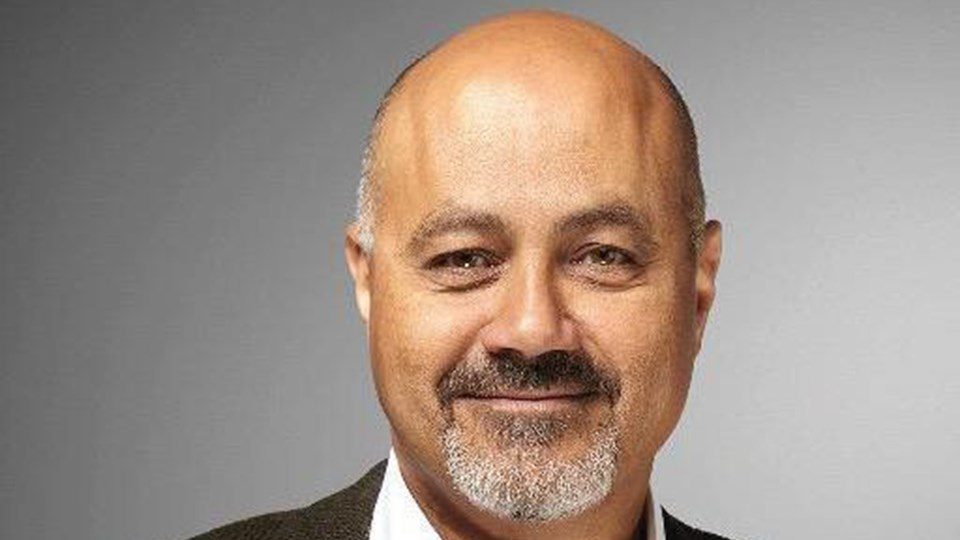
Victor Basta, CEO of DAI Magister, is the author of this article.

The first gap is in the range of $10-25 million scale-up funding rounds. The second is the lack of customised, structured non-equity financing to support company growth. Notably, because the vast majority of African investments are impact or mission-driven, focusing on positive social and economic change, this provides a natural path to overlay specific investors’ objectives, such as gender-lens investing, climate positivity, or financial inclusion.

The $10-25 Million Funding Gap

In the chart below, based on proprietary research, we can see the number of investors active in Africa categorised by the size of their investments. On the left are the traditional African start-up investors, usually committing less than $5 million. To the right are investors, including international or regional players, whose criteria demand larger investments, usually exceeding $20 million. This gap between $5-20 million is where relatively few investors are actively engaged, creating a significant opportunity for future investments. 

There is a yawning gap:

Several forward-thinking funds have recognised this gap and are adapting to address it. Investors like Norrsken, Partech, and TLCom have or will naturally raise larger funds to support these companies’ growth. Simultaneously, the number of quality African companies qualifying for such funding is on the rise, leading to increased demand that will outstrip the capital supply for many years. This persistence in the funding gap presents a compelling investment opportunity.

Structured Financings in Africa

Non-equity capital is still in its early stages of development in Africa. Typically, local currency debt is primarily offered by banks, but these institutions are known for being burdensome, expensive, and reluctant to support companies looking to invest in growth, which naturally reduces profitability in the short term. Moreover, their financial products tend to be relatively basic and are usually accessible only to larger, well-established businesses at the top of the economic hierarchy.

Dollar-denominated debt, on the other hand, is available in various forms, with a significant portion originating from Development Finance Institutions (DFIs) or similar organisations. However, the innovative financial structures and speed of execution required in Africa are often lacking from these sources.

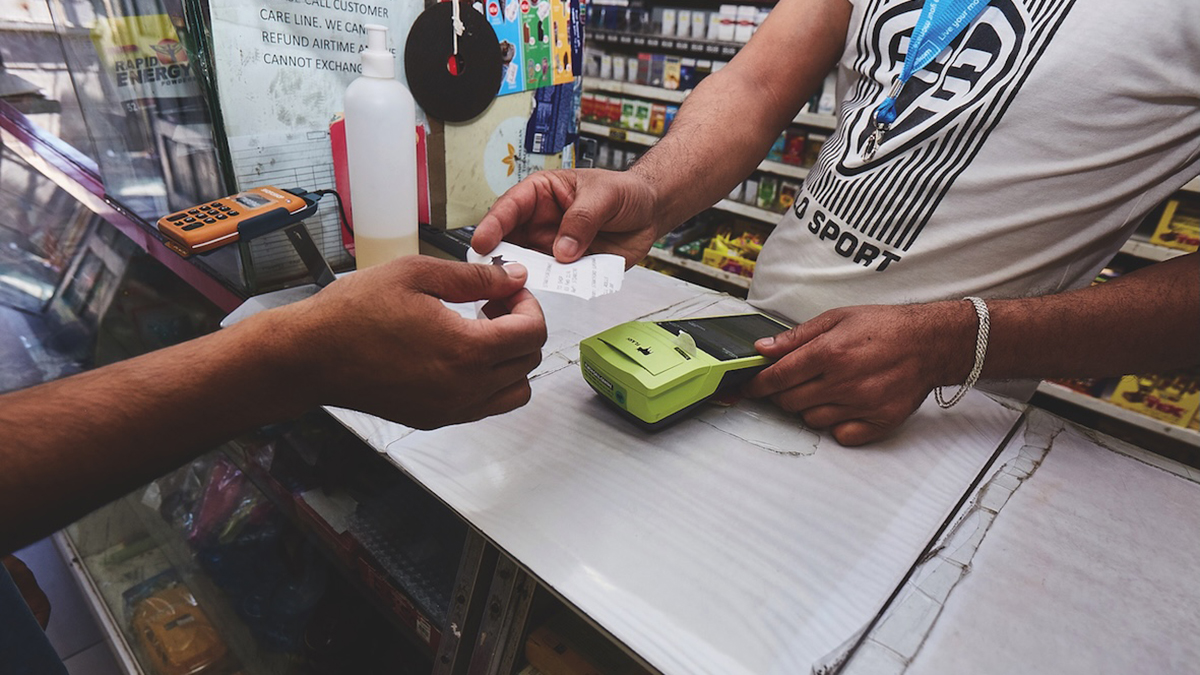
This issue is compounded by the fact that many African companies, particularly those aiming for growth, rely at least in part on selling money in some form to generate profits in their operations. This can take the form of financing productive assets like motorcycles, mobile phones, solar pumps, or even embedded finance such as providing financing to retailers for weekly stock replenishment, funding agricultural inputs with guaranteed off-take, or supporting the deployment of POS terminals for agent banking. We estimate that over 70% of African scale-up businesses generate income through these “money resale” activities.

This dependence on money resale for income makes it financially impractical to rely solely on equity financing. Equity returns are typically around 30% annually, while financing margins, especially for commercial financing, are usually much lower. Consequently, companies cannot afford to “burn” capital in this way to simply fuel growth.

Examples of this kind of capital are diverse. They include payments companies seeking up to $10m to support the purchase and distribution of POS terminals to contracted merchants, providers of renewable power products looking to transfer an initial $20 million+ of dollar-indexed receivables generated from three markets to an off-balance sheet Special Purpose Vehicle (SPV), with the potential to expand to $40-50 million to enhance liquidity, and even large companies looking to finance a second year of market entry through a mix of debt and equity, since banks typically require 2-3 years of evidence before lending the first $, even if a client has $100m+ of revenue already.

This structured finance gap is often filled by DFIs, which, while invaluable to the African ecosystem, may not be an ideal fit for most growing companies. They tend to be cumbersome, inflexible, demand extensive reporting, and have less tolerance for the dynamic evolution of growing businesses. Although some flexibility has been introduced in recent years, the need for structured finance remains unmet across the continent, necessitating earlier risk-taking and a faster response time than current providers can offer.

This article was authored by Victor Basta,  founder and CEO of DAI Magister, DAI’s capital advisory arm, who has advised on more than 130 transactions across 30 years and helped build three corporate finance firms.

Featured Image Credits: McKinsey

African Tech’s Offshore ‘Paper Parents’ Face Tough Tax Reckoning

By Henry Nzekwe  |  November 3, 2026

For a decade, the defining ritual of African venture capital has been the “flip.” A startup builds its product, hires its engineers, and finds its customers in Lagos, Nairobi, or Cairo, then incorporates a holding company in Delaware before the first institutional cheque arrives. The structure is often a compliance requirement imposed by investors who want a legal system they understand.

New data from a TLP Advisory report on 100 African tech companies shows just how lopsided this arrangement has become. The United States is the most common destination, with 67% of companies holding a US affiliation. But 81% of those US ties are incorporation and nothing else. There are no American customers, no American employees, and no American licences. The parent exists on paper.

The United Kingdom, by contrast, tells a different story. Of the 32% of companies with a UK affiliation, 47% have an operational presence and 19% hold regulatory licences. The UAE, meanwhile, is almost purely operational. Among its 23% of connected companies, 87% have people on the ground.

For years, this division of labour worked because tax authorities in home markets largely tolerated it. A Delaware parent could sell its shares and book a gain offshore, insulated from Nigerian or Kenyan capital gains tax. That tolerance is disappearing. Nigeria’s Tax Act 2025, which took effect in January, introduced an economic nexus rule. If more than half the value of an offshore holding company is derived from Nigerian assets, the sale of that company is taxable in Nigeria.

Foreign venture capitalists have warned the change could slow investment. “For founders, this means your exit valuation needs to be 20% higher just to give your investors the same net return they expected in 2024,” Segun Cole of Maasai VC told TechCabal in February.

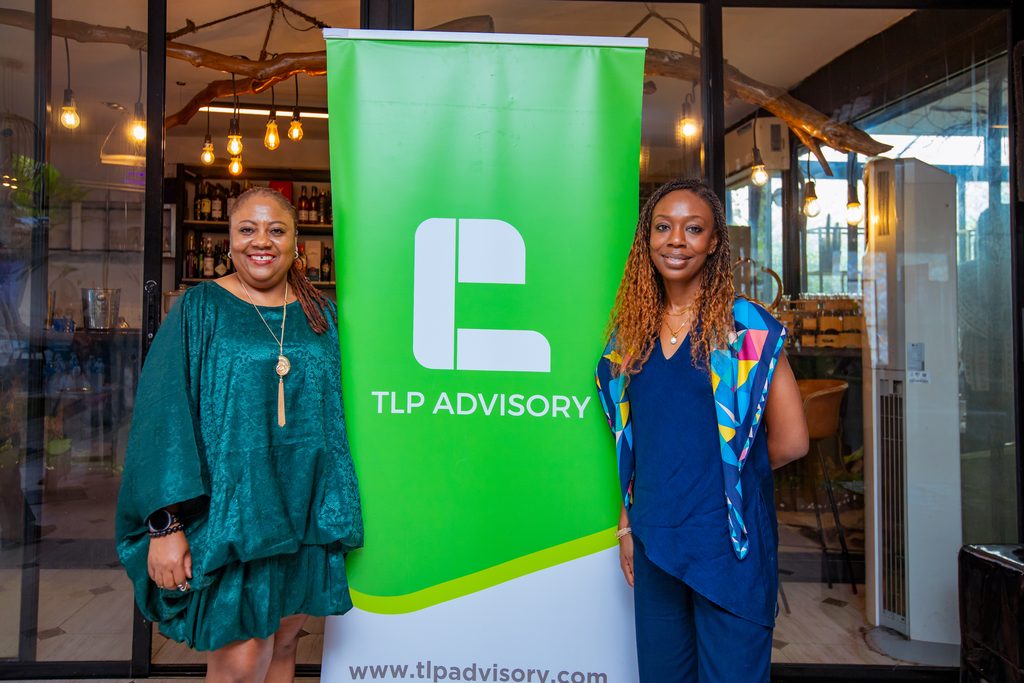
L-R: Odun Longe, Funkola Odeleye, TLP Partners Co-Founders

The shift exposes a vulnerability at the heart of the incorporation-only model. A Delaware parent with no operational substance beyond a registered agent is precisely the kind of structure the new rules are designed to reach. The UK, which already hosts more real activity per affiliated company, is less exposed to that line of attack. A London entity with a licence, a team, and a bank account is harder to dismiss as a tax artifice.

TLP Advisory, a cross-border venture law practice with its origins in Nigeria, is careful not to overstate the UK’s advantage. “A round closed in Delaware and a license in London are both important but they play very distinct roles,” said Odunoluwa Longe, co-founder of TLP Advisory. The advice from Anthony William Catt of the UK Africa Sandbox is blunter: validate before you incorporate. “In the majority of cases our recommendation is a validation step with no entity,” he said.

That logic is about to become less optional. As African governments tighten the screws on indirect transfers and profit shifting, the purely paper parent will lose its appeal. The winners will be jurisdictions that allow a company to be both legally domiciled and economically present. TLP’s findings offer some evidence that the UK, with its combination of common law, tax incentives, and regulatory infrastructure, appears better placed for that future than the US.

Feature Image Credit: Dragos Condrea

Africa’s Hottest IPO Sold Out Online, Giving Tech A Tough Act To Follow

By Henry Nzekwe  |  November 2, 2026

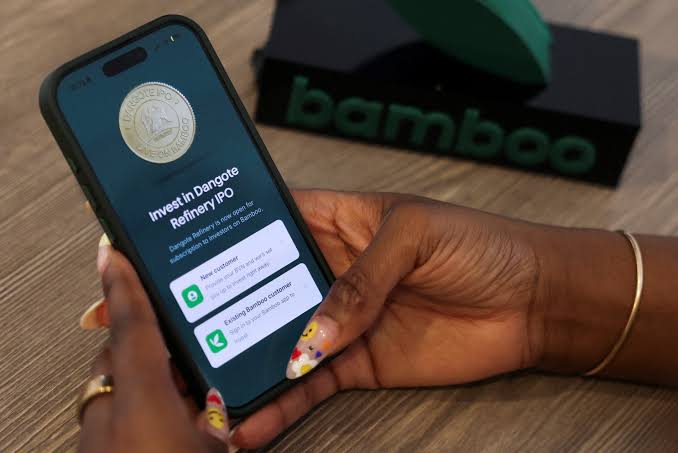
When Dangote Petroleum Refinery opened its USD 1.6 B initial public offering in September, the rush did not begin at bank branches or stockbroker offices. It began on mobile phones.

Within thirty minutes of the offer going live, traffic on Bamboo, one of Nigeria’s largest digital investment platforms, surged to ten times normal levels. The app crashed. So did Cowrywise and InvestNaija. “To be very, very honest, our system broke,” Bamboo co-founder Yanmo Omorogbe told Reuters at the time.

Six weeks later, the scale of what happened on those apps is becoming clear. Exclusive collation data first revealed by Nairametrics shows the offer drew about 1.55 million unique online retail subscribers who placed roughly 2.2 million transactions worth more than NGN 860 B (USD 560 M). Bamboo alone processed more than 600,000 transactions valued at about NGN 99 B, outpacing even legacy names like Zenith Bank, FirstBank, Chapel Hill Denham and the Nigerian Exchange’s own portal. Total retail participation, including offline and association-based purchases, could approach five million subscribers.

That is a striking number in a market where only about 600,000 of roughly six million registered Central Securities Clearing System accounts were active as of late 2025. In a single offer, Nigeria’s fintech apps appear to have onboarded more first-time retail investors than the traditional capital market had activated in years. Bamboo said more than 43% of its new users who subscribed to the IPO were first-time investors.

For Nigeria’s technology ecosystem, the temptation is to read this as a breakthrough. For a decade, venture capital has flowed into Nigerian fintech, commerce and logistics with few credible ways out. Mergers and acquisitions remain the dominant exit route, with 63 deals recorded across Africa in the first half of 2026. Nigeria has never produced a venture-capital-backed IPO. The NGX launched a dedicated Technology Board in 2022, but three years later it has yet to record a single listing. OPay, one of the country’s most valuable fintechs, just terminated a New York Stock Exchange listing amid regulatory hiccups.

The Dangote offer proves that digital distribution can mobilise retail capital at a scale the NGX has never seen, though whether tech companies can tap it is a different matter. The refinery is a mature, cash-generating industrial asset backed by Africa’s richest man and a distribution budget of at least USD 31 M, according to its prospectus. A growth-stage startup cannot replicate that machinery.

More fundamentally, many Nigerian startups are incorporated in Delaware or London, earn naira revenue but raise dollar capital, and their investors expect dollar returns. A 2025 TLP Advisory report found that 53% of founders had not considered an NGX listing because they did not understand how local listings work. A separate TLP analysis estimated that a private tech company valued at USD 100 M could be valued at only USD 60 M on the NGX.

While the Dangote IPO has widened the retail on-ramp, the exit door remains narrow. But the listing has arguably created a template for startups, regulators, and the exchange to study. The NGX has said it is courting technology companies and pushing for dual listings. But until the currency, valuation and structural gaps close, the millions of Nigerians who bought refinery shares through their phones will remain investors in refineries and banks, not in the fintech products they use every day.

Feature Image Credit: Reuters

OPay’s Scrapped IPO Exposes Gap Between African Fintech Hype & Public Market Reality

By Staff Reporter  |  October 31, 2026

The most anticipated African fintech listing in years ended this week not with a bell, but with a quiet thud. SoftBank-backed OPay withdrew its USD 304 M U.S. initial public offering on Friday after a regulatory inquiry in an unidentified foreign jurisdiction spooked the deal hours after it had priced.

The company, which runs one of Nigeria’s largest digital payments platforms, had sold 16 million American depositary shares at USD 19.00 each, the bottom of its marketed range, valuing it at roughly USD 4 B.

The withdrawal is the most concrete signal yet that the wave of multibillion-dollar valuations assigned to African fintechs in private markets does not always survive contact with public investors. OPay is not a failing startup. It swung from a USD 50.8 M loss in 2024 to a USD 72.5 M profit in 2025, and in the first half of 2026 revenue more than doubled to USD 467.1 M while net income nearly quadrupled to USD 90.9 M. But those numbers, impressive in isolation, carry risks that a private valuation can ignore and a public listing cannot.

The first is the source of the profit. OPay markets itself as a payments company. In reality, just over half of its first-half revenue, about USD 236 M, came from loan financing tied to a Nigerian lending book that originated USD 927.6 M of new loans in six months. It charges annualised interest of 18.3% on 30-day loans and 16.8% on 60-day loans, rates that look attractive against Nigeria’s high inflation but depend on a consumer credit cycle that has not been tested through a full downturn. OPay writes off loans after 120 days, far faster than Nigerian banks’ 360-day standard, a sign of how quickly it needs to recycle capital to sustain growth.

The second is currency. OPay earns almost all of its revenue in naira, which has been repeatedly devalued, and reports in dollars. A weaker naira can erase a U.S. investor’s return even while the local business grows. Nigeria accounted for 89.5% of first-half revenue, leaving the company exposed to a single market’s monetary and regulatory trajectory.

The third is the regulatory fog that ultimately stopped the listing. OPay said the inquiry relates to a jurisdiction it considers “immaterial” to its core operations, Reuters reported, but it did not name the regulator or describe the nature of the investigation. That silence is curious.

OPay operates in Nigeria, Indonesia, Egypt and Pakistan, and its founder, Chinese billionaire Yahui Zhou, has business interests across multiple jurisdictions. Investors were asked to accept an undisclosed regulatory risk in a company valued at USD 4 B. When the inquiry surfaced, the underwriters, including Citigroup, Deutsche Bank, Standard Bank and CICC, agreed with OPay to terminate the underwriting agreement rather than proceed.

The collapse also strands a parallel arrangement with Africa’s largest bank. Stanbic Africa Holdings, a Standard Bank subsidiary, had agreed to buy up to USD 200 M in OPay shares through a private placement contingent on the IPO closing, capped at a 4.99% post-listing stake. That investment is now in limbo, along with a proposed secondary listing on the Nigerian Exchange that was meant to give local investors access to a business that derives nearly nine-tenths of its revenue from Nigeria.

OPay’s withdrawal signals the mismatch between the private valuation of African fintechs and the disclosure, governance and currency risks that public investors price. Airtel Money managed to list in London earlier this month at a USD 7 B valuation, but it did so as a subsidiary of a FTSE 100 company with a long regulatory track record. OPay has no such cover. Until it, and the investors who valued it at $4 billion, can name the jurisdiction that stopped the deal, the valuation remains a number on a prospectus.

OPay’s Lending Business Has Quietly Overtaken Its Payments Empire As IPO Nears

By Henry Nzekwe  |  October 13, 2026

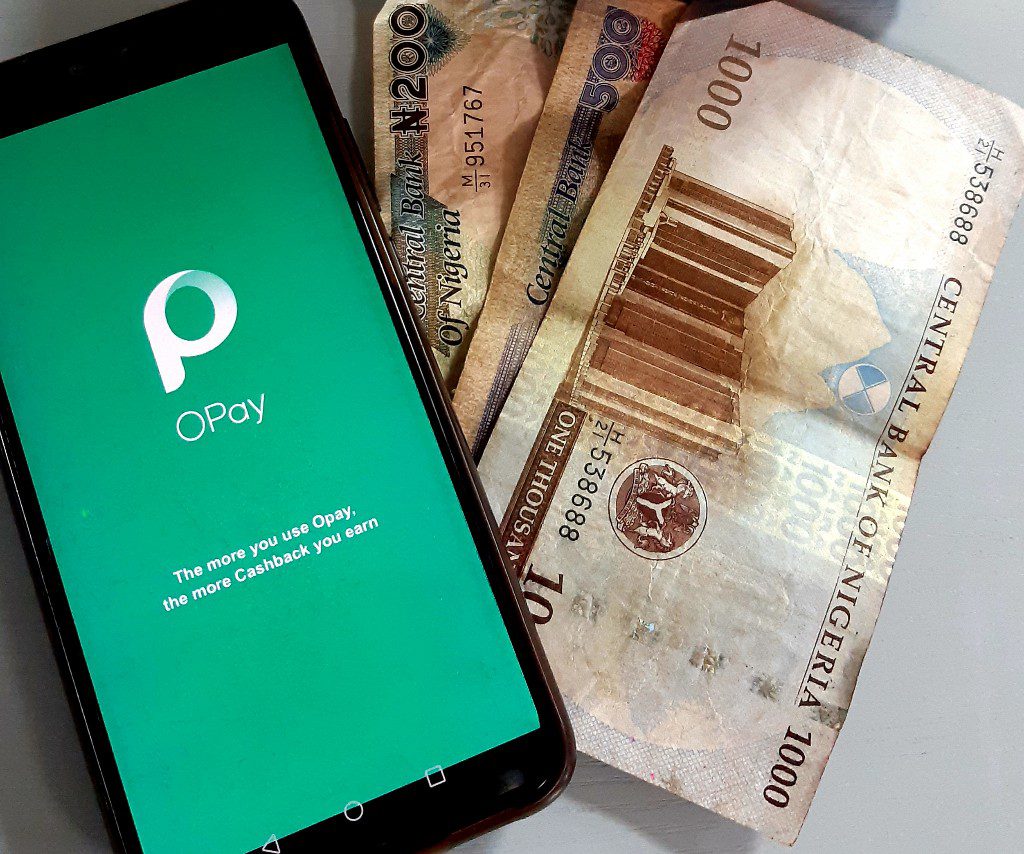
OPay has established its place as Nigeria’s ubiquitous payments app for a good few years now. Its green logo is plastered on the walls of roadside kiosks and the phone screens of millions, with the simple pitch of moving money faster than a bank. But the company’s newly filed IPO prospectus reveals a more consequential transformation. Lending, not payments, is now the engine driving its revenue.

In 2024, transaction-based services accounted for 39% of revenue while lending contributed 35%. By the first half of 2026, that hierarchy had flipped. Loan financing alone generated USD 236.1 M, or 50.6% of total revenue, according to the F-1 filing. Payments revenue fell to 28%. The company originated USD 927.6 M in new loans in Nigeria during the first six months of 2026, roughly three times the amount from a year earlier.

The scale of OPay’s lending machine is such that it now has 6.7 million unique quarterly borrowers, more than seven times the number it had in early 2024. Its non-performing loan ratio stood at 4.3% as of June 30, 2026, down from 4.8% a year earlier.

That improvement is down to the company quietly shifting its credit mix away from riskier consumer loans toward merchant lending. In the first half of 2026, the fintech unicorn disbursed USD 99.0 M in merchant loans across 20,000 transactions, generating USD 8.8 M in revenue. The company said it “tightened risk appetite in consumer loans” and shifted toward merchant loans, which carry a lower risk profile, according to the filing.

Consumer lending in Nigeria is politically sensitive and operationally fragile. Borrowers are often informally employed, repayment discipline is uneven, and regulators are watching. Merchant lending is different. OPay can observe a business’s daily transaction flows through its POS terminals and wallet accounts, giving it real-time visibility into cash flow and a natural collection mechanism.

OPay is also quietly rolling out a buy-now-pay-later product. Its BNPL offering allows active users to access short-term credit for everyday purchases with a two-week billing cycle and a one-week repayment window. For now, the product is small. In the first half of 2026, BNPL transaction volume was just USD 5.0 M across 13.4 million transactions. But the company is clearly testing whether the same infrastructure that powers its lending business can support a consumer credit product that feels more like a payment than a loan.

The timing of this lending pivot is not coincidental. OPay filed for a New York Stock Exchange listing under the ticker OPAY, seeking a valuation that reports suggest could reach USD 4 B. Standard Bank Group’s subsidiary has agreed to invest up to USD 200 M through a concurrent private placement, a signal that institutional capital sees value in OPay’s lending economics.

But the filing also exposes the tension at the heart of the model. OPay’s provision for expected credit losses surged to USD 118.4 M in the first half of 2026 from USD 38.1 M a year earlier. The company is lending more, and it is setting aside more to cover the risk of default. Whether merchant lending genuinely lowers that risk or simply delays it remains the central question for investors. One of its main rivals did run into problems with a startup it had lent a sizeable sum to, for instance.

OPay is betting that the same data advantage that made it a payments giant can make it a lending giant too. The prospectus suggests that bet is already paying off. The risk is that in emerging markets, credit cycles can turn faster than payment networks can adapt.

Tech Giants’ Retreat From Africa Continues As Microsoft Guts Kenyan Engineering Hub

By Staff Reporter  |  October 13, 2026

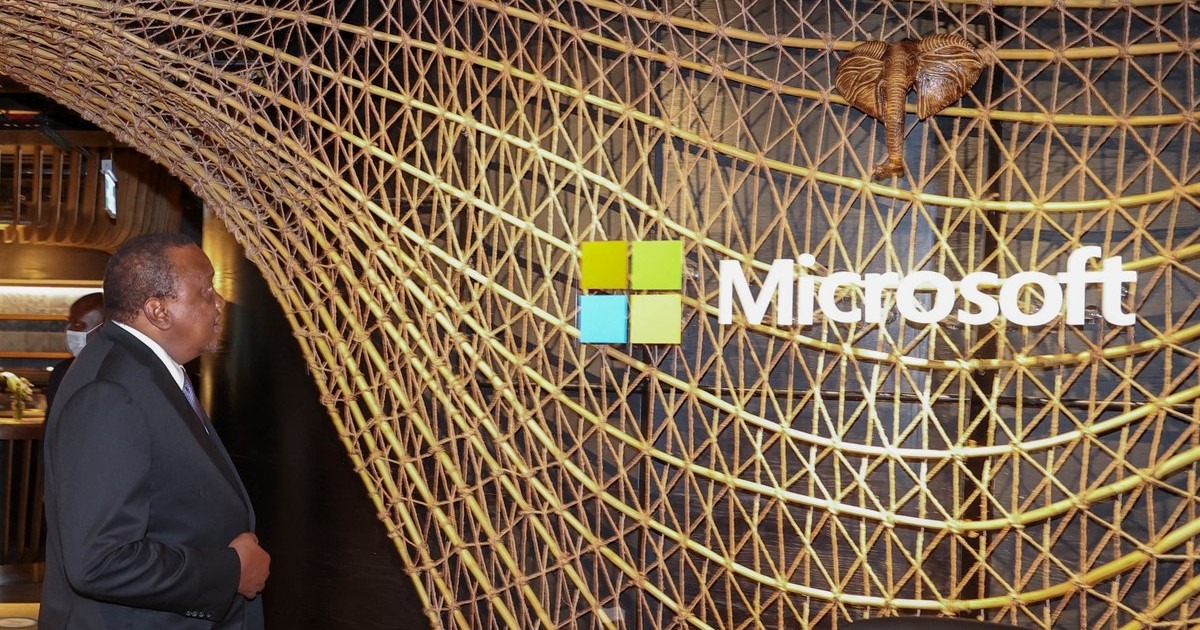
Microsoft has told staff at its Africa Development Centre in Nairobi that the engineering hub will close, ending a seven-year, USD 100 M bet on building global products from Africa and putting nearly 400 jobs at risk.

The decision, communicated to employees on Monday, marks the second retreat from a dedicated engineering presence on the continent after Microsoft shut its Lagos ADC in 2024. Coming just months after a USD 1 B data centre project with Abu Dhabi’s G42 stalled over payment guarantees, the closure signals a broader recalibration of how US tech giants engage with Africa.

The pattern extends beyond Microsoft. X, formerly Twitter, briefly opened an office in Accra, Ghana, in November 2022, then laid off nearly all of its roughly 20 employees just four days later. Former staff said they were “ghosted” without severance pay for more than seven months, and the company reached a settlement only after about a year of negotiations. Kenya has since given X three months to open a physical office in Nairobi, a demand that remains unmet.

Oracle has taken a different path. The company has not closed its Nairobi office but has cut roughly 21,000 jobs globally, about 13% of its workforce, as it redirects capital toward AI and cloud infrastructure. Oracle’s Nairobi operation, which serves as a hub for East African cloud and AI sales, has not been immune.

The company has not disclosed how many Kenyan staff were affected, but termination emails sent in September 2026 gave employees same-day notice, with severance capped at 26 weeks of base salary. Oracle has simultaneously been advertising roles in Kenya for data centre technicians and AI infrastructure sales, a signal that the cuts are a reallocation rather than a full retreat.

Ride-hailing giant Uber has also pulled back sharply from Africa. The ride-hailing giant shut down operations in Nigeria and Uganda in September, capping a year in which it exited four African markets in roughly twelve months, having earlier withdrawn from Tanzania in January 2026 and Côte d’Ivoire in September 2025. Meanwhile, Meta’s termination of a content moderation contract triggered 1,108 job cuts at Sama’s Nairobi hub in April.

The combined effect is a continent increasingly treated as a market for consumption rather than a site for production. The depth of Western involvement raises questions about whose priorities shape Africa’s digital future.

***

Microsoft’s cash spending on property and equipment, mostly data centres, rose from USD 23.9 B in FY2022 to USD 115.9 B in FY2026. Its workforce, meanwhile, fell by 5,000 to 223,000. Capital is flowing into compute infrastructure, not engineering headcount. The Nairobi ADC, whose teams built global products rather than Africa-specific ones, was exposed. Its work could be done from Redmond or Hyderabad. Median entry-level pay for a Microsoft engineer in Kenya stood at roughly USD 52 K a year, against USD 30 K in Bengaluru.

Kenya’s ICT Cabinet Secretary William Kabogo met a Microsoft delegation on Monday and said he “stressed the importance of retaining local talent, protecting jobs at Microsoft’s Nairobi engineering centre and sustaining investor confidence.” The government and Microsoft agreed to develop a joint action plan covering AI adoption, digital government services and cybersecurity.

For Kenya, the closure undercuts a decade-long effort to position itself as a regional technology hub. It follows the stalled Olkaria data centre, which was to be anchored by a geothermal-powered facility and mentored by ADC engineers. Talks broke down in May over Kenya’s reluctance to commit to fixed annual capacity payments.

Africa accounts for 18% of the world’s population but holds less than 1% of global data centre capacity. The continent’s four largest tech economies have each drafted AI strategies acknowledging dependence on US infrastructure as a security concern.

The Nairobi ADC was launched in May 2019 with a pledge of 500 engineers by 2023. By December 2022 it reported more than 500 engineers in Nairobi. Employees were asked to meet with managers by Friday to discuss exit options, including severance terms. Microsoft has not disclosed the timeline for the wind-down or whether Microsoft Research Africa and the Microsoft Garage, both housed at the ADC’s Dunhill Towers office, are included.

The Unlikely Fintech Breakthrough Of Africa’s Biggest Clothing Retailer Rocked By Dispute

By Staff Reporter  |  October 12, 2026

The unlikely thriving fintech arm of Africa’s biggest clothing retailer has investors clashing in a dispute over governance that threatens to overshadow a strategic pivot into financial services.

Pepkor Holdings, the owner of the Pep and Ackermans discount chains, has built a fintech business that is growing far faster than its core retail operations. Revenue from the fintech segment jumped 25.4% to ZAR 4.8 B (~USD 290 M) in the quarter to December, while financial services revenue surged 47.6% to ZAR 2.4 B (USD 144 M). For a company known for selling affordable clothing to millions of low-income shoppers, the numbers are striking. Credit sales now account for 18% of total group sales, up from 16% a year earlier.

That growth explains why Pepkor in July agreed to combine its Flash subsidiary, a payments platform serving 170,000 informal traders, with rival Shop2Shop, which has more than 210,000 users. The deal creates a fintech company valued at about ZAR 21 B (USD 1.3 B), with Pepkor holding a 57.1% stake. Pepkor says the combination will expand its payments, lending and merchant-commerce operations and broaden distribution for a planned digital bank it aims to launch in April 2027.

But the transaction has exposed a governance rift. Some directors voted against the deal, and a top 30 investor, Aeon Investment Management, says shareholders should have voted on a transaction where Pepkor Chief Executive Officer Pieter Erasmus also has a financial interest. Erasmus held a minority position in Shop2Shop before the deal and will own a 13.2% stake in the combined entity, valued at about ZAR 2.8 B (USD 169 M) based on the transaction’s implied valuation.

The transaction does not require shareholder approval under Johannesburg Stock Exchange rules because it falls below the threshold for a related-party transaction. Erasmus recused himself from board deliberations, according to Pepkor.

Even so, seeking shareholders’ views would have demonstrated better corporate governance, according to Asief Mohammed, chief executive officer of Aeon, which holds a 0.4% stake in Pepkor. “It would have gone down better had they done it,” Mohammed said. “Seeking shareholder approval would have been good governance”.

Pepkor says it obtained independent valuations of both businesses and a voluntary independent fair-and-reasonable opinion. The retailer declined to disclose how many directors voted in favour of the deal, citing the confidentiality of board proceedings.

The dispute comes as Pepkor’s shares have dropped 31% this year, compared with a 25% decline on the eight-member FTSE/JSE Retailers Index. The governance concerns also arrive as the company pushes deeper into financial services to find growth beyond its core discount retail operations, a strategy that has delivered tangible results but now faces heightened scrutiny over board process and shareholder rights.

The planned listing of the combined fintech business, provisionally called FintechCo, in the medium term adds another layer of complexity. Pepkor is betting that its informal market platform and merchant network can become a standalone fintech powerhouse. Whether investors will reward that bet depends partly on how the company manages the governance questions the deal has raised.

Beyond A Button: SeerBit Takes On The Real Gap In African Cross-Border Payments

By Henry Nzekwe  |  October 12, 2026

In Accra, a beauty brand built its following on TikTok and Instagram, reaching customers in the UK who liked the products enough to buy. The merchant had done the hard part, creating something people wanted and finding them online. But when a British customer reached checkout on the brand’s website, the payment experience was unfamiliar, and the sale slipped away.

That scenario, described by Omoniyi Kolade, founder and CEO of the pan-African payments company SeerBit, captures the shift now underway in African digital commerce.

In August 2026, SeerBit announced it had integrated PayPal into its checkout infrastructure, allowing merchants across its 10 African markets to accept payments from PayPal’s more than 400 million users. The integration runs alongside the local payment methods SeerBit already supports, including cards, bank transfers, and mobile money, and gives merchants a single dashboard to manage local and international transactions.

The announcement was framed as a milestone for African businesses seeking global customers. But the more revealing story lies beneath the press release, in what the partnership exposes about PayPal’s complicated history on the continent, the limits of a single integration and where the real bottlenecks in African cross-border commerce have shifted.

PayPal’s relationship with Africa is marked by two decades of exclusion. In 2004, the company restricted inbound payments to Nigeria, citing fraud and chargeback risks, a policy that locked out a generation of freelancers and online businesses. A 2014 partnership with First Bank allowed outbound payments only, and a 2021 Flutterwave link served businesses while ignoring individual users. Those restrictions remained in place for 22 years.

During that absence, Nigerian fintechs including Paga, Flutterwave and Paystack built the infrastructure PayPal had declined to provide, capturing a domestic digital payments market that reached NGN 1.07 Q (USD 702.6 B) in 2024.

***

Kolade is careful not to frame the SeerBit integration as a correction of that history. He describes a different set of changes that made the partnership possible now. African businesses became more digitally discoverable, consumers grew more comfortable buying across borders, and local payment infrastructure matured enough for global networks to connect to something reliable.

“The shift isn’t simply that African merchants suddenly want PayPal,” Kolade told WT. “It’s that the commercial relationship between an African business and a customer somewhere else in the world is becoming much more normal.”

What that relationship requires, however, is not simply a payment button, the founder emphasised. When SeerBit integrated PayPal, the company had to build additional merchant verification layers, because PayPal was extending its network to businesses it did not know directly.

It also created dedicated support and escalation processes, cutting resolution times for merchant issues from as long as 90 days to 24 hours. And it had to account for the fact that Africa is not a single payments market. Regulatory environments, banking infrastructure and settlement realities differ across every country SeerBit operates in. The complexity is not the integration itself, Kolade said, but everything around it.

Even after those layers are addressed, the merchant’s work is not finished when a payment notification arrives. Kolade argues that accepting payment is becoming less of a bottleneck, and that the harder problem now is what happens after the customer has paid.

A cross-border transaction must still be settled, often across multiple currencies and institutions. The merchant has to understand what they have actually earned after fees and foreign exchange costs, reconcile it against orders, and then access those funds where the business needs them. “For me, the next frontier is less about, can I accept this payment, and more about, can I make the money useful,” Kolade said.

That post-payment journey is where fragmentation becomes expensive. If a business sells into several markets and collects through different currencies, methods and providers, the money can pass through several institutions before it becomes usable. That ties up working capital, creates reconciliation work and makes it harder to understand true margins. It is a problem that a checkout integration does not solve, he reiterated.

***

There is also a quieter dynamic at play. Kolade points out that the merchant does not have to be an exporter for cross-border payments to matter.

“Someone in Canada might want to order food for their parents in Nigeria. Someone in the diaspora might pay for groceries or a pharmacy purchase for a family member back home. An international visitor in Ghana or Kenya might want to use the payment method they already know,” he volunteered as examples.

In these cases, the merchant remains local while the customer is international. And the founder asserts that the boundary between a local business and a global customer is becoming less important, and that changes what merchants expect from their payment infrastructure.

PayPal’s broader strategy, PayPal World, is designed to connect global payment networks with local wallets and infrastructure rather than building the entire stack itself. Kolade sees this as a recognition that the foundational work has already been done by African companies. “This isn’t one company coming in to solve African payments,” he said. “A lot of that foundational work has already been done by African companies.”

Still, the integration raises questions that the announcement does not answer. Cross-border payments in Africa remain expensive, with the World Bank estimating that sending USD 200.00 to Sub-Saharan Africa costs more than 8% on average, compared with a global average of around 6%. Currency volatility and central bank restrictions on hard currency can delay or complicate settlements. Merchants will need to understand how PayPal transactions are priced, how quickly funds settle and how disputes are handled.

For PayPal, the African market is a growth opportunity at a time when its core markets are maturing. For SeerBit, the partnership strengthens its position as a checkout aggregator that handles both local and global payment methods. For African merchants, the integration removes one obstacle at the point of sale. Whether it changes the economics of selling across borders depends on what happens after the customer clicks pay.

Moove Quits Nigeria, Its Birthplace, As Global Ambitions Trump Difficult Home Market

By Staff Reporter  |  October 8, 2026

Moove, the mobility fintech founded in Lagos in 2020, announced on Thursday it will conclude operations in Nigeria, the market that incubated its business model and launched its global trajectory. The company will transfer vehicles worth approximately NGN 35 B (USD 22 M) to eligible Nigerian customers free of charge from October 1, 2026.

The exit comes just over a month after Uber Technologies ended its operations in Nigeria on September 2, a departure that rendered Moove’s core model in the country untenable. Moove built its Nigerian business by financing vehicles for Uber drivers, with repayments tied to daily earnings. When Uber left, that data pipeline collapsed, leaving drivers uncertain and Moove’s local unit without a platform partner to anchor loan recovery.

Moove, now headquartered in Dubai, reached a USD 2.1 B valuation in August after raising USD 250 M in a Series C round led by Abu Dhabi sovereign wealth fund Mubadala. Its annual recurring revenue climbed from roughly USD 275 M in 2024 to about USD 400 M in 2025, before hitting USD 420 M following acquisitions including Brazil’s Kovi and Tokyo Taxi in Japan. The company operates about 42,000 vehicles across 29 cities in 13 countries and employs roughly 3,300 people.

Yet the Nigerian market that produced this global platform became a drag. A currency mismatch defined the problem. Moove raised dollar-denominated debt to buy vehicles while drivers earned naira, a disparity that widened sharply after Nigeria’s 2023 fuel subsidy removal drove up pump prices and compressed driver margins. The company had already weathered a repayment crisis, repossessing vehicles from drivers who could not earn enough to meet obligations.

“While Nigeria remains deeply important to our story, the operating environment has become increasingly challenging,” Moove said in a statement announcing the exit, framing the vehicle transfer as a “thank you” to customers.

The company’s pivot toward autonomous mobility has reshaped its strategic centre of gravity. Through a partnership with Alphabet’s Waymo, Moove manages autonomous vehicle fleets in Phoenix and Miami, with London planned next. It is the largest global fleet partner for Uber and is positioning itself as a neutral infrastructure layer for robotaxi operations, a role that has attracted investment from Toyota’s growth fund Woven Capital.

Co-founder Ladi Delano, now based in Dubai, has spoken of building a business that solves problems his parents’ generation faced in Nigeria, but the company’s current growth is driven by markets far from Lagos.

Moove did not disclose a timeline for completing the wind-down or the number of employees affected. The company said eligible customers would take full ownership of their vehicles with no further payment required for the vehicles themselves from October 1. Remaining obligations, if any, were not specified.

The transfer of NGN 35 B in assets to drivers is an unusual exit gesture, one that may cushion the immediate blow for Moove’s Nigerian customers. But it does not change the broader signal that a company built to democratise vehicle ownership in Africa has concluded that ownership of its own future requires leaving Africa’s largest market behind.

M-KOPA Built Its Name On Solar—Now Smartphones & EVs Drive A USD 600 M Boom

By Henry Nzekwe  |  October 8, 2026

Africa-focused fintech M-KOPA reported a 45% surge in revenue to USD 600 M for its 2025 financial year, a milestone that underscores how the Kenya-based company’s decisive shift from solar financing to smartphone and electric vehicle asset financing has reshaped its business and its balance sheet.

The company, which marked its 15th anniversary this month, said it added three million customers in the past year, bringing its total to 10 million across Kenya, Nigeria, Ghana, Uganda and South Africa.

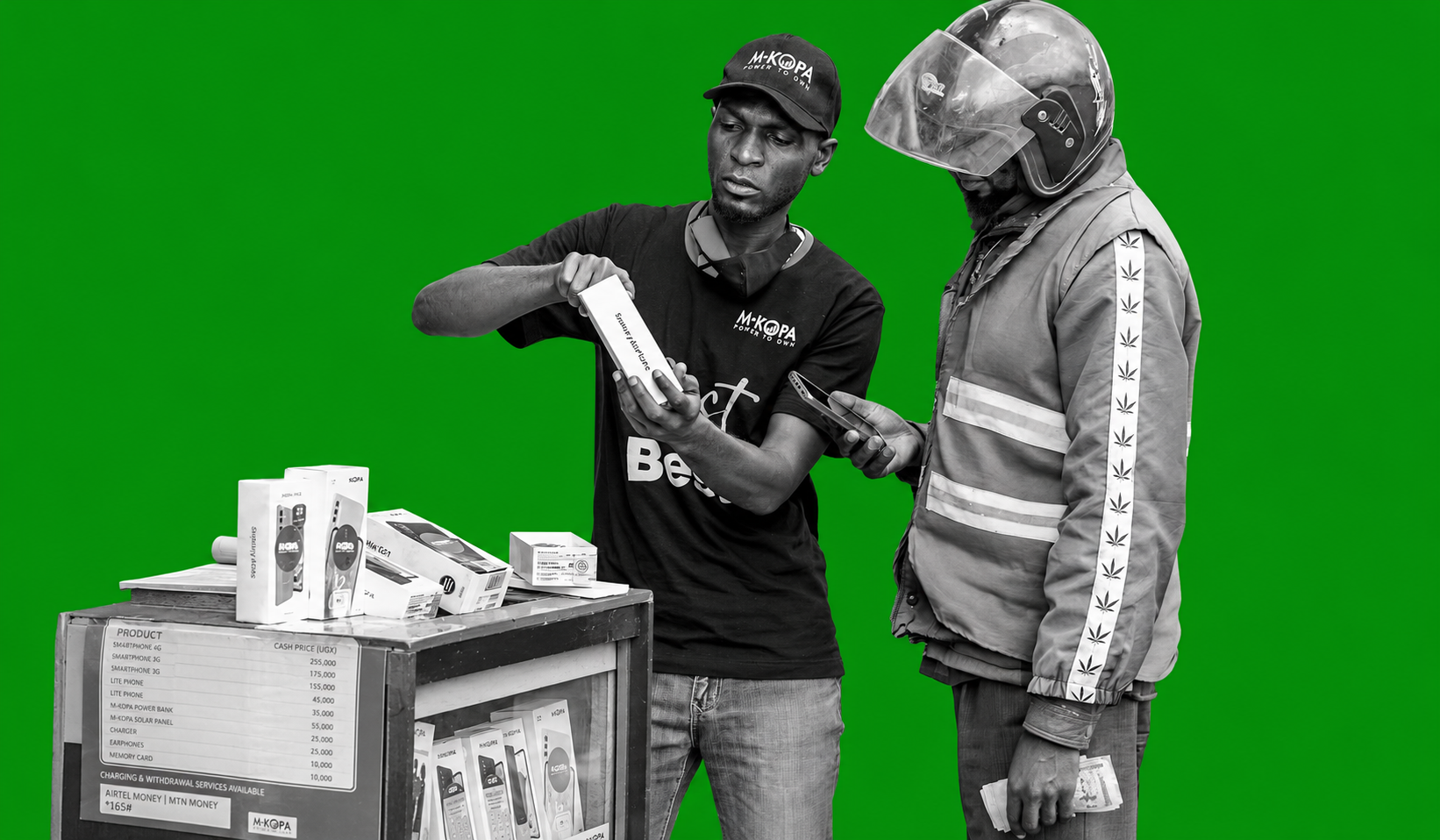
The growth was driven less by its original solar home systems and more by credit-financed smartphones, a category M-KOPA entered only in 2020. Since that pivot, revenue has compounded at an annual rate of 50%, transforming what was once an impact-driven energy company into one of Africa’s largest consumer-financing platforms.

The shift reflects a hard economic reality across its markets. The vast majority of everyday earners lack formal salaries or credit histories, yet demand for smartphones and income-generating electric vehicles has outstripped the addressable market for financed solar panels.

“We maintained profitability while reinvesting as much as possible in our products, technology and distribution to scale our reach across Africa’s massive, underserved market of everyday earners,” Chief Financial Officer Faraimose Kutadzaushe said in a statement.

That reinvestment is now visible in two areas. First, the company says its Nairobi assembly plant is the largest smartphone factory in Africa by volume, producing over two million devices since its opening in 2023 and employing more than 400 workers.

On the other hand, the company has financed more than 10,000 electric motorcycles and three-wheelers in Kenya, with rider data showing average daily savings of KES 530.00 (USD 4.10) from lower energy and maintenance costs. M-KOPA is now expanding that pay-as-you-go model to electric tuk-tuks, targeting a broader segment of Kenya’s commercial transport sector.

M-KOPA says it onboards approximately 10,000 new customers per day and processes micropayments at a rate of 23 times per second, showing operational heft underpinning its expansion. It employs over 2,500 full-time staff and supports nearly 50,000 sales agents, making it one of the largest private distribution networks in African consumer finance.

Yet the USD 600 M revenue figure masks a strategic vulnerability that management has moved to address. M-KOPA’s entire financing model depends on its ability to remotely lock financed smartphones when customers fall behind on repayments.

In March 2026, the company acquired Finnish software firm KilpiTek for approximately USD 8 M, bringing that device-locking capability in-house rather than relying on a third-party provider. The transaction included about USD 2.67 M in cash and the remainder in M-KOPA shares and deferred consideration, according to its financial disclosures.

“The transaction is intended to strengthen the group’s control over a critical component of its technology stack and support ongoing product and sourcing strategy,” the company said in its disclosure.

The broader question for investors is whether M-KOPA’s smartphone-led model can sustain its growth rate as it expands across five markets with varying regulatory and currency environments. The company has been recognised on the Financial Times Fastest Growing Companies in Africa list for five consecutive years, but its customer base remains heavily concentrated in East Africa, and its newest markets in Nigeria and Ghana present different competitive and macroeconomic challenges.

For now, the numbers point to a company that has found a more durable product axis than the one it was founded on. While solar gave M-KOPA its first decade and its patient-capital base, smartphones and electric mobility appear to be giving it its next one.

Africa’s Traditional Savings Groups Quietly Emerge As New Payments Battleground

By Henry Nzekwe  |  October 7, 2026

Across Africa, an old financial habit is becoming a new frontier for banks, fintechs, and mobile money providers. Community savings groups, long dismissed as the informal domain of cash-stuffed envelopes and handwritten ledgers, are being pulled into the digital economy at speed. The prize is not just the deposits they hold, but the transaction flows they generate.

The numbers explain the sudden interest. Kenya’s regulated savings and credit cooperative organisations held KES 1.21 T (USD 9.4 B) in assets in 2025, up 12.5% from a year earlier, according to the Sacco Societies Regulatory Authority. South Africa’s 800,000 stokvels manage about ZAR 50 B (USD 2.7 B) annually and count roughly 11 million members. Egypt’s MoneyFellows, which digitises the traditional gameya savings circle, says it has onboarded more than 8 million users.

These pools of money once sat largely outside the banking system. Now they are becoming the connective tissue for a payments market that banks cannot afford to ignore.

The competitive dynamic is most visible in Kenya. Commercial banks are racing to handle cheque clearing, ATM access, and real-time transfers for deposit-taking SACCOs, which are barred from direct access to the national payment infrastructure. Co-operative Bank of Kenya served 110 SACCOs with ATM connectivity in 2025, but Family Bank, KCB, and Equity Bank are expanding their footprints. Safaricom and payment provider Interswitch have entered the Pesalink instant transfer market for SACCOs, a sign that the settlement landscape is widening beyond traditional lenders.

SASRA reported that the number of SACCOs offering digital financial products rose to 267 in 2025 from 236 a year earlier. But the same report warned of cyber risks, and 107 regulated SACCOs still had no USSD connectivity at all. The digitisation race is real, but it is uneven.

***

In South Africa, the battleground is account opening. First National Bank completed the full digitisation of its stokvel accounts in early 2026, removing a long-standing requirement for three signatories to visit a branch together.

“We’ve completed the digital stokvel account journey and now everything, from account opening through to transactions and payouts, can now be done digitally,” said Himal Parbhoo, FNB’s CEO of cash investments. Standard Bank, Nedbank, and Absa offer stokvel accounts, but none have matched FNB’s end-to-end remote onboarding.

The broader significance lies in what happens to the money once it is inside a bank. Stokvel balances are stable and predictable, building through the year before seasonal payouts. For lenders, they are a low-cost source of funding. For members, formal accounts offer security. The trade-off is that community savings are being slowly absorbed into the same institutional structures they were designed to bypass.

Egypt offers a different model. MoneyFellows, which raised USD 13 M in 2025, has built a profitable business by digitising the gameya without requiring users to join pre-formed social circles.

“We’ve managed to crack this model and achieve profitability,” said founder and CEO Ahmed Wadi. “What makes this even more transformative is that we’ve facilitated billions in loans without using working capital.” The platform’s ability to generate credit scores from savings behaviour has turned a cultural tradition into a data asset.

Nigeria is also in the picture as new vigour seeps in after some previous stop-start endeavours. Rank, a fintech formerly known as Moni, launched Money Circles in 2026, a digital version of ajo and esusu rotating savings schemes. The company says it has paid out more than USD 100 M to users in the past year.

“For generations, Africans have relied on communal financial structures to build wealth,” said CEO Femi Iromini. “We are bringing these trusted traditions into the modern age by layering cutting-edge technology.”

The race is not without friction. Digitising savings groups requires trust, and trust is not easily coded. Many groups still prefer cash because it is visible. Others worry that formal accounts will expose them to fees or taxes. Regulators, meanwhile, are caught between encouraging financial inclusion and managing new risks.

What is clear is that the infrastructure behind community savings is becoming a market in its own right. Banks want the deposit base, fintechs want the transaction data, and mobile money providers want the payment rails. The savings groups themselves want convenience and security. Whether those interests align or collide will shape how hundreds of millions of Africans save, borrow, and build wealth in the years ahead.

Feature Image Credits: WVI