In East Africa, a logistics company had the money, having raised more capital than its direct competitor. Yet, it haemorrhaged clients. Not on price, as it turns out, but on reliability. The competitor, operating on thinner margins, simply routed its trucks better, managed working capital with tighter discipline, and hired more selectively.
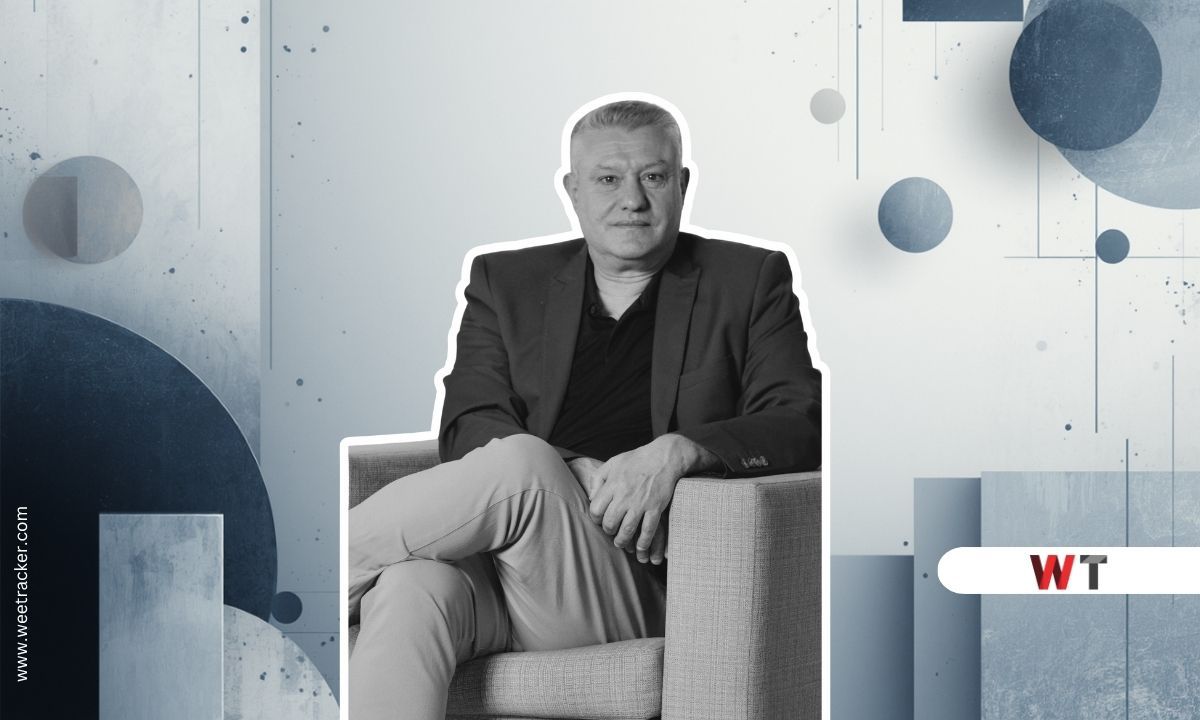
“No amount of additional capital could fix a scheduling and last-mile execution problem,” says Nico Christoforou, General Partner at Lighthouse Capital, an operator-led private equity firm currently raising USD 50 M for its inaugural fund, as it pushes to combine growth capital with hands-on operational expertise to help businesses scale sustainably.
That moment changed how he views the African market. For two decades, Christoforou operated under “a naïve assumption that capital liquidity was as easily accessible in the rest of Africa as it was in his South African investment banking days.” He learned the hard way that it isn’t. Banks in the region prefer lending to large corporates and governments. The small and medium-sized businesses that actually drive employment are left to fend for themselves.
But Christoforou now operates under a somewhat counterintuitive philosophy based on the conviction that while funding is scarce, the deeper constraint is operational rot. “We mistakenly assumed our money alone would be the differentiator,” he admits. “It wasn’t.”
The old private equity playbook—load up on debt, slash costs, and flip the asset—is dying in Africa, he tells WT. Christoforou argues it is not just ineffective but also reckless. Currency volatility alone can erase leverage-driven returns. He points to the grim math of a 30% to 40% currency drop in a single year, which has sunk otherwise sound businesses that took on hard-currency debt against local-currency revenue. Beyond that, the infrastructure for exits, such as IPOs, strategic trade sales, or secondary buyouts at scale, simply does not exist in most African markets.
“Investors who still show up assuming they can financially engineer their way to a 3x return in five years, without contributing to the operational work, are increasingly the ones stuck holding underperforming assets they can’t exit,” he says.
What works now is boring, he says, suggesting route planning, cash conversion cycles, and governance upgrades.
***
Christoforou tells the story of a fintech founder processing millions of dollars in transactions with a team of just eight people and no institutional backing. When asked what kept him going, the founder did not talk about market size or total addressable revenue. He talked about his mother. About proving that the school fees she paid when she had nothing to spare had been worth it. For Christoforou, that personal stake is a more reliable indicator of success than a polished pitch deck.
He looks for founders who can explain their business model in five minutes to a stranger. He wants to see a leadership team that can politely disagree with the founder in a room. “A business that only functions when the founder is present is not an investable business; it’s a job with a boss,” he says.
The red flags are equally bare. He walks away from founders who attribute every past failure to external macro factors without acknowledging their own missteps. Evasiveness about numbers during due diligence is an immediate deal-breaker. “They will very likely be even more evasive after,” he notes.
One of the most persistent misconceptions Christoforou encounters is the idea that “Africa” is a single market. He still gets asked to comment on “African risk” as if a consumer goods company in Nairobi shares a regulatory environment with a digital services firm in South Africa. They do not.
Kenya’s capital markets look nothing like Nigeria’s, and both look nothing like the francophone West African monetary union. International investors who apply a flat “Africa risk premium” to every deal either overprice viable opportunities out of existence or underprice the real, country-specific hazards, he warns.
***
Christoforou’s advice to founders is brutally practical: build your governance infrastructure before you need it. The way he sees it, founders who wait until due diligence to formalise their books and board structures are negotiating from a position of weakness. “Every gap discovered during diligence becomes leverage for the investor to reprice or add protective terms,” he warns.
He advises founders to walk into a capital raise with audit-ready financials and a functioning board, even an informal advisory one, because institutional capital rewards businesses that look institutional-ready before the money arrives, not after.
As for the future, Christoforou is not chasing flashy consumer apps. He is looking at the “boring” middle layer of fintech—card processing, identity verification, and B2B payment rails for informal trade. He also sees structural tailwinds in healthcare distribution and climate-linked agribusiness, where development finance institutions and commercial equity are increasingly co-investing in the same deals. It is a blended capital stack where the return case and the development case genuinely overlap.
But his underlying message is lucid. He asserts that in a market where capital is expensive, exits are unpredictable, and regulations shift overnight, the investor who survives is not the one with the deepest pockets but the one who knows how to fix a broken supply chain.
“Investing is about people,” Christoforou says. “Their dreams, their ambitions, and their desire to build something that outlasts them. The investors who understand that tend to make better decisions than the ones treating Africa as an asset class to be modelled rather than a place to be understood.”