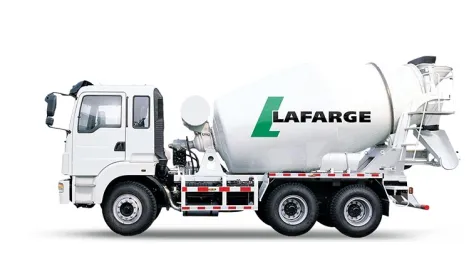
For years, Nigeria’s cement market has been dominated by three players. Two were homegrown: Dangote Cement, the country’s heavyweight with a 60% market share, and BUA Cement, its fast-rising challenger. The third was Lafarge Africa, the Nigerian arm of Swiss multinational Holcim. Together, they controlled supply in Africa’s largest economy.
Now, that balance has shifted. A Chinese entrant has muscled in, snapping up Lafarge’s spot to compete in Africa’s largest economy.
According to confirmed reports, Huaxin Cement, one of China’s oldest producers, has quietly pulled off one of the biggest cement deals in Nigeria’s history. The company paid USD 1 B to acquire an 83.81% stake in Lafarge Africa from Swiss giant Holcim, instantly making itself the country’s third-largest producer. By 2026, Huaxin plans to buy the remaining shares and take full control.
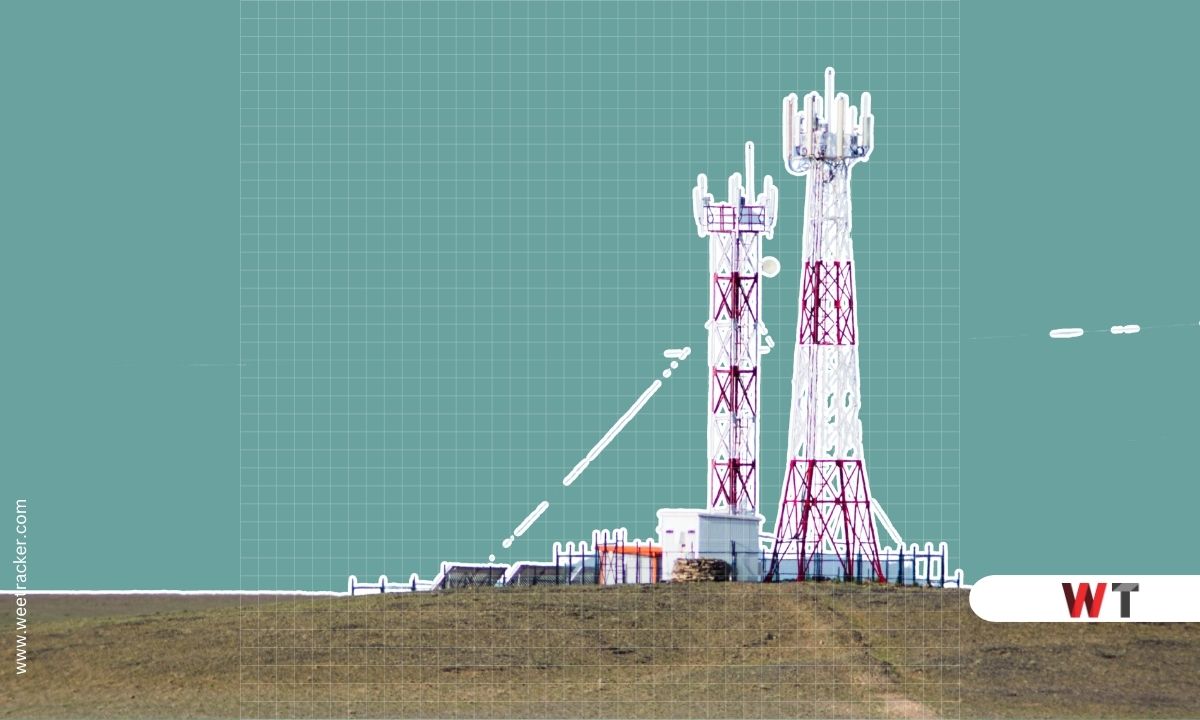
The deal gives Huaxin ownership of four major cement plants, Sagamu, Ewekoro, Ashaka, and Mfamosing, with a combined production capacity of 10 million tonnes per year. That puts it in direct competition with Dangote’s 35 million tonnes and BUA’s rapidly expanding footprint.
Nigeria and Broader African Expansion
Nigeria consumes roughly 30 million tonnes of cement annually, driven by population growth, housing demand, and government-led infrastructure projects. Cement demand is expected to climb as Nigeria pushes forward with new roads, bridges, housing developments, and industrial expansion.
For Huaxin, which has seen demand slow at home in China, Nigeria is a lucrative new frontier. Lafarge Africa alone generated USD 450 M in revenue last year, and Huaxin is betting that number can grow under its management.
But Huaxin’s ambitions aren’t limited to Nigeria. Africa has become central to its overseas pivot as China’s construction boom slows and overcapacity drags down profits at home.
Since 2020, Huaxin has expanded aggressively across the continent through acquisitions rather than greenfield projects. Since 2020, Huaxin has snapped up ARM Cement’s Tanzanian operations, Lafarge subsidiaries in Zambia and Malawi, InterCement’s assets in South Africa and Mozambique for USD 265 M. The strategy has enabled it to scale quickly, sidestepping the costs and risks associated with building plants from scratch.
With the Lafarge Africa takeover, Huaxin now controls nearly 30 million tonnes of capacity across Africa, cementing its status as a serious continental player.
China’s Footprint in Africa’s Construction
Huaxin’s push into Nigeria is part of a much wider trend of China’s growing grip on African construction and infrastructure
Chinese companies already dominate many of the continent’s largest projects, from roads and railways to bridges, airports, and power plants, often financed through Beijing’s Belt and Road Initiative. In Nigeria alone, Chinese contractors like China Civil Engineering Construction Corporation (CCECC) and China Harbour Engineering Company (CHEC) have been awarded contracts for some of the country’s most significant developments, including rail lines, ports, and bridges.
Controlling cement production means more control of the supply chain. It no longer just lets dominate Africa’s infrastructure; it’s now lets control the raw materials that make those projects possible. Huaxin’s entry into Nigeria is a strategic extension of that influence.
Meanwhile, Huaxin has signaled that its African investments are not short-term. In Zambia, it recently invested USD 30 M to install a new kiln and modernize facilities. Similar upgrades are expected in Nigeria as Lafarge Africa is folded into its global operations.
For CEO Li Yeqing, the Nigerian deal marks the boldest step in Huaxin’s international strategy so far. The company has made clear that Africa is central to its growth ambitions as China’s domestic market slows.
The Cement Wars
With the dust settling, Nigeria’s cement industry is shifting from a Swiss-Nigerian triopoly to a new three-way battle featuring a Chinese powerhouse.
However, Dangote and BUA remain formidable competitors. Dangote Cement pulled in USD 2.4 B in revenue last year, while BUA has been on a building spree, commissioning new plants across the country. But Huaxin’s scale, deep pockets, and appetite for acquisitions make it a force neither rival can ignore.
That said, the Huaxin deal is facing some legal issues. A minority shareholder, Strategic Consultancy Ltd, has gone to court claiming it was shut out of negotiations. While Holcim insists the transaction is done, the case could still drag on in Nigeria’s federal court.
Legal wrangles aside, the bigger question is how Huaxin’s arrival will reshape competition. Cement prices have remained stubbornly high for years, despite rising supply. A powerful new entrant could pressure rivals to expand supply, improve efficiency, and maybe even stabilize costs for consumers.