This Kenyan Entrepreneur Literally ‘Brightened The Lives’ Of Poor People In Rural Communities As A Freshman

By Henry Nzekwe  |  January 7, 2019

The name Evans Wadongo will undoubtedly remain engraved on the minds of many Kenyans for several years to come – especially the natives of Chumvi, a settlement located in the Eastern province some 211 kilometers from Nairobi, the Kenyan capital.

Evans Wadongo calligraphed his name on the annals of history and became something of a local hero by designing and building the first made-in-Africa solar-powered LED lanterns, otherwise known as ‘MwangaBora.’

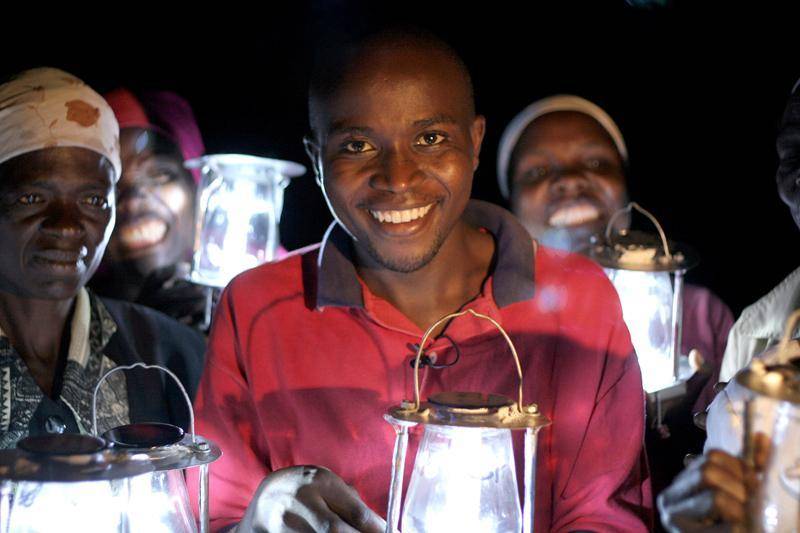
Evans Wadongo Holding One Of His ‘MwangaBoras’
Image Source: capitalfm.co.ke

Such was his resourcefulness and ingenious improvisation that he was able to put the whole thing together from discarded materials. Through his creation which has quite literally illuminated the lives of many of the locals, he has been able to alleviate the misery that has hitherto been the case for most people living in poor Kenyan communities.

With absolutely no hope of electricity as is evident in the lack of infrastructure, the people of Chumvi – and similar communities – who are predominantly farmers have to eke out a living and go about their daily lives wholly dependent on kerosene lamps as their only source of light at night time.

Growing up, Wadongo experienced firsthand the vile-tasting reality of having to make do with just one kerosene lamp as the only source of illumination after dark in a family of about seven. The five Wadongo brothers had to study using that single light source; the dim kerosene lamp, which they treasured much like those Knight Templars did the Holy Grail in one of those Dan Brown novels. It’s no wonder the brothers bickered over who gets to use the lamp on several occasions.

Without electricity which should ordinarily be more of necessity than luxury, studying was a tremendous burden for kids of school age, as working on school assignments at night became some sort of Herculean Task.

Of greater concern, the kerosene lamps required a refill of kerosene on a regular and since the fuel is no cheap commodity, many households were forced to do without it altogether and wallow in the darkness as most families in rural Kenya survive on less than a dollar a day.

In such households. food takes up a major chunk of the meager income available as it is understandably given preference over light in terms of importance. As a result of this, a significant number of children are left with no light after sunset.

No kerosene. No light. No means of studying. Education gradually begins to take the backseat. And before long, truancy becomes the order of the day for these kids and many of them drop out of school eventually.

You may have a hard time coming to terms with why these kids have only nighttime to study. You may be tempted to ask the obvious question; “If you have no light source at night, then why not study during the day?” Well, hold your horses because there’s more to life in poor rural communities than meets the eye.

To begin with, it might interest you to know that the closest schools to these kids – the Manyonje and Bisunu Primary schools – are no less than 10 kilometers away. This implies a daily walk of at least 20 kilometers to and fro; no cake walk.

More so, in most low-income households, kids shoulder some responsibilities when it comes to fending for the family from a tender age. They are required to work during the day to bolster the family’s income. Hence, they ply the somewhat unconventional route by going to school well after midday, after they must have worked on farms or done other odd jobs from the break of dawn.

That said, these kids will have to embark on a 10 kilometers walk to school from the afternoon after all the exertions from work, probably under the scourging rays of the sun. They will have to also cover the same distance on foot on the return trip which typically takes up the greater part of dusk and all the way to nightfall.

For these kids, the common practice is to attend ‘afternoon school’ with their kerosene lamps in tow as they will need the illumination for the latter stages of the school day and on the walk back home. For families that had only a single lamp or maybe no lamp at all, and for those ones that could not afford kerosene, the kids had to sit out school.

Even as a young child, Evans Wadongo was deeply disturbed by the situation. Many of his many friends and classmates had quit school simply because their families couldn’t afford the luxurious commodity – kerosene. Yes, in rural Kenya, being able to afford kerosene in those days was as close to luxury as one could possibly come.

Born in Western Kenya to a family that had both parents as teachers by profession, Evans Wadongo didn’t exactly have an upbringing laden with scoops of milk and honey, but it was no hand-to-mouth situation either. He was, at least, privileged enough to not suffer the same fate as many kids his age. Pained by the unsavory scenario, Evans who is the youngest Wadongo boys, resolved to do something to literally brighten the lives of kids in his community.

Evans’ family was one of the few that could afford the ‘luxury fuel,’ but this seemingly fortunate situation didn’t come without drawbacks of its own. Studying with the dim lights produced by kerosene lanterns means staying really close to these lamps and inhaling the dark fumes they emit. This is known to cause a number of health problems, including respiratory tract problems and damages to eyesight. And Evans even has the battle scars to prove this as he still struggles with sight problems to this day.
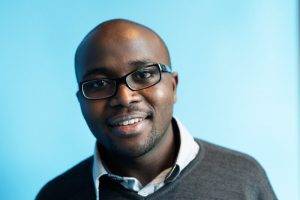
Evans Wadongo

Apart from these obvious health concerns, kerosene lamps are potential fire hazards as they can ignite inflammable materials and set an entire house ablaze, destroying lives and property. For the record, there are several occurrences of this horrendous ordeal for a considerable number of households in parts of rural Kenya.

These problems and drawbacks only acted to reinforce the resolve of young Evans to provide an alternative to the notoriously-harmful yet highly-treasured kerosene lanterns that had become something of a staple.

The little boy was concerned for his classmates and friends whose education suffered because they didn’t have access to a steady light source. And the saddest of all is that kids who gave up on education also gave up on opportunities to improve their lives. So, they tow the same line as those before them and continue the vicious cycle of privations and hardship by birthing yet another underprivileged generation.

Evans Holding Up ‘The Good Light’ At His Workshop
Image Source: phys.org

To put an end to this, Evans Wadongo stepped and like a ‘circuit-breaker,’ he swung into action to stop the continuous cycle of ignorance and poverty. He brought an end to this chain of events with his solar-powered LED lanterns.

Being relatively privileged and slightly better off than most of his peers, and being that he was an assiduous student too, Evans went on to complete his high school education at Kakamega High School while also emerging as one of the best 100 students in the 2002 Kenya Certificate of Secondary Education Examination.

Unfazed by the gloomy situation in his hometown, Evans furthered his education in 2004 when he joined the Jomo Kenyatta University of Agriculture and Technology in pursuit of a degree in Electronics and Computer Engineering. It was within the walls of that institution that he got what could be called his first flash of ingenuity.

That was during his freshman year. While working on a school project that had them use LED for Christmas lights, the young Engineer conceived the idea of using solar-powered LED lanterns as a perfect replacement of kerosene lamps. Those powerful but intangible thoughts led him through a series of experiments which eventually brought forth his creation; solar-powered LED lanterns.

While he was at it, his sole motivation the entire time whole time was the need to put an end to the situation where life seemingly comes to a halt or even become miserable after sunset in some of Kenya’s rural communities.

He was also buoyed by a desire to wipe clean the tear-streaked faces of those students who had to face the teacher’s ‘correction stick’ because they failed to do their homework. Evans made it something of a personal mission to, as well, see to it that the number of out-of-school kids many of those rural communities was significantly curbed.

The young lad knew that these seemingly-insurmountable problems would vanish in the wake of a steady, affordable and healthier light source. Thus, he was relentless in his quest to find that light source; the good light, the MwangaBora. And find it he did.

Being only an ‘engineer-in-training’ at the time, he still managed to craft what is considered the first made-in-Africa solar-powered LED lanterns from inexpensive scrap metals and a solar panel he picked up on his way back from school. And he was only 19 and barely into his sophomore year when he pulled it off.

At such a young age, Evans had exhibited remarkable courage by tackling the problems of his entire community. As a student of engineering, the workload was staggering and enormous. But somehow, he found the time to see the task to its successful completion.

To produce those lamps, he had to buy scrap metals, photovoltaic panels, batteries and LED with money that should have been used for his feeding and upkeep. For several weeks, that meant skipping two meals daily – such was his unusual sacrifice and commitment.

His unflinching resolve yielded phenomenal success – he created ‘the good light’ which birthed the entire project was named ‘Use Solar, Save Lives.’
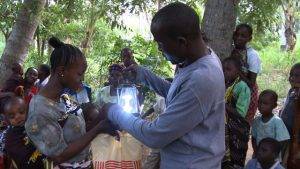
The MwangaBora At Work
Image Source: cnn.com

However, as soon as the fanfare of his initial achievement had died down somewhat, Evans was greeted by the harsh reality that starving to make a few ‘MwangaBoras’ and giving them out to families didn’t make much difference.

The situation in the communities pretty much remained the same and to make a significant impact, he had to push himself even further. This time, the challenge was to find quicker and cheaper ways of making the lanterns. As at that time, a single MwangaBora cost about KSh 2 K (about USD 23.00) – an arm and a leg for the poor families he was actually trying to help.

This led him to undertake a bigger project and in 2006, he founded Sustainable Development for All Kenya (SDfA-Kenya). He designed the new project as a non-profit social enterprise geared towards combating poverty in rural communities by focusing on three key areas; education, environment, and economic empowerment.

In June 2007, SDfA-Kenya became registered and officially recognized in all of Kenya and it adopted the ‘Use Solar, Save Lives’ programme as its headline project. The project seeks to tackle poverty and ignorance head-on by teaching women in rural areas alternative sources of livelihood.

These women are aided with solar lighting and encouraged to save up funds originally meant for kerosene with the aim of channeling those saved funds into local businesses that can improve the economic situation in their respective communities. The strategy is known to have given rise to a number of local businesses built on agriculture.

As these solar-powered lamps are now being locally-made, lives are also being enriched. This manufacturing job is known to pay as much as USD 110.00 per week to workers in many rural communities.

In July 2009, Evans Wadongo obtained BSc honors in Electronics and Computer Engineering, and despite his limited study time, he was one of the best graduating students. Besides being the Founder and Chairman of SDfA-Kenya, Wadongo also functioned as the organization’s Project Manager from 2006 to 2008.

He went on to wear the hats of Chairman and Programs Director between 2008 and 2010. Directo. He currently works as the Executive Director and Chairman of SDfA-Kenya; an establishment that has since spread its tentacles beyond Kenyan borders to reach parts of Malawi in collaboration with Jacaranda Foundation.

Image Source: vimeo.com

Under the leadership of Evans Wadongo, SDfA has influenced millions of lives both directly and indirectly. In 2010, Wadongo was voted as one of CNN’s Top Ten Heroes and in July 2011, he went on to launch the ‘Just One Lamp’ campaign globally to raise awareness and funds for the MwangaBora lanterns.

That same year – precisely on 30th March 2011- Wadongo made history when he received the inaugural Mikhail Gorbachev Awards for ‘The Man Who Changed The World’ in a ceremony that took place in Russia. And if you’re wondering just how big a deal this is, you might have your answer in the co-recipients of that year’s award in the form of Sir Tim Berners-Lee; the inventor of the World Wide Web, and Ted Turner; Founder of CNN.

A recipient of numerous awards and a speaker at many events and forums, Wadongo was honored as one of three Kenyan torchbearers as the Olympic Games which took place in London over six years ago. He made a 2013 list by MIT Technology Review of the ‘Top 35 innovators under 35’, while also earning a thoroughly-deserved spot in Forbes’ ‘30 under 30’ list of Africa’s best young entrepreneurs for 2013. His story has seen extensive coverage from both local and international media.

Evans At The London 2012 Olympics
Image Source: Twitter

Evans Wadongo currently resides in Nairobi, Kenya, where he works as the Co-Founder of GreenWize Energy; an enterprise which serves clients with renewable energy solutions. He is also an adviser to a number of social enterprises which aim to increase food production, as well as expedite processing and distribution by speeding up technology and business model innovations.

The boy who created ‘the good light’ has also co-founded Wadson Ventures – an establishment that supports startups who offerings feature innovative solutions for the underprivileged and economically-disadvantaged. It appears he has something of a personal vendetta with poverty and ignorance.

Wadongo’s MwangaBora has spread throughout Kenya and beyond. Special designs of these lanterns adorn walls at Victoria and Albert Museum in London and Atlanta’s High Museum of Art also has permanent collections.

Evans believes that one cannot make an impact by keeping things to himself. He also thinks that training young people on a variety of skills fosters a sense of leadership in them, as well as inspire them to take the initiative to carve out their own path.


Featured Image Courtesy: npr.org
Weetracker_Private_Equity_Africa

Mauritius Displaces Nigeria, Climbs To No. 1 Spot In Africa’s PE Market In The First 9 Months Of 2025

By Emmanuel Oyedeji  |  December 5, 2025

In the first nine months of 2025, Mauritius vaulted to the top spot among African private equity destinations, outpacing Nigeria even though it completed far fewer transactions.

According to data from DealMakers Africa, Mauritius recorded a total deal value of USD 1.25 B, a dramatic 311% rise from just USD 38.9 M in the same period the previous year. Meanwhile, Nigeria, despite closing 45 deals, saw its total deal value shrink sharply to USD 987.5 M from USD 3.8 B

That leap didn’t come from an increase in deal count but from a few very large transactions. In June 2025, a merger combining the diplomatic-housing businesses of Diplomatic Holdings Africa, Verdant Ventures, and Verdant Property Holdings—made official through 24.7 million Grit Real Estate shares—alone accounted for USD 839 M.

That same month, another major transaction saw Tremont Master sell a 56% stake in Alphamin Resources (approximately 718.99 million shares) to Alpha Mining in a deal worth USD 367 M. Together, these two transactions accounted for a substantial portion of Mauritius’ 2025 surge.

Mauritius’ race to the top comes as the momentum in the broader African private equity market weakens. DealMakers Africa found that deal value outside South Africa slipped 6% year-on-year to USD 6.85 B, after a 10% fall in 2024. Total deal count dropped to 259 from 282.

West Africa led the regional tables with 78 deals, thanks to Nigeria’s volume. North Africa followed with 67, most of them in Egypt, and East Africa posted 63, driven by Kenya.

General corporate finance activity took a sharper hit. There were 64 transactions worth USD 2.2 B, down from 88 deals worth USD 10.4 B in 2024. Notable transactions included Sun King’s USD 156 M securitization, the largest of its kind in sub-Saharan Africa outside South Africa. Mining dominated the top 10 list, led by Vitol’s USD 1.65 B acquisition of stakes in Côte d’Ivoire’s Baleine project and the Republic of Congo’s LNG project.

Mauritius’ Rebranding into an Economic Hub

Mauritius, once best known as an idyllic tourist destination, is now one of Africa’s most sophisticated financial hubs. Over the past few decades, the island has built a strong legal and regulatory framework, fashioned a business-friendly tax regime, and leveraged its geographical position, bridging Africa, Asia, and Europe to become a go-to gateway for capital flows across the continent. 

Today, the island-state, with only a population of 1.3 million and a GDP of USD 14.95 B in 2024 per the World Bank, hosts more than 450 private equity funds that collectively manage almost USD 40 B in assets spanning infrastructure, renewable energy, agriculture, telecoms, logistics, fintech, and financial services. That concentration of capital, expertise, and governance gives fund managers a reliable base for structuring continent-wide investments and navigating cross-border deals in volatile markets.

Moreover, Mauritius benefits from a network of bilateral investment treaties and its participation in the African Continental Free Trade Area (AfCFTA), enhancing regional integration and strengthening investor legal protection.

According to advisers like StraFin Corporate Services, structuring investments via Mauritius offers tax efficiency, simplified governance, and compliance with international standards, all major draws for global investors, family offices, and multinationals seeking Africa exposure.

Mauritius’ rise as a financial gateway sends a powerful signal about the shifting landscape in Africa’s PE. For investors and fund managers, Mauritius’s legal, regulatory, and tax infrastructure offers a secure, efficient launching pad for cross-border deployments. As a result, a handful of large transactions now carry more weight in shaping deal-value rankings than many smaller deals combined.

Overall, private equity is increasingly being seen not just as niche funding but as a reliable engine for scale, consolidation, and long-term value creation.

Best eSIM for Nigeria 2026 -Partner Content

Best eSIM for Nigeria 2026

By Partner Content  |  December 5, 2025

Nigeria’s networks range from 5G in Lagos, Abuja, and other major cities to 3G in rural states. Therefore, choosing the right eSIM begins with coverage research. From there, crucial points to consider when finding the best data plan include ensuring a stable signal between regions, clear data-per-GB pricing, hotspot availability, easy activation, and compatibility with unlocked iOS and Android devices.

With unequal coverage across the country, travellers and local users require flexible connectivity options. Roaming costs are high, and the need to physically change SIM cards is inconvenient, which is why eSIMs have become a practical solution. Multi-network services – including Ohayu eSIM Nigeria – automatically connect users to the strongest available signal from Airtel, Glo, and MTN networks. This offers better reliability in remote locations, on highways, or when moving between cities.

Why eSIMs are changing connectivity in Nigeria

Embedded SIM is gradually changing the way people connect to mobile networks in Nigeria. Unlike traditional physical cards, which need to be inserted and changed manually, Nigeria eSIM works entirely digitally. It can be activated in a few minutes using a QR code, without visiting a carrier’s store. This convenience has made the technology popular among urban users and nomads who often use multiple networks and travel between regions.  

Despite its flexibility, the widespread adoption among local users is still limited. The travel market is currently the main driver. It offers:

  1. Instant activation;
  2. Flexibility;
  3. Savings on roaming;
  4. Multi-network connectivity without the need for multiple physical cards. 

Some solutions even switch between operators automatically. It guarantees stable coverage in different cities, from Lagos to Abuja.

How to choose the best eSIM for Nigeria 

First, analyze the area you are planning to visit. If it is a rural area, expect 2G/3G coverage. 4G coverage is widely available in Ode-Irele, Idemili South, and other states. Meanwhile, 5G is available in Lagos, Ibadan, Benin City, Onitsha, and Enugu. 

Some of the other points to keep in mind:

  1. Pick mobile networks in Nigeria from Airtel, Glo, and MTN. 
  2. Check device compatibility on the provider’s website by entering the smartphone model (iPhone, Samsung, Pixel, Meizu, Lenovo, etc.). Check that your device is unlocked. Locked gadgets give no connection to other operators. 
  3. Review the restrictions on transferring unused data depending on local or travel plan.
  4. Determine whether you need minutes and texts, which are mostly offered by local carriers. Most carrier options include data-only plans.

Source: https://ohayu.com/blog/best-mobile-networks-nigeria/ 

You should also choose the activation time. This can be before your trip or after landing. Activation is possible via QR code, manual code entry, or app-based setup. Note some details:

  1. For iOS: Settings → Cellular → Add embedded SIM; 
  2. For Android: Network & Internet → SIMs → Add embedded SIM.

Best global providers of eSIM for Nigeria – plans comparison

We’ve checked out and compared the top international Nigeria eSIM providers: Ohayu, Airalo, Holafly, Nomad, and Yesim, based on key criteria. Here are the detailed results:

ProviderData AmountPriceValidityHotspot SupportPartner networksCost per 1GB of data
Ohayu3 GB$21.2914 days+Airtel, Glo, MTN$7.10
Airalo2 GB$13.5015 days+Airtel$6.75
HolaflyUnlimited$62.9014 days+Airtel, Glo, MTN$4.49/day
Nomad3 GB$17.0030 days+Airtel$5.60
Yesim3 GB$15.607 daysDepends on the operatorAirtel, Glo, MTN$5.21

Use cases & network performance  

Travelling to popular cities. Embedded SIMs usually work reliably thanks to dense 4G/5G coverage in Lekki, Victoria Island, Ikeja, and Yaba in Lagos, as well as in central areas of Abuja near Millennium Park, Wuse, or Maitama. This is convenient for navigating between major tourist attractions such as the National Theater in Lagos or Aso Rock in Abuja, as well as for video calls and streaming.

Driving to remote areas. Keep in mind that 3G connectivity is prevalent in Yankari National Park and Gashaka Gumti National Park. During long road trips between states, coverage can vary, and data plans that connect to multiple local carriers are most beneficial here. Automatic switching between Airtel, MTN, or Glo increases your chances of staying online at least at a basic level, especially in areas with limited infrastructure.

Business trip. Those who regularly move between business centers, such as the Victoria Island area in Lagos, the Central Business District in Abuja, or the Trans Amadi area in Port Harcourt, get the most reliable connection. These areas have 4G/5G with the highest speeds and most stable data transfer. Video conferencing, collaboration, and fast file downloads are guaranteed.

What to avoid when choosing an eSIM

Avoid these mistakes when buying the best eSIM for Nigeria:

  1. Trusting little-known single-operator providers;
  2. Buying a plan before checking gadget compatibility;
  3. Choosing a plan that doesn’t fit your needs;
  4. Selecting an operator without checking coverage;
  5. Leaving roaming enabled on the main SIM card;
  6. Choosing a provider without technical support.

Nigeria eSIM FAQs 

How to get an eSIM for Nigeria? 

Select a provider and tariff plan according to your needs. Activate the package before or after arrival via QR code, manual code entry, or app-based setup.

Do embedded SIMs work outside Nigerian cities?

Yes, but coverage in rural areas remains within 3G and 4G, so multi-operator eSIMs work best.

Can one eSIM cover multiple countries?

Yes, the carriers we analysed offer this feature. For example, Ohayu has global plans for travelling to different countries without worrying about switching between SIM cards.

How does eSIM work for national parks and remote spots?

The signal may be unstable in remote areas, so the embedded SIM switches to the best available operator if it is a multi-network plan. Expect 3G in such areas. 

What if I’m out of data or need to extend the validity period? 

Some suppliers allow you to extend the validity period for an additional fee, while others offer the purchase of an additional package.

Final thoughts 

It’s easier to select the best eSIM for Nigeria when you know the travel needs. Holafly and Yesim offer bigger data limits, while Airalo and Nomad attract customers with low prices. If you plan to travel between regions, visit parks, and local attractions, then Ohayu is a convenient option due to its automatic selection of the most stable network. Moreover, this service identifies the device automatically and has apps for Android and iOS to simplify the plan selection, data usage monitoring, and accessing user guides.

2025 African Startup Review: Unpacking Key Trends and Events

2025 African Startup Review: Unpacking Key Trends and Events – Startup Shutdowns

By Emmanuel Oyedeji  |  December 4, 2025

As 2025 comes to a close, we’re taking a moment to look back at some of the stories that dominated conversations across Africa. This week’s edition turns the spotlight on one of the ecosystem’s hardest topics: Startup Shutdowns.

It has been a year marked by tough decisions, dramatic pivots, and founders wrestling with realities that no pitch deck can soften. Across the continent, companies faced rising costs, unforgiving markets, and the pressure to build not just fast, but sustainably.

What follows is a look at the companies that closed their doors or entered administration and the deeper signals behind each fall.

Joovlin: A Quiet End for a Promising Early-Stage Contender

This year’s shutdown narrative began with Joovlin’s shutdown in January. The Nigerian startup closed after nearly four years of building tools for micro-suppliers to manage orders and online sales.

It attracted over 2,000 resellers, secured USD 100 K in funding, and earned praise for solving a real operational pain point.

But early-stage traction couldn’t make up for an empty runway. Joovlin struggled to raise follow-on investment, and without fresh capital or a path to meaningful revenue, the founders made the tough call to shut down. The shutdown wasn’t dramatic; it was simply the result of timing, investor appetite, and the relentless math of burn versus growth.

The end was quiet, almost understated, yet it marked the beginning of a year where much louder collapses would follow. And barely weeks later, the ecosystem received the next, far more jarring signal.

Bento Africa: The HR Startup That Wanted to Be the Deel for Africa, Until the Floor Fell Out

Bento Africa had long pitched itself as the Deel for Africa—an automated payroll and HR platform that could scale across markets and simplify compliance. With a big vision, Bento quickly expanded into Ghana, Kenya, and Rwanda while onboarding hundreds of businesses.

It was the kind of company investors expected to scale quickly and dominate a critical infrastructure category.

But by early 2025, the company was sinking under allegations of unremitted taxes and pension contributions. The undoing began when the company’s engineers stopped work in protest of unpaid salaries, and the company fired the entire tech team, paralyzing its payroll engine.

Clients soon reported that their employees’ salaries had been missed. Tax and pension remittances also went missing, with one business publicly claiming NGN 50 M in unremitted deductions, prompting investigations by the EFCC and LIRS.

Bento’s CEO resigned as the panic deepened, and the board announced a temporary shutdown while advising customers to stop funding their payroll accounts.

Unlike Joovlin’s shutdown, which was because of limited funding, Bento collapsed in a spiral of mistrust and forensic scrutiny. And as the dust settled, founders across the continent were reminded of something uncomfortable: in fintech, ambition means nothing if the fundamentals aren’t airtight. You cannot automate payroll for others when your own house is unstable.

Edukoya: Edtech Ambition Meets Market Friction

Later in the same month, the spotlight shifted to education technology. Edukoya had entered Africa’s edtech scene with rare fanfare, landing the continent’s largest pre-seed round, USD 3.5 M, in 2021. Its model of K–12 tutoring with live classes, on-demand classes, and AI-supported learning felt like the perfect answer to Africa’s youth boom and widening learning gaps.

The platform onboarded 80,000 students, delivered over 15 million answered questions, and hosted thousands of live tutoring sessions. Its metrics were strong, its mission timely, and its product ambitious.

But the harsh reality was simple: the market wasn’t ready. Poor internet access prevented consistent usage. High device costs kept millions locked out. Disposable incomes kept falling as inflation rose. Even with a freemium model, converting users to paying customers became impossible at scale.

Unable to find a sustainable model, and after exploring M&A and potential pivots, the team decided it was better to close the platform and return capital than burn cash chasing scale that wasn’t coming. Edukoya’s shutdown marked a sobering turn in a sector that is long overdue for growth but continues to collide with Africa’s infrastructure gaps.

Lipa Later: Administration Takes Over

Kenya’s Buy Now Pay Later (BNPL) startup Lipa Later didn’t shut down, but its entry into administration in March 2025 signaled deep trouble for consumer credit startups in East Africa.

The company had raised USD 16.6 M across multiple rounds and expanded into Uganda and Rwanda. It even went on the offense during tough times, acquiring the e-commerce platform Sky Garden for USD 1.6 M in late 2022, a bold move that signaled confidence in its future.

But by early 2025, 3 years later, that confidence was fading. Lipa Later struggled to raise new funding, payroll obligations began slipping, and concerns around debt levels intensified. The appointment of an administrator placed the company’s future in limbo, with restructuring, acquisition, or liquidation all on the table. The financially troubled hire-purchase firm has since entered several bids for acquisition.

While the company didn’t shut down entirely, entering administration was a stark reminder that BNPL models depend on continuous capital flow. Without it, even a well-known brand can grind to a halt.

Okra: The Fintech Powerhouse That Could Not Outrun Its Own Momentum

In May 2025, the once-celebrated fintech—one of Africa’s brightest hopes for open banking—closed down its operations.

Okra had all the hallmarks of a breakout success: top-tier founders, USD 16.5 M raised, partnerships with major banks, and blistering early growth that turned it into an industry favorite almost overnight.

But after co-founder David Peterside’s departure, the company struggled to maintain execution speed. The engineering team struggled under the weight of growing contracts, and the platform’s heavy reliance on screen scraping became a bottleneck.

The pivot to Nebula, a naira-priced cloud offering launched in October 2024, felt bold, but bold wasn’t enough. It arrived in a market dominated by AWS and Google Cloud. Meanwhile, the naira losing ground daily was a mismatch that Okra could not win. By mid-2025, the company accepted the inevitable.

By mid-2025, Okra shut down, returning an estimated USD 4–5.5 M to investors and offering staff up to six months of severance. Its closure was a moment of reckoning: if a company with this level of capital, talent, and early traction could collapse, it signaled that the era of easy fintech wins was over.

And as Okra bowed out, it left the industry asking a sharper question: If a frontrunner can fall this fast, what does that mean for everyone else building in the same economic storm?

Afristay: Covid Fatigue Claim a Local Travel Favorite

Afristay’s shutdown in early mid-2025 closed the chapter on one of South Africa’s most recognizable travel-tech platforms. Before the Covid-19 pandemic, the platform was thriving, attracting 700,000 monthly visitors and aiming for ZAR 140 M in bookings, positioning it as South Africa’s homegrown answer to Airbnb. It had a local-first product, dedicated booking agents, and strong brand loyalty.

But the pandemic crushed demand almost overnight. Traffic dropped 96%, bookings evaporated, and the business never recovered its footing. By 2023, Afristay was operating with two part-time staff and fewer than 30 monthly bookings. When the company finally shut down in 2025, it felt like the last chapter of a pandemic-induced decline that had dragged on for four years.

More importantly, Afristay’s fall highlighted something bigger: South Africans now have far less spending power than they did a decade ago. Travel is a luxury many can no longer afford, and even the strongest platforms cannot thrive in a shrinking consumer economy.

And with that, the first chapter of shutdowns in 2025 came to a close, each one different, but all pointing to an ecosystem reshaping itself under pressure.

A Year of Tough Calls and Tougher Lessons

Taken together, these shutdowns reveal a continental theme. Money alone isn’t saving companies anymore. Market timing, governance, cost discipline, and technical depth matter more than ever. Investors are asking harder questions. Founders are making tougher decisions. And the glamour around African tech is giving way to a more grounded, more demanding era.

This is only the first part of our 2025 African Startup Review. More stories are coming, and with them, the insights shaping the next chapter of innovation across the continent.

Vodacom Group Buys Majority Stake In Safaricom

Vodacom Group Purchases Controlling Stake In Kenya’s Safaricom

By Wayua Muli  |  December 4, 2025

Vodacom Group, a South Africa-based pan-African telecommunications company, has announced its purchase of a significant number of Kenya’s Safaricom PLC shares, giving it a 55% controlling stake in Kenya’s biggest telecom. The share agreement was announced in Nairobi on December 4, 2025.

Under the terms of this transaction, Vodacom will purchase 15% of Safaricom PLC from the Government of Kenya’s share in the telecom, and an additional 5% from its local subsidiary Vodafone (at USD 0.26 per share), valuing the total deal at USD 1.95 billion (SAR36 billion). Should the transaction receive the requisite approvals from regulatory and governmental authorities in Kenya, Ethiopia and South Africa, this will see Vodacom’s stake in Safaricom – which will remain listed on the Nairobi Stock Exchange – increase from 35% to 55%. Kenya’s government will continue to hold 20% of the company while public shareholders will take the rest.

The move is a key milestone in Vodacom’s Vision 2030 strategy, which includes deepening its leadership in Africa’s high-growth markets, and scaling its diversified portfolio to include financial inclusion for underserved markets. This will include M-Pesa Global, which both Vodafone and Safaricom have been expanding over the years to allow East Africans to send merchant and personal payments around the world at minimum cost and inconvenience. Should this work as envisioned, M-Pesa Global will become the jewel in the crown of Safaricom’s operations.

However, this trade hasn’t come without some resistance from Kenyans – both as shareholders and as users of the business’ services – who feel Kenya has ceded too much ground and undersold its shares which, while trading at Sh29 (from an opening position of Sh28.20 on the day of this announcement), are estimated to be valued at at least Sh40 per share, given the company’s latest strategy moves. Kenya’s President William Ruto has stated in the past that this and similar sales of government properties allow Kenya to raise home-grown investment in critical infrastructure without having to rely on debt.

Per Hon. John Mbadi, Cabinet Secretary for National Treasury and Economic Planning: “This transaction is one of the first steps in the President’s stated agenda of innovatively unlocking capital without increasing taxes or the country’s debt burden, to allow additional investment in critical infrastructure to support future growth.”

Despite the home-grown controversy, this is a very strategic move for Vodacom. “This landmark transaction will mark a pivotal step in Vodacom’s journey to accelerate growth and (deepen) our impact across Africa,” said Shameel Joosub, CEO of Vodacom Group. “Acquiring a controlling stake in Safaricom strengthens our position as a market leader, while at the same time unlocks new opportunities to drive digital and financial inclusion at scale in Kenya and Ethiopia.

“Safaricom’s outstanding track record and differentiated growth outlook perfectly complement our Vision 2030 ambitions, empowering us to deliver sustainable value for all stakeholders and to connect millions more people for a better future. I look forward to working even closer with the Safaricom team and taking some of the learnings from their success and leveraging it across the Group,” he added.

Peter Ndegwa, Safaricom CEO, said: “Vodacom has been a trusted partner in Safaricom’s journey from the very beginning, and we welcome their continued commitment and long-term investment in our business. Their confidence in Safaricom is a testament to the strength of our people, our strategy, and the opportunities ahead. We look forward to deepening our collaboration as we continue to scale innovation, expand regionally, and deliver transformative digital and financial services to our customers.”

Safaricom is widely regarded as one of Africa’s most attractive assets, combining telecommunications, fintech and technology services. It has consistently delivered strong financial results, with industry-leading margins and resilient cash generation. Through its flagship platform of M-Pesa in Kenya, it drives high-growth fintech revenue, while its Ethiopia operations position Safaricom for continued regional growth.

The Radical Startup Paying 500 Africans For A Year To Work For Others

By Henry Nzekwe  |  December 4, 2025

When Nicolas Goldstein talks about remote work, he does so with the blunt optimism and raw resolve that one would come to expect from someone in the ‘people’ business. His newest plan is somewhat radical: to pay hundreds of people a year to work for others and make remote work great again.

Goldstein is the co-founder of Breedj, the Mauritius-based HR tech platform formerly known as Talenteum. Recently, he announced something that sounds like an experiment and a challenge at once: Breedj will fully fund 500 twelve-month remote internships for African graduates, covering stipends, onboarding and HR support while employers simply open a remote seat and mentor the intern.

The idea lands at an awkward moment. Since the pandemic, many large employers have been moving in the opposite direction, pulling staff back to offices and sounding sceptical about remote talent.

Headlines have tracked that U-turn. Big names from retail to tech have tightened remote policies, and some companies have ended fully remote work entirely.

At the same time, employers say they cannot find enough people. Recent talent-shortage surveys show three-quarters of firms struggling to hire the right skills.

“HR leaders are facing a growing shortage of young talent who are truly job-ready,” Goldstein shared with WT. “76% of employers worldwide report struggling to hire due to a lack of qualified talent.”

Breedj’s pitch to companies is that if they are desperate for entry-level talent and African universities keep graduating people at scale, why not meet in the middle, remotely, for a year, in a low-risk trial?

There are encouraging signs as the Breedj, across its previous and present iterations, now boasts a 15,000-strong talent network and 3,500+ positions secured with 120+ business partners, and more than 54 countries covered.

Make remote work great again

Breedj’s model borrows from the playbooks of talent platforms that grew up under the same premise — train, vet and then place. Think Andela, which started by paying and training aspiring developers and then placing them as full hires on global teams, who then pay the employee while Andela earns commission.

That model helped change how some firms view talent in Africa, proving quality could be delivered at a distance. But Breedj is trying to flip the unit economics again, asking employers to supervise rather than pay the initial risk costs while Breedj buys the runway for the intern.

Goldstein frames the move as a response to two stubborn facts. “Western labour markets are producing fewer young professionals while employers face inflationary hiring pressures and changing skills needs,” he explains.

Nicolas Goldstein

Meanwhile, Africa’s tertiary cohorts are expanding fast, Goldstein says the continent has the world’s youngest population and a growing pipeline of degree holders who nevertheless often struggle to land a first professional job.

“The number of young people in Africa completing secondary or tertiary education is expected to more than double between 2020 and 2040, from 103 million to 240 million,” he notes. 

“Many of these graduates possess strong technical and digital capabilities, yet many struggle to secure their first professional role. In Kenya, for example, it is estimated that a graduate takes an average of five years to secure a job.”

Breedj argues the gap is about access and structure rather than talent. That logic makes sense on paper, but it also exposes hard questions. Who pays for a year of stipends at scale and why?

Breedj is the sponsor, but the programme’s long-term success depends on conversion. Do mentors turn into hirers, and do these remote juniors convert into durable, productive team members? Goldstein says each placement is a “low-risk, high-impact way to assess real talent in real time.”

A challenging prospect

The test for Breedj will be whether employers treat the placements as cheap labour, an experiment to be shelved, or a genuine pipeline that feeds mid-career roles.

There are practical traps, too. Hiring across borders still runs into payroll, tax, and compliance minefields, though Goldstein points out that those obstacles have narrowed thanks to global HR tooling, but they have not disappeared.

Integrating a junior remote worker requires proper onboarding, time invested by mentors, and a team that can absorb a learner without productivity penalties. Breedj says it will shoulder onboarding and HR support; that is the key operational claim to watch.

Goldstein maintains that the human stories matter more than the spreadsheets. “For employers, the promise is access to motivated people who often speak English or French, and who have technical or professional training but no practical experience,” he asserts.

“For graduates, the offer is clarity; a paid way to gain workplace habits, references, and something concrete on a CV.”

The approach echoes other scalable initiatives across Africa, from Andela’s fellowship model, which was ultimately discontinued, to newer training-to-hire schemes such as Gebeya’s partnerships to upskill developers at scale. Those programs show both upside and complexity in that graduates can launch careers, but the systems that support them must be robust.

Timing is relevant, too

Immigration rules and geopolitical shifts are nudging companies to look beyond traditional talent pools. Visa headaches, higher wages, and demographic decline in some Western markets make a borderless approach more than a novelty.

But the optics are sensitive: firms must avoid the perception of exploiting cheaper labour. Goldstein pushes the messaging that “this is strategic hiring, not a CSR move.” The claim is credible if employers treat placements as real investments in talent rather than a temporary arbitrage.

There are early signals that companies will test hybrid solutions. Some will insist on near-shore or hub models. Others will treat remote juniors as apprentices who require structured mentorship. Breedj’s bet is that once a few cohorts succeed, conversion and confidence will spread, and reluctance will fade.

Where Breedj can surprise is in measurement. If the company publishes conversion rates, retention figures and performance metrics, it would invite rigorous judgment instead of goodwill. If the numbers are opaque, scepticism will grow. That scrutiny is healthy as it keeps the experiment honest and helps employers and policymakers decide whether to scale similar efforts.

There is a moral and economic argument for trying

African graduates need pathways into stable careers. Global firms need reliable pipelines in a tighter labour market. If Breedj’s 500 placements deliver real hires and solid work, it will be easier for other firms to accept remote juniors as part of their future workforce. If the experiment falters, it will still expose the operational gaps that must be fixed.

Either way, the story matters because it tests a thesis about the future of work in terms of whether structure and sponsorship can overcome geography and bias. Goldstein is offering one answer, backed by money and a year of runway. Now the real work starts.

Has Canal+ Bitten Off More Than It Can Chew With Its Purchase Of Multichoice?

By Wayua Muli  |  December 4, 2025
  • Updated on November 5, 2025, to include the impact of Netflix’s acquisition of Warner Bros. Discovery.

Africa’s biggest pay TV provider, Multichoice, is facing major headwinds resulting in severe loss in subscriber count in the period since it was acquired by French media giant Canal+.

Not only is Multichoice facing massive subscriber churn, but it is also facing the potential loss of over 12 international channels that it distributes across Africa, following deadlocks in distribution discussions with Warner Bros. Discovery (WBD), which owns them. Among the channels the business may lose are significant ones such as The Food Network, CNN, Cartoon Network, TNT Africa and Discovery Channel.

This information came to light during Canal+’s latest strategy and outlook presentation, and the first one since its purchase of Multichoice was confirmed. Per the French owned pay TV conglomerate, the brutal subscriber loss has climbed up to 2.8 million users in South Africa alone by the year ended September 2025, from a peak number of 17.3 million subscribers at the end of March 2023. This represents a 16% decline in numbers.

While this number is reflective of the situation in South Africa only, other countries such as Kenya have also recorded a similar trend. In Kenya alone, numbers dipped by 84% in the year preceding September 2025, as detailed in a Communications Authority report released in September. In Nigeria, Multichoice lost 1.4 million subscribers in the two-year period ended June 2025. Both Nigeria and Kenya are key markets for the African entertainment provider.

The decline is attributed to the entry of global streaming service Netflix in 2016, which is when Multichoice’s DStv started to experience this steep decline. Unlike Multichoice, which requires heavy hardware investment and offers steep package pricing, all one needs to access Netflix is a reliable internet connection and a paid subscription.

Multichoice has tried to counter Netflix’s invasion with its own streaming service, Showmax; however, Showmax has faced its own difficulties in the recent past, with multiple users reporting difficulty in paying for their subscriptions, as well as a recent partnership with Peacock TV which saw disruptions in access to its platforms while the two respective company’s apps were merged.

Multichoice has previously tried to stem this churn by combining its Premium offering with its Compact Plus, creating a new premium subscription tier. It has also changed its reporting period from overall subscriber gain or loss over the course of a financial year, to a ’90-day active subscriber’ period. None of these moves has stalled or reversed the loss. They have also failed to address customer dissatisfaction with the overall product; in a world overtaken by on-demand viewing, is there still space for non-news, non-sports appointment entertainment? Multichoice also stands accused of poor overall television offerings.

Further complicating Multichoice’s position come January 1, 2026, is the acquisition of WBD’s content library by Multichoice’s biggest competitor, Netflix. WBD, which owns channels such as HBO and streaming service HBO Max, put itself up for sale in October 2025. Netflix was facing stiff bidding competition from Paramount and Comcast until Netflix won the bidding war on November 5, 2025. This means that going forward (pending regulatory approvals and a potential lawsuit from Paramount) Netflix now owns WBD’s superior content, and streaming and studio services; these do not include cable TV channels such as CNN and TNT.

This could throw discussions between Multichoice and WBD into a spin, potentially locking out important channels in Multichoice’s premium offering – for good. Crucially, Multichoice’s exclusive distribution deal with HBO could also see an end to an important pillar in both DStv and Showmax’s basket of goodies. To survive, Canal+ would have to make some difficult decisions, including shutting its pay TV wing down and focusing on cultivating streaming relationships with globally relevant streaming services such as Hulu, to compliment its current arrangement with Peacock. Canal+ would also have to increase its investment in original African content.

In the interim, according to MultiChoice’s pre-takeover report, currency depreciation was one of the culprits for its decline, as was economic disruption across the continent, and piracy. Among the company’s measures to overtake its circumstances was an aggressive price hike – even while subscribers walked away.

Recently, Canal+ announced its rescue plan, which included bringing the prices of hardware and subscriptions down, as well enhancing its African offering. However, the question still remains: With Multichoice increasingly seeming like a relic from the past in a world overtaken by the instant demand for entertainment, is there still space for it in African homes, or should they pivot entirely and focus on streaming-only services?

Moniepoint Makes Tricky First Foray Beyond Payments With Moniebook

By Henry Nzekwe  |  December 3, 2025

Moniepoint, the Lagos-born fintech that reached unicorn status last year after a major funding round, is making its first foray beyond pure payments, where it’s seen much success, into an arena that seems both tricky and valuable.

The company has rolled out Moniebook, a combined point-of-sale and bookkeeping product aimed at small and medium businesses across Nigeria. The company frames Moniebook as a single place for payments, inventory, staff management and sales reporting, sold as a subscription alongside Moniepoint’s existing terminals.

The new product follows the firm’s wider push into adjacent services, most recently a diaspora remittance product called MonieWorld earlier this year.

Moniepoint closed a headline-making Series C that put it in unicorn territory, and it processes billions of transactions through its network. That reach gives Moniepoint a distribution advantage most pure-play bookkeeping startups lack. Moniepoint says Moniebook was tested in beta by more than 4,000 businesses and that NGN 19 B (~USD 13 M) in transaction value moved through the system during that phase. The product comes in two subscription tiers: Core at NGN 6 K (USD 4.15) per month and Pro at NGN 8.5 K (USD 5.88) per month, with add-ons for extra registers and implementation support.

Babatunde Olofin, managing director of Moniepoint MFB, says the product is “engineered to be a growth partner for businesses” and promises “full visibility over sales, staff, customers, and inventory in real time.” Oluwole Adebiyi, head of product for Moniebook, stresses that the tool was built with “the realities of Nigerian business owners in mind.” Those direct lines from the company reinforce that Moniepoint is selling a practical fix for everyday pain points many merchants still juggle manually.

Still, this is hardly a guaranteed win. While it’s fair to say that everything Moniepoint has touched has turned to gold thus far, this new move comes with peculiar challenges.

Bookkeeping has proven a harder product to monetise than payments. Nigerian startups that leaned heavily on bookkeeping features have run into trouble converting users into paying customers or scaling beyond early adopters. Kippa, once a high-profile bookkeeping app backed by international investors, pivoted away from core bookkeeping ambitions after operational struggles. It signals that building bookkeeping into a durable, revenue-generating business is difficult in Nigeria even with a strong product story.

Moniepoint has advantages that other bookkeeping players that faltered may have lacked, as it already controls the payment rails and has on-the-ground relationships with merchants through its terminal business. Its funding and investor backing give it more runway to subsidise hardware, push sales, and bundle services. The pitch of a single vendor managing both payments and books could be appealing to merchants if the experience is reliable and if the subscription price proves affordable relative to the value delivered.

Moniepoint’s move is sensible in the context of its recent expansion strategy. The company has pushed into remittances and other adjacent services in quick succession, and its investor backing gives it room to iterate. Whether Moniebook becomes a profitable, standalone revenue stream or primarily a merchant-acquisition loss leader will say a lot about where Moniepoint wants to position itself in the next phase of growth.

For now, Moniepoint is wagering that combining its payments footprint with genuinely useful business software will be enough to clear the bar that felled others.

A New Price for the American Dream: African Travelers Brace For Higher Fees For The U.S. Visa

A New Price For The American Dream: African Travelers Count the Price of U.S. Travel in 2026

By Emmanuel Oyedeji  |  December 2, 2025

Starting in 2026, travel to the United States will become noticeably harder for millions of Africans. What was already a demanding process is about to become heavier, slower, and far more expensive.

The change arrives under a sweeping immigration reform pushed by the Trump administration known as the One Big Beautiful Bill, a law that reshapes nearly every part of the visa process and introduces a mandatory USD 250 Visa Integrity Fee for non-immigrant visa issuance, kicking off in October.

Countries like Morocco, Egypt, South Africa, Nigeria, Ghana, Kenya, Uganda, Namibia, and several others now face higher fees, longer waits, stricter checks, and the new USD 250 Visa Integrity Fee that sits at the center of the overhaul. For African travelers, the bill’s impact will be felt at every step of the journey.

The USD 250 Fee That Changes Everything

As soon as the USD 250 Visa Integrity Fee is introduced, the basic cost structure of U.S. visas shifts, making U.S. travel significantly more expensive for students, families, business travelers, and first-time visitors.

For instance, non-immigrant visas—such as the B1/B2 tourist visa currently set at USD 160, student visas at USD 160, J exchange visas at USD 160, and H-1B work visas ranging from USD 190 to USD 460—will rise sharply once the integrity fee is added at issuance.

For many applicants, especially families and student groups, total costs will exceed USD 400 per person. Some nationalities already pay additional issuance fees ranging from USD 50 to USD 200, further raising the overall financial commitment.

Overall, this new fee is set to make U.S. travel significantly more expensive for students, families, business travelers, and first-time visitors.

Although the law mentions the possibility of a refund, the conditions are so strict and demanding that few applicants are expected to qualify. To be eligible, travelers must follow every visa rule perfectly, never work illegally, never extend their stay, and leave within five days of their visa’s expiration. Even then, the process is unclear, and many doubt refunds will ever become common.

Even worse, because the law allows the Secretary of Homeland Security to increase this fee at any time, the USD 250 baseline may well be temporary.

A Continent Already Straining Under Long Wait Times

As the United States explains it, the new rules respond to growing visa demand and higher security concerns. The changes are meant to strengthen border integrity, pay for enforcement, and manage rising visa demand, especially from Africa, where travel to the U.S. has grown rapidly.

Yet, the new fee arrives at a time when several African nations already face heavy visa traffic and long processing times. Nigeria, for example, consistently ranks among the largest sources of U.S. visa applications in Africa. Processing in Lagos and Abuja often stretches anywhere from three to twelve weeks, and many expect those timelines to expand once the new requirements take hold.

The same is true for Kenya, where applicants in Nairobi typically wait between three and eight weeks, and for Ethiopia, Uganda, Ghana, Morocco, Tanzania, and Senegal, where delays of two to eight weeks are already common.

Even South Africans, who enjoy visa-free access for short stays, are subject to these expanding delays when applying for longer-term visas such as B1/B2, H-1B, F, M, or J categories.

With the new system tightening documentation requirements and expanding security checks, the region’s processing times are expected to grow even longer, along with higher fees and stricter checks, with no country-specific relief.

Students, Tourists, and Businesses Feel the Pressure

As the ripple effects take shape, students are among the most vulnerable. University admissions and scholarship timelines depend on predictable visa approvals, yet the new fees and extended processing periods make planning far more difficult.

At the same time, businesses that rely on project-based travel, professional exchanges, and specialized training must now budget for both higher fees and slower entry procedures.

Tourism will not escape the impact either. For many middle-income families who once considered the United States within reach, a USD 400-plus visa could change the equation entirely.

For countless potential visitors, the U.S. trip they once considered realistic may now feel out of reach.

A Wide Net of Rising Travel Costs

Meanwhile, the changes go far beyond the USD 250 fee. A key example is Form I-94, the arrival and departure record issued by U.S. Customs and Border Protection that proves when and how a traveler entered the country. Air and sea travelers usually receive it electronically, while land travelers receive a paper version. Under the new bill, the fee for issuing Form I-94 rises from USD 6 to USD 24, marking a 300%+ increase. This shift underscores the bill’s broader theme: every step of the travel process, no matter how routine, becomes more expensive.

The bill also raises the cost of the Electronic System for Travel Authorization (ESTA) to USD 40 starting September 30, 2025, with annual inflation adjustments allowed for several categories. Temporary Protected Status applicants must now pay USD 500 for the application, USD 550 for the initial employment authorization document, and USD 275 for renewals.

Asylum seekers will owe USD 100 each year while their cases remain pending, in addition to the USD 550 and USD 275 required for initial and renewed work permits. Humanitarian parole applications climb to USD 1,000. In immigration courts, adjustment of status now costs USD 1,500, cancellation of removal USD 600, and appeals or motions USD 900.

As the bill unfolds, even agencies responsible for promoting the United States abroad feel the consequences. Brand USA, the national tourism marketing organization, sees its funding reduced from USD 100 M to USD 20 M. At the same time, enforcement budgets grow, adding more border officers and intensifying checks at ports of entry.

Taken together, the rising fees, longer processing times, deeper documentation requirements, and tighter entry checks mark a major shift in how travelers from Africa access the United States.

Washington presents the bill as a necessary modernization of immigration and border management. Critics warn that it risks discouraging legal travel, limiting educational exchange, straining diplomatic ties, and placing a disproportionate burden on low-income families and vulnerable applicants.

Tourism officials also warn that the timing is poor, with global events like the World Cup and Olympics approaching and international interest in U.S. travel already strained by rising costs.

As 2026 approaches, traveling to the United States will require more money, more documents, and far more time. Fees will rise, processing will slow, and entry checks will toughen. And applicants will need to plan months ahead to avoid setbacks.

For many Africans, the dream of visiting, studying, or working in the United States remains alive, but reaching that dream now demands more effort than ever before.

Ethiopia Shut Its Doors For Decades. Its Startup Scene Is Forcing Them Open.

By Henry Nzekwe  |  December 1, 2025

Yuma Sasaki vividly recalls the lay of the land four years earlier when he started building Dodai, an electric motorcycle startup based in Addis Ababa.

“There were few established supply chains, limited charging infrastructure, and almost no policy framework for electric transport,” he shared with WT. Yet, within a few years, that picture has changed dramatically.

“The government has proactively introduced supportive legislation, while domestic firms across industries are now actively exploring ways to integrate electric vehicles into their operations,” he says.

Sasaki’s account feels like a map for the wider story playing out across Ethiopia. For years, the country was broadly off most investors’ radars. A state-led model, tight controls and an unpredictable forex environment left the market looking risky and hard to scale in. Now, a sequence of policy moves and a few visible investments are nudging Ethiopia into view.

“Investors are beginning to recognise this shift,” Sasaki says. “That change reflects growing confidence in both the market and the fundamentals of doing business in Ethiopia.”

***

This year, Ethiopia passed its first Startup Proclamation, a legal framework that recognises startups as a distinct business category and offers incentives such as tax breaks and simplified registration. On paper, the law promises a clearer path for early-stage firms and for the outside capital that backs them. Implementation will be the real test, but the law is a signal that the state wants entrepreneurship to matter.

Perhaps the clearest market signal came when the country opened telecoms to competition. In 2021, a Safaricom-led consortium won a license and rolled out services across multiple cities the following year. That move broke a long-standing state-run monopoly, brought fresh network investment, and raised the prospect of more sophisticated mobile services. For investors, better connectivity and clearer digital rails reduce the friction of doing business.

Ethiopia has also relaxed rules on foreign banks. Lawmakers in late 2024 and into 2025 passed measures to allow reputable foreign banks to set up subsidiaries, branches or take minority stakes in local banks under ownership caps. That matters because better banking options can expand access to foreign exchange, provide startups with more international payment rails, and help institutional investors consider meaningful local exposure.

***

Ethiopia’s scale is the obvious draw. Ethiopia’s population now tops more than 130 million, and a large share of that population is under 30. That creates a wide, young consumer base and a big labour pool for digital services. That scale is the central prize for investors who look beyond short-term noise.

On the ground, momentum still looks small compared with Nairobi or Lagos, but it is building. Dodai is one visible example. The company has raised multi-million dollar rounds and is pushing battery swap stations and local assembly to make electric two-wheelers practical for delivery riders and taxi drivers.

Dodai Founder, Yuma Sasaki, stands beside a Dodai electric motorcycle at an event in April 2024.

Sasaki frames these as patient, practical moves. “For investors, success in Ethiopia depends on partnership and patience,” he notes. “The most effective strategies involve working closely with local teams, understanding the nuances of regulation, and building relationships with government and financial institutions.”

Other Ethiopian startups have also begun to close meaningful rounds, from climate-focused ventures to payments platforms that are trying to connect local businesses to global e-commerce rails.

***

Real risks remain, however. Currency volatility and foreign exchange shortages complicate exits. Some reforms are recent and fragile. Institutional investors watch governance, transparency and the pipeline of enforceable exits before writing large cheques. International companies that have entered Ethiopia have learned this the hard way; telecom and banking entrants have absorbed startup costs and regulatory surprises that show why careful local knowledge matters.

What helps explain why some investors are moving from cautious to curious are stories they can relate to. A startup that builds battery-swap stations solves a practical problem for thousands of riders. A payments company that links a small export business to global rails shows how scale can happen. Those concrete outcomes make the abstract reforms feel real.

Sasaki puts it plainly. “Because Ethiopia is still an emerging destination for venture capital, entrepreneurs must spend time educating investors,” he says. “They must explain not only their business model, but how the ecosystem operates, why it is changing, and the immense potential it offers.”

Ethiopia’s history of complex politics and protectionism, and a recent period of instability, gave some investors pause. But at the moment, the country resembles a sleeping giant waking up after years of isolation and opacity.

As Yuma notes, the perceived opacity often masks a dynamic and exciting business culture. For now, that culture is what may finally get foreign investors to stay and build.

Featured Image Credits: Nisarg Desai

Weetracker_CashPlus

Cash Plus Becomes Morocco’s First Listed Fintech, Debuts at USD 550 M Valuation in Landmark IPO

By Staff Reporter  |  December 1, 2025

Morocco’s fintech sector reached a new milestone this week after Cash Plus completed its debut on the Casablanca Stock Exchange, landing a valuation of about USD 550 M and drawing one of the largest investor turnouts the market has seen from a tech-driven issuer.

The listing, which closed on November 25, was shaped as much by the movement of long-term shareholders as by the company’s ambition to accelerate its growth across both digital and physical channels.

The IPO raised USD 82.5 M in total, including USD 44 M in new capital that will go directly into scaling the company. Cash Plus plans to use the funds to expand its nationwide footprint, strengthen its agent network, and push its digital ecosystem further into payments, mobile wallets, and app-based services.

At the center of the IPO was a two-part structure that split the USD 82.5 M raise into new capital for the company and liquidity for an early investor.

Cash Plus received USD 44 M in fresh funds through a capital increase aimed at accelerating the expansion of its nationwide agency network and investing in digital infrastructure. The remaining USD 38.5 M came from the sale of existing shares, all of it from Mediterrania Capital Partners (MCP), which used the offering to partially exit its position.

The private equity firm offloaded 1.8 million shares, with its main vehicle, MC IV Money, accounting for roughly USD 31.9 M of the sale, while MCIV Morocco cashed out USD 6.6 M. The exit reduced MCP’s holding from 23.5% to 14.3%.

The move provided liquidity for MCP after several years in the company, but it also left the fund without a lock-up, a detail analysts say could influence trading patterns in the months ahead, given the stock’s relatively small float.

While MCP exited part of its investment, the company’s founding shareholders took the opposite path. The Amar and Tazi families, each previously holding 38.2%, did not sell any shares. Their post-IPO stakes now sit at 35.1% each, a reduction tied entirely to new shares issued rather than disposal. Both families have committed to a seven-year lock-up, anchoring control and signaling long-term belief in the company’s direction.

The pricing of the IPO reflected a balance between intrinsic value and market precedent. Shares were offered at 200 MAD, roughly USD 22. A dividend discount model used in the prospectus valued Cash Plus at USD 628 M, or USD 27.83 per share, while a transactional reference based on MCP’s 2024 entry, at a P/E of 16.3x, implied a valuation near USD 490 M, or USD 21.78 per share. The final price landed between these two markers, giving investors a discount to the DDM value but aligning closely with recent private-market activity.

Behind the numbers is a business that has grown into one of Morocco’s most widely used financial-services platforms. Cash Plus operates close to 5,000 branches across the country, with roughly one quarter located in rural regions. About 87% of its network is franchised, a model that has helped the company reach communities underserved by the banking sector. On the digital side, its mobile app counts about 1.3 million users, and across both its physical and digital channels, the company says it serves around 12 million customers annually.

That combined “phygital” presence has reshaped Cash Plus’s revenue mix. Transfers, which once made up 73% of its income, have fallen to about 52% as the company expands into payment accounts, digital wallets, bill payments, and other cashless services. The USD 44 M raised through the capital increase is expected to push this transition further by strengthening both the technology platform and the branch network.

Financial performance underpins the company’s public-market pitch. Cash Plus enters the market as one of the few profitable, scaled fintechs in Africa. The company reported USD 21.56 M in net profit for 2024 and projects USD 26.07 M in 2025. It forecasts more than USD 29.7 M in 2026 and aims for USD 43.67 M by 2030. Between 2026 and 2030, the company plans to distribute 85% of net profits as dividends, presenting itself as a yield-focused asset rather than a high-burn tech play.

However, the prospectus outlines several risks. Competition remains intense, with established players like Wafacash and Chaabi Cash backed by major banking groups. Heavy reliance on franchisees introduces quality-control challenges across a network of nearly 5,000 branches. Meanwhile, the company’s shift deeper into digital finance raises cybersecurity and technology-spend pressures, leaving limited room for missteps as it seeks to maintain profitability and meet dividend commitments.

Even with those uncertainties, Cash Plus’s listing marks a turning point for Morocco’s capital markets. Mediterrania Capital Partners may have unlocked part of its investment, but the company’s founding families have doubled down. The next phase will test whether Cash Plus can turn its USD 550 M debut into sustained momentum as it evolves from a transfer operator into a full financial-services platform.