Nigeria’s Worsening Heat Crisis Is Spawning A New Wave Of Startups

By Staff Reporter  |  April 29, 2026

The cost of extreme heat in Africa is rising rapidly, with lost crops, broken hospital equipment, and wages evaporating under a merciless sun. But money to fix it is not flowing nearly fast enough.

Africa needs an estimated USD 70 B annually by 2030 to adapt to a hotter climate. The actual finance it received in 2023 stood at just USD 14.8 B, and that gap is widening.

Now a new coalition of donors is betting on a different approach: funding small Nigerian startups to tackle heat right where it hurts most.

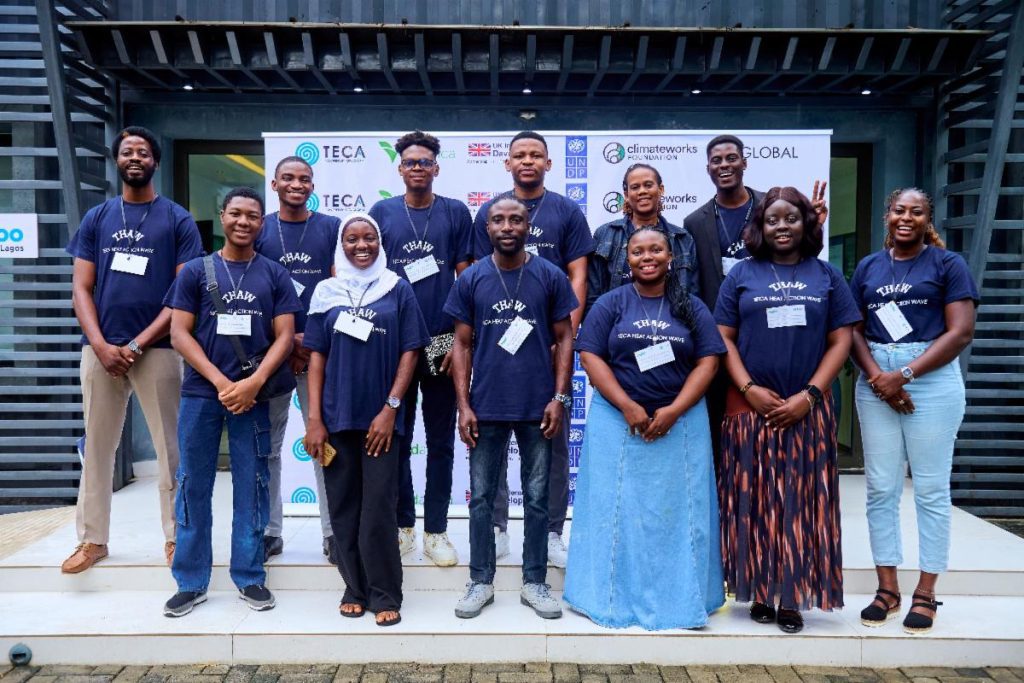
Ten ventures will each receive USD 56 K in funding and hands-on support from BFA Global, FSD Africa, ClimateWorks Foundation and the UK’s Foreign, Commonwealth & Development Office under the TECA Heat Action Wave programme.

More than 60% of Nigeria’s population is regularly exposed to dangerous heatwaves, with cities like Lagos, Kano and Abuja now experiencing heat indices above 50°C during peak months. A 2025 report from the Nigerian Meteorological Agency warned that nine out of the ten years from 2016 to 2025 ranked among the 12 warmest on record.

Extreme heat “is rapidly becoming one of the biggest operational risks facing African economies,” said Tyler Ferdinand, TECA Director at BFA Global. “Our goal is not only to support these ventures but to prove that climate adaptation can become a powerful new investment frontier.”

The ventures span sectors that affect almost every Nigerian. Ofemini Global provides a heat-resilient logistics platform to help farmers transport perishable goods with heat monitoring to reduce spoilage.

Let-It-Cold offers a solar-powered portable cooling solution for small businesses and households. TheHyWing combines heat alerts and AI diagnostics to help outdoor workers avoid heat-related health risks. Others focus on hyperlocal early warnings, livestock health, soil diagnostics and even sanitation.

Six of the ten selected ventures have a female co-founder. The companies are based in Lagos, Kaduna and Edo States.

“This is the early stage of a market,” Ferdinand said. “If we can get this right in Nigeria, it becomes a model for the rest of West Africa.”

The programme runs through 2026, culminating in demo days and investor engagement opportunities for top-performing ventures. But the bigger test goes beyond Nigeria. Across the continent, adaptation finance remains a fraction of what is needed. Africa received just USD 30 B of the USD 300 B required annually for overall climate finance. Private capital remains largely absent, contributing only a small single-digit share of adaptation financing.

“If climate adaptation finance is going to scale in Africa, it has to be grounded in real, investable solutions,” said Juliet Munro, Director of Early Stage Finance at FSD Africa.

If these Nigerian startups can demonstrate real returns in one of the world’s most heat-stressed economies, they could help write a new playbook for climate adaptation.

Kenyan Data Workers Who Flagged Meta Smart Glasses Sex Videos Fired

By Staff Reporter  |  April 30, 2026

When Kenyan data workers told Swedish newspapers in February that their job involved watching Meta smart glasses users use the toilet and have sex, it appears they not only exposed a privacy nightmare but may have also signed their own termination notices.

Less than two months after the revelations, Meta ended its multimillion-dollar contract with Sama, a San Francisco-based outsourcing firm operating in Nairobi’s digital hub. Sama notified 1,108 employees on April 16 that they would be laid off, with just six days’ notice. 

The workers had been labelling sensitive footage captured by Meta’s Ray-Ban smart glasses to train the company’s artificial intelligence.  They reported seeing everything from undressing women to bank card details and sexual acts. 

The timing ignited a fierce dispute. Meta told the BBC it ended the partnership because “they don’t meet our standards”.  Sama, which has defended the quality of its work, said it was never notified of any failure.  A Kenyan workers’ organisation alleged the real reason was the workers speaking out, an accusation Meta has not directly addressed. 

The workers’ accounts have already triggered a UK data watchdog inquiry, a Kenyan privacy investigation, and a class-action lawsuit in the US over Meta’s “designed for privacy” marketing claims.

But for the thousands of young Kenyans who power the global AI economy with low-cost labour, the layoffs feel like insult on injury. The Oversight Lab, an African technology policy group, called the move devastating, warning that “our current strategies are harming our youth, hurting our economy and in no way advance Kenya’s participation in the AI ecosystem.” 

The mass dismissal is the latest chapter in years of legal battles between Meta and its Kenyan contractors. Nearly 200 former content moderators are already suing Meta and Sama, alleging forced labour, human trafficking, and severe PTSD from reviewing graphic online content.  In a landmark ruling, Kenya’s Court of Appeal has already said Meta can be sued in the country, rejecting the tech giant’s bid to shield itself behind outsourcing contracts. 

“Power sits with large technology companies,” Kauna Malgwi, a former Sama worker, told The Guardian. “Risk flows downward, affecting outsourced workers, often in the global south, who have the least protection and highest exposure.”  As Mark Zuckerberg continues to wear his Ray-Ban smart glasses in public, the workers who trained the AI behind them are left jobless, asking whether speaking up is a right or a liability.

Feature Image Credits: NYT

Amazon vs Starlink: Bezos Takes On Musk For Kenya’s Internet Sky

By Staff Reporter  |  April 29, 2026

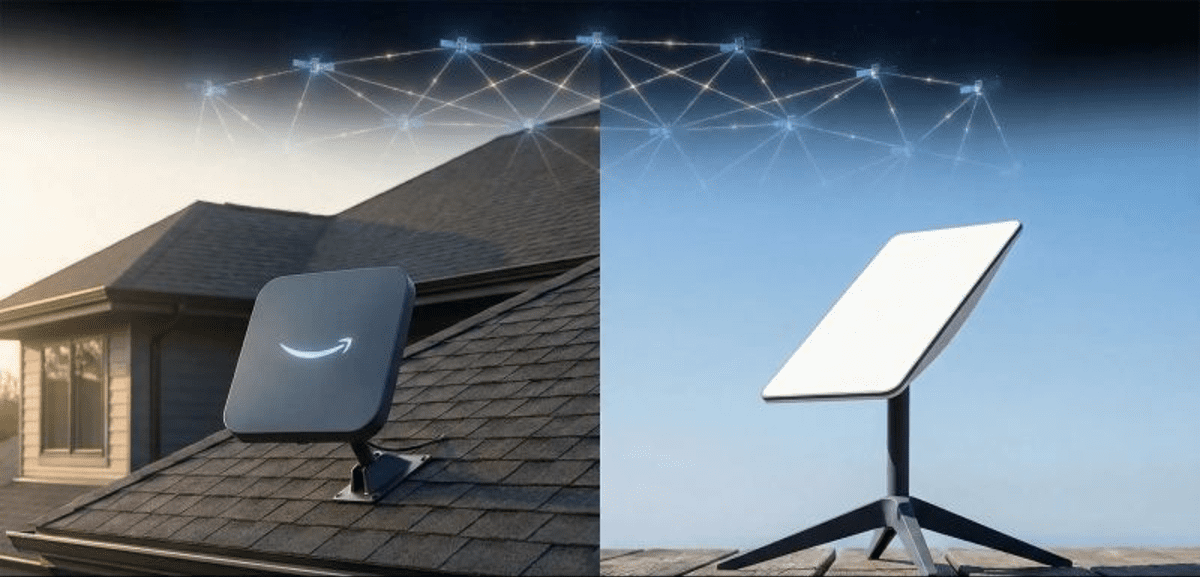
The battle to connect the unconnected in Africa has just turned into a billionaire’s boxing match. Amazon, owned by Jeff Bezos, has formally applied for a license to roll out its satellite internet service in Kenya, firing the opening salvo in a direct challenge to Elon Musk’s Starlink. The move sets the stage for a high-stakes duel between the world’s two richest men over the future of internet access on the continent.

The application, filed through the Nairobi-based subsidiary Amazon Kuiper Kenya Limited, seeks a Tier 2 license from the Communications Authority of Kenya. This specific category allows operators to build and run communications infrastructure across the country. With the regulator now inviting public feedback, Kenya is positioned as a critical frontier in Amazon’s plan to deploy more than 3,200 low-earth orbit satellites by 2028.

As Kenya pushes to expand universal connectivity, the timing could not be more critical. Fixed broadband coverage remains uneven, with fibre rollout proving expensive and often commercially unattractive in sparsely populated counties.

Mobile broadband, while widespread, struggles with persistent coverage gaps in arid and semi-arid regions. This connectivity gap has already fuelled growth for Starlink, which entered Kenya in July 2023 and has grown to about 22,282 subscribers, representing 0.9% of the country’s fixed internet connections.

But Amazon is not entering empty-handed. The company is dangling speeds that eclipse its rival. For a standard terminal, Amazon is promising up to 400 Mbps, dwarfing Starlink’s offering of 150 Mbps.

For commercial users, Bezos’s company says it will deliver a 1,280 Mbps download rate, more than three times higher than Starlink’s maximum 400 Mbps. While Starlink currently enjoys a first-mover brand advantage, Amazon’s raw speed numbers could fundamentally shake up consumer expectations.

The deeper play, however, may not be about selling dishes to individual households. Amazon’s entry strategy hinges on a powerful partnership with traditional mobile operators, directly plugging into existing networks.

A March agreement with Vodafone, the overall parent firm of Kenya’s largest telco, Safaricom, will link Amazon’s Leo network to 4G and 5G base stations in remote locations, with initial trials set for 2026. This approach mirrors a similar partnership Starlink’s parent SpaceX made with Safaricom’s parent Vodacom, turning Kenya into a testbed for how orbital networks integrate with terrestrial giants.

Key details like pricing remain undisclosed, leaving a massive question mark over whether faster speeds can translate into affordable access for everyday Kenyans. For now, the battle lines are drawn, and the prize is connecting the continent’s most underserved populations.

Secret Meta Deal Saw Nigeria Waive USD 32.8 M Fine & Drop Key Demands

By Staff Reporter  |  April 28, 2026

Nigeria quietly wrote off a USD 32.8 M fine against Meta Platforms Inc. last year, a review found, under a secret settlement agreement that erased the company’s financial liability over alleged data privacy violations affecting more than 60 million Nigerian users.

The Nigeria Data Protection Commission (NDPC) imposed the penalty in February 2025 following a 17-month investigation that accused Meta, the parent company of Facebook, Instagram and WhatsApp, of multiple breaches of the Nigeria Data Protection Act 2023.

The regulator alleged the tech giant had processed personal data of over 60 million Nigerians without explicit consent, used the information for targeted advertising, transferred data across borders without proper authorisation, collected data from non-users, and deployed algorithms that could expose users to financial and health risks.

But what was hailed at the time as a landmark enforcement action, one of the first of its kind in Africa, collapsed behind closed doors. On 30 October 2025, the NDPC and Meta signed a confidential settlement agreement. Days later, on 3 November 2025, a Federal High Court in Abuja converted the deal into a formal consent judgment, according to certified court documents obtained by Premium Times.

Under the terms of the agreement, Nigeria absolved Meta of all liabilities, waived the entire USD 32.8 M penalty, and set aside the original “Final Orders” that had required the company to overhaul its data handling practices. The company agreed only to cover the legal costs Nigeria incurred during court proceedings in which Meta had challenged the NDPC’s orders.

Most of the original corrective obligations were softened or removed entirely, the review discovered, replaced with vague commitments to handle Nigerian users’ data more ethically in the future and to collaborate on public awareness campaigns about data privacy. In return for writing off the fine, which resulted from months of investigation by the NDPC, Meta pledged simply to be “ethical” going forward, a promise critics say carries little enforceable weight.

The Data Privacy Lawyers Association of Nigeria (DPLAN) had, in December, issued a pre-action notice to the NDPC, arguing that the commission lacked the legal authority to compromise the remedial fine. The group is demanding the restoration of the original USD 32.8 M penalty. A court hearing is expected this year.

The NDPC has defended the deal, arguing that it reflects a balanced approach that prioritises compliance and public education over punitive fines. The commission has partnered with Meta to translate the Nigeria Data Protection Act into local languages and run awareness campaigns on Facebook.

But the secrecy surrounding the agreement has fuelled distrust. The government kept the full terms hidden for months, only surfacing through recent investigative reporting. The episode has drawn comparisons to Nigeria’s 2021 dispute with Twitter (now X), which was banned before a similarly opaque negotiated resolution.

LemFi Commits USD 135 M to Global Expansion, Financial Access Across Africa

LemFi Commits USD 135 M to Global Expansion, Financial Access Across Africa

By Partner Content  |  April 28, 2026

LemFi, the global financial platform serving people who live and work across borders, has committed £100 million to expanding its global infrastructure, marking a major milestone in its growth from African roots to international scale.

The announcement follows the UK–Nigeria State Visit in March 2026, during which LemFi’s investment was recognised as part of the Enhanced Trade and Investment Partnership between the two countries.

LemFi serves more than two million customers globally, enabling cross-border payments to over 30 countries. The platform plays a critical role in supporting diaspora communities and the markets they connect, particularly across Africa, where remittances remain a key driver of economic activity.

By making a strategic £100m (USD 135 M) investment in its global infrastructure and designating London as its global hub, LemFi is better equipped to serve the diaspora and the markets they support. This move in the world’s financial hub gives LemFi the regulatory and capital-market exposure it needs to deliver on its mission to provide fair and accessible financial services for people who live and work across borders. 

Scaling a global platform for cross-border lives 

LemFi’s growth has been driven by increasing demand from globally mobile communities. Today, the platform serves more than two million customers, enabling payments across 30+ countries while expanding into products such as credit, savings, and global accounts.

As the company scales, it continues to build infrastructure that supports how people actually live and work across borders, helping users not just move money, but manage and grow their financial lives internationally.

LemFi operates within multiple regulatory frameworks, holding licences and approvals in key markets including the UK, Ireland, Australia and Nigeria, as well as across 14 US states.

LemFi’s £100m commitment was made possible by the UK-Nigeria Department of Business and Trade, as part of the UK-Nigeria Enhanced Trade and Investment Partnership. LemFi will continue to innovate and develop innovative financial products and services for underserved communities globally. 

Ridwan Olalere, co-founder and CEO of LemFi, said: “We started LemFi to solve a real problem for people living across borders and today that mission is scaling globally. From our roots in Africa, we’re now serving millions of customers across continents, building financial services that reflect how people actually live and move. This next phase is about expanding that impact: reaching more people, across more markets, with products that help them not just send money, but build and grow financially wherever they are.” 

Rian Cochran, co-founder and CFO of LemFi, said: “Our £100m commitment is more than just a capital injection; it is a promise of stability and accessibility. By centralising our global operations in London, we are creating a hub that ensures every corridor we serve, whether in Africa, Asia, or Latin America, benefits from world-class financial infrastructure and a cooperative relationship with local regulators.” 

AI-Generated Fake Citations In South Africa’s AI Policy Serve Major Blunder

By Henry Nzekwe  |  April 27, 2026

A flagship South African national AI policy has been withdrawn after it was found to contain fake, AI-generated citations. It’s a blunder that has undermined the credibility of a document meant to govern the very technology that produced its errors.

Communications and Digital Technologies Minister Solly Malatsi announced the withdrawal late on Sunday after an internal probe confirmed that the Draft National Artificial Intelligence Policy, published for public comment on 10 April, contained multiple fictitious references in its bibliography.

“This failure is not a mere technical issue but has compromised the integrity and credibility of the draft policy,” said Malatsi. “The most plausible explanation is that AI-generated citations were included without proper verification,” he added, calling the episode an “unacceptable lapse” and a clear demonstration of why vigilant human oversight over AI remains critical.

The debacle was triggered by an investigation from South African publication News24, which reported that at least six academic citations in the 67‑item reference list, drawn from journals such as the South African Journal of Philosophy and AI & Society, either did not exist or could not be found in recognised academic databases.

A check with journal editors confirmed that the credited articles had never been published in those outlets. The finding strongly indicated that the references had been “hallucinated” by a large language model, meaning the AI had invented them with convincing but wholly inaccurate confidence.

The irony of the situation was not lost on critics. Khusela Diko, chairperson of Parliament’s portfolio committee on communications and digital technologies, had called for withdrawal days earlier and sarcastically urged the minister to undertake the necessary review “without using ChatGPT this time”.

Public Works and Infrastructure Minister Dean Macpherson, a fellow Democratic Alliance member of the Government of National Unity, accused Diko of “grandstanding,” while Diko fired back that DA ministers were the “epitome of populism.

The draft policy, approved by Cabinet on 25 March after a special sitting on 1 April, had been positioned as a cornerstone of South Africa’s Fourth Industrial Revolution response.

It aimed to establish national AI priorities, embed principles of intergenerational equity, and create new oversight structures, including a National AI Commission, an AI Ethics Board, an AI Safety Institute and an AI Insurance Superfund. Had it proceeded, the public consultation period would have run until 10 June.

Malatsi conceded that the withdrawal reflects a broader failure of quality control within his department. “South Africans deserve better. The Department of Communications and Digital Technologies did not deliver on the standard that is acceptable for an institution entrusted with the role to lead South Africa’s digital policy environment,” he said. He promised “consequence management for those responsible for drafting and quality assurance”.

The withdrawal leaves South Africa without a formal AI governance framework at a time when the technology is rapidly reshaping economies and societies across the continent. A new, properly vetted policy will now have to be drafted from scratch, delaying any near-term regulatory clarity.

OPay’s Valuation Tops USD 3 B With IPO In View, Early Backer Suggests

By Staff Reporter  |  April 27, 2026

The Norwegian browser group, Opera, which incubated OPay, has raised the implied valuation of the Nigerian fintech heavyweight to about USD 3.1 B, according to a securities filing, and assigned an 85% probability to an initial public offering within the next two years.

The filing shows Opera valued its 9.5% stake in the digital payments platform at USD 294.6 M at the end of 2025, implying a total valuation for OPay of roughly USD 3.1 B. That marks a significant increase from the USD 2.7 B implied by the 2024 carrying value of USD 258.3 M, and a more than 50% rise from OPay’s USD 2 B valuation following a USD 400 M Series C round led by SoftBank’s Vision Fund 2 in 2021.

Opera’s internal model assumes a liquidity event will occur within nine months to two years and applies a discount rate of 18.5% plus a 10% discount for lack of marketability. The company weighted an IPO at 85%, a trade sale at 10%, dissolution at 2.5% and redemption at 2.5%. Opera cautioned that the 85% figure is a valuation input, not a market forecast.

“The fair value of the OPay investment is highly uncertain and may result in material volatility in our results of operations,” the company said in the filing. 

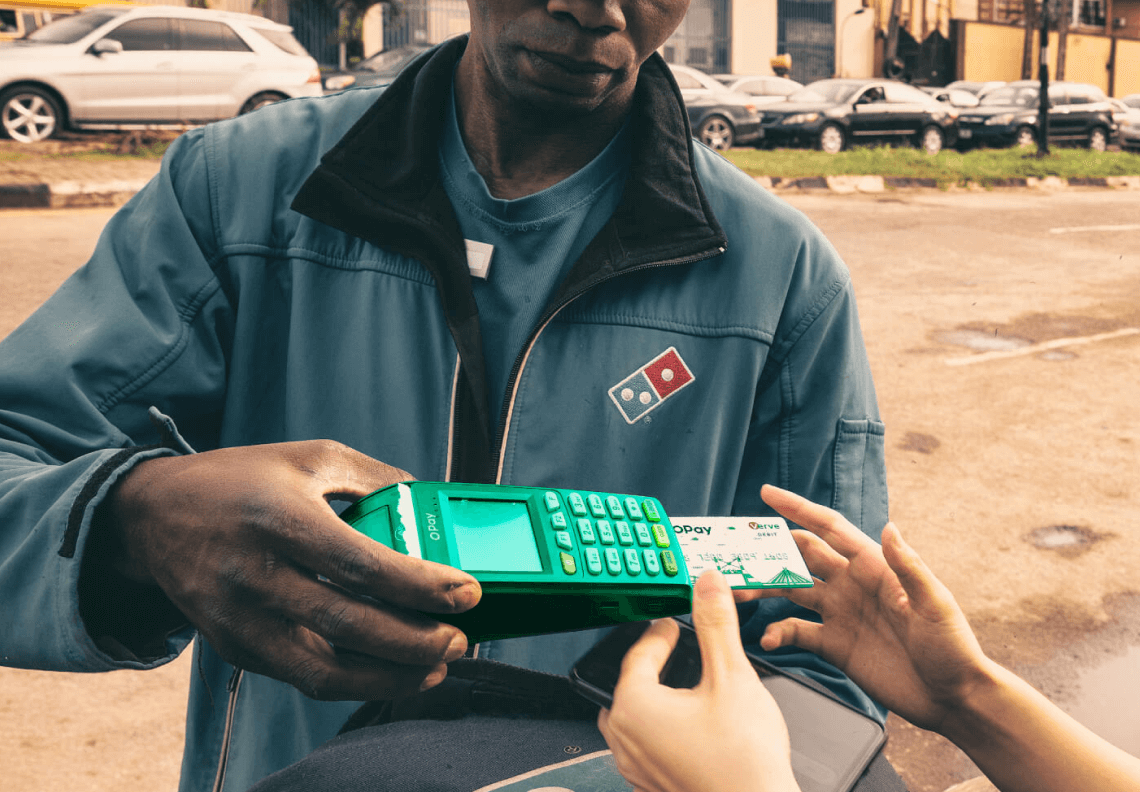
OPay, which began inside Opera in 2018 as a super app offering services that included e-hailing and food delivery, before pivoting to payments, now counts more than 50 million users in Nigeria alone, processing 10 million daily active users and roughly USD 12 B in monthly transaction volume.

Signs of IPO readiness have emerged. In December 2025, OPay appointed a new global management team, including James Zhou as executive chairman, former Opera CEO Lars Boilesen as co-CEO, and James Perry, a former Citigroup managing director with over 25 years of investment banking experience, as chief financial officer. Perry’s core professional background is in navigating public markets, a skill set typically sought only when a company is preparing to list, while Boilesen’s role focuses on international expansion and regulatory communication. 

OPay’s dominant position in Nigeria’s crowded fintech market may be reinforced by a new regulatory directive from the Central Bank of Nigeria. Effective April 1, 2026, the central bank has restricted point-of-sale agents to work with only one financial institution, a change analysts say could benefit larger, more stable platforms like OPay over smaller rivals. 

Opera’s fintech stake now represents about 26% of the company’s total equity, exceeding its year-end 2024 value. The company reported full-year 2025 revenue of USD 614.8 M, up 28% year-on-year, and unveiled a USD 300 M share repurchase programme in February 2026.  Without the OPay uplift, Opera’s reported net income would have been roughly 6% lower, underscoring the fintech investment’s growing influence on the browser company’s bottom line. 

However, OPay has made no formal announcement of an IPO timeline. No filing with the U.S. Securities and Exchange Commission or other public statement from the fintech has confirmed any listing plans. If OPay does not list within Opera’s assumed two-year window, or if market conditions reduce its attainable valuation, Opera would be required to adjust the carrying value of its stake downward, creating earnings volatility independent of its core browser business.

South Africa’s Junior Tech Workers Are Getting Crushed By AI Hiring Shift

By Staff Reporter  |  April 23, 2026

South Africa’s technology industry is slamming the door on junior developers as artificial intelligence alters the hiring landscape, with new salary data revealing deepening pay dissatisfaction among the country’s entry-level tech professionals.

More than 6 out of 10 junior developers in the country feel underpaid, according to OfferZen’s 2026 State of SA’s Developer Nation Salary and Benefits Report, based on a survey of more than 2,200 software, data and tech professionals. That rate of dissatisfaction is the highest of any seniority band and far above the 49% average across all developers, OfferZen said. Only 2–3% of developers at any level feel overpaid.

The data indicates a structural shift in the hiring practices of local tech companies, which are increasingly using AI to absorb the entry-level tasks that for years served as training grounds for junior talent.

Nearly half (48%) of tech leaders surveyed said they feel pressure to hire more senior engineers as teams become leaner. More than seven in ten said their hiring is now focused on filling a smaller number of high-impact roles, and 71% of tech leaders indicated a shift in hiring practices towards such roles, suggesting a formalisation of a trend first flagged by OfferZen in previous surveys. 55% said AI fluency and product thinking are now baseline expectations for engineers.

The shift is already showing up in pay packets for emerging professionals, particularly in the fintech sector, historically a major engine of entry-level hiring. Average entry-level fintech salaries fell from ZAR 37,748 (about USD 2 K) a month in 2025 to around ZAR 27,777 (~USD 1.5 K) this year, a 26% drop. Junior software-as-a-service developers saw their average monthly pay slip to ZAR 16,470 (USD 890) in 2026, down nearly 24% from the previous year.

Engineers themselves describe a hiring halt at the bottom end of the market. “The job market feels smaller at the moment, as businesses believe they need fewer developers because of AI,” one anonymous respondent told OfferZen. Another said: “The market is rough for junior devs as companies focus on hiring seniors since AI can do the mundane tasks,” a finding that aligns with the broader cooling of the aggressive salary growth phase of 2021–2022.

Senior-level pay, by contrast, has held steady or risen. Engineering managers with more than a decade of experience remain the country’s highest-paid tech professionals, taking home an average of ZAR 125,194 (USD 6.7 K) a month.

Cape Town continued to lead in developer compensation, with a senior developer in the city earning roughly ZAR 105 K per month (USD 5.6 K), while in Johannesburg the typical top-level salary lagged at roughly ZAR 97 K (USD 5.2 K) per month.

Beyond pay, only 34% of developers said their benefits packages meet their needs, according to the report. Career progression is also a growing concern, as 37% of junior developers said they had no career progression framework at their current employer, and 38% said they did not know what it would take to be promoted to the next level.

Across all seniority bands, only 19% of respondents described their progression framework as clearly defined.

Nigerian Government Turns Venture Capitalist As State Funds Flock To Startups

By Staff Reporter  |  April 22, 2026

Nigeria’s federal government is accelerating its push into venture capital, deploying billions of naira through a series of state-backed funds as Africa’s most populous nation seeks to transform itself from a regulator of startups into an active investor in its technology economy.

The shift has crystallised over the past six months through a cluster of initiatives spanning sovereign wealth vehicles, regional development funds and direct equity plays, signalling what officials describe as a deliberate move to channel public capital into high-risk, high-reward innovation.

“For the first time in Nigeria’s history, the federal government is directly taking a stake in the nation’s startup ecosystem, not as a regulator or grant-maker, but as an investor,” a BusinessDay analysis noted in November 2025, capturing the scale of the pivot.

The most tangible evidence of the new approach is the government’s USD 617.7 M Investment in Digital and Creative Enterprises (iDICE) programme. Launched in 2023, iDICE made its first startup investment in late 2025, committing capital to Ventures Platform’s USD 75 M pan-African venture fund, a seed-stage investor active across the continent.

Ventures Platform, which was appointed iDICE’s technology fund manager in August 2025 after a competitive bidding process, announced a USD 64 M first close for its VP Pan-African Fund II, with a target of USD 75 M. Investors in the fund include the International Finance Corporation, Standard Bank of South Africa, British International Investment, and iDICE itself.

Kola Aina, founding partner at Ventures Platform, described iDICE’s entry as transformative. “We are delighted to have iDICE as an LP. They inspire and give confidence to foreign LPs. They also have deep context into the local markets, which makes them invaluable to the fund manager and portfolio companies,” he said.

The government’s venture ambitions extend beyond iDICE. In February 2026, the Nigeria Sovereign Investment Authority (NSIA) finalised a USD 50 M Impact Innovation Fund with Japan International Cooperation Agency (JICA), a vehicle designed to provide patient, local-currency financing to pre-seed and early-stage startups in agriculture, healthcare, education, energy and water management.

JICA will provide USD 14 M in grant funding while NSIA commits up to USD 20 M in matching capital, structured as a first-loss vehicle to de-risk investments and attract private funding.

Aminu Umar-Sadiq, managing director and CEO of NSIA, said at the signing ceremony in Abuja that the fund represents “a transformative step for Nigeria’s startup ecosystem,” adding that “the minimum has to be 200 [million dollars]” to move the needle for an economy of Nigeria’s size.

Regional development vehicles are also joining the push. The South East Development Commission (SEDC) unveiled a USD 50 M venture capital initiative in March 2026 aimed at unlocking the region’s underfunded innovation ecosystem, with a pitch competition finals scheduled for May 13 followed by an investment ceremony on May 14.

Hon. Stanley Ohajuruka, executive director of finance at SEDC, described it as “a funded, coordinated and time-bound effort to build a system that channels capital efficiently into innovation”.

Meanwhile, the iDICE Startup Bridge programme, launched in March 2026, will provide grants of up to NGN 10 M (~USD 7 K) for idea-stage founders and USD 100 K in equity investment for startups with market traction, targeting more than 500 technology entrepreneurs across all 36 states and the Federal Capital Territory.

Flutterwave speculation tests new model

Amid these structured initiatives, speculation over a possible direct government investment in Nigeria’s largest fintech has underscored both the appetite for state-backed tech funding and the complexities of executing it.

Local media reports on April 20 suggested that President Bola Tinubu had approved a USD 75 M investment in Flutterwave through the Ministry of Finance Incorporated (MoFI) ahead of a planned initial public offering. The reports cited a presidential aide’s post on X and noted the investment would represent approximately 0.15 percent of Nigeria’s proposed 2026 budget.

But Flutterwave swiftly pushed back. In a statement on April 21, Africa’s largest fintech firm said no such investment had been formally announced. “Some of the recent reports may reflect evolving discussions or interpretations… but they do not correspond to any formally executed or disclosed transaction,” the company said.

The fintech, which has processed more than USD 50 B in payments across 34 countries, also dismissed speculation of an imminent IPO, stating that any referenced funding relates to private capital rounds, not a public offering. “Flutterwave is not in any way close to an IPO, and they have made no announcements regarding a listing or fundraising tied to an IPO as described,” the company said in a statement.

The episode highlighted the gap between policy ambition and deal execution. While no official confirmation has been issued regarding a direct government investment in Flutterwave, the firm’s recent strategic moves, including the acquisition of open banking provider Mono and the securing of a microfinance banking licence in Nigeria, position it as a natural candidate for state backing.

A structural shift in public finance

For years, Nigeria’s public funding mechanisms avoided venture-style risk-taking, even though the Nigeria Startup Act of 2022 provided for a government-backed seed fund of up to NGN 10 B (USD 6.95 M). The iDICE–Ventures Platform deal has broken that pattern, offering a blueprint for public-private collaboration that officials hope will catalyse institutional investment.

Vice President Kashim Shettima, who chairs the iDICE Steering Committee, said the programme is designed to give entrepreneurs across the country “a real opportunity to build or scale”. Olasupo Olusi, managing director of the Bank of Industry, which implements iDICE, noted that the bank disbursed NGN 636 B across sectors in its latest financial year, its largest annual disbursement to date, with NGN 43 B directed to digital and creative projects.

“We are happy to replicate our success over time with the iDICE Startup Bridge as well,” Olusi said.

The government plans to launch two additional iDICE funds in 2026: a creative sector fund and a “fund of funds” that will invest in smaller technology and creative sector funds. With applications for the iDICE Startup Bridge’s Founders Lab closing on April 20 and the SEDC pitch competition finals set for May, the coming months will test whether Nigeria’s experiment in state-backed venture capital can deliver the returns its architects envision.

Inside Chowdeck, Devs & Execs Compete To Personally Deliver Dinner To Doorsteps

By Henry Nzekwe  |  April 21, 2026

Peculiar Erhisohwode is a founding engineer at Chowdeck, a Nigerian on-demand delivery startup, which she joined in its early days. She has built features used by millions. But in the company’s internal rankings, she is also known for something else. She competes with the CEO and co-founder, Femi Aluko, for the highest number of staff deliveries each quarter.

At Chowdeck, engineers, product managers and C-suite executives all hit the road. Every staff member has a rider profile. Anyone can step out and make deliveries whenever they want, Aluko tells WT. “Delivery is not someone else’s job at Chowdeck, it is core to what we do.”

Every year, staff across the company are given delivery targets, typically between 15 and 30 deliveries to complete within a quarter. On top of that, deliveries are part of onboarding. Every new joiner is expected to complete 30 deliveries. Aluko says over time that adds up to a meaningful amount of firsthand field experience across the company.

Chowdeck has grown fast. CEO, Aluko, stated that as of March 2024, Chowdeck had surpassed NGN 2.4 B (~USD 1.7 M) in monthly GMV, a 140% increase from the previous year. It processes around 1 million orders monthly, averaging 40,000 deliveries daily across Lagos, Ibadan and Abuja. The YC-backed company, which began in 2021, has seen rapid growth, serving over 2 million users in Nigeria and Ghana.

In 2025, the startup raised a USD 9 M Series A, led by Novastar Ventures, to launch a quick commerce strategy and expand into more cities. The growth has come in a tough market, bedevilled by economic upheavals and infrastructure gaps. In 2023, well-funded rivals like Bolt Food and Jumia Food shut down, citing profitability challenges.

Chowdeck now leads the Nigerian food delivery market, according to industry analysis. The company flaunts rider earnings as a selling point. Some riders report taking home between NGN 80 K (~USD 60.00) and NGN 120 K (~USD 90) a week, while top earners have made up to NGN 205 K (~USD 152) over a single four-day weekend, dwarfing average monthly earnings in Nigeria by some distance.

In addition to an accident insurance scheme covering over 20,000 riders, Chowdeck operates incentive programs like “Rider Games” in Ghana, offering cash bonuses and loans up to GHS 1 K (~USD 90) for hitting delivery targets. However, pricing has drawn scrutiny as Chowdeck treads a tricky path to sustainable unit economics and profitability in a tough delivery scene.

***

Aluko says the biggest insight from delivering meals himself is that “delivery is a deeply human experience, not just a logistics event.” He explains that a lot can look fine in the data while the real experience still feels stressful, confusing or inconvenient for the customer or rider.

“You notice how much small things matter,” he says. “How clear the address is, how easy it is to reach the customer, whether the vendor handoff is smooth, whether building access slows you down, whether the order is actually ready when the system suggests it is.” He adds that once you do the job yourself, even a few times, “your sense of urgency and product judgment changes.”

The practice has produced tangible product outcomes. Aluko says most of Chowdeck’s brilliant rider app features came directly from the team’s experiences delivering meals. He points to a recurring observation that challenged the company’s internal data.

“On-paper efficiency can hide real-world friction,” he says. A pickup may look straightforward in the system, but in practice the rider is waiting because of packaging delays, staff coordination or unclear handoff processes, the CEO explains.

“Delivery time alone does not tell you everything. Two deliveries can take the same amount of time, but one can feel smooth while the other involves far more effort because of poor address quality, building access, traffic patterns or customer responsiveness,” Aluko says.

“Operational reality is often messier than the clean version you see in a dashboard. And that is exactly why we think it’s important to keep doing it.”

The company still runs company-wide delivery targets annually. Onboarding deliveries remain standard for every new joiner. All staff have access to their rider profiles, so anyone can step out and do deliveries whenever they want. “It is not a one-off exercise for us,” Aluko says. “It is something we have intentionally kept alive in our culture.”

For Erhisohwode, Chowdeck’s first female software engineer, that means the quarterly leaderboard battles with her CEO continue. At Chowdeck, the people who write the code also carry the food. And the company says that is exactly how they want it.

Africa’s Hottest Defence Startup Goes All In On Ghana Over Nigerian Home Base

By Staff Reporter  |  April 20, 2026

Nigeria’s Terra Industries, a startup manufacturing autonomous drones, is opening its first overseas factory in Ghana, in a strategic pivot that highlights the startup’s determination to scale faster outside its home market rather than wait for local policies to catch up.

The 34,000-square-foot drone manufacturing facility in Accra, named Pax-2, will become Africa’s largest such plant when it begins operations in June 2026, more than doubling the footprint of Terra’s Abuja factory.

The company, founded in 2024 by Nathan Nwachukwu and Maxwell Maduka, and now backed by USD 34 M from investors including Palantir co-founder Joe Lonsdale’s 8VC and Lux Capital, has already secured contracts protecting some USD 11 B worth of critical infrastructure across eight African nations, including hydropower plants, lithium mines and oil facilities.

But for a startup positioning itself as Africa’s first “defence prime” – a vertically integrated manufacturer of autonomous surveillance systems – the choice of Ghana raises a pointed question: Why not Nigeria?

Ghana’s incentives appear to be the decisive factor. The country’s free zones regime offers a 10-year corporate tax holiday followed by a reduced 15% rate, along with duty exemptions on imported machinery and raw materials.

Meanwhile, Nigeria’s Defence Industries Corporation (DICON) Act 2023, intended to encourage local military manufacturing, has yet to produce tangible results for Terra beyond a memorandum of understanding signed in February.

With over 80% of Terra’s components already sourced locally, the company’s CEO, Nwachuku, cited Ghana’s “political will to become a serious defense exporter” as a key reason for the expansion.

Yet the move carries commercial risk. Terra has generated over USD 2.5 M in revenue since its founding, but its new Ghana facility is projected to produce 50,000 units annually by 2028, a leap in production that will require a massive expansion of its customer base beyond the USD 50 M in contracts the company has already signed. The company’s primary market remains Nigeria, where the vast majority of its existing clients are based.

Ghana is betting that Terra’s arrival will do more than fill government coffers. The government has already committed to distributing 272,000 metric tonnes of fertiliser nationwide and allocating GHC 2.7 B (~USD 243 M) for cocoa farmer support in 2026, part of a broader agricultural transformation agenda. A local drone industry could complement these efforts, particularly in precision agriculture and infrastructure monitoring.

But it’s becoming apparent that Terra’s ambition to build “sovereign defense” capabilities for Africa is running ahead of the regulatory frameworks needed to support it at home. Until Nigeria matches Ghana’s incentives, the continent’s most-funded defense-tech startup will keep building its future on more welcoming ground.