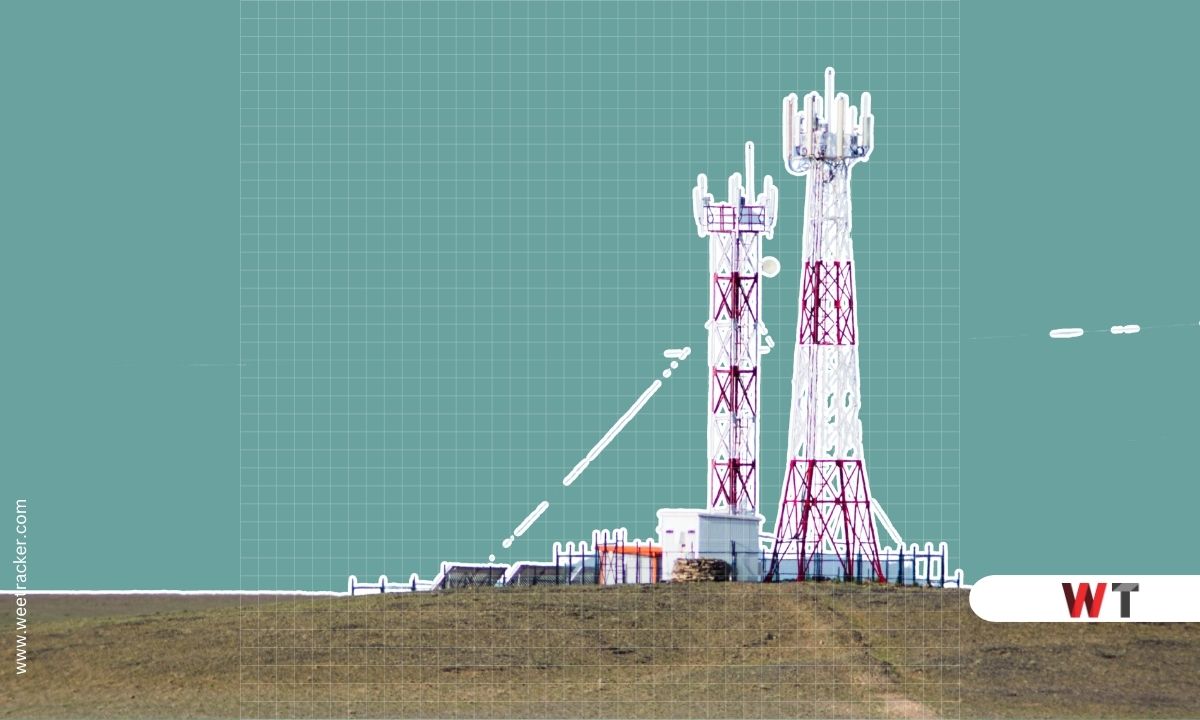
One thing the African market shows, again and again, is that loyalty follows the pocket. In a region where macroeconomic winds like inflation, joblessness, and weakening currencies are blowing, affordability wins. Most times, not all.
And here’s the thing: if you manage to undercut the competition, great. But the moment you lose consistency on speed, service, or price, people will look elsewhere. Fast. I’m not an economist, but you can quote me on that.
That’s exactly the lesson Starlink is learning the hard way in Kenya.
When Elon Musk’s Starlink entered Kenya in 2023, it was selling a future where access to fast, reliable internet didn’t depend on cables buried underground or masts vulnerable to sabotage. Where connectivity came from space, immune to government censorship, outages, and blackouts. It was a compelling pitch, and for a moment, Kenyans bought it.
The context couldn’t have been more perfect for disruption. Just months before Starlink’s arrival, the government had restricted internet access during nationwide protests that left dozens dead. That moment shook public confidence in existing providers. Suddenly, satellite internet wasn’t a luxury—it was an insurance policy.
Starlink’s promise of freedom from terrestrial infrastructure, its association with Musk’s tech brand, and the relative ease of onboarding were enough to drive adoption.
But fast forward to 2025, that early excitement has turned into disillusionment.
By early 2025, Starlink had lost more than 2,000 subscribers in just three months, marking its first real decline in Kenya. This saw its market share in Kenya’s fixed internet segment slip to 0.9% in Q1 2025, down from 1.1%. The 10.86% drop in users came even as the country’s broader fixed internet market grew by 8.1%, according to the Communications Authority of Kenya. In a market where internet demand is growing, Starlink is somehow shrinking.
The Promise That Didn’t Land
Starlink’s early momentum masked its shortcomings. The truth is, many Kenyans signed up during a time of panic, when the threat of censorship and internet blackouts made satellite connectivity feel like a safe bet. But after the dust settled, users began asking tougher questions about value, reliability, and service. And Starlink didn’t have many good answers.
Starlink overpromised and underdelivered. While it claimed download speeds of up to 220 Mbps, Kenyan users reported a median of just 47 Mbps, with some dipping far lower.
At the same time, cost, too, became a sticking point. The entry-level plan advertised at KSh 4 K (USD 31) came with a KSh 27 K (USD 209) hardware fee, and users in congested areas were often pushed into higher tiers, sometimes spending over KSh 15 K (USD 116) monthly just to maintain stable service.
Even worse, support was practically nonexistent. There was no local office or technicians. When issues arose, as they did frequently, users were left filing complaints through an online system that couldn’t troubleshoot physical problems.
“People made an emotional purchase,” said Nairobi-based data analyst Chris Orwa. “If they had sat down and compared it with other options, it would’ve been the worst one.”
Unlike local ISPs, which have physical offices, call centres, and installation crews, Starlink is remote by design. But what works in theory—a fully digital, borderless service—fails in practice when hardware breaks or service degrades.
A Pause with Consequences
However, Starlink’s biggest misstep may not have been speed or pricing; it might have been believing its own hype. In late 2024, Starlink temporarily paused new urban sign-ups, citing network congestion and said it needed time to stabilise quality in densely populated areas. In hindsight, that decision looks more like an unforced error.
Pausing sign-ups in cities like Nairobi, Starlink’s strongest foothold, meant that adopters: small business owners, digital creatives, and professionals seeking independence from fragile local networks and looking beyond whether it had a competitive offering or not, were effectively sidelined.
And while Starlink hit pause, its rivals hit the gas. Local ISPs took advantage of the vacuum. Local ISPs moved quickly, rolling out aggressive deals and expanding coverage. Kenya’s largest provider, Safaricom, pushed deeper into both data-hungry business districts and price-sensitive neighbourhoods. Other local providers, including Poa Internet, Jamii Telecom, and even Dimension Data, gained momentum during this time.
By the time Starlink reopened sign-ups in June 2025, the shift was already underway. The same customers who once showed off their Starlink dish were quietly returning to faster, cheaper, and more responsive local providers.
By the end of Q1 2025, Starlink had around 17,000 subscribers, down from over 19,000 just months earlier. It now ranks eighth in the fixed internet market. Meanwhile, the market leader, Safaricom, holds over 680,000 broadband subscribers, and Jamii Telecommunications sits comfortably in second place. Even Dimension Data, a lesser-known provider, overtook Starlink in market share.
Still Relevant—But Not for Everyone
That said, Starlink still shines where no one else can reach. In remote, underserved regions, it remains a game-changer. In some rural areas, it reliably delivers over 200 Mbps, filling gaps that terrestrial providers still can’t.
Organisations like Tech Kidz Africa have used it to bring connectivity to off-grid schools, scaling from 30,000 students to over 160,000 according to the founder, Paul Akwabi. In places like that, Starlink is still very relevant.
But those aren’t the customers who gave Starlink its initial growth. And they aren’t enough to sustain the kind of urban momentum Starlink hoped for.
A Bigger Pattern Emerging
If there’s one throughline in Starlink’s Kenyan struggles, it’s misalignment
Starlink offered a technically impressive but operationally disconnected product. And that mismatch is catching up with it. That, plus the upfront cost, is prohibitive, and it doesn’t have local customer service.
It is a reality check for a company that seemed to assume that offering cutting-edge tech was enough to win. But in Kenya, and many parts of Africa, the value equation sometimes matters more than the tech itself.
Starlink’s slump in Kenya isn’t just a local issue; it’s part of a broader trend. Globally, cracks are forming in Musk’s empire. Tesla’s dominance is eroding. X (formerly Twitter) is haemorrhaging credibility. And Starlink, which was supposed to be the benevolent force bringing connectivity to the world’s most underserved, is starting to feel like another tech fantasy that underestimated local nuance.
The company claims over 6 million users worldwide. But in Kenya, it’s losing ground while the market itself is booming.
There’s still a path forward. But to stay relevant, Starlink will have to get the basics right: consistent performance, fair pricing, and a real support presence for customers. Without that, it risks going from a bold promise to a cautionary tale in a country that was once ready to believe in internet from space.