Uber Quits Tanzania After Turbulent Decade Of Disputes In Market Deemed Hostile

By Staff Reporter  |  February 2, 2026

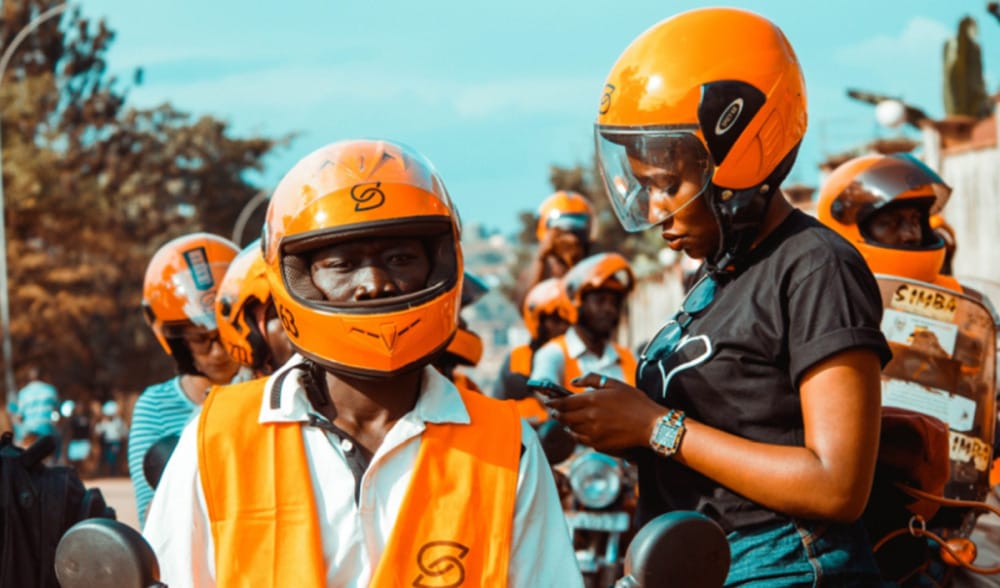
Uber ceased all ride-hailing operations in Tanzania on January 30, 2026, ending nearly a decade in the market. The company informed users via its app that services were no longer available in cities including Dar es Salaam, Arusha, and Zanzibar, thanking them for their support but not detailing specific reasons for the exit.

The departure follows years of dispute with the Land Transport Regulatory Authority (LATRA). Uber’s journey in Tanzania, which began in June 2016, has been characterised by friction.

The core conflict centred on regulations that treated ride-hailing like traditional taxis, imposing a fixed fare structure and a cap on the commission platforms could take from drivers. LATRA enforced a commission ceiling of 15%, which was significantly below Uber’s global standard and limited its ability to fund promotions and driver incentives.

This regulatory pressure led Uber to suspend services temporarily in April 2022, stating the environment was not friendly to its business model. Operations resumed in early 2023 after negotiations resulted in a revised commission structure. However, the underlying regulatory framework remained, and the company has now made its exit permanent.

Intense competition from rival Bolt compounded Uber’s challenges. Bolt, which entered Tanzania in 2017, has become the market leader with a reported network of over 30,000 drivers across eight cities. Analysts note that Bolt’s pricing strategies and model were more adaptive to local conditions and LATRA’s rules. At the time of its exit, Uber’s active driver fleet was estimated at around 1,500.

The immediate impact displaces thousands of drivers who relied on the platform for income and removes a well-known mobility option for commuters. Market demand is expected to shift to remaining competitors like Bolt, In-Drive, and Little.

Uber’s exit from Tanzania follows its retreat from Côte d’Ivoire in 2025. Industry analysts view this as part of a strategic recalibration, where the global platform prioritises markets with regulatory environments more conducive to its dynamic pricing and commission model.

Sudden Collapse Of Kenyan Clean-Energy Startup Leaves Many In The Lurch

By Henry Nzekwe  |  February 2, 2026

A clean-cooking company that powered kitchens for hundreds of thousands of low-income families has abruptly collapsed, laying off its entire 700-person workforce and shutting off fuel supplies overnight. The fall of KOKO Networks, a once-celebrated Kenyan startup, reveals the fragility of climate-tech ventures built on complex global finance and vulnerable to a single regulatory decision.

Founded in 2013, KOKO Networks aimed to revolutionise cooking in urban Africa. It built a vast physical network of more than 3,000 automated fuel-dispensing “KOKOpoints” installed in corner shops across Kenya. Households would buy bioethanol—a cleaner-burning fuel—in reusable bottles at these outlets for as little as KES 100.00 (around 78 cents) per liter, roughly half the market price. The company sold its purpose-built cookers for KES 1.5 K (~USD 12.00), heavily subsidised from a market rate of about KES 15 K (USD 116.00).

This model tackled multiple problems. It offered a cheaper, faster alternative to charcoal, reduced harmful indoor air pollution, and cut down on deforestation. At its peak, KOKO was onboarding an estimated 1,000 new households daily and served an estimated 1.5 million families. Investors, including heavyweights like the Microsoft Climate Innovation Fund and Rand Merchant Bank, poured over USD 100 M in equity and debt into the venture, seeing it as a flagship for climate action.

***

KOKO’s ability to sell fuel and stoves far below cost was financed by the international carbon market. This was the core of its business model. By switching households from charcoal to bioethanol, KOKO generated verified reductions in greenhouse gas emissions. Each tonne of emissions avoided was certified as a carbon credit.

These credits were sold to companies and governments abroad, like airlines in compliance offset schemes, to help them meet their climate goals. These “compliance market” credits could sell for around USD 20.00 each, a key revenue stream.

The income from selling these credits was used to cover the gap between KOKO’s costs and the subsidised prices paid by its customers. In essence, global carbon finance was directly funding affordable, clean cooking for Kenyans.

This entire financial architecture depended on one critical document; a Letter of Authorization (LOA) from the Kenyan government. Under international climate rules (Article 6 of the Paris Agreement), a country must authorise a company to sell carbon credits representing emissions reductions on its territory.

According to multiple reports, the Kenyan government declined to issue this letter to KOKO. While the exact reasons are part of private discussions, sources indicate a dispute over the control and sharing of benefits from the carbon credit revenues.

The refusal was catastrophic. Without the LOA, KOKO could not sell its carbon credits on the primary compliance markets. Overnight, the revenue funding its subsidies vanished. Following two days of crisis meetings, executives concluded the business was no longer viable. On January 31, 2026, operations stopped, staff were told not to come to work, and customers received a terse SMS informing them of the shutdown.

***

Over 1.5 million families must now find a new, likely more expensive and polluting, way to cook. Energy experts warn of a widespread return to charcoal, reversing gains in public health and forest conservation. Meanwhile, more than 700 direct employees and thousands of shop agents who operated KOKOpoints have abruptly lost their livelihoods.

The collapse may also trigger a massive financial liability. In 2024, the World Bank’s Multilateral Investment Guarantee Agency (MIGA) provided a USD 179.6 M political risk guarantee to back KOKO’s expansion. With the company alleging a government action led to its failure, Kenyan taxpayers could face a potential claim reported to be as high as KES 23 B (~USD 179 M).

Ultimately, KOKO’s failure exposes the high-wire act of climate-tech ventures in emerging markets. The company built a real, impactful service with strong customer demand but was felled by a breakdown in the intricate, policy-dependent finance that underpinned it.

The fallout could also send a sobering signal to international investors and entrepreneurs betting on Kenya’s “Silicon Savannah” and its ambitions as a green investment hub.

Visa Unveils Fifth Cohort for Africa Accelerator Program

Visa Unveils Fifth Cohort for Africa Accelerator Program

By WT Data Labs  |  February 2, 2026

Visa recently announced the latest cohort for its Visa Africa Fintech Accelerator program. This high-impact initiative is designed to support startups across the continent through mentorship, training, and potential investment opportunities, helping them scale their solutions to solve real-world financial challenges.

The fifth cohort of Visa’s accelerator is designed to provide early- and growth-stage startups with crucial support, including mentorship, technology assistance, and access to Visa’s extensive global network. This comprehensive approach is vital for startups seeking to scale their operations and introduce new financial solutions to underserved populations across Africa.

By expanding its geographical reach, the program actively positions itself as a pivotal platform for nurturing fintech innovation and accelerating financial inclusion. The latest program supports selected businesses with the resources and expertise to help shape the future of payments across Africa.


Meet the Cohort

The latest cohort features a diverse group of companies ranging from agricultural logistics to advanced fraud prevention, all working to deepen financial inclusion and digital payment adoption in Africa.

StartupLocationDescription
EvMakTanzaniaA financial technology platform that empowers MSMEs by integrating online and offline payment methods with AI-driven reconciliation and business analytics.
FeedxpayNigeriaA cross-border payment solution providing digital wallets, expense management, and investment tools for businesses looking to scale internationally.
InflowTanzaniaA personalised finance manager and wealth management app that helps users track spending and grow their savings.
MarabooSenegalA fintech focusing on streamlining cross-border payments and financial services for the Francophone African market.
MerasEgyptA digital platform offering specialised financial services and payment solutions tailored for the healthcare and service sectors.
NiobiKenyaA unified payment and banking infrastructure provider that allows businesses to collect and make payments across multiple African markets via a single API.
OparetaUgandaA digital toolkit for mobile money agents that provides transaction digitisation, business reports, and working capital loans.
OrcaSouth AfricaAn advanced fraud prevention startup that uses real-time transaction monitoring and AI to protect digital wallets and payment platforms.
PericulumNigeriaA data analytics company that provides credit assessment and fraud detection services for lenders in emerging markets.
RafikiTanzaniaA B2B payment platform (under the NALA umbrella) designed to simplify mass payouts and cross-border transfers for businesses.
SahlEgyptA comprehensive bill payment app that allows users to pay for utilities, education, and government services directly from their mobile devices.
SolisSenegalA digital banking and credit platform focused on providing credit solutions to underserved populations through alternative data.
SUSUIvory CoastA “health-fintech” startup that combines health insurance with financial services to make healthcare more accessible for families.
TermiiNigeriaA customer engagement platform that uses verified communication channels (SMS, Voice, WhatsApp) to help businesses secure repeat customers.
ToumAITogoA SaaS data analytics platform that uses AI to analyse local African dialects, providing financial insights and risk assessment for investors.
WinichNigeriaAn agritech platform that connects smallholder farmers directly with factories and retailers, eliminating middlemen and expanding access to financial services.
Zeeh AfricaNigeriaAn AI-powered open banking and credit data infrastructure company that helps financial institutions verify users and assess credit risk.
ZyntaGhanaA fintech focused on simplifying digital payments and financial management for small and medium-sized enterprises.

Flutterwave-Backed CinetPay Owes Partner USD 1.1 M Lost To Fraud Incident

By Henry Nzekwe  |  February 2, 2026

CinetPay, the Ivorian fintech backed by Nigerian giant Flutterwave, is facing intensifying scrutiny as a new million-dollar dispute with a business partner emerges, compounding existing investigations into the company for alleged money laundering and fraud troubles in Senegal.

The fresh allegations reveal a severe liquidity crisis at the company, contradicting its public assurances of stability and raising urgent questions about regulatory oversight in one of Africa’s fastest-growing digital payment markets.

According to documents reviewed by WT, CinetPay’s CEO, Daniel Dindji, formally acknowledged in September 2025 that the company owed merchant aggregator D-Pay CFA francs 655 M (approximately USD 1.1 M). The debt stemmed from a “significant cyber fraud incident” that same month, which Dindji stated had a “direct and substantial impact on our cash flow.”

The incident, which targeted CinetPay’s systems in Côte d’Ivoire, Togo, and Burkina Faso, saw fraudsters exploit its treasury to siphon funds to mobile money accounts. While CinetPay blocked some transactions on Orange Money, recoveries were minimal. Four months later, D-Pay reports the funds remain unpaid, forcing it to cover settlements to its own merchant clients from its working capital to avoid collapse.

“By withholding customer funds for months, this situation has restricted our access to working capital and affected our ability to serve our clients,” revealed John Schubbe, an operations manager at DPay, speaking on behalf of the company.

***

This financial dispute unfolds alongside a separate, serious legal probe. Last year, Senegalese authorities investigated CinetPay for its alleged role in facilitating organised fraud, money laundering, and illegal online gambling.

According to Senegalese police reports from September 2025, the investigation began after complaints about harassment from fake loan companies. Authorities tracing financial flows found funds routed through CinetPay’s platform to an Ivorian company, Nectar Microcrédit Technologie.

A search of CinetPay’s Dakar office also uncovered links to Sunutech Ltd Sarl, operating as Seyp Senegal, an entity accused of running a Ponzi scheme that allegedly defrauded Senegalese citizens of over USD 15.4 M. Police technical analysis indicated CinetPay processed payments for this scheme throughout 2024.

Senegal’s Special Cybersecurity Division arrested a CinetPay business development manager in Dakar as part of the probe.

In a September 2025 statement, CinetPay denied any wrongdoing, claiming a “third-party company misused its services.” It said it terminated the contract, cooperated with authorities, and filed a complaint against the merchant. The company asserted its commitment to compliance and framed the scrutiny as “demonisation.”

***

CinetPay holds a payment service provider license from the Central Bank of West African States (BCEAO) and gained 2025 approval to join the region’s formal cross-border payment system. It services over 25,000 merchants across francophone Africa and raised USD 2.4 M in 2021 from Flutterwave and 4DX Ventures.

This authorised status clashes with the current allegations. The situation forces urgent questions about the efficacy of client fund safeguarding rules, real-time transaction monitoring, and the BCEAO’s supervisory capacity for licensed fintechs, especially after a major cyber incident.

BCEAO regulations mandate that electronic money institutions segregate and protect client funds, ensure timely settlement, and promptly report material incidents. The documented months-long settlement failure to D-Pay and the alleged processing for fraudulent schemes in Senegal suggest potential breaches of these core requirements.

Despite the CEO’s signed debt acknowledgment to D-Pay dated September 30, 2025, and the issuance of formal legal notices in November, no comprehensive repayment plan has been implemented. Partial payments of about 120 million CFA francs were made in some jurisdictions, but the bulk remains outstanding.

CinetPay has not responded to multiple requests for comment regarding the debt to D-Pay. Flutterwave and 4DX Ventures have also not publicly addressed the allegations against their portfolio company. For now, partners like D-Pay are left waiting, and regulators face a critical test of enforcement.

Canal+ Deems Showmax Unsuccessful, Cuts Funding After MultiChoice Buy

By Staff Reporter  |  January 29, 2026

A rather candid assessment of its new African acquisition sees French media giant Groupe Canal+ declaring MultiChoice-owned streaming platform Showmax commercially unsuccessful while planning to significantly cut investment, pivoting a multi-billion-dollar deal toward cost savings rather than digital growth.

The move follows Canal+ gaining control of the MultiChoice Group in a USD 3 B deal finalised in September 2025. Canal+ CEO Maxime Saada announced as the group outlined a plan to extract over USD 479 M in annual cost synergies from the combined company by 2030.

“Showmax is not a commercial success. It’s quite obvious,” Saada said bluntly during a recent presentation. “We are in a position to reduce those investments… I won’t say how much, but it is significant”. Chief Financial Officer Amandine Ferré described Showmax’s ongoing losses as “not acceptable for us”.

The decision represents a swift reversal of MultiChoice’s ambitious multi-year strategy to transform the continent’s pay-TV leader into a streaming powerhouse. MultiChoice had relaunched Showmax with a major technology and content overhaul in 2024, projecting it could generate USD 1 B in revenue within five years.

However, the platform’s financial reality has proven dire. For the 2025 financial year, Showmax recorded a trading loss of ZAR 4.9 B (approximately USD 308 M), an 88% worsening from the previous year. Despite a 44% year-on-year increase in paying subscribers, the platform’s revenue declined, dragged down by what the company described as “a step-change in content costs and increased platform costs”.

Analysts say Canal+’s primary motivation for the MultiChoice acquisition was always scale and cost savings in its core pay-TV business across Africa, not to salvage a standalone streaming contender.

“We are in a position to reduce those investments. They are included in the synergies,” Saada said, explicitly linking the Showmax cuts to the broader USD 479 M annual savings target. The synergy plan focuses on consolidating spending on content, technology infrastructure like satellite and set-top boxes, and refinancing MultiChoice’s debt.

Canal+ executives have stressed they will proceed cautiously to avoid losing “potentially valuable subscribers,” but the strategic shift is evident.

Showmax’s struggles occur against a backdrop of severe challenges for its parent company. MultiChoice lost 2.8 million linear TV subscribers over the past two years, with its active customer base falling to 14.5 million. The group blamed a “severely stretched consumer environment,” foreign exchange volatility, intense competition from global streamers, and rampant piracy for its declining revenue and profit.

Canal+ now faces the task of stabilising the broader MultiChoice business while managing Showmax’s substantial losses. The French group has committed to not cutting South African staff for three years, indicating that savings will come from operational areas, not mass layoffs.

The strategic retreat from heavy streaming investment has been forced by the harsh economics of competing in Africa’s video market, where low broadband penetration, complex payment collection, and price-sensitive consumers create formidable barriers.

For now, Canal+ appears to be betting that a leaner, more integrated pay-TV operation with a scaled-back streaming component offers a surer path to profitability than an all-out battle with global giants for Africa’s streaming future.

How A Shadowy Syndicate Breached A Nigerian Telco & Stole Billions In Airtime

By Staff Reporter  |  January 29, 2026

A cyber syndicate allegedly stole NGN 7.7 B (approximately USD 5.5 M) from a major telecommunications company by hacking its core systems to divert vast quantities of airtime and mobile data. The Nigeria Police Force announced the arrest of six suspects, revealing a complex fraud that exploited internal vulnerabilities to treat digital airtime like cash.

The scheme began with a critical breach. Investigators found that the criminals gained access not by attacking the company’s external defenses, but by compromising the login credentials of internal staff. This allowed them to infiltrate the telecom’s core billing and payment systems undetected. Once inside, they executed large-scale, illegal diversions of prepaid airtime and data resources.

This fraud highlights a fundamental aspect of Africa’s telecom landscape as prepaid airtime functions as a liquid, digital-currency alternative. The syndicate’s operation essentially involved hacking the “mint” and printing unlimited digital cash, which they could then sell on the retail market for real money.

The scale of the fraud became evident with the arrests and asset seizures. Following a petition from the affected company and weeks of planning, police conducted coordinated raids in Kano and Katsina states in October 2025, with a final arrest in Abuja.

Recovered assets, believed to be proceeds of the crime, painted a picture of a highly organised, large-scale commercial operation. Among items recovered are two residential houses and two mini-plazas in Kano, retail outlets containing over 400 laptops and 1,000 mobile phones, a Toyota RAV4 vehicle, and substantial sums of money traced directly to the suspects’ bank accounts.

The police identified the suspects as Ahmad Bala, Karibu Mohammed Shehu, Umar Habib, Obinna Ananaba, Ibrahim Shehu, and Masa’ud Sa’ad. They are to be charged in court upon the conclusion of the investigation.

Inspector-General of Police Kayode Egbetokun commended the officers of the National Cybercrime Centre for the operation, reiterating a commitment to “safeguard Nigeria’s digital and financial ecosystems”.

The case exposes a critical weak spot for telecoms, which manage vast, easily monetisable digital resources. The breach of internal credentials points to potential failures in cybersecurity protocols and internal controls, allowing a technical exploit to result in one of the largest telecom frauds recently uncovered in Nigeria.

Image Credit: Hurriyet Daily News

Nigeria’s Unstoppable Digital Payments Boom Meets Immovable Object: Cash

By Staff Reporter  |  January 28, 2026

While Nigeria’s payment landscape touts a digital revolution, the country’s economy is telling a different story: a 300% surge in electronic transactions since 2020 has not dethroned cash, which remains the undisputed king for millions.

New data from Nigeria’s banking sector compiled by professional services firm, Proshare, reveals a paradox. Despite electronic payment volumes growing 276% over five years, a staggering 95% of the country’s NGN 5.73 T (over USD 4 B) in physical cash circulates entirely outside the banking system. This parallel growth of digital and cash economies points to deep-seated structural issues that no app can easily fix.

“The future of currency is not either digital or physical; it is both,” said Central Bank of Nigeria (CBN) Governor Olayemi Cardoso at a recent banking conference, acknowledging the need for a balanced system. “Cash remains king. It is critical that this is maintained”.

Analysis from Proshare points to a triad of trust, infrastructure, and economic reality. For many Nigerians, cash is not a choice but a rational necessity. Unreliable bank networks, sudden transaction failures, and the traumatic memory of the 2023 cash shortage crisis have eroded confidence in digital systems. Cash provides certainty when technology does not.

Furthermore, physical infrastructure is sparse. With roughly one bank branch for every 18,000 people, accessing digital services is a challenge. Frequent power outages affect electronic payments, while cash never needs a battery or an internet connection.

The bedrock of the issue is Nigeria’s vast informal economy, estimated to account for 60-65% of all activity. For small traders and artisans, digital payments create a taxable paper trail and incur transaction fees that eat into slim margins. Cash is immediate, final, and free.

This cash dominance creates a significant challenge for economic management. With most currency outside banks, the CBN’s primary tools for controlling inflation and stimulating growth, like adjusting interest rates, lose their potency.

In response, authorities are shifting strategy from trying to eliminate cash to managing its coexistence with digital finance. The CBN is reviewing policies to ensure better ATM availability and sees digital channels as a way to “decentralise and stabilise cash distribution,” the research finds.

The emerging consensus is that Nigeria’s financial future is “phygital”—a hybrid model blending physical and digital. Proshare’s report asserts that bank branches are being reimagined not as mere cash counters, but as trust centres where customers can resolve issues face-to-face, building the confidence needed for digital adoption.


Featured Image Credits: Adetona Omokanye/Bloomberg

SA’s Telcos, Banks At War With Govt Over 6,500% ID Verification Fee Hike

By Staff Reporter  |  January 27, 2026

South Africa’s telecommunications and banking industries are taking the government to court over a fee increase they call a “regressive tax,” while the state defends it as the essential cost of building a modern digital nation.

The Association of Communications and Technology (ACT), representing major networks including Vodacom and MTN, has filed for a High Court review to overturn a new regulation from the Department of Home Affairs. The rule increases the cost for private companies to verify a customer’s identity against the National Population Register (NPR) from 15 cents to ZAR 10.00 (USD 0.63) per real-time check—a jump of over 6,500%.

The system, called the Online Verification System (OVS), is a critical tool used by banks, mobile operators, and insurers to comply with anti-money laundering laws and prevent fraud when opening new accounts. The new fee structure, which also introduces a ZAR 1.00 option for off-peak batch checks, took effect on July 1, 2025.

Home Affairs Minister Leon Schreiber argues the 15-cent fee, unchanged for over a decade, was unsustainably low. He states it led to underinvestment, causing system failures over 50% of the time and widespread “system offline” errors at government offices. The new revenue is earmarked for a major upgrade to what the government calls an “Intelligent Population Register,” which it deems a “matter of national security” and the foundation for a future digital ID system.

Schreiber has accused companies opposing the hike of prioritising profits over public good, claiming some had “exploited the unreliability of the system” to create overpriced third-party verification services. The department has launched an upgraded verification platform with a reported failure rate of less than 1% and has offered a transitional arrangement to help companies adapt.

The ACT’s legal challenge argues the government failed to conduct meaningful consultation, that the increase is disproportionate, and will cause “irreparable harm” by raising costs for millions of South Africans already under financial pressure. The core of the industry’s objection is that the cost will be passed on to consumers or make serving low-income citizens unprofitable.

This view is starkly articulated by TymeBank CEO Coenraad Jonker. In an open letter, he labelled the hike a “crippling blow to financial inclusion” and a “regressive tax on the most vulnerable,” arguing it risks reversing efforts to get South Africa off the international financial crime watchdog’s greylist by making compliance unaffordable. In contrast, rival bank Capitec has stated it will absorb the costs for now and not pass them to customers.

Minister Schreiber defended the increase, arguing the old 15-cent fee forced taxpayers to subsidise profitable companies for a service that costs far more to provide and contributed to chronic system failures. He sharply criticised TymeBank’s CEO, stating it was “shocking” the bank paid so little for years and that its CEO admitted to not reading the official invitation for public comment before attempting to apply political pressure after the consultation period closed.

The legal battle may hinge on procedural grounds. The ACT claims a “significant departure” from constitutional principles of consultation. This argument finds precedent in a recent High Court ruling against the national energy regulator, which found that implementing major tariff hikes without transparent public participation was unconstitutional.

The court’s decision highlights a potential vulnerability in the government’s process, even as it pushes forward with a digital transformation agenda that includes the rollout of a national Smart ID and a functional digital identity system.

Feature Image Credits: BusinessTechZA

Egypt Pushing For Social Media Ban For Children Amid Global Crackdown

By Staff Reporter  |  January 27, 2026

Egypt’s parliament is preparing legislation to restrict children’s use of social media, a move that places the North African nation among a growing list of countries seeking to shield minors from what it calls “digital chaos” online.

The push comes directly from President Abdel-Fattah el-Sissi, who on Saturday urged lawmakers to adopt measures restricting access to social platforms “until they reach an age when they can handle it properly”.

Citing examples from Australia and the United Kingdom, the president’s call prompted an immediate response from parliament, which pledged on Sunday to draft a law to “protect Egyptian children from any risks that threaten its thoughts and behaviour”.

This initiative reflects growing alarm over digital exposure. A 2024 government-linked study found that about 50% of Egyptian children under 18 use social media, where they face risks including harmful content, cyberbullying, and abuse.

Egypt’s plans mirror a decisive, and controversial, international policy shift. In December 2025, Australia became the first country to implement a comprehensive ban, prohibiting children under 16 from holding accounts on major platforms like TikTok, Facebook, Instagram, and YouTube.

The policy, which has led to the deactivation of 4.7 million accounts according to government data, is enforced by imposing massive fines (up to USD 33.2 million) on platforms that fail to take “reasonable steps” to keep underage users out.

Other Western nations are rapidly following. The British government has launched a consultation on a similar under-16 ban. Meanwhile, French President Emmanuel Macron is fast-tracking a law to ban social media for those under 15 by September 2026, arguing that “the minds and feelings of our children and adolescents are not for sale” to algorithms. Denmark and Norway are also considering comparable legislation.

A central challenge for any such law is practical enforcement. Australia’s model places the legal onus on companies, banning them from relying on simple self-declaration of age. Instead, platforms must use “reasonable steps” like government ID verification, facial or voice recognition analysis, or “age inference” technology that estimates age based on online behaviour.

These methods have sparked significant debate. Privacy advocates warn of the risks of collecting and storing sensitive biometric data, especially after high-profile breaches in Australia. Technology experts also question effectiveness. A government report found facial assessment technology is “least reliable for teenagers, and critics point out that determined teens can use virtual private networks (VPNs) to bypass geographic blocks or create accounts with fake details.

The proposed bans have ignited global controversy, splitting experts, tech companies, and the public. Major medical authorities, like the American Academy of Child and Adolescent Psychiatry, acknowledge clear evidence that social media can negatively impact youth mental health, disrupting sleep and exposing them to cyberbullying and harmful content. This forms the core justification for the laws.

However, many child safety advocates and academics argue that blunt prohibition is the wrong tool. A coalition of 42 UK organisations, including the NSPCC, warned a ban “would create a false sense of safety,” potentially driving children to less-regulated corners of the internet.

Professor Amy Orben of the University of Cambridge recently told the BBC that there is “not strong evidence” that age-based bans are effective. Tech giants like Meta and YouTube have fiercely opposed the Australian rules, calling them difficult to implement and warning they could deprive young people of positive social connections and push them toward platforms with weaker safety features.

Even within Egypt, the approach is not unanimous. Yasser Arfa, an Egyptian MP, has stated he will propose alternative legislation focused on “regulation, not an absolute ban,” emphasising parental guidance and digital literacy over outright prohibition.

Feature Image Credits: Image: Wolfgang Maria Weber/picture alliance

PayPal Ends Decades-Long Nigeria Ban Blocking Local Withdrawals In Belated Push

By Henry Nzekwe  |  January 27, 2026

Global payments giant PayPal has launched a long-delayed service enabling Nigerians to receive and withdraw international payments, ending nearly two decades of exclusion by partnering with local fintech pioneer Paga.

The integration allows users to link their PayPal accounts to a Paga wallet, receive funds from over 200 countries, and instantly convert them to Naira for local spending or withdrawal, it said in a press release. This move grants Nigeria’s freelancers, online merchants, and families formal access to a global network of over 400 million users they were previously locked out of.

The partnership signals a strategic reversal for PayPal, which has cited fraud concerns since restricting Nigerians from receiving money in 2004. The decision had forced a generation of digital workers to rely on informal workarounds, endure frozen funds, or miss opportunities entirely. Paga’s founder, Tayo Oviosu, first pitched the collaboration idea to PayPal in 2013, a proposal that has now taken 13 years to materialise.

During PayPal’s absence, a vibrant local fintech ecosystem emerged to solve the problems it left behind. Companies like Paga, Flutterwave, and Paystack built robust infrastructure for local and cross-border payments, capturing a digital payments market that, per the press release, reached NGN 657.8 T (~USD 466 B) in 2023.

“For years, when PayPal was the standard, they shut us out,” said Kenneth Nwakanma, a tech entrepreneur who claims he lost USD 15 K when his account was abruptly closed in 2020. “Now they want to come back into a market we have built for ourselves.”

This history of exclusion fuels deep scepticism. Social media reactions to PayPal’s recent African expansion plans have been fiercely critical, with calls for a boycott from users citing years of frozen assets and frustration.

***

Analysts view the move as a critical part of PayPal’s broader international strategy to reignite growth. Facing intense competition from rivals like Stripe in its core U.S. market, PayPal’s share price has fallen about 75% from its 2021 peak. The company is now doubling down on emerging markets, where e-commerce is growing rapidly.

“PayPal’s international expansion is key,” Zennon Kapron, a fintech analyst, opines. “The company is looking to counter increased competition in mature markets and capitalise on the rapid growth of e-commerce in emerging economies.”

The Nigerian partnership is a cornerstone of this push. It aligns with “PayPal World,” a new global platform set for an African launch in 2026 that will connect local digital wallets to international commerce. The company has committed USD 100 M to invest in the Middle East and Africa region.

Crucially, PayPal is not launching a direct competitor to Paga but is using it as a local bridge. This partnership model—leveraging established local infrastructure instead of building its own—is central to its new African strategy.

“We’ve been intentional about partnering with local innovators like Paga,” said Otto Williams, PayPal’s Senior Vice President for Middle East and Africa. “This collaboration helps strengthen the broader payments ecosystem by supporting local innovation.”

***

For Paga, which processed NGN 17 T (USD 11.98 B) across 169 million transactions in 2025, the deal validates years of building local trust and infrastructure. “Until now, Nigerians could not receive money via PayPal. Our partnership unlocks that,” Oviosu says.

“This moment isn’t about a single announcement. It’s about patience. It’s about building robust, trusted local infrastructure. It’s about believing that global platforms scale better when they work with local systems, not around them. Partnerships like this don’t happen overnight. They are the result of years of conversations, trust-building, regulatory work, and showing up consistently,” he added.

The partnership unlocks significant new functionality, including allowing Nigerians to receive money directly from users of Venmo, PayPal’s popular U.S. peer-to-peer app.

The long-term test will be whether the utility of seamless global access can overcome the enduring resentment from two decades of exclusion. PayPal is entering a sophisticated market where trust was earned not by the global giant, but by the local players who filled the void it created.