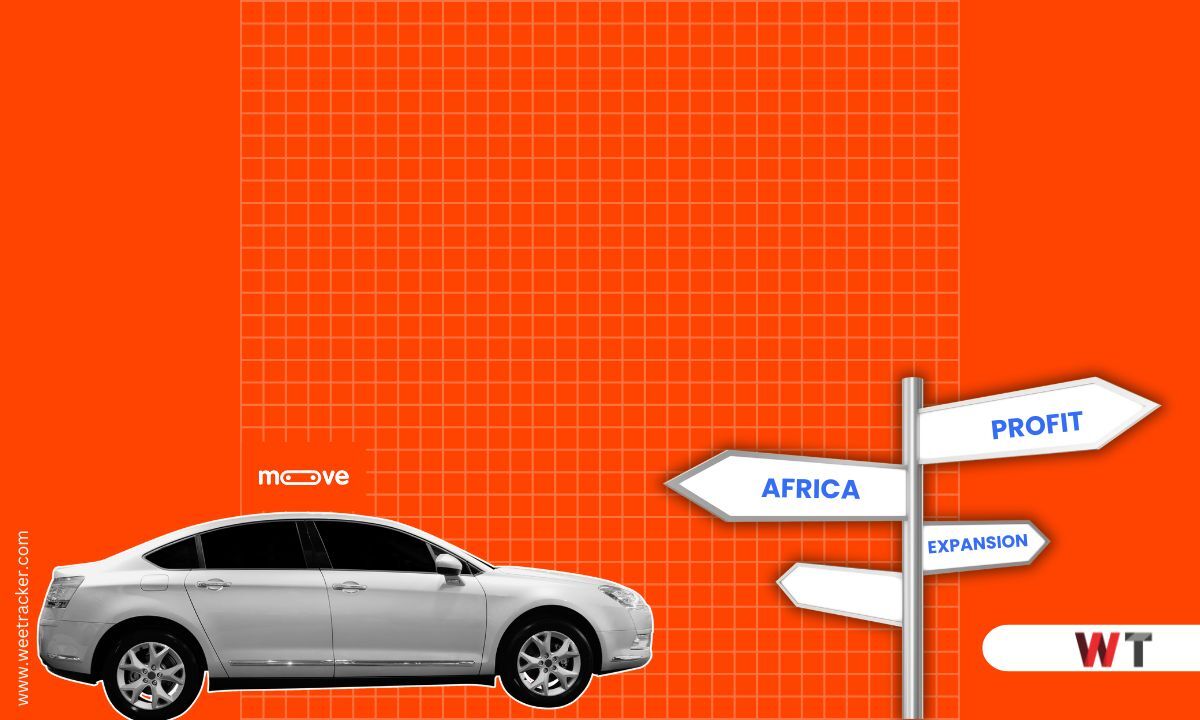
Moove, the mobility fintech founded in Lagos in 2020, announced on Thursday it will conclude operations in Nigeria, the market that incubated its business model and launched its global trajectory. The company will transfer vehicles worth approximately NGN 35 B (USD 22 M) to eligible Nigerian customers free of charge from October 1, 2026.
The exit comes just over a month after Uber Technologies ended its operations in Nigeria on September 2, a departure that rendered Moove’s core model in the country untenable. Moove built its Nigerian business by financing vehicles for Uber drivers, with repayments tied to daily earnings. When Uber left, that data pipeline collapsed, leaving drivers uncertain and Moove’s local unit without a platform partner to anchor loan recovery.
Moove, now headquartered in Dubai, reached a USD 2.1 B valuation in August after raising USD 250 M in a Series C round led by Abu Dhabi sovereign wealth fund Mubadala. Its annual recurring revenue climbed from roughly USD 275 M in 2024 to about USD 400 M in 2025, before hitting USD 420 M following acquisitions including Brazil’s Kovi and Tokyo Taxi in Japan. The company operates about 42,000 vehicles across 29 cities in 13 countries and employs roughly 3,300 people.
Yet the Nigerian market that produced this global platform became a drag. A currency mismatch defined the problem. Moove raised dollar-denominated debt to buy vehicles while drivers earned naira, a disparity that widened sharply after Nigeria’s 2023 fuel subsidy removal drove up pump prices and compressed driver margins. The company had already weathered a repayment crisis, repossessing vehicles from drivers who could not earn enough to meet obligations.
“While Nigeria remains deeply important to our story, the operating environment has become increasingly challenging,” Moove said in a statement announcing the exit, framing the vehicle transfer as a “thank you” to customers.
The company’s pivot toward autonomous mobility has reshaped its strategic centre of gravity. Through a partnership with Alphabet’s Waymo, Moove manages autonomous vehicle fleets in Phoenix and Miami, with London planned next. It is the largest global fleet partner for Uber and is positioning itself as a neutral infrastructure layer for robotaxi operations, a role that has attracted investment from Toyota’s growth fund Woven Capital.
Co-founder Ladi Delano, now based in Dubai, has spoken of building a business that solves problems his parents’ generation faced in Nigeria, but the company’s current growth is driven by markets far from Lagos.
Moove did not disclose a timeline for completing the wind-down or the number of employees affected. The company said eligible customers would take full ownership of their vehicles with no further payment required for the vehicles themselves from October 1. Remaining obligations, if any, were not specified.
The transfer of NGN 35 B in assets to drivers is an unusual exit gesture, one that may cushion the immediate blow for Moove’s Nigerian customers. But it does not change the broader signal that a company built to democratise vehicle ownership in Africa has concluded that ownership of its own future requires leaving Africa’s largest market behind.