Africa’s Female Founders Are Forced To Play A Rigged Game Investors Created & Refuse To Fix

By Henry Nzekwe  |  April 3, 2025

When Nour Emam, Co-Founder and CEO of Egyptian femtech platform Daleela by Motherbeing, recounts a moment from her entrepreneurship journey, it encapsulates the daily deep-seated challenges female founders face.

“One moment that sticks with me was during a pitch where, despite solid traction and user growth, an investor asked, ‘But how do you know Arab women even want to talk about these topics?’” she tells WT.

This loaded question wasn’t just about market validation, Emam says, but a subtle reminder of the systemic bias that boxes women, particularly those daring to disrupt sensitive sectors like women’s health.

For Emam, a notable entrepreneur, doula and reproductive health activist whose company confronts taboo topics around sexual and reproductive health among women, the question was less about risk assessment and more about challenging centuries of silence and stigma surrounding women’s bodies.

Africa is paradoxical. It leads the world in female entrepreneurial activity, with women representing 26% of total entrepreneurial endeavours. And yet, female-led startups remain grossly underfunded. In 2024, while male-led ventures attracted around USD 2 B, per one research, female-led startups secured a mere 2% of that.

Another research estimates a staggering USD 42 B funding gap for Africa’s women entrepreneurs. Such figures paint a picture of a market rich in potential yet strangled by entrenched biases and an ecosystem that still largely sidelines women.

More than a Capital problem

Akinyi W. Ooko Ombaka, Head of Portfolio Success at Madica, explains that the challenges are rooted in a web of intersecting issues. “The challenges faced by women-led businesses intersect and compound across multiple channels,” she notes.

Investor bias, she explains, often pigeonholes female founders into ‘traditional’ sectors like education or care economies, which are viewed as less catalytic for rapid growth. Yet, beyond the bias, Ombaka argues that the real game-changer is access to networks; be it mentorship, sponsorship, or robust community connections.

“From a strategic and cultural perspective, we’ve failed to address these challenges as an investment community because our interventions do not take diversity, equity and inclusion seriously. Tactically, we haven’t invested the resources to back these founders in a meaningful way,” she adds.

Madica’s approach, however, offers a counter-narrative. With a portfolio that includes over 50% female founders, Ombaka says Madica has honed a rigorous due diligence process and crafted an 18-month support program tailored to each founder’s specific needs. But she candidly admits that such an intensive, hands-on approach is resource-heavy, and few funds have the capacity—or the will—to replicate it.

Ombaka challenges top African VCs to radically change their playbook. “The numbers already demonstrate that having diverse teams and investing in women-led businesses is not only smart but also profitable,” she says.

“Investing in African businesses requires more—more time, more capital, more support. If you aren’t willing to play the long-term game, you’re in the wrong place or you haven’t found the right partners to do it.”

For Ombaka, acknowledging what hasn’t worked is the first step toward actionable change. “We must be actionable in our approach by sharing more instances of what’s working and tag-teaming best practices to build upon,” she stresses, hinting at a collaborative future where co-investment and founder-first approaches become the norm.

A Founder’s Battle

For Emam, the journey is as much about building a community as it is about securing funding. Reflecting on the investor’s question about Arab women’s willingness to engage with taboo topics, Emam is unapologetic.

“If I were a man building a crypto app or a logistics platform, I wouldn’t be asked to prove that my audience was ready for innovation. But as a woman building for women, I’m expected to justify our right to speak openly about our health,” Emam asserts. Such biases, she adds, are not merely annoying but actively stymie progress and reinforce an inequitable status quo.

Emam’s response to these challenges is both practical and empowering. “Build your audience before your investor deck,” she advises emerging founders. By fostering a community and accumulating tangible user engagement, female founders can create an unassailable narrative that data and human stories alike support.

Her journey with Daleela by Motherbeing, which uses an AI-powered assistant to empower Arab women in managing their sexual and reproductive health, is a testament to this strategy. Her approach has not only built credibility but also forced investors to confront their preconceptions with hard evidence: millions of views, thousands of comments, and robust conversion rates that tell a story of significant market demand.

Emam, recognised as one of the BBC 100 Most Influential Women of 2024, is also pragmatic about the current VC ecosystem. “The short answer is: we need both,” she explains when asked whether women should entirely retreat from the traditional VC model.

While alternative funding ecosystems—bootstrapping, revenue-first models, community-driven funds—are proving their worth, abandoning the VC route altogether would mean ceding influence in shaping the future of tech investment. Instead, the goal, she believes, should be to redesign the table.

“That means more women writing checks, more funds prioritising gender-lens investing, and more founders holding VCs accountable for their pipelines,” Emam suggests.

Numbers That Speak

Broader industry data underscore these personal accounts. African startups have seen funding declines across the board with male-led ventures continuing to pull in billions, while female-led initiatives languish.

Studies from Disrupt Africa reveal that out of nearly 2,600 startups surveyed, only 17.3% had at least one female co-founder, and a mere 11.1% were helmed by a female CEO. In Nigeria alone, only 10% of funded startups were female-founded, receiving just 0.7% of the total deal volume in a market worth USD 600 M.

The disparity becomes even starker when dissected further. Female CEOs received just USD 48 M in funding in 2024, per The Big Deal, while solo male founders raised USD 430 M and all-male teams secured USD 1.6 B.

Such figures are not isolated anomalies but part of a broader trend that sees less than 5% of Africa’s tech funding going to all-female founding teams over nearly a decade. These statistics reveal an ecosystem where impressive entrepreneurial activity by women is systematically undermined by inadequate access to capital.

However, compared to other regions, Africa does present a slightly better picture. A 2024 Pitchbook report noted that companies founded solely by women in the US and Europe received only 2% and 1.8% of total capital respectively, while Africa’s figure hovered at 8.2%. This relative advantage, however, does little to mask the overall systemic exclusion that women face globally.

Toward a More Inclusive Future

The conversation around gender funding gaps in Africa’s tech ecosystem is not solely about lamenting the status quo. It is also a call to action for all stakeholders, from investors to founders to policymakers.

Initiatives like Madica, which offer comprehensive support and clear investment theses focused on underrepresented founders, demonstrate that change is possible when the right mix of resources, mentorship, and strategic clarity is in place.

Both Ombaka and Emam stress that the road to parity is paved with honest introspection and radical rethinking of existing models. They opine that investors must be willing to reallocate resources, share success stories, and challenge their own biases, while founders are encouraged to leverage community support and build compelling narratives that defy stereotypes.

As Emam succinctly puts it, “In 2025, storytelling is a growth strategy. Don’t just pitch investors—create content, own your voice, build public proof. That credibility compounds faster than you think.”

The stakes are high. With studies estimating that achieving gender parity could boost global GDP by up to USD 12 T, the economic imperative to empower female entrepreneurs is undeniable. The challenge is to transform these figures into actionable change.
Three Days In, Nigeria’s Naira‑Only Remittance Rule Has Big Cracks To Fill

By Henry Nzekwe  |  May 4, 2026

Aunty Bisi in Lagos usually gets money from her son in Houston every two weeks. That cash pays for school fees, market supplies, and the occasional emergency. When her son sent USD 200.00 a few days ago, she expected the usual text alert. Instead, nothing came for six hours. When it finally arrived, the amount seemed short by a few thousand naira.

This is the new reality under the Central Bank of Nigeria’s latest directive, which took effect on May 1. Every International Money Transfer Operator, or IMTO, must now settle payments through local bank accounts. Recipients can no longer receive dollars directly. The policy aims to fix Nigeria’s chronic FX shortage and neuter the parallel market.

But the people actually moving the money say the government overlooked a basic problem. Nigeria’s banks still process transactions in batches, not one by one in real time.

Pelumi Esho runs 91 Payments, a licensed IMTO that moves money between Nigeria, the US, and Canada. She says the new system shifts currency risk onto companies like hers.

“IMTOs face a funding gap between the moment of conversion and the final payout,” she tells WT. That gap exists because banks take hours to match incoming dollars with outgoing naira. Larger operators can survive the delay. Smaller ones may not.

The biggest bottleneck, according to Esho, is a clash of speeds. “IMTOs relied on agile Payment Service Providers to provide short-term liquidity that bridged funding gaps. Traditional banks are not fundamentally built for immediate real-time settlement.” During peak periods like Christmas, when millions of Nigerians abroad send money home, this mismatch could freeze up the entire pipeline.

For the average person sending USD 100.00 from Toronto or London, the immediate effect might be frustration. “Senders might see slower turnaround times, delayed payouts, or partial settlements,” Esho admits.

She calls this a transitional teething phase. But she adds that banks urgently need to upgrade their API layers, the digital connectors that let different systems talk to each other.

***

The policy does include one smart feature. IMTOs must now reference live rates from Bloomberg’s BMatch platform. That centralised system makes it harder for anyone to hide bad exchange rates. “Margins will likely tighten,” Esho says, meaning senders could eventually get better value.

But there is a clear risk. If the formal system becomes too slow or unreliable, Esho fears people will go back to informal channels, the underground networks that have moved money across West Africa for decades.

“Diaspora senders are highly price sensitive,” she says. “If a significant disparity opens up between official rates and parallel markets, senders will inevitably pivot towards informal or peer-to-peer networks.” That would defeat the entire purpose of the reform.

As of May 4, the naira traded at NGN 1,376 per dollar on the official market. The gap with the parallel market has narrowed but not disappeared. Millions of Nigerians depend on money sent from abroad, with the World Bank putting the figure at just over USD 21 B as of 2024.

Esho believes the long-term outcome depends on one thing. Will the banking system upgrade fast enough to keep people from walking away? “If the formal system fails to deliver fair value, or introduces severe settlement delays, the policy risks making informal channels more attractive purely by comparison.”

For Aunty Bisi and millions like her, convenience and speed will always beat policy intent.

How Digital Infrastructure Can Power UK–Nigeria Tech Ties

By Guest Post  |  May 4, 2026

By: Mayowa Olugbile, CEO, Itana

When Nigeria’s President Bola Tinubu visited the United Kingdom in March, the growing diplomatic and commercial relationship between the two countries was on full display. Alongside the pageantry came a wave of major investment announcements: a GBP 746 M deal to modernise Lagos’s two largest ports, new agreements across the creative industries and education, and a steady drumbeat of deals from the private sector.

But perhaps some of the most interesting moves came in the world of tech. During the state visit, Nigerian fintech LemFi confirmed plans to invest GBP 100 M in the UK over the next five years, cementing London as its global headquarters. Nigerian unicorn Moniepoint is scaling its London team to 100, while Kuda Bank is preparing to double its UK footprint. At the same time, UK fintech Wise is moving closer to securing its first Nigerian license, opening the door to one of the world’s largest remittance corridors.

Taken together, these developments point to something deeper than a typical bilateral relationship. They reflect the growing reality of two digital ecosystems that are increasingly intertwined and fuelling mutual growth.

Deep Ties

The depth of this relationship is based as much on people as on technology. After all, the UK is home to roughly 300,000 Nigerian-born residents, with an estimated 500,000 people of Nigerian heritage overall, making it home to second-largest Nigerian diaspora globally after the United States. 

That diaspora is not just a cultural link but a financial one. In 2024, remittance flows into Nigeria accounted for more than 3% of GDP. A significant share of that flow runs through UK-based platforms, helping to explain why both British and Nigerian fintech companies are investing heavily in building a stronger presence on both sides of the corridor.

It is in this context that the UK–Nigeria tech relationship is continuing to evolve and deepen. Trade between the two countries has reached an all-time high of GBP 8.1 B annually, with growth increasingly driven by digital and tech services. The result is an evermore connected digital economy spanning London and Lagos.

The underlying dynamics are clear. London remains Europe’s largest tech hub and a global centre for finance. Meanwhile, Lagos has become one of the fastest-growing tech ecosystems anywhere in the world, particularly in fintech and digital services. Companies on both sides are increasingly recognising that the capital, talent, and ideas both sides offer can be a powerful mix.

With that said, for all this momentum, many founders on the UK side are quickly presented with a problem to resolve: how do they actually enter and operate in Nigeria in a way that is scalable?

Market Entry

For founders, the theoretical appeal of Nigeria is obvious. It is a large, young, mobile-first market with high levels of digital adoption and significant unmet demand across sectors. But market entry can still be a difficult, complex, and fragmented process. Companies have traditionally been required to establish local entities, navigate complex regulation, and build operations from scratch. Doing this in an unfamiliar market inevitably ends up being a costly, time-consuming process.

However, digital infrastructure is now being built as an answer to these problems, not least Digital Special Economic Zones. The concept is similar to traditional free zones built for manufacturing or physical exports, but are designed for digital-first businesses that operate across borders. Their purpose is to reduce friction: simplifying incorporation and creating more accommodative conditions for companies looking to thrive in global markets.

Itana, Africa’s first Digital Special Economic Zone, is part of this shift. The model is straightforward: to allow startups from the UK and around the world to incorporate in Nigeria entirely remotely and seamlessly access opportunities in the country.

Itana is located at Alaro City, within the Lekki Free Zone in Lagos, Nigeria.

The focus is on creating a fully digital, business-friendly regulatory environment that simplifies cross-border operations and enables companies to access global markets more easily. By streamlining compliance and reducing administrative burden, Itana allows startups to focus on building and scaling rather than getting bogged down in bureaucracy.

Just as importantly, Itana also brings companies into a dedicated ecosystem of high-growth, tech-centric firms. In turn, this creates the kind of network effects that fuel expansion and growth.

Seizing the Opportunity

The impact is tangible. Lower barriers to entry shorten timelines, reduce upfront costs, and allow companies to seize the opportunities associated with the Nigerian market without needing a physical presence in the country.

It also enables companies to think beyond Nigeria alone. Digitally incorporating in Nigeria is increasingly seen as a gateway into a wider African digital economy, which includes some of the fastest-growing markets anywhere in the world.

The recent state visit made clear that there is political will on both sides to deepen the relationship. But if the UK and Nigeria are to fully seize the opportunities presented by the growing digital economy, that intent will need to be backed up by infrastructure that makes cross-border business easier in practice.

OPay’s Road To USD 4 B US Listing Marks Fintech’s Rapid Rise In Nigeria

By Henry Nzekwe  |  May 1, 2026

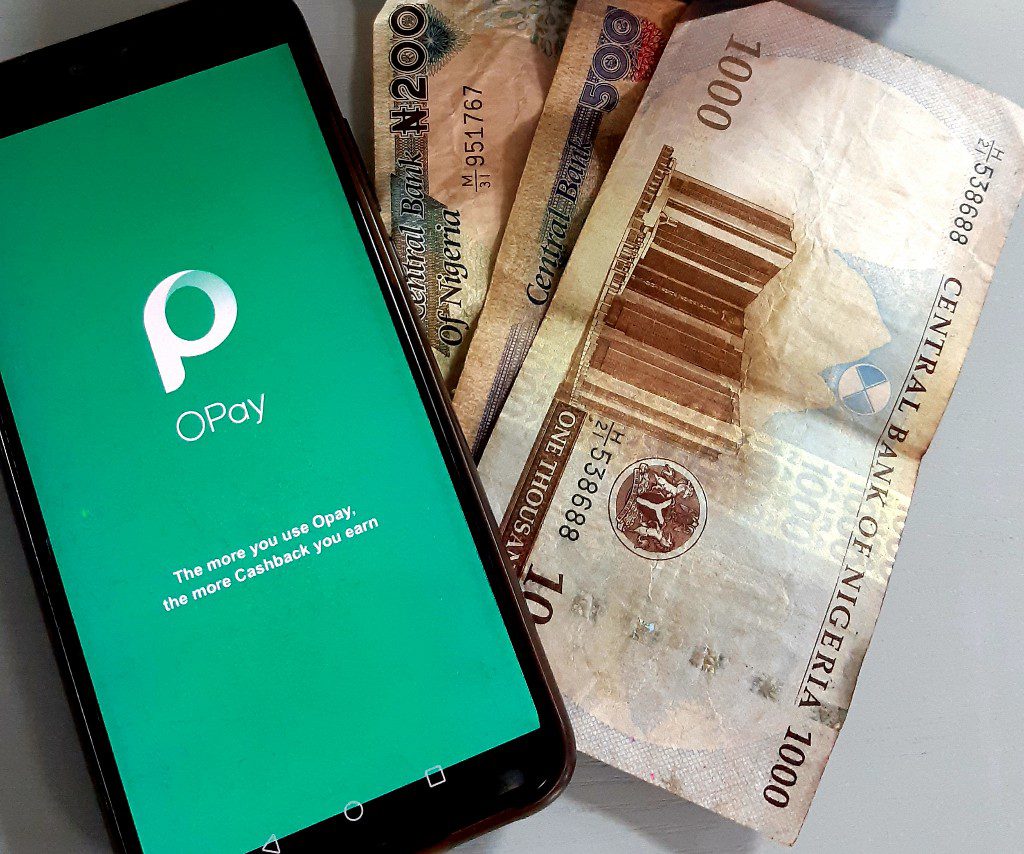
The journey of OPay from a ride-hailing service to a USD 4 B US IPO prospect tracks the explosive growth of digital payments in Africa’s most populous nation, a rise that has drawn Wall Street’s top banks to Lagos.

The SoftBank Group-backed fintech has appointed Citigroup, Deutsche Bank and JPMorgan Chase to lead a US initial public offering seeking a valuation of about USD 4 B, Bloomberg reported on Friday, citing people familiar with the matter. The share sale could happen later this year.

The reported target marks a rapid ascent from the company’s USD 2 B valuation in 2021, when it raised USD 400 M in a Series C round led by SoftBank’s Vision Fund 2. Since then, OPay’s valuation has climbed steadily, reaching an implied USD 2.7 B in early 2024 based on Opera’s stake and USD 3.1 B by the end of 2025, according to recent Opera securities filings.

The valuation surge reflects aggressive user and revenue growth. OPay quadrupled its user base in 2023 and grew revenue by more than 60% on a constant currency basis during that period as Nigerians turned to digital payment apps during a cash shortage triggered by the central bank’s banknote redesign.

Today, OPay counts more than 50 million users in Nigeria alone, and handled roughly USD 12 B in monthly transaction volume by mid-2025.

The company’s path to a public listing has been deliberate. In December 2025, OPay appointed a new global management team, including former Opera CEO Lars Boilesen as co-CEO and James Perry, a former Citigroup managing director with over 25 years of investment banking experience, as chief financial officer.

Opera, the Norwegian browser group that incubated OPay in 2018, had already signalled strong confidence in an IPO outcome. An April securities filing showed Opera assigned an 85% probability to an OPay listing within two years, valuing its 9.5% stake at USD 294.6 M at the end of 2025.

The fintech operates in a competitive but concentrated market. OPay and rivals such as Moniepoint and PalmPay serve more than 90 million users between them, and control the majority of Nigeria’s mobile money segment. A recent Central Bank of Nigeria directive restricting point-of-sale agents to work with only one financial institution could further consolidate OPay’s position.

A successful listing would mark the largest technology IPO to emerge from Nigeria and could serve as a bellwether for African fintech, where funding has slowed in recent years. OPay would join Airtel Africa, which is also planning to list its mobile money unit at a USD 4 B valuation.

OPay has not publicly confirmed the IPO plans. 

Africa Data Watchdogs Hand Down Fines, Prison Terms As Enforcement Ramps Up

By Henry Nzekwe  |  April 30, 2026

Africa’s digital economy is entering a new phase of regulatory enforcement as 45 countries adopt data protection laws and 16 roll out national artificial intelligence strategies, according to a 2026 report by stablecoin infrastructure provider Yellow Card.

The report found that 39 data protection authorities are now fully operational across the continent, marking a significant shift from policy adoption to active enforcement.

Uganda secured its first criminal data conviction in July 2025, imprisoning a director of a digital lender for using personal data without consent, the report. Nigeria’s Data Protection Commission fined MultiChoice USD 500 K for “patently intrusive” privacy violations and dragged Meta into a settlement over data breaches, though new details of the agreement have caused some dissatisfaction.

In Kenya, banking, energy, and telecom firms have all been fined by the Office of the Data Protection Commissioner. Tanzania’s High Court imposed a fine on a company that used a newborn’s photo on Instagram without the mother’s consent.

Meanwhile, AI governance is emerging as the next regulatory frontier. Sixteen African countries have adopted national AI strategies, with Nigeria, Angola, Morocco and Namibia advancing toward binding legislation. Angola’s draft AI law proposes fines of up to USD 1.6 M and prison sentences of up to 12 years for intentional misuse.

“The ability to innovate and modernise payment rails is deeply tied to navigating complex cross-border regulatory landscapes,” Thelma Okorie, Yellow Card’s group data protection and privacy counsel and author of the report, said in a statement.

For financial institutions using stablecoins for treasury management and cross-border payments, times are changing. Regulators are increasingly requiring Data Protection Impact Assessments and Algorithmic Impact Assessments before deployment, raising compliance costs for non-adherent firms.

“Stablecoins are powerful tools for business efficiency and mitigating FX volatility risk,” Okorie added. “But the infrastructure powering them must operate in lockstep with the strictest data protection and AI governance frameworks.”

Kenyan Data Workers Who Flagged Meta Smart Glasses Sex Videos Fired

By Staff Reporter  |  April 30, 2026

When Kenyan data workers told Swedish newspapers in February that their job involved watching Meta smart glasses users use the toilet and have sex, it appears they not only exposed a privacy nightmare but may have also signed their own termination notices.

Less than two months after the revelations, Meta ended its multimillion-dollar contract with Sama, a San Francisco-based outsourcing firm operating in Nairobi’s digital hub. Sama notified 1,108 employees on April 16 that they would be laid off, with just six days’ notice. 

The workers had been labelling sensitive footage captured by Meta’s Ray-Ban smart glasses to train the company’s artificial intelligence.  They reported seeing everything from undressing women to bank card details and sexual acts. 

The timing ignited a fierce dispute. Meta told the BBC it ended the partnership because “they don’t meet our standards”.  Sama, which has defended the quality of its work, said it was never notified of any failure.  A Kenyan workers’ organisation alleged the real reason was the workers speaking out, an accusation Meta has not directly addressed. 

The workers’ accounts have already triggered a UK data watchdog inquiry, a Kenyan privacy investigation, and a class-action lawsuit in the US over Meta’s “designed for privacy” marketing claims.

But for the thousands of young Kenyans who power the global AI economy with low-cost labour, the layoffs feel like insult on injury. The Oversight Lab, an African technology policy group, called the move devastating, warning that “our current strategies are harming our youth, hurting our economy and in no way advance Kenya’s participation in the AI ecosystem.” 

The mass dismissal is the latest chapter in years of legal battles between Meta and its Kenyan contractors. Nearly 200 former content moderators are already suing Meta and Sama, alleging forced labour, human trafficking, and severe PTSD from reviewing graphic online content.  In a landmark ruling, Kenya’s Court of Appeal has already said Meta can be sued in the country, rejecting the tech giant’s bid to shield itself behind outsourcing contracts. 

“Power sits with large technology companies,” Kauna Malgwi, a former Sama worker, told The Guardian. “Risk flows downward, affecting outsourced workers, often in the global south, who have the least protection and highest exposure.”  As Mark Zuckerberg continues to wear his Ray-Ban smart glasses in public, the workers who trained the AI behind them are left jobless, asking whether speaking up is a right or a liability.

Feature Image Credits: NYT

Nigeria’s Worsening Heat Crisis Is Spawning A New Wave Of Startups

By Staff Reporter  |  April 29, 2026

The cost of extreme heat in Africa is rising rapidly, with lost crops, broken hospital equipment, and wages evaporating under a merciless sun. But money to fix it is not flowing nearly fast enough.

Africa needs an estimated USD 70 B annually by 2030 to adapt to a hotter climate. The actual finance it received in 2023 stood at just USD 14.8 B, and that gap is widening.

Now a new coalition of donors is betting on a different approach: funding small Nigerian startups to tackle heat right where it hurts most.

Ten ventures will each receive USD 56 K in funding and hands-on support from BFA Global, FSD Africa, ClimateWorks Foundation and the UK’s Foreign, Commonwealth & Development Office under the TECA Heat Action Wave programme.

More than 60% of Nigeria’s population is regularly exposed to dangerous heatwaves, with cities like Lagos, Kano and Abuja now experiencing heat indices above 50°C during peak months. A 2025 report from the Nigerian Meteorological Agency warned that nine out of the ten years from 2016 to 2025 ranked among the 12 warmest on record.

Extreme heat “is rapidly becoming one of the biggest operational risks facing African economies,” said Tyler Ferdinand, TECA Director at BFA Global. “Our goal is not only to support these ventures but to prove that climate adaptation can become a powerful new investment frontier.”

The ventures span sectors that affect almost every Nigerian. Ofemini Global provides a heat-resilient logistics platform to help farmers transport perishable goods with heat monitoring to reduce spoilage.

Let-It-Cold offers a solar-powered portable cooling solution for small businesses and households. TheHyWing combines heat alerts and AI diagnostics to help outdoor workers avoid heat-related health risks. Others focus on hyperlocal early warnings, livestock health, soil diagnostics and even sanitation.

Six of the ten selected ventures have a female co-founder. The companies are based in Lagos, Kaduna and Edo States.

“This is the early stage of a market,” Ferdinand said. “If we can get this right in Nigeria, it becomes a model for the rest of West Africa.”

The programme runs through 2026, culminating in demo days and investor engagement opportunities for top-performing ventures. But the bigger test goes beyond Nigeria. Across the continent, adaptation finance remains a fraction of what is needed. Africa received just USD 30 B of the USD 300 B required annually for overall climate finance. Private capital remains largely absent, contributing only a small single-digit share of adaptation financing.

“If climate adaptation finance is going to scale in Africa, it has to be grounded in real, investable solutions,” said Juliet Munro, Director of Early Stage Finance at FSD Africa.

If these Nigerian startups can demonstrate real returns in one of the world’s most heat-stressed economies, they could help write a new playbook for climate adaptation.

Amazon vs Starlink: Bezos Takes On Musk For Kenya’s Internet Sky

By Staff Reporter  |  April 29, 2026

The battle to connect the unconnected in Africa has just turned into a billionaire’s boxing match. Amazon, owned by Jeff Bezos, has formally applied for a license to roll out its satellite internet service in Kenya, firing the opening salvo in a direct challenge to Elon Musk’s Starlink. The move sets the stage for a high-stakes duel between the world’s two richest men over the future of internet access on the continent.

The application, filed through the Nairobi-based subsidiary Amazon Kuiper Kenya Limited, seeks a Tier 2 license from the Communications Authority of Kenya. This specific category allows operators to build and run communications infrastructure across the country. With the regulator now inviting public feedback, Kenya is positioned as a critical frontier in Amazon’s plan to deploy more than 3,200 low-earth orbit satellites by 2028.

As Kenya pushes to expand universal connectivity, the timing could not be more critical. Fixed broadband coverage remains uneven, with fibre rollout proving expensive and often commercially unattractive in sparsely populated counties.

Mobile broadband, while widespread, struggles with persistent coverage gaps in arid and semi-arid regions. This connectivity gap has already fuelled growth for Starlink, which entered Kenya in July 2023 and has grown to about 22,282 subscribers, representing 0.9% of the country’s fixed internet connections.

But Amazon is not entering empty-handed. The company is dangling speeds that eclipse its rival. For a standard terminal, Amazon is promising up to 400 Mbps, dwarfing Starlink’s offering of 150 Mbps.

For commercial users, Bezos’s company says it will deliver a 1,280 Mbps download rate, more than three times higher than Starlink’s maximum 400 Mbps. While Starlink currently enjoys a first-mover brand advantage, Amazon’s raw speed numbers could fundamentally shake up consumer expectations.

The deeper play, however, may not be about selling dishes to individual households. Amazon’s entry strategy hinges on a powerful partnership with traditional mobile operators, directly plugging into existing networks.

A March agreement with Vodafone, the overall parent firm of Kenya’s largest telco, Safaricom, will link Amazon’s Leo network to 4G and 5G base stations in remote locations, with initial trials set for 2026. This approach mirrors a similar partnership Starlink’s parent SpaceX made with Safaricom’s parent Vodacom, turning Kenya into a testbed for how orbital networks integrate with terrestrial giants.

Key details like pricing remain undisclosed, leaving a massive question mark over whether faster speeds can translate into affordable access for everyday Kenyans. For now, the battle lines are drawn, and the prize is connecting the continent’s most underserved populations.

Secret Meta Deal Saw Nigeria Waive USD 32.8 M Fine & Drop Key Demands

By Staff Reporter  |  April 28, 2026

Nigeria quietly wrote off a USD 32.8 M fine against Meta Platforms Inc. last year, a review found, under a secret settlement agreement that erased the company’s financial liability over alleged data privacy violations affecting more than 60 million Nigerian users.

The Nigeria Data Protection Commission (NDPC) imposed the penalty in February 2025 following a 17-month investigation that accused Meta, the parent company of Facebook, Instagram and WhatsApp, of multiple breaches of the Nigeria Data Protection Act 2023.

The regulator alleged the tech giant had processed personal data of over 60 million Nigerians without explicit consent, used the information for targeted advertising, transferred data across borders without proper authorisation, collected data from non-users, and deployed algorithms that could expose users to financial and health risks.

But what was hailed at the time as a landmark enforcement action, one of the first of its kind in Africa, collapsed behind closed doors. On 30 October 2025, the NDPC and Meta signed a confidential settlement agreement. Days later, on 3 November 2025, a Federal High Court in Abuja converted the deal into a formal consent judgment, according to certified court documents obtained by Premium Times.

Under the terms of the agreement, Nigeria absolved Meta of all liabilities, waived the entire USD 32.8 M penalty, and set aside the original “Final Orders” that had required the company to overhaul its data handling practices. The company agreed only to cover the legal costs Nigeria incurred during court proceedings in which Meta had challenged the NDPC’s orders.

Most of the original corrective obligations were softened or removed entirely, the review discovered, replaced with vague commitments to handle Nigerian users’ data more ethically in the future and to collaborate on public awareness campaigns about data privacy. In return for writing off the fine, which resulted from months of investigation by the NDPC, Meta pledged simply to be “ethical” going forward, a promise critics say carries little enforceable weight.

The Data Privacy Lawyers Association of Nigeria (DPLAN) had, in December, issued a pre-action notice to the NDPC, arguing that the commission lacked the legal authority to compromise the remedial fine. The group is demanding the restoration of the original USD 32.8 M penalty. A court hearing is expected this year.

The NDPC has defended the deal, arguing that it reflects a balanced approach that prioritises compliance and public education over punitive fines. The commission has partnered with Meta to translate the Nigeria Data Protection Act into local languages and run awareness campaigns on Facebook.

But the secrecy surrounding the agreement has fuelled distrust. The government kept the full terms hidden for months, only surfacing through recent investigative reporting. The episode has drawn comparisons to Nigeria’s 2021 dispute with Twitter (now X), which was banned before a similarly opaque negotiated resolution.

LemFi Commits USD 135 M to Global Expansion, Financial Access Across Africa

LemFi Commits USD 135 M to Global Expansion, Financial Access Across Africa

By Partner Content  |  April 28, 2026

LemFi, the global financial platform serving people who live and work across borders, has committed £100 million to expanding its global infrastructure, marking a major milestone in its growth from African roots to international scale.

The announcement follows the UK–Nigeria State Visit in March 2026, during which LemFi’s investment was recognised as part of the Enhanced Trade and Investment Partnership between the two countries.

LemFi serves more than two million customers globally, enabling cross-border payments to over 30 countries. The platform plays a critical role in supporting diaspora communities and the markets they connect, particularly across Africa, where remittances remain a key driver of economic activity.

By making a strategic £100m (USD 135 M) investment in its global infrastructure and designating London as its global hub, LemFi is better equipped to serve the diaspora and the markets they support. This move in the world’s financial hub gives LemFi the regulatory and capital-market exposure it needs to deliver on its mission to provide fair and accessible financial services for people who live and work across borders. 

Scaling a global platform for cross-border lives 

LemFi’s growth has been driven by increasing demand from globally mobile communities. Today, the platform serves more than two million customers, enabling payments across 30+ countries while expanding into products such as credit, savings, and global accounts.

As the company scales, it continues to build infrastructure that supports how people actually live and work across borders, helping users not just move money, but manage and grow their financial lives internationally.

LemFi operates within multiple regulatory frameworks, holding licences and approvals in key markets including the UK, Ireland, Australia and Nigeria, as well as across 14 US states.

LemFi’s £100m commitment was made possible by the UK-Nigeria Department of Business and Trade, as part of the UK-Nigeria Enhanced Trade and Investment Partnership. LemFi will continue to innovate and develop innovative financial products and services for underserved communities globally. 

Ridwan Olalere, co-founder and CEO of LemFi, said: “We started LemFi to solve a real problem for people living across borders and today that mission is scaling globally. From our roots in Africa, we’re now serving millions of customers across continents, building financial services that reflect how people actually live and move. This next phase is about expanding that impact: reaching more people, across more markets, with products that help them not just send money, but build and grow financially wherever they are.” 

Rian Cochran, co-founder and CFO of LemFi, said: “Our £100m commitment is more than just a capital injection; it is a promise of stability and accessibility. By centralising our global operations in London, we are creating a hub that ensures every corridor we serve, whether in Africa, Asia, or Latin America, benefits from world-class financial infrastructure and a cooperative relationship with local regulators.” 

AI-Generated Fake Citations In South Africa’s AI Policy Serve Major Blunder

By Henry Nzekwe  |  April 27, 2026

A flagship South African national AI policy has been withdrawn after it was found to contain fake, AI-generated citations. It’s a blunder that has undermined the credibility of a document meant to govern the very technology that produced its errors.

Communications and Digital Technologies Minister Solly Malatsi announced the withdrawal late on Sunday after an internal probe confirmed that the Draft National Artificial Intelligence Policy, published for public comment on 10 April, contained multiple fictitious references in its bibliography.

“This failure is not a mere technical issue but has compromised the integrity and credibility of the draft policy,” said Malatsi. “The most plausible explanation is that AI-generated citations were included without proper verification,” he added, calling the episode an “unacceptable lapse” and a clear demonstration of why vigilant human oversight over AI remains critical.

The debacle was triggered by an investigation from South African publication News24, which reported that at least six academic citations in the 67‑item reference list, drawn from journals such as the South African Journal of Philosophy and AI & Society, either did not exist or could not be found in recognised academic databases.

A check with journal editors confirmed that the credited articles had never been published in those outlets. The finding strongly indicated that the references had been “hallucinated” by a large language model, meaning the AI had invented them with convincing but wholly inaccurate confidence.

The irony of the situation was not lost on critics. Khusela Diko, chairperson of Parliament’s portfolio committee on communications and digital technologies, had called for withdrawal days earlier and sarcastically urged the minister to undertake the necessary review “without using ChatGPT this time”.

Public Works and Infrastructure Minister Dean Macpherson, a fellow Democratic Alliance member of the Government of National Unity, accused Diko of “grandstanding,” while Diko fired back that DA ministers were the “epitome of populism.

The draft policy, approved by Cabinet on 25 March after a special sitting on 1 April, had been positioned as a cornerstone of South Africa’s Fourth Industrial Revolution response.

It aimed to establish national AI priorities, embed principles of intergenerational equity, and create new oversight structures, including a National AI Commission, an AI Ethics Board, an AI Safety Institute and an AI Insurance Superfund. Had it proceeded, the public consultation period would have run until 10 June.

Malatsi conceded that the withdrawal reflects a broader failure of quality control within his department. “South Africans deserve better. The Department of Communications and Digital Technologies did not deliver on the standard that is acceptable for an institution entrusted with the role to lead South Africa’s digital policy environment,” he said. He promised “consequence management for those responsible for drafting and quality assurance”.

The withdrawal leaves South Africa without a formal AI governance framework at a time when the technology is rapidly reshaping economies and societies across the continent. A new, properly vetted policy will now have to be drafted from scratch, delaying any near-term regulatory clarity.