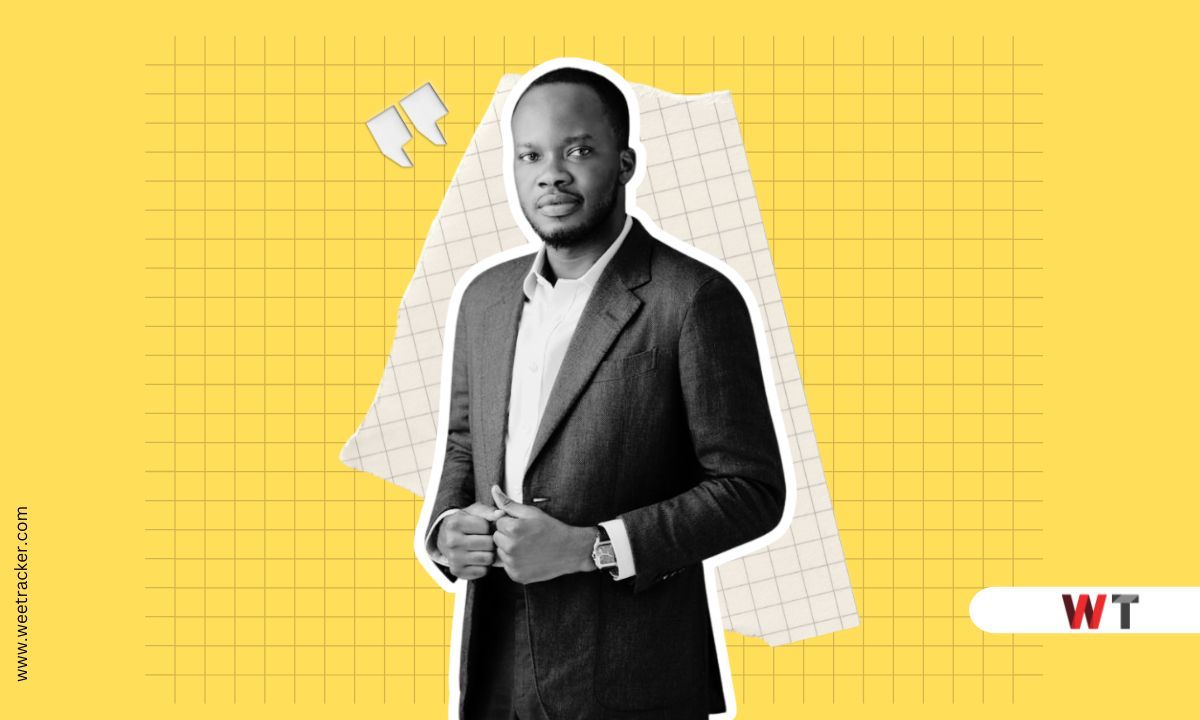
A Ugandan HR specialist with 20 years of experience in the Gulf has built a free tool that could give African workers a clearer picture of how artificial intelligence (AI) might reshape their careers.
Kim Kiyingi, who runs InspireAmbitions and is the author of “From Campus to Career,” launched an AI Job Risk Calculator that does not just score job titles but analyses a user’s actual daily tasks to generate a personalised risk score, a protection score, and an estimated year of displacement.
The calculator, which draws on research from the World Economic Forum, McKinsey, Goldman Sachs, and Oxford University, applies three scoring dimensions: AI technical capability, economic incentive for automation, and regulatory or social barriers in a specific country and industry. It then generates a risk score, a protection score, and an estimated timeline for when the majority of high-risk tasks could realistically be automated.
Kiyingi, who says he currently leads people operations across multiple hospitality properties in the UAE, covering over 600 employees across more than 40 nationalities, built the tool after watching companies make automation decisions from the inside for years.

“Most existing tools just score job titles, which tells you nothing useful,” he told WT. “A marketing manager in Lagos does completely different work than one in London. I wanted to give people a way to see which specific parts of their role are at risk and which parts protect them, so they can make smart moves instead of panicking.”
In Africa, where the conversation about AI and jobs has often been framed by macro-level projections, the calculator offers a different view. The tool has dedicated parameters for Nigeria, Kenya, South Africa, and Egypt, the continent’s largest and most digitally active economies.
For other countries, it applies a generalised developing-economy framework adjusted for local infrastructure and regulatory context.
What roles are at risk, and which ones are not (for now)?
Perhaps the most striking pattern revealed by the calculator is the vulnerability of entry-level digital roles, which were previously seen as pathways to prosperity.
The tool scores a junior software developer in Nigeria at roughly 49 to 55 percent risk, exclusive roles analysis shared with WT shows. The tasks driving that score include code generation from specifications, debugging standard errors, writing unit tests, and documentation, all functions that GitHub Copilot and similar tools already perform at production quality. Senior developers who architect systems and manage stakeholders score much lower at 21 to 27 percent.
That junior-senior gap may be the most important insight the calculator provides, and it aligns with recent findings elsewhere. A Stanford University analysis found that workers aged 22 to 25 in AI-exposed fields experienced a 13 percent relative decline in employment, even as older colleagues saw gains in the same sectors. The research suggests AI is starting to have a significant and disproportionate impact on entry-level workers.
In Africa, the contrast between global projections and on-the-ground realities is particularly sharp. The International Labour Organisation found that only 0.4 percent of employment in low-income countries is currently exposed to direct AI automation, compared with 5.5 percent in high-income countries.
But, as Kiyingi notes, that is an economy-wide aggregate figure. A bank teller in Lagos faces a 74 percent personal risk even though the national aggregate remains low, his analysis shows, because most Nigerian workers are in agriculture and informal sectors that AI does not yet touch. Both figures are accurate, Kiyingi points out, but measure different things.
AI versus Jobs
Some roles that might seem obvious candidates for automation turn out to be surprisingly protected. The calculator scores a mobile money agent in Kenya at roughly 36 to 42 percent risk.
Mobile money agents operate where trust, physical cash handling in areas without reliable internet, personal identity verification, and navigating informal economic networks are central. In London or Dubai, this role would be mostly automated already. In rural Kenya, it is protected by the very conditions that make the work necessary.
The calculator also points to broader trends that African economies cannot ignore. McKinsey projects that generative AI could unlock USD 61 B to USD 103 B in annual economic value across Africa if deployed at scale, with telecom and retail capturing the biggest shares. The calculator reflects this as telecom and retail roles with routine task profiles score highest, which is where businesses have the strongest economic incentive to automate.
But the tool is not designed to cause panic. Kiyingi shared an early example of a marketing professional in West Africa who ran her role through the calculator and found that over 60 percent of her daily tasks, including social media scheduling, basic copywriting, and campaign reporting, scored above 70 percent risk.
Her strategy and client relationship work, however, scored below 20 percent. He told WT that she has since redirected her development time toward strategic planning and stakeholder management.
“That’s the shift I wanted the tool to create,” Kiyingi said. “Less panic, more clarity on what to do next.”