Canal+ Lists In South Africa With Bold Plan To Reverse DStv Decline

By Henry Nzekwe  |  June 3, 2026

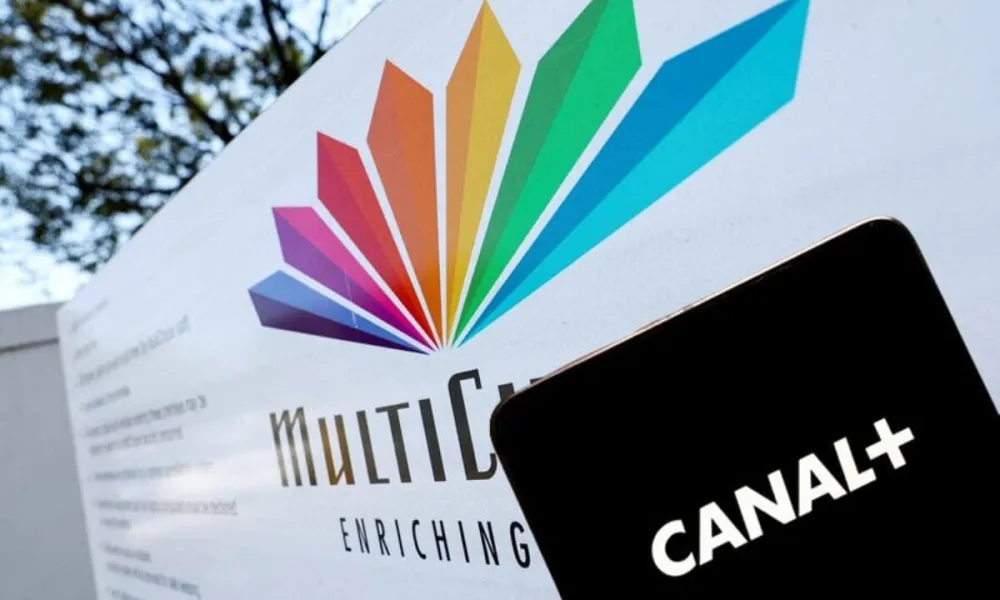
Canal+ began trading on the Johannesburg Stock Exchange on Wednesday in a secondary listing that fulfils a key regulatory pledge tied to its USD 3.2 B acquisition of MultiChoice, as the French media group doubles down on live sports rights to reverse steep subscriber losses at Africa’s largest pay-TV operator.

The listing, the first ever by a French company on the JSE, comes eight months after Canal+ took full control of MultiChoice, which has shed nearly three million linear subscribers over the past two financial years across its DStv and GOtv platforms. The stock opened at 58.50 rand, above its reference price based on London-traded shares, before settling.

While the listing hands South African investors rand-denominated exposure to a combined entity serving 42 million subscribers across 70 countries, the operational challenge facing the group is quite tasking.

MultiChoice ended 2025 with 14.4 million subscribers, down from 14.9 million a year earlier, with revenue sliding 6% to EUR 2.4 B. In South Africa alone, DStv shed 589,000 subscribers in the 2025 financial year, an 8% decline across every pricing tier from premium to mass-market.

Sports as a shield

Canal+ has moved decisively to lock in premium rights across multiple disciplines in a bid to stem churn. On Wednesday, the same day as the JSE listing, the group extended its Premier Soccer League broadcast rights through SuperSport across sub-Saharan Africa. That followed a May renewal of its multi-year domestic rugby rights with the South African Rugby Union, covering all Springbok matches.

SuperSport will also broadcast all 104 matches of the 2026 FIFA World Cup across 27 African nations, a tournament featuring a record 10 African teams.

“The renewal of the domestic broadcast agreement is not just the strengthening of our long-standing partnership,” said Rendani Ramovha, Canal+ director for sports content in English and Portuguese-speaking Africa, following the rugby deal. “It is a victory for DStv viewers and subscribers”.

Canal+ Africa CEO David Mignot said the rugby extension “reaffirms our long-term commitment to local sport,” while the group has also committed EUR 100 M to a turnaround plan that includes hiring more than 1,000 salespeople across African markets and lowering subscriber entry costs.

Content consolidation

The Paris-based group has simultaneously moved to rationalise MultiChoice’s streaming bets, shuttering the loss-making Showmax platform in March after years of heavy investment failed to deliver scale.

By centralising sports rights through SuperSport while cutting standalone streaming overhead, Canal+ is betting that live events, which are less vulnerable to cord-cutting than general entertainment, can anchor a broader content proposition that includes thousands of hours of local African productions.

Canal+ CEO Maxime Saada described the dual London-Johannesburg listing as reinforcing the group’s “ambition to be a bridge between Europe and Africa”. But question marks linger over whether a renewed focus on sports and local content can reverse years of subscriber erosion in a market where the shift to streaming appears structural.

Uganda Puts The Squeeze On Cash While Taxes On Digital Alternatives Bite

By Staff Reporter  |  June 4, 2026

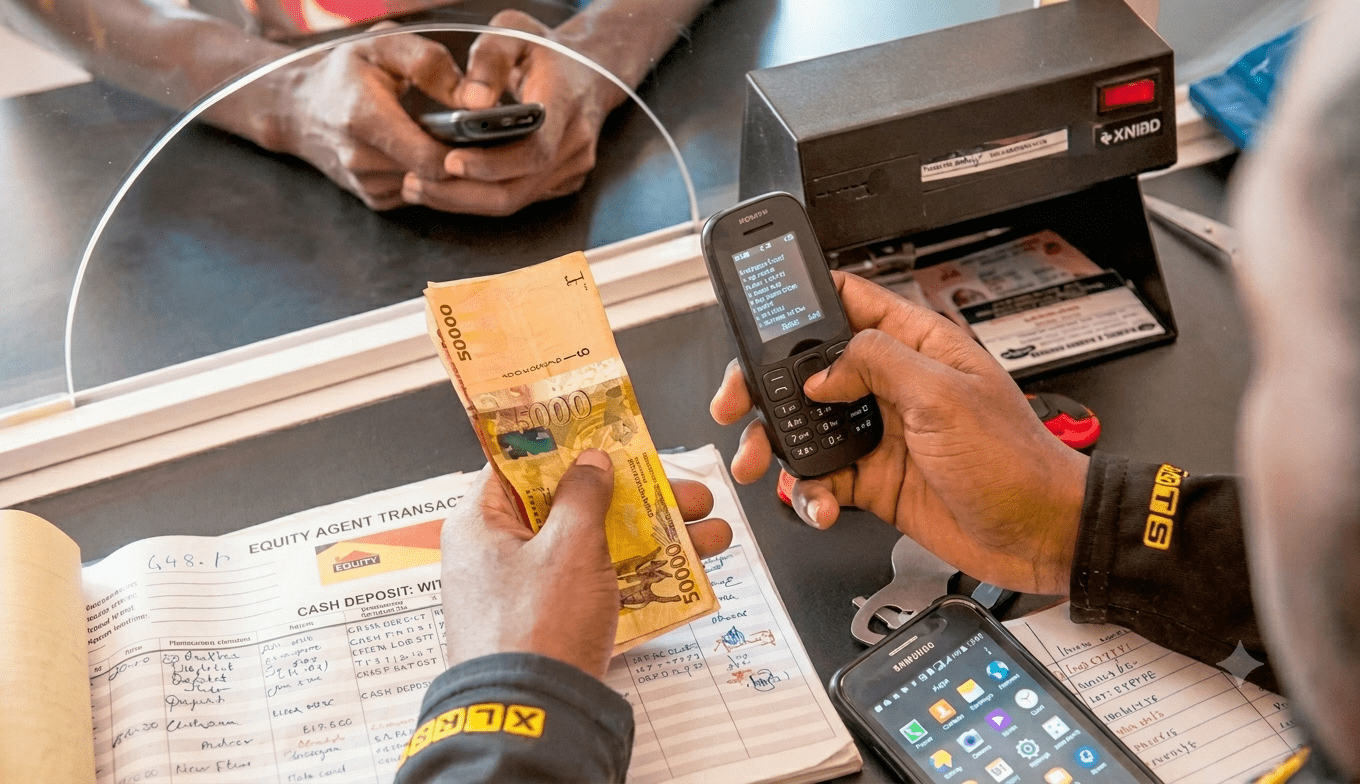
Uganda’s central bank is tightening the screws on cash, imposing new withdrawal and cheque limits in its strongest push yet toward a cashless economy, even as the government’s own digital transaction taxes threaten to undermine adoption.

The Bank of Uganda, in a circular issued last week, set daily over‑the‑counter cash withdrawal caps of UGX 50 M (USD 13.7 K) for individuals and UGX 500 M (USD 137 K) for businesses. Weekly limits are set at UGX 250 M and UGX 2.5 B, respectively. The rules take effect on Jan. 1, 2027.

“In line with the Bank of Uganda e‑payments strategy, which aims to promote a cash‑lite economy as part of the broader national digitisation agenda,” the central bank said it had also reduced interbank cheque limits and introduced the withdrawal caps, according to the circular.

The move comes as digital payments surge. According to the central bank’s own data, electronic money transaction values in the East African nation rose 28% in 2025 to UGX 366 T (USD 100.3 B), while transaction volumes grew 17.3% to 9.1 billion. Mobile money remains the primary driver, with transaction values jumping 40% to UGX 66.1 T last year.

But a 0.5 percent excise duty on mobile money cash withdrawals, charged on top of service fees, is creating friction. Telecommunications firms MTN Uganda and Airtel Uganda told Parliament’s finance committee in April that the levy disproportionately hurts low‑income users. The operators are pushing for a reduction to 0.25 percent, arguing it would stimulate usage and ultimately lift tax revenue.

“When you send money for Parish Development Model, Emyooga, women down there will suffer the tax burden, they are your taxpayers,” MTN’s Dennis Kakonge told lawmakers.

The cost has sparked a shift. Agency banking transaction values rose 76% in 2025 to UGX 29.4 T as consumers seek cheaper channels, according to industry data. The number of agents expanded to more than 22,000. Refactory CEO Michael Niyitegeka, a tax expert, called the current framework “a distortion in the digital payments ecosystem,” noting that the tax burdens one channel while similar banking transactions attract lower costs.

The central bank’s restrictions may backfire if the cost of digital channels remains prohibitive. But mobile money remains the most accessible payment option for households and small merchants, even with the levy.

Amazon Brings Prime To South Africa In A Renewed Push Against Local Rivals

By Henry Nzekwe  |  June 4, 2026

Amazon has launched its paid Prime service in South Africa, deploying the loyalty engine that underpins its global dominance two years after the U.S. e‑commerce giant quietly entered the country’s crowded online retail market.

The subscription, priced at ZAR 59 (USD 3.20) monthly or ZAR 399.00 annually, offers unlimited same‑day delivery in major metros, access to Prime Video streaming and Amazon Luna cloud gaming, as well as exclusive entry to the company’s annual Prime Day sales event, scheduled for June 23‑29. The launch makes South Africa the 27th country to receive the service.

Amazon’s marketplace went live in South Africa in May 2024 to a muted reception, with limited product selection and no Prime offering in place. Nearly two years later, independent data suggests the platform has gained traction. During the 2025 Black Friday period, Amazon recorded the third‑highest transaction value among customers of both FNB and Discovery Bank, trailing only Takealot and Checkers Sixty60. One logistics partner, The Courier Guy, processed a peak of nearly 224,000 deliveries for Amazon in September 2025.

“Since launching Amazon in South Africa two years ago, we have built a store our customers love, with a great selection of local and international products backed by a reliable delivery experience,” Robert Koen, managing director for Sub‑Saharan Africa at Amazon, said in a statement. “Launching Prime is the next exciting milestone on our journey in the country.”

The move ratchets up pressure on incumbent rivals. Naspers‑owned Takealot remains South Africa’s largest e‑commerce platform, holding about 45% of regular online consumers, but its market share has fallen from 35% in 2020 to 24% in 2025.

Takealot introduced its own TakealotMore subscription service days after Amazon’s entry, while Shoprite’s grocery delivery app Sixty60 has emerged as a formidable competitor.

South Africa’s online retail sector remains underpenetrated, accounting for an estimated 5%‑8% of total retail sales, a gap that Koen said presents a growth opportunity. Amazon has expanded its physical footprint to support the push, including more than 4,000 pickup points across the country and delivery coverage extending into rural areas.

“We want to price it at an affordable level, which I think adds a lot of value in the offering,” Koen told local media. Customers can sign up for a 30‑day free trial before committing to the subscription.

Bitnob Expands Its Infrastructure for Global Payment Markets
Press Release

Bitnob Expands Its Infrastructure for Global Payment Markets

By Partner Content  |  June 3, 2026

Most financial infrastructure was built in markets where payments already work. Bitnob was built in markets where they don’t.

Bitnob has operated at the intersection of some of the world’s most complex financial environments: markets where businesses navigate currency volatility, limited access to dollars, fragmented payment networks, long settlement timelines, and costly cross-border transactions in their everyday operations.

Today, the company is introducing the next evolution of its infrastructure platform.

Bitnob announced the launch of Bitnob Enterprise, a non-custodial infrastructure stack, alongside the next generation of Bitnob Business, its managed platform for businesses building with modern financial rails.

Together, the two offerings provide businesses with a choice between managed and non-custodial operating models while leveraging the same underlying infrastructure.

“We’ve spent years building infrastructure in environments where financial inefficiency is not an inconvenience but a business risk,” said Bernard Parah, Founder and CEO of Bitnob.

“When your customers deal with currency volatility, delayed settlements, restricted access to global currencies, and expensive cross-border payments, you learn very quickly what matters and what doesn’t. The infrastructure we built to solve those problems is increasingly relevant far beyond the markets where we started.”

Over the last five years, Bitnob has built infrastructure powering wallets-as-a-service, payments, treasury operations, stablecoin settlement, swaps, collections, payouts, and virtual card products used by businesses operating across global markets. Today, more than USD 4.5 B has moved through its infrastructure.

First launched in 2022, Bitnob Business provides businesses with access to managed infrastructure via APIs and dashboards, enabling them to launch and scale financial products without having to manage blockchain infrastructure or internal operational complexity.

The next generation of Bitnob Business introduces a redesigned experience and enhanced infrastructure designed to support growing treasury workflows and operational requirements.

Alongside it, Bitnob Enterprise introduces a non-custodial infrastructure layer for organisations and developers that prefer greater ownership and control over how financial products are built and operated.

Customers using Enterprise retain control of their custody architecture while leveraging Bitnob’s infrastructure for wallets, payments, treasury operations, market intelligence, and embedded financial services. It is available to regulated financial institutions, fintechs, and developers building products that prefer a non-custodial architecture from day one.

The launch comes at a time when businesses across emerging markets are increasingly turning to stablecoin infrastructure to move money more efficiently across borders.

According to a 2025 Oui Capital report, Africa’s cross-border payments corridor is projected to grow from approximately USD 329 B annually today to nearly USD 1 T by 2035. Across Sub-Saharan Africa, stablecoins now account for roughly 43% of digital asset transaction activity, driven increasingly by practical use cases such as supplier payments, treasury management, payroll, and international commerce.

At the same time, institutional adoption continues to accelerate globally. Stablecoin frameworks are emerging across major jurisdictions, financial institutions are increasing participation, and programmable financial infrastructure is becoming an increasingly important part of the global financial system.

Bitnob believes the future of financial infrastructure will be shaped not by geography, but by utility. As businesses become increasingly global from day one, the demand for infrastructure that is programmable, borderless, and accessible continues to grow.

The same infrastructure that helps a business in Lagos access global markets can help a company in São Paulo manage treasury more efficiently, or enable a fintech company in Nairobi to move money across borders faster and at lower cost.

Bitnob Business and Bitnob Enterprise are available free beginning today. For more information, visit https://bitnob.com/ or schedule a call with the sales team

Kenyans Furious At PayPal As Frozen Funds And Banned Accounts Hit Many

By Henry Nzekwe  |  June 3, 2026

For more than a decade, Kenyan freelancers and remote workers built their livelihoods around PayPal. Now, many of them are locked out of their accounts, with funds frozen and no clear path to access their earnings.

The crisis exploded this week after PayPal began restricting and permanently blocking several Kenyan accounts, citing anti-money laundering compliance and fraud prevention obligations. The company required proof of identity, a physical address, and government-issued identification, along with utility bills, contracts or agreements for freelance work, invoices, and bank statements. The requirements proved impossible for many Kenyans.

One freelance writer said he has been unable to access USD 190.00 (about KES 24.5 K) paid by a client in the United Kingdom after PayPal flagged the transaction. “We have chosen to permanently limit your account following a review, thus you are no longer able to use PayPal,” the company informed him.

The crackdown follows Kenya’s placement on the Financial Action Task Force’s (FATF) grey list of countries considered at increased risk for money laundering and terrorist financing. Enhanced due diligence is now mandatory for all grey-listed counterparties, prompting international payment providers to adopt stricter verification measures. But for affected freelancers, the explanation offers little comfort.

Affected users include freelancers, online sellers, small businesses, artists, and people receiving donations or family support.

One of the most challenging requirements has been proving a physical address. PayPal demands formal documentation such as electricity, water, gas, or internet bills linked to a formally registered residential address. This is not always straightforward in Kenya as many homes are identified by landmarks and informal descriptions, not the structured street addressing common in the United States and Europe.

Accounts that remain non-compliant for more than six months are permanently deactivated without wiring the cash back to the sender. For users whose accounts have already been blocked, balances can be held for up to 180 days, making the platform an increasingly unreliable option for those who depend on timely access to their earnings.

The situation is eerily familiar to Nigerians, who have a painful history with the global payments giant. In 2004, PayPal restricted Nigerian accounts to “send only” status, citing fraud concerns, locking an entire generation of digital entrepreneurs out of receiving international payments. When PayPal partnered with local fintech Paga in January 2026 to finally enable inbound payments, many greeted the news with anger.

“Don’t use it!” one Nigerian user posted on X. “They seized our people’s money for years and stigmatised us as fraudsters. We have better local platforms that do it faster and cheaper”.

Many Nigerians lost thousands of dollars over two decades of account freezes and withheld funds. Sceptics warn that PayPal’s return does not erase the past. A Nigerian user whose account was locked immediately after receiving a one-dollar test payment after the Paga partnership remains blocked.

Across both countries, PayPal’s automated systems have been accused of flagging legitimate African users as suspicious, and demanding documents that ignore how people actually live and work on the continent.

Direct withdrawal from PayPal to M-PESA, as an alternative, has long been available to Kenyans, but that does not solve account freezes. The Pan-African Payment and Settlement System (PAPSS) now offers instant local-currency transfers across African borders, bypassing correspondent banking chains. Other fintechs like Flutterwave, Paystack and Grey have filled the gap PayPal left behind.

But for many Kenyans who have seen their earnings held hostage by compliance paperwork they cannot produce, none of that helps right now.

Chowdeck Moves To Fix Gaps After Impersonation Controversy As Grievances Remain

By Henry Nzekwe  |  June 2, 2026

When a Techpoint Africa investigation revealed in May that a fictitious restaurant could be set up and take live orders on both Glovo and Chowdeck without any real identity check, it laid bare a deeper crisis of trust in Nigeria’s USD 1.1 B online food delivery industry, and triggered an urgent response from one of its biggest players.

The controversy, which followed a December 2025 complaint by a legitimate food brand that had been impersonated on Glovo, prompted Chowdeck to overhaul its vendor verification framework. Today, the company rolled out a three-tier “Vendor Badge” system designed to give customers clarity about who is actually preparing their food.

“We built Chowdeck on trust,” founder Femi Aluko said in a statement. “A recent incident exposed a vulnerability in a system we created to support small businesses. It raised important questions about customer safety and how vendor verification works.”

Under the new system, “Verified” badges designate fully vetted official partners. “Awaiting Verification” badges apply to starter businesses completing their paperwork, while “Shopper” badges indicate a local store that is fulfilling orders through a trained Chowdeck shopper rather than a direct partnership. The platform’s official blog stressed that compliance does not end at onboarding, promising continuous monitoring and enforcement.

Yet for vendors whose businesses are being listed without their knowledge or consent, the badges do not resolve the core grievance.

A complaint shared publicly on May 28, seen by WT, detailed the frustration of yet another food business, an outlet called Norma known for its suya, which discovered an unauthorised listing on Chowdeck and struggled to have it removed. In the company’s official blog, it wrote that “we take unauthorised listings seriously and will investigate and resolve them promptly.”

Nigeria’s digital commerce ecosystem is steadily expanding, and the federal government has already announced a National Digital Trust Mark to combat online fraud. Industry observers have pointed out that weaker merchant verification on food delivery platforms can lead to consequences ranging from counterfeit goods to health risks.

Chowdeck’s introduction of transparent badges is a calculated step toward rebuilding consumer faith. But as Aluko acknowledged, “trust guides every decision we make.” Whether the badges can restore that trust, and protect the real businesses that are its engine, is now the question the industry is watching.

Investors Now Demand Proof Over Promises From African Firms, Insiders Warn

By Staff Reporter  |  June 2, 2026

After years of venture capital chasing market-share narratives, the continent’s business leadership is pivoting toward institutional depth and verifiable performance, according to a new industry trends report seen by WT.

TheBoardroom Africa’s 2026 Industry Trends Report, released Monday, draws on insights from 30 senior executives, investors and policymakers across more than 20 sectors. It identifies four structural shifts already reshaping capital allocation, regulatory direction and competitive positioning: the repricing of risk, the maturation of artificial intelligence, the redesign of healthcare and a decisive move from governance as policy to governance as proof.

The report marks a critical departure from the narrative-driven fundraising that defined Africa’s last tech boom. Global venture funding is contracting, exit volumes are slowing, and investors are no longer relying solely on market-size projections. Risk is now assessed on cash flow stability and operational resilience, the findings suggest.

“Private credit is replacing equity-led growth as the dominant financing model across the continent,” the report finds. Structured debt, revenue-linked instruments and risk-partitioned facilities are proving more aligned with local operating realities than traditional venture capital. In April 2026, African startups raised just USD 110 M, the lowest monthly funding volume since March 2025; a 58% drop from the rolling 12-month average of USD 266 M.

The implication is that access to capital now requires durable performance, not potential. Accurate risk pricing, the report argues, is not exclusionary but foundational to sustainable lending and stronger repayment cultures.

Artificial intelligence, meanwhile, has moved decisively from experimental differentiator to operational backbone. Across fintech, energy, healthcare and compliance, AI is no longer a novelty but infrastructure. In financial services, it drives fraud detection, credit underwriting and compliance monitoring. In healthcare, it is redesigning workflow, triage and clinical decision support.

The competitive distinction, the report finds, has shifted from who is experimenting with AI to who has the governance frameworks to deploy it at scale. “Boards are increasingly expected to interrogate explainability, accountability and automated decision-making as central governance concerns, not technical matters to delegate downward.”

Governance itself is being redefined. ESG, AI ethics, cybersecurity and social performance are converging into a single accountability framework. Compliance effectiveness, the report warns, “will be judged less by policies produced and more by behaviours evidenced. A policy commitment is a statement. A proof point is an audit trail. For local and global capital alike, the latter is no longer optional.”

Nowhere is this shift more visible than in healthcare, where the continent’s underfunded, brittle systems are being redesigned from the ground up. The report identifies a decisive move from volume-based to value-based care, away from counting procedures toward measuring outcomes and cost.

Care delivery is migrating from centralised hospitals toward decentralised networks of outpatient centres, community hubs and virtual platforms. Impact investment, the report finds, has become a catalytic complement to public funding, not a replacement.

“Africa’s challenges have always been its most compelling investment case. What is different now is that its leaders are building the institutions to prove it,” Marcia Ashong-Sam, Founder and CEO of TheBoardroom Africa, emphasised.

For a continent long defined by its potential, the shift is fundamental. The era of narrative is giving way to the era of evidence.

African Markets Shake Up Top-Tier Outsourcing, Challenging Asia’s Grip

By Staff Reporter  |  June 2, 2026

Africa has crashed the party. While the conversation around global outsourcing has focused on Asia’s mature markets, the 2026 Global Outsourcing Talent Index, released by U.S.-based firm Ataraxis, reveals that the continent is reshaping the field.

The study, which evaluated all 193 UN-recognised countries, is a data-driven rebuttal to the old “cheap labour” narrative. For the first time, seven African nations—South Africa (5th globally), Nigeria (6th), Kenya (11th), Egypt (15th), Ghana (17th), Ethiopia (23rd), and Uganda (24th)—now occupy 28% of the world’s top 25 outsourcing destinations, a share that now matches Asia’s.

The African countries leading the pack are doing so on the strength of high-value metrics typically associated with traditional knowledge economies. While cost remains a major factor, the region’s comparative advantage is evolving quickly.

Data shows Nigeria, Ghana, and Kenya each boast an English Proficiency score of 90/100, outperforming France and Spain (80/100) and challenging long-held assumptions about linguistic supremacy in outsourcing.

Furthermore, a recent analysis from the Boston Consulting Group found that Africa’s developer community is expanding at an annual rate of 21%, the fastest globally, with a 4.7 million-strong base that positions the continent as a key source of engineering talent.

African countries are playing a strategic role in the USD 328 B global BPO market, which is projected to reach USD 696 B by 2033. While South Africa leverages world-class English and stability, and Nigeria uses its massive workforce scale, another more nuanced trend is emerging in the strategic partnership model, spearheaded by Kenya.

Kenya ranks 11th globally, but the index notes its digital infrastructure (50/100) far outpaces the African average, though it remains only 102nd worldwide. However, Nairobi is leapfrogging this gap by focusing on governance. Kenya is on track to become the first African nation to secure an EU data adequacy decision, a designation that would open seamless access to the bloc’s EUR 800 B (USD 873 B) data economy.

This positions Kenya not as a low-cost alternative, but as a regulatory partner. With a young workforce where 75% are under 35 and a time zone alignment with Europe, Kenya is solving a critical pain point for European firms facing a severe ICT talent shortage—Germany alone has an estimated 14,000 unfilled tech roles.

This rapid ascension presents a critical tension, however. The index’s own methodology places a heavy weight on business, legal, and political stability (5%) and digital infrastructure (5%). While African nations now match Asia in top-tier rankings, the depth of their tech ecosystems tells a different story. Africa’s entire developer base stands at 4.7 million versus Asia’s 73.9 million.

To maintain growth, governments are aggressively building physical hubs, from Nairobi’s “Silicon Savannah” to Itana in Lagos and Kigali Innovation City, to structure these innovation ecosystems at scale.

Once‑Beloved Fintech Brass Absorbed Into Paystack MFB After Two-Year Rescue Bid

By Staff Reporter  |  June 1, 2026

Two years after a high‑profile rescue by a Paystack‑led consortium, Nigerian business banking startup Brass has ceased operating as an independent entity, with its operations now absorbed into Paystack Microfinance Bank in a move that closes the chapter on the once high-flying fintech as a standalone entity.

Founded in July 2020 by Sola Akindolu and Emmanuel Okeke , who met while working at Kudi and Paystack respectively, Brass raised a USD 1.7 M round in October 2021 that drew backing from Flutterwave CEO Olugbenga “GB” Agboola and Paystack co‑founder Ezra Olubi. The startup built a digital banking platform that offered business accounts, payroll tools, expense management and cash‑flow tracking, positioning itself as a modern banking layer for African SMEs.

But by October 2023, cracks began to show. Customers reported delays in processing withdrawals, sparking liquidity concerns across the ecosystem. In March 2024, Brass furloughed an unspecified number of its roughly 50 employees, with Akindolu citing “significant economic shifts” in a public statement. The delays continued for months, and ecosystem stakeholders worried that the collapse of a deposit‑taking fintech could trigger a wider bank run on digital financial services.

In May 2024, a consortium led by Paystack, with participation from PiggyVest, Ventures Platform, P1 Ventures and angel investors, acquired Brass for an undisclosed amount, replacing Akindolu and his founding team with new leadership. The acquisition ended months of speculation, though some investors raised questions about liabilities, with two sources describing a NGN 2 B (~USD 1.4 M) hole in the company’s balance sheet that Brass’s leadership could not account for.

On Monday, Brass announced that interested customers would be migrated into Paystack MFB before July 31, 2026, integrating its business banking operations into Paystack’s regulated banking infrastructure. “As we rebuilt and as our platform became more mature, something became increasingly clear: the next phase of our growth could not be achieved alone,” the company said.

Paystack, which was acquired by Stripe in 2020 for USD 200 million, absorbs Brass to deepen its expansion from payments processing into full‑stack financial services; a shift that began in January when it entered Nigeria’s banking sector by acquiring Ladder Microfinance Bank.

The integration also signals the maturity of Africa’s fintech market. After years of venture‑backed startups building overlapping products, consolidation is now accelerating as capital and regulation tightens.

Mobile Money Fees To Get Costlier As Kenya Pushes Digital Taxes, Operators Warn

By Staff Reporter  |  June 1, 2026

Mobile money users in Kenya could see transaction costs rise by up to 18.4% under proposed tax changes, industry players have warned lawmakers, potentially reversing years of hard-won gains in financial inclusion.

The warnings come from two of Kenya’s most prominent digital payments players—the operator of the dominant mobile money network, M‑PESA, and global card giant Visa—as Parliament considers the sweeping Finance Bill 2026.

Safaricom, which owns M‑PESA, appeared before parliamentarians to oppose a clause in the bill, which would slap a 16% value‑added tax (VAT) on digital payment platforms on top of an existing 15% excise duty already charged on mobile money transfers.

The telco calculated that the two levies would push the effective tax burden on an M‑PESA transaction from 15% to 33.4%, translating directly into higher costs for Kenya’s 51 million mobile money users. On a typical transaction, fees could climb by as much as 18.4%, the company said.

“What I’m foreseeing happening is us going back to instances where people would have money stuck underneath their mattresses,” Kiema Onesmus, KPMG East Africa Associate Director for Tax and Regulatory Services, told CapitalFM, warning that the shift could push users back to cash-based transactions.

Treasury Cabinet Secretary John Mbadi has defended the digital tax push. “The person who supplies ICT to enable payments is the one subject to VAT,” a Treasury official said, stressing that the levy targets platform fees, not the money being transferred directly.

But analysts and payment firms say that argument misses how mobile money works. Fees earned by PSPs come from user charges, they point out, and the additional 16% VAT will simply be passed on in the form of higher costs to the customer.

Visa has also stepped into the fray. The global payments company is tracking proposals to impose withholding tax on interchange and merchant service fees on every card transaction. Visa’s detailed modelling found that for a typical KES 10 K (about USD 77.00) purchase, a merchant currently receives KES 9.8 K. If the bill passes in its current form, that same merchant would receive just KES 9.768 K, a KES 32.00 (USD 0.25) hit on a single transaction.

The Kenya Bankers Association (KBA) has lodged formal opposition, warning that the compounding tax burden could push total digital financial transaction costs from 15% to 58.4%, potentially reversing the country’s celebrated status as a global leader in mobile money adoption.

The stakes are starkly illustrated by M‑PESA’s recent performance. The platform moved KES 41.68 T (USD 323 B) in the last financial year, with active merchants expanding 71% to 3.1 million. A meaningful hike in those transaction costs could dent a digital economy built on low‑cost, high‑volume transfers.

“The proposals, if they sail through as they are, will set us back way more, almost like a thousand steps,” Onesmus warned, urging a rethink of a revenue strategy that could ultimately shrink the very tax base it aims to expand

African Fintechs Jostle As Cross-Border Payments Serve Up ‘Biggest Opportunity’

By Henry Nzekwe  |  June 1, 2026

For most Africans, sending money across a border is often a hassle marked by high fees, slow transfers, and funds that disappear for days. But that pain is now driving one of the continent’s biggest business opportunities.

A new industry ranking reveals that sub-Saharan Africa is on the cusp of a cross-border payments boom as it’s becoming the continent’s biggest fintech opportunity. Five African companies: Flutterwave, M-PESA, MTN’s MoMo, Mukuru, and Onafriq, have made the 2026 Cross‑Border Payments 100 list by FXC Intelligence, standing alongside global giants like Visa and PayPal.

For a construction worker in Lagos whose brother in London sends USD 200.00 home every month, or a trader in Nairobi buying goods from South Africa, or a student in Ghana paying tuition in Canada, each transaction bleeds value. International transfers can cost 8% or more, and funds can take days to arrive, or never arrive at all.

African fintechs are fixing this by building direct connections between local mobile money wallets, banks, and global systems. Instead of a payment bouncing through three or four intermediary banks in New York or London – each taking a cut – these companies create shortcuts.

M-PESA, Kenya’s mobile money giant, moves more than USD 1 B daily across Africa. MTN’s MoMo processed over USD 500 bB in transactions last year alone. Onafriq links one billion mobile wallets across the continent.

A new shortcut

More quietly, a new tool, stablecoins, is changing everything. These are digital dollars that live on a phone. As it requires no bank account and no middlemen, a Nigerian freelancer paid by a US company can receive stablecoins instantly and convert them to local cash within minutes.

Sub-Saharan Africa recorded roughly USD 205 B in stablecoin-linked on-chain value from July 2024 to June 2025, a 52% year-over-year surge. In Nigeria, 95% of survey respondents said they would prefer to receive payments in stablecoins rather than in naira.

Big companies are notices. Deel, the global payroll giant, launched stablecoin salary payouts in May after processing USD 250 M in crypto payouts last year. Earlier this year, Onafriq integrated Conduit’s stablecoin infrastructure, using USDC for treasury settlement to bypass the USD 5 B annual friction of correspondent banking.

Africa’s diaspora sends home more than USD 100 B every year, more than all foreign aid combined. Yet much of that money still travels through slow, expensive channels.

The continent’s cross‑border payment market could more than triple to USD 1 T by 2035, according to projections. That is why global players like Binance, Tether and Visa are also on the FXC list, scrambling for a slice.

For ordinary Africans, the competition cannot come soon enough. Cheaper, faster money transfers mean more cash in pockets, more business done, and fewer sleepless nights waiting for a transfer to clear.

Feature Image Credits: Openway Group