Between Nigeria’s ICT Ministry & Telcos That Fleece Subscribers With Unsolicited Voicemail Services

By Henry Nzekwe  |  November 15, 2019

Dr. Isa Ali Ibrahim Pantami has been a busy man since he was appointed as a minister of the Federal Republic of Nigeria — not that he wasn’t before now.

In his immediate past capacity as Director-General of the National Information Technology Development Agency (NITDA), he put in some fine work and this may have, in fact, fuelled his rise to the head of the country’s “newly-minted” Ministry of Communications and Digital Economy.

It appears one of Dr. Pantami’s keener interests since assuming office has been to keep the telcos operating in the country in check. And some may say he’s not had much of a problem throwing his weight about.

Related image
Dr. Isa Ali Ibrahim Pantami
Source: DailyTrust

In the past few weeks, he’s ordered the Nigerian Communications Commission (NCC) to make telcos operating in Nigeria to slash their broadband data prices, stepped in when it looked like the telcos were going to charge subscribers for USSD services, ordered the deactivation of millions of improperly registered/unregistered SIM cards and threatened to penalise network providers whose services are not up to standard.

And now he’s at it again. On Friday, November 15, Dr. Pantami ordered the Nigerian Communications Commission (NCC) to stop the automatic voicemail service on existing lines.

According to a statement released by Uwa Suleiman, the Spokesperson to the Minister, Pantami described the service as financial exploitation by Mobile Network Operators (MNOs) in the country, as voicemails were not popularly used in the country.

Actually, voicemail services are not popular in Nigeria but in recent times, it seems the telcos are hellbent on shoving it down the throats of subscribers.

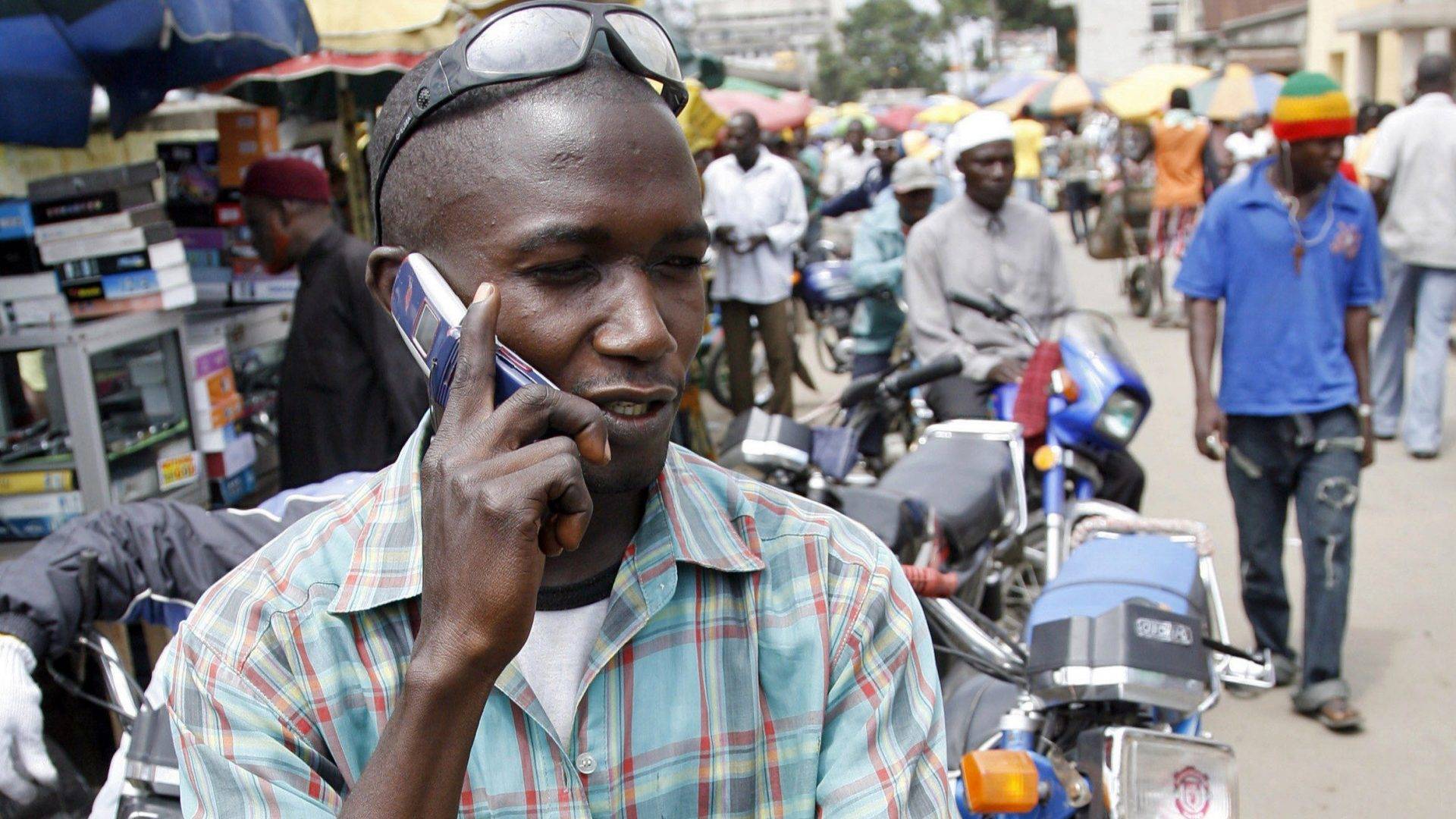
These days, when a subscriber calls someone who is not able to answer, the telcos take it upon themselves to switch the caller to voicemail at the expiration of the ring. Then, charge the said unsuspecting caller for every second spent on the unsolicited voicemail. That’s pretty much the picture.

“Voicemail is not a popular service among mobile phone users in Nigeria, coupled with the language challenge among rural dwellers, who mostly do not understand the language deployed by these networks,” the Minister’s statement read.

Pantami instructed the NCC to immediately ensure that issues regarding automatic voicemails are addressed to allow subscribers the option of accessing the service at their discretion and not by default.

He added that the service was a subtle, ingenious method of defrauding Nigerians and it was totally unacceptable that subscribers incur finance charges for a service they are compelled to use by default.

“It is apparent, that the recent clampdown on the exploitative activities of some Mobile Network Operators (MNOs) in the country, has beamed the searchlight on the sector properly, and some unpatriotic elements in the system are devising subtle, ingenious methods of defrauding Nigerians,” he said.

In a bid to resolve this, the Minister asked the regulatory body to end the automatic voicemails by providing telecom subscribers with the option of accessing the service via an activation code.

And as would be expected, the telcos are countering the Minister’s claim on the automatic voicemails, denying claims that they may be fleecing subscribers.

According to Gbenga Adebayo, the Chairman of the Association of Licensed Telecoms Companies of Nigeria (ALTON), the association deems the allegations contained in the statement released by Dr. Pantami as untrue as the telcos are not forcing voicemail services on subscribers.

Adebayo said that the issue of automatic voicemails was not a major policy issue but instead was a consumer issue which the ministry could have easily called the attention of the NCC to settle amicably.

Speaking further, Adebayo went on to clarify that automatic voicemails are value-added services and as such should not be given to only those who request it.

However, he added that every customer has a choice to allow it or not as the voicemail only comes on if a user calls another and the recipient doesn’t pick. The voice prompt comes after the ringing tone ends, and if the user quits it immediately, he/she won’t be charged.

But that may not be entirely true. Subscribers do get charged for voicemail services they don’t even know they are using and it’s high time the matter is looked into.

Featured Image Courtesy: VOAnews

LemFi Secures Bank of Canada Registration
Press Release

LemFi Secures Bank of Canada Registration

By Partner Content  |  March 10, 2026

LemFi, the global financial platform built for the underserved, has officially been registered as a Payment Service Provider (PSP) by the Bank of Canada under the country’s new Retail Payment Activities Act (RPAA). 

LemFi already serves customers in Canada, and this new registration brings the company fully into the country’s enhanced federal supervisory framework, strengthening oversight under the Bank of Canada’s new payments regime.

The milestone is a key moment in LemFi’s ongoing quest to reinforce trust through compliance, but also serves the company’s mission to build the full stack of financial services that move with people across borders. While many providers focus solely on remittances, LemFi is building a full financial ecosystem spanning payments, credit, savings and more within one platform.

Fastest-growing outbound market 

Canada represents one of the world’s fastest-growing outbound remittance markets. According to the Migration Policy Institute, outbound remittances from Canada reached an estimated USD 8.6 B in 2023, up from USD 7.5 B in 2020. India, China and the Philippines are the largest recipient countries – key corridors already supported by LemFi’s global infrastructure.

Under Canada’s RPAA framework, payment providers must meet strict standards for operational resilience, safeguarding and risk management. Through its Canadian entity, Pomelo Technology Canada Ltd, LemFi demonstrated its ability to meet these enhanced federal requirements. The legislation establishes a higher regulatory standard for payment providers, increasing accountability and strengthening protections for consumers.

The registration adds to LemFi’s expanding global regulatory footprint, which includes licenses and approvals in the UK, Ireland, Australia and across multiple US states. Today, LemFi serves more than 2 million customers globally, enabling transfers to over 30 countries across Africa, Asia, Europe, and Latin America. Over the past year, the company has expanded beyond remittances into credit and savings, launching Send Now Pay Later (SNPL) in the UK, introducing Instant Access Savings Accounts and expanding its credit infrastructure following the acquisition of UK fintech Pillar. Backed by a USD 53M Series B round and delivering 65% year-on-year revenue growth, LemFi continues to scale as a regulated, AI-enabled financial platform built for global citizens. 

Rian Cochran, co-founder and CFO of LemFi, said: “Canada is one of the world’s most important remittance markets, driven by a diverse and growing immigrant population. Being registered as a Payment Service Provider under the RPAA reflects our commitment to building a platform that is not only innovative but deeply aligned with the highest regulatory and operational standards.

“For our customers, this is about trust. It means they can move money across borders knowing their funds are handled securely within a robust supervisory framework, while still benefiting from the speed, affordability and simplicity that define the LemFi experience.”

Exclusive: How Prembly’s ‘Fraud Bank’ Could Finally Make Nigeria’s Fintech Rivals Talk To Each Other

By Henry Nzekwe  |  March 10, 2026

The fraudster who cleaned out one Nigerian fintech last week is probably applying for an account at another one today. And unless someone says something, he’ll probably get it.

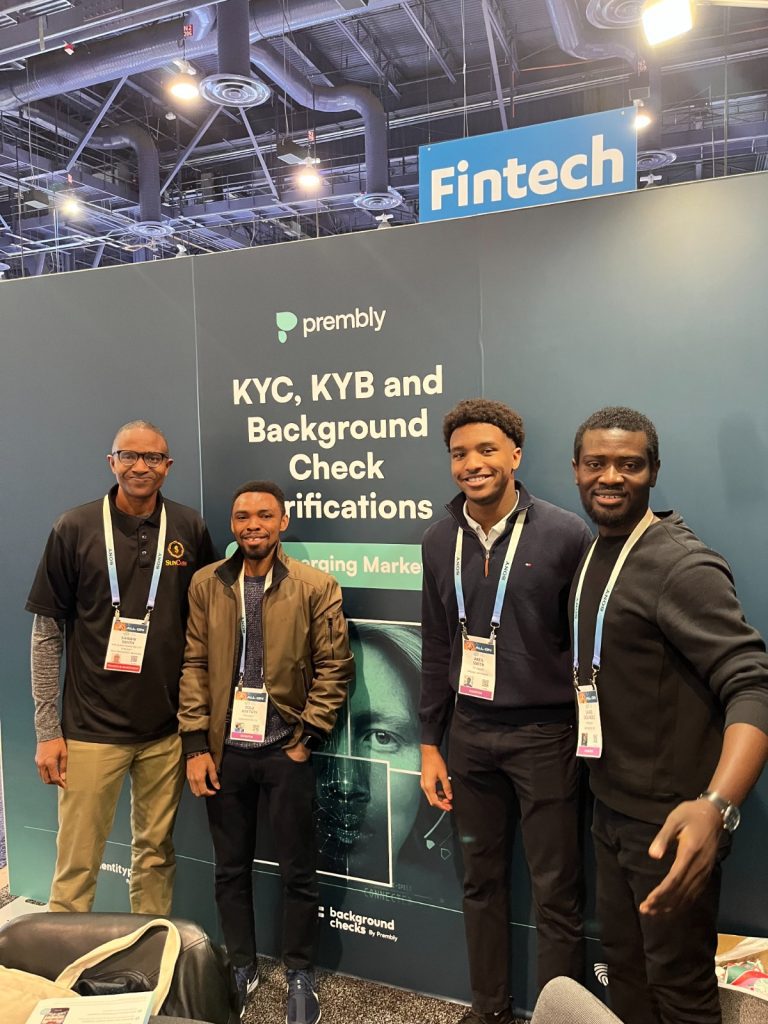
This is the paradox Lanre Ogungbe has been staring at for years. As CEO of Prembly (formerly Identitypass), a compliance and identity verification company serving 800 businesses monthly, he’s watched the same patterns repeat. A fraudster hits Platform A, gets flagged, vanishes, then reappears on Platform B using the exact same phone number, the exact same ID, the exact same playbook.

“They use the same tactics on another platform because you were quiet about it,” Ogungbe tells WT. “We’ve seen this multiple times play out, enabled by your silence.”

This week, Prembly is launching FraudLens, billed as Africa’s first effective open-source fraud intelligence bank.

The idea, to get financial institutions to actually share data about who’s ripping them off, though simple in theory yet complicated in practice, is starting to find traction.

How it actually works

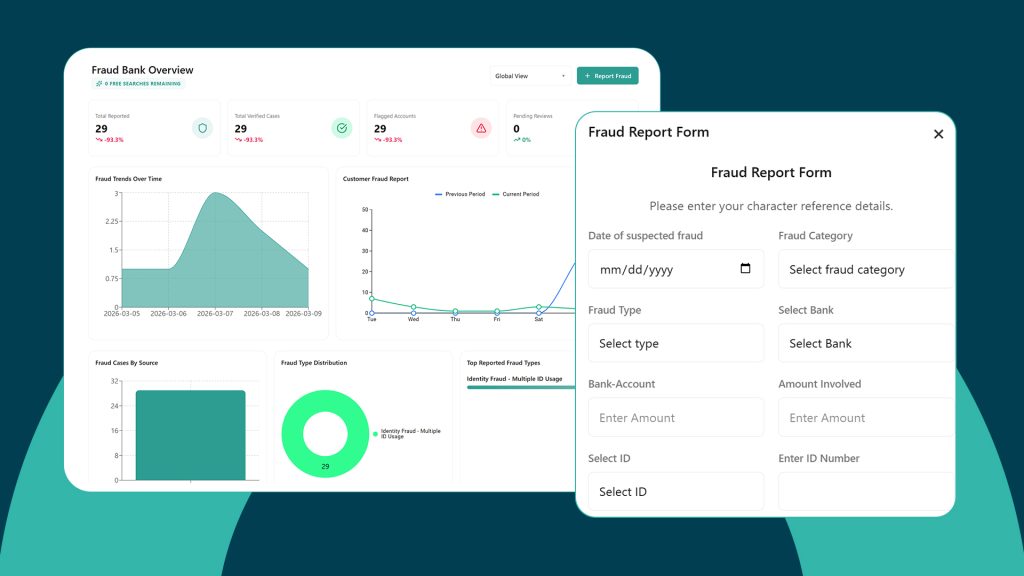
Prembly’s FraudLens has two faces. The public side is a real-time dashboard showing fraud trends, patterns and prevalence; fraud awareness made accessible, so to speak.

Anyone can see that this week, 451 fraud events were reported, that Niger state is showing unusual activity, that Lagos leads in attempted compromises.

The private side is where the actual work happens. Verified, regulated businesses that subscribe to Prembly’s platform get access to a shared database.

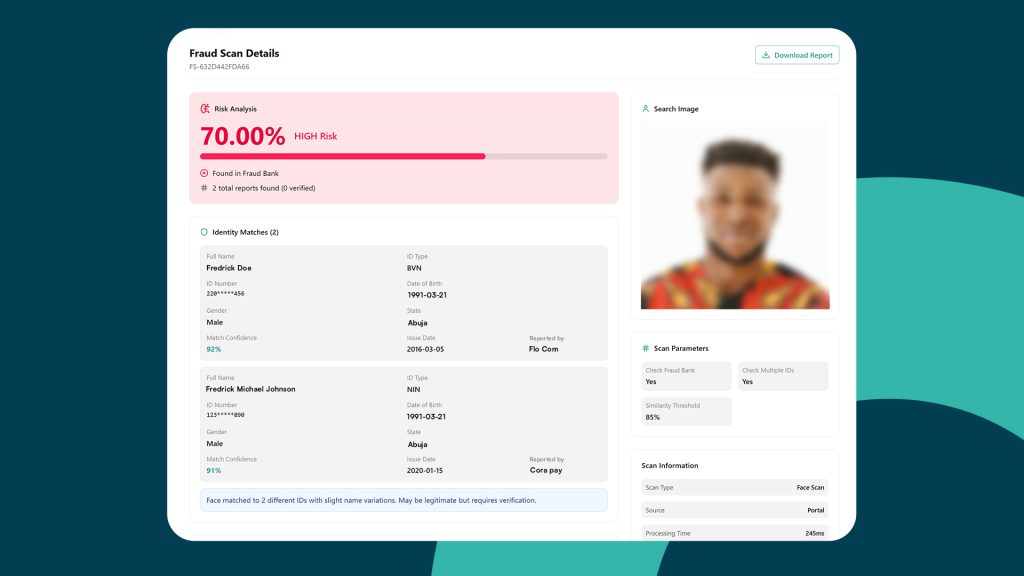
When they onboard a new customer, the system flags if that phone number, that ID, that device fingerprint has been reported by other institutions. The business doesn’t have to act on the information—it can still approve the customer—but at least it knows what it’s walking into.

Crucially, reporting isn’t free-for-all. Every submission requires vetted evidence. Internal approval. A paper trail.

“We can’t just have somebody submit something false,” Ogungbe explains. “If you wrongly claim a consumer committed fraud, there’s a liability process. There’s a retrieval process if we made a mistake.”

Will rivals actually share?

On the surface, we like to imagine fraud as Hollywood hacking; hooded figures breaking through firewalls in dark rooms. But sit with Ogungbe, and he’ll tell you the truth is both simpler and more disturbing in that the system is designed to stay quiet.

“We don’t do a lot of documentation of the events that happen,” Ogungbe says. “When fraud happens, we are meant to document it so that we can prevent it. But the issue is that when you document, it comes with panic.”

This is the knot at the centre of Nigeria’s fraud problem. Document a major fraud event, and consumers will withdraw their money. Banks collapse. It’s played out in the past, the generations that watched banks go under in the 1990s carry that trauma. So institutions stay silent. Fraudsters get documented nowhere. And the same person who cleaned out one fintech walks into the next one and does it again.

“Fraud really works when data is hidden,” Ogungbe explains. “We’ve seen the same ID reported as fraud by a particular fintech, and the same person used the same ID to go to another platform and commit the same type of fraud. That could have been prevented if the other person had said something had happened.”

The obvious question—and Ogungbe has heard it enough to pre-empt it—is why competitors would cooperate. Banks spend millions fighting each other for customers. Why hand over intelligence that might expose their own weaknesses?

Ogungbe’s answer is that they already do. Just not publicly.

The Bank Verification Number system is owned by the banks. Nigeria Inter-Bank Settlement System is private, owned by the banks. Compliance officers from every major financial institution meet monthly and share information, Ogungbe points out. As it turns out, the competition that plays out in marketing campaigns doesn’t extend to the back rooms where fraud is discussed.

“From a public market perspective, it has to appear as though there’s a war between everybody,” the Prembly CEO says. “But what really happens at the back end is different.”

Credit bureaus already share default data by law. Fraud data, he argues, is the logical next layer, and the infrastructure simply didn’t exist before.

Traditional systems from NIBSS, the Central Bank and the police force weren’t built by KYC companies. He maintains that they lacked the verification technology, the biometric integration, the big-data analysis that the Y Combinator-backed startup has spent years building.

The fraud that lives in the infrastructure

When Ogungbe runs through how money actually gets stolen in Nigeria, the Hollywood hacking narrative barely registers. The real damage is systemic, he asserts; fraud is built into the systems themselves.

He discovered he personally had over 15 bank accounts opened in his name that he knew nothing about. Created during his NYSC days, when banks flooded camps with sign-up drives. Created by branch managers chasing targets, created using his information without his knowledge.

“You trace it down, it comes from a manager somewhere that insists that for the branch to stay open, you have to open 50,000 new accounts in a community of less than 100,000 people,” he says. “How do they do that? They use the same information to open multiple accounts.”

This is what Prembly’s system is designed to catch. Not the lone hacker in a dark room, but the organised operation running the same synthetic ID across five platforms in the same week.

The weaponisation concerns

Any database of alleged fraudsters raises uncomfortable questions. Who decides someone is a fraudster? What happens when a business gets it wrong? Could this become a de facto blacklist with no appeal process?

Ogungbe acknowledges the risks. The system is currently restricted to businesses with proper compliance structures, specifically to prevent weaponisation. Individuals can’t report other individuals; that loophole stays closed until safeguards are stronger.

“Can it be weaponised? Yes. Have we been able to close the loop from an individual perspective? No. That’s why we’re not releasing that to the public,” he says.

For now, only the statistics are public. The private details stay with verified institutions, and every flagged entry comes with evidence. If a business reports someone for chargeback fraud, it needs to show the transaction. If it’s identity fraud, it needs to show the ID mismatch.

The cat-and-mouse reality

Ogungbe doesn’t pretend this ends fraud. Fraudsters will adapt. They’ll find new loopholes, new infrastructures to exploit, new ways to weaponise AI and social engineering. The game is cat-and-mouse, and the mice are motivated.

“What that does is it makes them ask more questions,” he says. “It makes them have heightened security. If somebody can go through the stress and beat everything you’ve put in place, then the amount they’re going after is worth it. For those cases, you pursue them.”

The goal, he says, isn’t perfection but making fraud harder. It’s ensuring that the person who hit one platform can’t simply walk into the next one unchallenged. It’s introducing consequence into a system designed for speed above all else.

“If we can reduce fraud losses by half or more in five years, that’s a winning streak for us,” Ogungbe says.

The trust question

Ask Ogungbe what success actually looks like, and he doesn’t point to dashboards or press releases. He speaks of the Opay rider who accepts a transfer without waiting to confirm. The POS operator who trusts that the money actually moved. The consumer who stops checking their banking app with dread.

“That is what we’re tracking,” he says. “Create more trust within the consumer space.”

For now, trust is still in short supply. The EFCC recently dropped numbers that should give everyone pause: NGN 18.7 B stolen, more than 900,000 victims, one customer operating 960 accounts in a single bank, and NGN 162 B (~USD 114 M) in suspicious cryptocurrency transactions with no oversight.

A system built for speed discovering, belatedly, that silence has a cost. And it would soon become clearer whether shared intelligence arrives in time to matter, or whether the fraudsters have already moved on to the next loophole.

Fintech Innovation in Africa & The Rapid Evolution of Digital Trading Platforms_partner-content

Fintech Innovation in Africa & The Rapid Evolution of Digital Trading Platforms

By Partner Content  |  March 9, 2026

For a long time, access shaped the structure of investing in Africa.

Access to brokers. Access to financial infrastructure. Access to trustworthy settlement systems. Access to foreign markets. Access to the kind of tools that institutional desks treated as standard, while retail investors had to work around delays, friction, and weak platform design.

That gap is narrowing fast.

Africa’s fintech ecosystem has moved beyond the early phase of digital convenience. It now plays a central role in how people discover, evaluate, and execute investment opportunities. The real shift is not simply that more investors can open accounts from a phone. The deeper shift is that participation has become more structured, more transparent, and more aligned with global market standards.

That matters because serious market participation depends on confidence. Investors need to know what they are trading through, how orders are handled, how funds move, and what protections exist when markets turn volatile. In many African markets, fintech firms and digital brokers are now building exactly that layer of trust. They are doing it with better infrastructure, cleaner product design, and stronger compliance discipline.

This is why Africa has become one of the most closely watched regions in modern finance. The opportunity is not based on hype. It is based on the fact that financial access is improving in ways that directly affect trading behaviour, capital flow, and investor expectations.

The quality of the platform now shapes the quality of the investor experience

Every mature trading market eventually learns the same lesson. Better access means very little if the tools themselves are weak.

That is why platform quality has become such a central issue, both in Africa and worldwide. Investors who trade actively, manage risk carefully, or allocate across multiple asset classes need stable execution, clear pricing, and interfaces that support decision-making instead of slowing it down. This is where reliable trading platforms become key for the evolution of fintech. 

The African fintech wave has increased access, but access alone does not create durable trust. A market grows when users feel that platform standards are improving, along with participation. That includes faster onboarding, stronger verification systems, better charting environments, and more visible fee structures. It also includes the less visible elements that experienced traders care about most, such as execution quality, account security, and operational resilience during market stress.

This global standard now matters more in Africa because many investors enter the market through mobile-first channels. The first platform experience often becomes the investor’s reference point for what digital finance should feel like. If that experience is confusing or unreliable, confidence fades early. If it is efficient and transparent, users stay engaged and become more sophisticated over time.

That has created a healthy form of pressure across the sector. Fintech firms and brokers now have to compete on usability and trust, rather than on basic availability alone. That is a meaningful evolution. It lifts expectations and gradually improves the entire market environment.

Mobile-first finance changed who gets to participate

The mobile story in Africa has been discussed for years, but its effect on digital trading deserves a more serious reading.

Mobile-first design did more than increase convenience. It changed the profile of the market participant. When investing tools become accessible through a familiar device, the financial system starts reaching users who were previously excluded by geography, branch dependency, or desktop-based product assumptions. That shift has brought a new layer of investors into the market, including professionals, small business owners, and digitally fluent younger users who expect financial tools to work with the same speed as the rest of their digital lives.

This is one reason African fintech has developed with a different instinct from some older financial systems. It did not begin by asking how to digitise an old brokerage model. In many cases, it asked how to build financial access for users whose first serious interaction with modern finance would happen through a smartphone.

That design logic has consequences. Mobile platforms in the region often place more attention on onboarding flow, wallet integration, and real-time usability. They are built for environments where attention is fragmented, and network conditions can vary. That has encouraged leaner interfaces and more practical user journeys.

For active traders and experienced investors, that may sound basic. It is not. Good mobile design affects execution behaviour. It reduces avoidable mistakes. It shortens the distance between analysis and action. It also makes it easier for users to monitor positions and react to market conditions without being tied to a desk.

In practical terms, mobile-first trading has turned participation into a habit rather than an event. That distinction matters. Markets deepen when engagement becomes continuous and informed.

Infrastructure is finally doing more of the heavy lifting

Underneath every strong trading environment sits a layer most users rarely think about until it fails.

Payments. Connectivity. Data delivery. Identity verification. Settlement processes. Regulatory reporting.

In earlier phases of digital finance, these layers often created the exact friction that kept retail participation shallow. Funding an account could take too long. Identity checks could feel inconsistent. Market data could arrive poorly packaged or with limited transparency. For many users, the problem was not interest in investing. The problem was that the system made participation harder than it needed to be.

Africa’s fintech evolution is changing that from the ground up.

Improved payment rails have made deposits and withdrawals more practical. Better digital identity processes have made onboarding more reliable. Cloud-based architecture and platform optimisation have allowed more firms to offer stronger uptime and smoother user experiences across devices. The result is not only speed. It is a more credible market structure.

This is especially important in trading, where confidence can disappear quickly when the operational layer feels weak. Investors can tolerate market risk because market risk is part of the game. What they resist is process risk. They do not want uncertainty around whether an order went through, whether funds will settle properly, or whether the platform can hold up when volumes rise.

As infrastructure improves, that operational anxiety begins to fade. It does not disappear completely, because no market is frictionless. Still, the reduction in avoidable friction changes investor behaviour in a meaningful way. It encourages repeat participation and supports longer-term account growth. It also makes the market look more investable to outside observers who watch platform maturity as a signal of regional financial readiness.

Smarter regulation is raising the floor for everyone

Regulation has often been framed as a barrier to innovation. In reality, poor regulation is usually the greater barrier.

Digital trading platforms scale well when users understand the rules, the obligations, and the protections built into the system. That is why smarter regulatory development across parts of Africa has become one of the most important drivers of confidence in the fintech sector. The strongest frameworks do not slow innovation for the sake of caution. They create enough structure for serious innovation to last.

This is where the conversation becomes more interesting for experienced readers. The issue is no longer whether regulation should exist. The real issue is what kind of regulation best supports platform growth without weakening investor protection. Africa’s Fintech sector is evolving, and markets need standards that address onboarding integrity, custody safeguards, dispute handling, disclosure quality, and capital controls, while still allowing digital firms to iterate and expand.

Some African jurisdictions have started moving in that direction with a more practical mindset. Instead of forcing fintech firms into outdated models, regulators are increasingly engaging with the realities of digital finance. That kind of engagement matters because it encourages product development that is both ambitious and accountable.

A stronger regulatory floor also improves competitive quality. It becomes harder for weak operators to win attention through aggressive promises or opaque structures. That gives better firms more room to differentiate on service quality, technology, and trust.

For the investor, this has a simple effect. The environment becomes easier to read. That clarity supports better decisions, and better decisions support deeper market participation.

A Nigerian Startup’s Newest Model Is Crushing OpenAI And Google

By Staff Reporter  |  March 6, 2026

“Sorry, I didn’t catch that.”

For millions of Africans, this robotic apology from Siri or Alexa isn’t just a minor annoyance.

When a common phrase like “No worry, e go better” gets transcribed as “No war eagle butter,” or the name “Chukwuebuka” becomes “Check wheelchair baker,” the promise of voice technology; the hands-free shortcut that makes life easier in the rest of the world, remains a frustrating mirage on the continent.

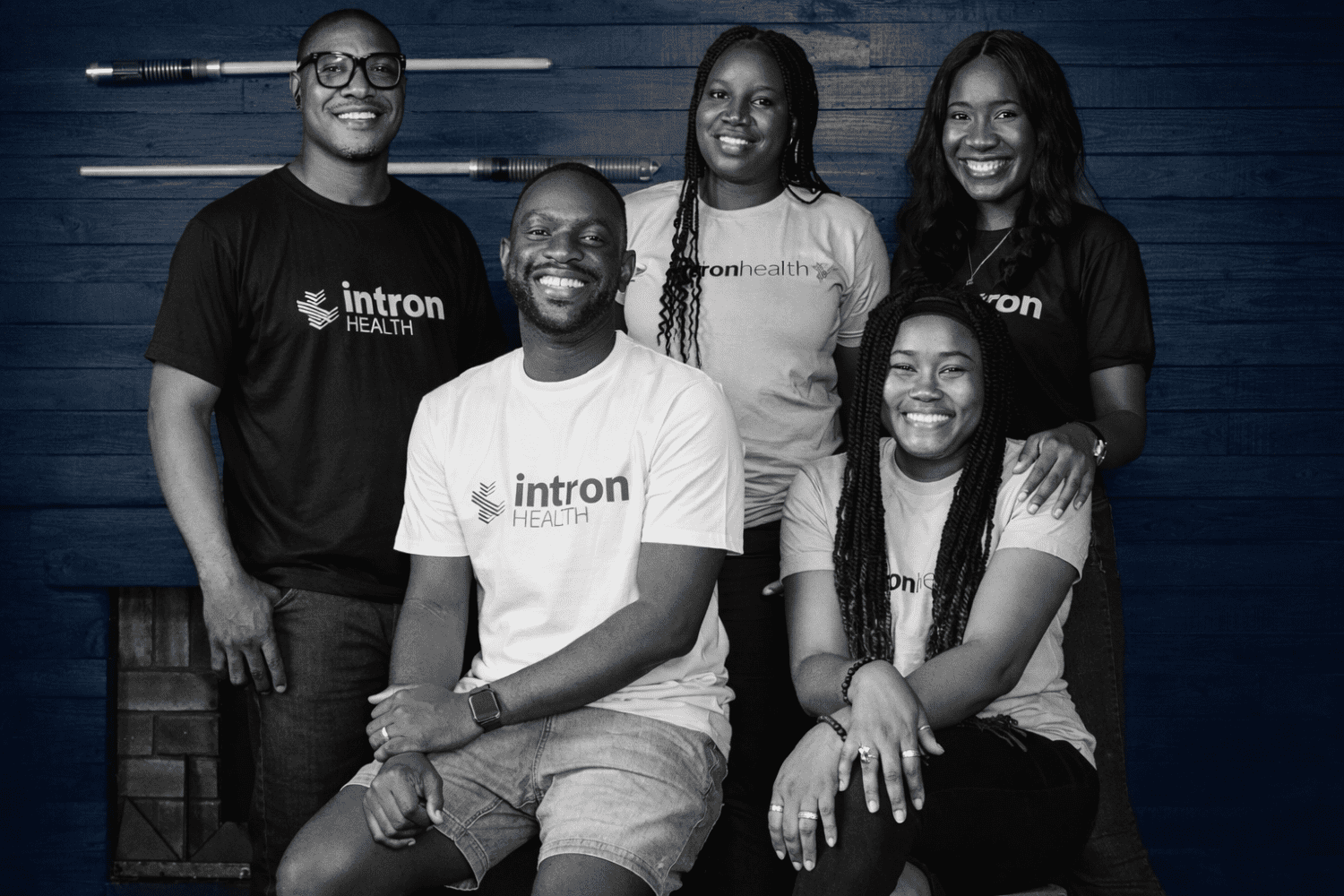
This week, Nigerian AI startup Intron released its latest salvo aimed at fixing that gap. With the launch of Sahara v2, the company claims it isn’t just catching up to Silicon Valley, but leapfrogging it, at least when it comes to understanding how Africa actually speaks.

But in a market suddenly crowded with identical solutions from Google to Toronto-based Cohere, the question is no longer just who has the best algorithm, but who will win the race to build the underlying infrastructure for Africa’s eventual billion voice users.

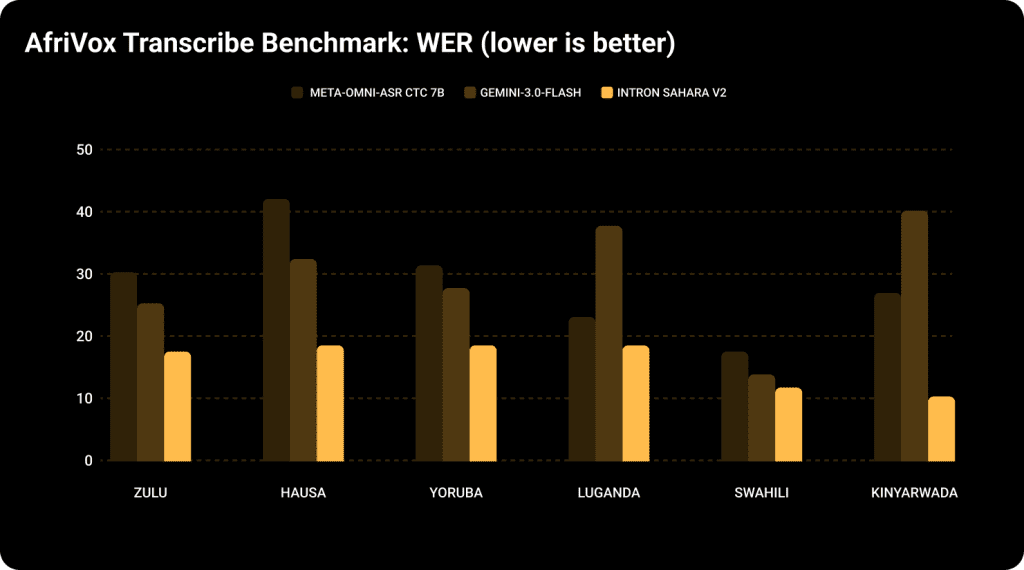
Intron’s new model is a significant technical feat. Trained on over 50,000 hours of audio from 40,000 speakers across 30 countries, Sahara v2 now supports 57 languages, including 24 new additions like Hausa, Swahili, Yoruba, and Zulu.

Intron claims Sahara v2 performs 68.6% better than leading models.

Unlike global models trained on pristine studio audio, Intron built its dataset in the wild, capturing the chaos of busy Nigerian clinics, Kenyan call centres, and South African courtrooms where background noise and overlapping speech are the norm.

The results, per the company’s benchmarks, are striking. Intron claims Sahara v2 performs 68.6% better than leading models like GPT-4 and Gemini on transcribing African names, organisations, and locations. In noisy environments, it boasts a 36.5% improvement in “hallucination robustness”—tech speak for making things up when it can’t hear clearly.

***

Yet, the most telling feature is the debut of the world’s first bilingual Swahili-English ASR model, developed with Kenyan healthcare provider Penda Health. This model handles “code-switching”—the instinctive habit of bouncing between languages mid-sentence that defines everyday conversation across Africa’s urban centres. Global AI typically chokes on this; Intron is banking on it being its competitive moat.

“We built for the hardest environment first,” Tobi Olatunji, Intron’s CEO and a former physician, said during the launch, referencing the startup’s origin story in overstretched Nigerian hospitals.

But Intron’s timing is precarious. The window for being the only player focused on African linguistics is closing fast. Just weeks before Intron’s announcement, Toronto-based Cohere launched “Tiny Aya,” a suite of multilingual models supporting over 70 languages, specifically designed to run on local devices in regions with spotty infrastructure.

Similarly, Microsoft Research introduced Paza, an initiative that includes a benchmark for low-resource African languages, while Google dropped WAXAL, an open speech dataset covering 21 Sub-Saharan languages.

This flurry of activity validates Intron’s thesis, but it also threatens to commoditise it. If Google and Microsoft are releasing open data and benchmarks, the barrier to entry for other startups lowers, and the pricing power for incumbents erodes.

Intron is trying to stay ahead by going deeper into the “plumbing.” Sahara v2 is being deployed to cut transcription times in Ogun State courts in Nigeria and reduce patient documentation errors at C-Care hospitals in Uganda. For enterprises like ARM Investments, the draw is the ability to accurately transcribe complex financial jargon and Nigerian currency amounts that foreign models mangle.

***

Perhaps most critically for a continent wary of data privacy, Sahara v2 now offers offline deployment via a partnership with Nvidia, allowing sovereign governments and sensitive industries to run the AI behind their own firewalls.

“We’ve seen significant improvement in transcription and summaries,” said Ayo Oluleye, Head of Data at ARM Investments, in a statement. Meanwhile, Audere’s CPO Sarah Morris noted the APIs achieved “99%+ success rates” on Southern African accents during testing.

Voice is widely seen as the next great interface for the internet, particularly in regions where literacy rates vary or typing in local languages is cumbersome. If AI cannot understand the user, the user remains locked out of the digital economy.

Intron is proving it can build a model that outperforms the giants on its home turf. But as the infrastructure for African language AI shifts from “if” to “how,” the real challenge will be whether a startup with a team of under 20 can outrun the data centres of Big Tech and the open-source armies of academia.

How M-KOPA Put 5,000+ Electric Bikes On Kenyan Roads—Fast

By Henry Nzekwe  |  March 5, 2026

It’s a Thursday morning in Nairobi’s CBD, and the matatu stage is unusually quiet. Not because there are fewer bikes—there are plenty—but because the deafening roar of two-stroke engines is absent as the soft hum of electric motors soothes the air.

On one corner, a rider in a yellow helmet unlocks his Roam Air from a swap station. On another, a Bolt passenger climbs onto an Ampersand, barely noticing the absence of vibrations shaking her spine. This is the sound of Kenya’s electric vehicle revolution. And it’s moving faster than anyone predicted.

From a paltry 700 EVs in 2022, Kenya now boasts nearly 25,000 registered electric vehicles, according to the just-launched National Electric Mobility Policy. That’s a 3,000 percent explosion in three years. Most of these are motorcycles, the ubiquitous boda bodas that form the circulatory system of Kenya’s economy.

The government wants credit, and to be fair, it has earned some. Zero VAT on electric bikes and lithium-ion batteries. Reduced import duties. And, as of February 2026, green number plates that make EVs instantly recognisable.

“If you’re an electric bike in a stage, there’s a higher likelihood a customer will go for it,” Brian Njao, General Manager of M-KOPA Mobility, told WT. Visibility, it turns out, matters.

But beneath the feel-good environmental narrative lurks a paradox that keeps policymakers awake. The same revolution saving riders money is quietly blowing a hole in Kenya’s budget.

The maths of more money in your pocket

Here’s the part that matters to the man on the bike: electric works because it pays, not necessarily because it’s better for the environment, though that’s a welcome coincidence.

Njao, who formerly led Uber’s East Africa operations, breaks it down without jargon. A boda boda rider on a petrol bike typically pockets USD 20.00 to USD 40.00 a day before expenses. Switch to electric, and after financing repayments, swap fees, and everything else, the take-home jumps by an extra five dollars daily. Over a month, that’s groceries, school fees, or, in one rider’s case, moving a child to a better school.

M-KOPA has financed over 5,000 e-bikes since 2023 through its pay-as-you-go model, the same approach that put solar panels in millions of homes. Riders pay daily via mobile money. Miss a day, the bike locks. No accumulation of crippling debt.

“If that bike is not active on the road, that customer will not pay us,” Njao said. “We have a symbiotic relationship.”

He also shared that the repayment rates on the e-bike book sit above the market average, which is in line with M-KOPA’s other product lines. “That tells us the credit model we have built translates well into electric mobility,” he said.

Where the charger meets the policy

Bolt, the ride-hailing giant, now has 5,808 EVs on its platform, accounting for nearly a quarter of all electric vehicles in Kenya. More strikingly, 40 percent of Bolt’s two-wheeler fleet is already electric.

Njao described M-KOPA’s partnership with Bolt as straightforward; riders on the platform pay less for their loans, Bolt gets guaranteed supply, and the customer wins twice via lower asset costs and steady trip income.

Yet the infrastructure keeping those wheels turning belongs to the OEMs. Roam, Ampersand, and Spiro. They own the swap stations. They manage the batteries. M-KOPA just finances the bikes.

This division of labour creates a delicate dance. “It’s a chicken and egg scenario,” Njao admitted. “If you bring a thousand bikes without swapping stations, you’re stuck. If you spend on a thousand stations without bikes, your capex is gone.” The balance is precarious, and right now, demand is outpacing both.

The billion-dollar question nobody’s answering

Now for the part the government doesn’t put in press releases.

Kenya funds its roads through a fuel levy, KES 25.00 (19 cents) per litre of petrol. More EVs mean less fuel consumption. Less fuel consumption means collapsing revenue. The numbers suggest the EV transition already caused a KES 2 B (USD 15.4 M) shortfall in 2025. By 2043, that gap balloons to KES 89.5 B (~USD 688 M).

The Ministry of Roads projects fuel tax collections will start declining by 2037, just as the government needs more money for the very roads these EVs use. It’s a structural conundrum. Every electric bike Kenya celebrates inches the country closer to a fiscal cliff.

Transport Caninet Secretary Davis Chirchir acknowledges the problem, vaguely promising “alternatives” like road-use charges or electricity levies. But for now, the policy framework accelerating EV adoption contains no concrete plan for replacing the fuel money evaporating with every swapped battery.

Can Nairobi scale without breaking?

Njao is pragmatic. When asked about replicating Kenya’s model across Africa, he didn’t mention tax breaks or green plates first. He said: “Policy consistency. If governments commit to long-term local assembly incentives that hold for ten years or more, that would be transformative.”

The translation is that investors can survive high taxes, but not governments changing rules every budget cycle.

M-KOPA’s next moves are already mapped towards densifying Nairobi, launching Mombasa properly, then eyeing Uganda, Nigeria, and Ghana. The solar and smartphone business proved that the pay-as-you-go model works across borders. Njao believes mobility will follow.

“If we can have smartphones working in five countries, we can have electric mobility working there too,” he said.

Kenya’s mobility revolution is afoot. Thousands of EVs, USD 108 M in economic activity from ride-hailing platforms, thousands of riders earning more. The green transition is happening on muddy roads and crowded stages.

But revolutions consume their parents. The fuel taxes that maintain Kenya’s roads are evaporating, and no one has admitted what will replace them. The country is racing toward an electric future with a revenue model built for petrol.

For the rest of Africa watching—Nigeria with its oil addiction, Ghana with its gradual pilots, Ethiopia with its radical combustion engine ban—the task is to solve for tomorrow’s problems while celebrating today’s growth.

Njao is aware that riders aren’t thinking about fiscal policy, however. They’re calculating daily earnings, watching their savings climb, and quietly moving children to better schools. That’s the revolution they see.

The other revolution—the one involving USD 688 M in missing road money—will announce itself soon enough. By 2042, when Kenya projects EV sales will match petrol vehicles, the music stops. The question is whether anyone will have built a new chair.

Canal+ Pulls Plug On Showmax As African Streaming Losses Mount

By Henry Nzekwe  |  March 5, 2026

When African pay-TV giant, MultiChoice, relaunched its streaming platform, Showmax, in February 2024, the pitch was bold. Backed by Comcast’s NBCUniversal and powered by the same technology as Peacock, Africa’s homegrown streaming champion would finally take on Netflix on equal footing. The target was USD 1 B in revenue within five years.

Two years later, the plug has been pulled. MultiChoice announced Thursday it will discontinue Showmax following a “comprehensive review” by its board, citing “substantial annual losses” that proved unsustainable. The decision, first reported by Variety, ends an 11-year run that began in 2015 as a modest DStv companion and ended as a money pit that swallowed over ZAR 3 B (~USD 182 M) in investment.

For the 2025 financial year, Showmax recorded a trading loss of ZAR 4.9 B (USD 297 M), an 88% worsening from the previous year. Revenue, which peaked at ZAR 1 B (USD 60 M) in 2024, fell back to ZAR 800 M (USD 48.5), miles from the ZAR 18 B (USD 1 B) target executives had promised investors. Subscriber growth, while hitting 44% year-on-year, never translated into dollars.

“The substantial annual losses experienced by the Showmax business have proved unsustainable,” the company said in a statement, adding that no job cuts would result from the closure.

MultiChoice Group CEO David Mignot offered a blunt diagnosis earlier this year. “Financially speaking, business-wise speaking, the thing is not flying”.

Africa has roughly 600 million smartphones, he noted, but the economics of mobile streaming simply don’t work given data costs. Barely 4-5% of the continent’s electrified, TV-owning households have access to fibre. The streaming future executives had envisioned collided with market reality.

Canal+, which acquired MultiChoice in a USD 2 B deal last September, had telegraphed this outcome. CEO Maxime Saada told investors in January that Showmax was “not a commercial success—it’s quite obvious”. The platform’s losses were “not acceptable,” CFO Amandine Ferré added, as the French media giant pivoted toward cost synergies rather than streaming growth.

The group is targeting EUR 400 M (USD 463 M) in annual savings by 2030, and Showmax had become a prime candidate for cuts. NBCUniversal, which held a 30% stake in the joint venture, will now exit alongside MultiChoice.

The closure leaves African filmmakers and audiences grappling with another narrowed window, echoing moves by global streamers, such as Netflix and Prime Video, to pare down investments on the continent.

One South African director who produced multiple series for Showmax described the loss as devastating. “Showmax was one of the only platforms available to us that was willing to back stories that were bold and authentic… Losing Showmax is a huge blow to the local industry”.

MultiChoice says streaming remains “central to our strategy” and that it will continue investing in premium content. Canal+ is expected to expand its existing partnership with Netflix, which already bundles the streamer into pay-TV offerings across 24 African countries. A “super app” combining the group’s video services is reportedly in development.

But for the African streaming market, Showmax’s demise carries a sobering lesson. What was once positioned as Africa’s last great frontier for streaming growth became one of its most costly experiments.

Meta’s Smart Glasses Send Intimate User Footage To Kenyan Contractors, Investigation Finds

By Staff Reporter  |  March 4, 2026

When one sets down their Ray-Ban Meta glasses on the nightstand, the camera might still be recording. And halfway across the world, a contract worker in Nairobi could be watching.

An investigation by Swedish newspapers Svenska Dagbladet and Göteborgs-Posten has revealed that intimate footage captured by Meta’s AI-powered smart glasses—including people undressing, using the bathroom, having sex, and entering credit card details—is being reviewed by data annotators at Sama, a Kenyan outsourcing firm hired to train the company’s artificial intelligence systems.

The AI feature that enables this data collection cannot be disabled, the investigation claims. Users who activate the glasses’ assistant must agree to have their video and audio processed by Meta’s servers, where it may be forwarded for manual human review; a detail buried in terms of service that one worker said most users never read.

“In some videos, you can see someone going to the toilet, or getting undressed,” one Sama employee told journalists. “I don’t think they know, because if they knew, they wouldn’t be recording”.

Meta sold approximately 7 million pairs of the glasses in 2025, up from 2 million in 2023 and 2024 combined. The company has positioned the device as an “AI-powered assistant” that can translate languages, describe surroundings, and capture hands-free moments. What the marketing does not emphasise is that those moments may end up on a screen in Nairobi, annotated by workers earning wages far below Silicon Valley rates.

Sama, which has previously faced scrutiny over working conditions for content moderators reviewing Facebook posts, requires employees to sign strict non-disclosure agreements. Workers told Swedish media that Meta’s automatic blurring and anonymisation tools often fail in complex lighting, leaving faces and bodies exposed.

“With cameras in your house, you know where they are,” one annotator said. “These are glasses you wear on your face that keep recording when you take them off and set them on your nightstand”.

The revelations have reached European regulators. A group of 17 Members of the European Parliament from four political groups has formally questioned the European Commission about whether Meta’s practices comply with the General Data Protection Regulation (GDPR), which requires clear consent and transparency for data collection.

Under GDPR, companies exporting EU user data to countries like Kenya, which has not been granted “adequacy” status by the Commission, must implement additional contractual safeguards.

Sweden’s Civil Minister Erik Slottner has demanded answers, warning that the combination of location data and intimate imagery could create serious safety risks if mishandled.

Meta declined to answer specific questions from Swedish media but directed attention to its privacy policy, which states that “in some cases” human review may occur.

A spokesperson told The Telegraph: “When people share content with Meta AI, like other companies, we sometimes use contractors to review this data to improve people’s experience with the glasses, as stated in our privacy policy. This data is first filtered to protect people’s privacy”.

For the Kenyan workers who see these images daily, the psychological toll is compounded by contractual silence. Sama has previously been sued by a South African former employee, Daniel Motaung, who alleged that reviewing traumatic content for Facebook led to post-traumatic stress disorder. That case, which could establish Meta’s liability for conditions at outsourcing partners, is ongoing in Kenya’s Employment and Labour Relations Court.

“The day I found out my glasses were sending video to Kenya, I stopped wearing them,” one early adopter posted on social media. The post was viewed 2 million times.

Featured Image Credits: Svenska Dagbladet

Breadfast Co-Founder Breaks Protracted Silence Amid Investor Controversy

By Henry Nzekwe  |  March 3, 2026

For nine years, Muhammad Habib built Breadfast without ever writing a public post about the company. Not for marketing. Not for defence. “Not my style,” he said. But this week, the co-founder and COO of one of Egypt’s most valuable startups broke his silence.

In a lengthy Facebook statement posted Sunday, Habib addressed a controversy that has engulfed the e-grocery platform since it announced a USD 50 M pre-Series C funding round in February.

Critics on social media targeted Japanese investor SBI Investment, citing its ties to Vertex Israel, a Tel Aviv-based venture firm, arguing that companies operating in Arab markets should avoid indirect financial links to Israel amid the ongoing war in Gaza.

“We have refused money more than once when it conflicted with our moral boundaries,” Habib wrote, revealing that Breadfast had previously turned down capital from investors directly connected to the Israeli state. Those decisions, he said, were made unanimously by the founders in locked rooms where no one was watching.

The statement offered a rare window into the ethical calculations facing startups in a region where geopolitics and venture capital increasingly collide. Habib argued that international funds operate diversified portfolios across hundreds of countries and sectors, funding hospitals in Brazil, tech companies in India, and infrastructure in Europe.

When they invest in Egypt, he said, it signals confidence in the Egyptian market, not endorsement of a political position.

He also drew a distinction often lost in online boycott campaigns. “A boycott is for a company that has servers directly operating the occupation army, a company providing surveillance technology used against Palestinians, or a company with factories in settlements,” he wrote. “These companies directly contribute to the killings and displacements.”

Breadfast, founded in 2017 by Habib, Mostafa Amin, and Abdallah Nofal, has grown from a subscription bread delivery service into a vertically integrated commerce platform offering groceries, pharmaceuticals, and financial services. Private-label goods now account for roughly 40% of grocery sales, a strategy that has helped the company improve margins in Egypt’s high-inflation environment.

The USD 50 M round, led by Novastar Ventures through its People and Planet Fund III, included backing from Mubadala Investment Company, The Olayan Group, SBI Investment, Asia Africa Investment & Consulting, Y Combinator, IFC, EBRD, and 4DX Ventures. According to disclosures from Swedish investment firm VNV Global, which holds a 7.5% stake, Breadfast’s valuation has risen to approximately USD 403 M.

Habib emphasised that all investors hold minority stakes and that the company remains founder-led and Egyptian-controlled. “If you want Egypt to take its place in the world economy,” he wrote, “we must accept that global capital moves in an interconnected network.”

The controversy arrives at a sensitive moment for Egypt’s startup ecosystem. Over the past two years, currency devaluations, inflation, and reduced global venture appetite have created funding slowdowns and valuation pressure across North Africa [citation. Against that backdrop, Breadfast’s raise, and its reported valuation growth, stands out as a rare bright spot.

Breadfast is not alone in facing scrutiny over its investor lineup. In January, Nigerian defence-technology startup Terra Industries announced an USD 11.75 M seed round led by 8VC, the Silicon Valley firm co-founded by Joe Lonsdale, a co-founder of Palantir Technologies; a data-analytics company whose software is widely used by Western military and intelligence agencies. Alex Moore, a defence partner at 8VC and a Palantir board member, joined Terra’s board shortly after .

The connection drew criticism on social media, with some questioning whether a Nigerian company protecting critical infrastructure, including hydropower plants, mines, and industrial assets valued at approximately USD 11 B, should accept capital from investors with deep ties to U.S. defence and intelligence establishments.

Critics argued that foreign board members gain insight into Nigeria’s security vulnerabilities, infrastructure locations, and surveillance data, creating potential strategic vulnerabilities.

Terra’s co-founder and CEO Nathan Nwachuku has spoken about building “sovereign intelligence” and reducing African dependence on Western powers for security support.

Yet the company’s reliance on capital with ties to foreign intelligence, including an additional USD 22 M extension in February that brought total funding to USD 34 M, with participation from Flutterwave CEO Olugbenga Agboola, has sparked debate about whether financial sovereignty can coexist with foreign investor control

Habib acknowledged that not everyone will agree with his position. “I understand that everyone can look at this subject differently, and I completely respect this,” he wrote. “Each of us has a conscience and makes his decisions based on what he sees is right. My conscience is comfortable: I believe before God that what we are doing is the right thing.”

The company plans to use the funding to expand across Egypt, strengthen supply chain infrastructure, and explore new markets in North and West Africa, ahead of a larger Series C round expected in the first half of 2026. A potential global IPO remains a long-term ambition.

MTN’s Rebound In Nigeria Masks Growing Pains In Fintech Push

By Staff Reporter  |  March 2, 2026

MTN Nigeria has staged a dramatic financial recovery, reporting a full-year profit after tax of NGN 1.11 T (USD 810 B) for 2025, reversing the NGN 400 B (USD 292 M) loss it suffered the previous year.

The telecom giant’s revenue surged 54.9 percent to NGN 5.2 T (USD 3.79 B), fueled by a landmark 50 percent tariff hike approved in January 2025 and a long-awaited swing to foreign exchange gains.

For the first time since 2022, MTN posted a net foreign exchange gain—NGN 90.27 B (USD 66 M) for the full year, a sharp reversal from the NGN 925 B (USD 675 M) loss that had battered its books in 2024.

The naira’s relative stability, appreciating from NGN 1.535 K per dollar in December 2024 to NGN 1.475 K by September 2025, provided breathing room for a company long exposed to currency volatility.

“The 2025 financial year was described as a remarkable period of recovery and resilience for the firm,” CEO Karl Toriola said, noting that the turnaround enabled “accelerated network investment to enhance quality of service.” MTN invested over NGN 1 T in capital expenditure during the year, expanding base stations and fibre infrastructure.

But beneath the headline recovery, the company’s fintech ambitions tell a more complicated story.

On paper, MTN’s fintech division, which houses MoMo Payment Service Bank, appears to be firing on all cylinders. Revenue surged 72.5 percent in the first nine months of 2025 to NGN 131.6 B, roughly NGN 43 B per quarter. If spun off as a standalone entity, analysts noted, the unit would already command unicorn valuation.

Yet the growth in revenue has not translated seamlessly into user engagement. Active MoMo wallets declined 6.1 percent to 2.7 million in the first half of 2025 compared to December 2024, raising questions about the stickiness of the company’s financial services. The decline was even steeper earlier in the year; active wallets fell to just 2.1 million in the first quarter, a 55.6 percent year-on-year drop.

While the company added approximately 562,000 new wallets in the second quarter, suggesting a rebound, the dip exposed the challenge of converting MTN’s massive subscriber base—85.4 million customers and 51.1 million active data users—into habitual fintech users.

The fintech revenue growth itself requires closer examination. Industry analysts note that nearly all of the increase is driven by Xtratime, an airtime lending product where MTN lends subscribers credit to make calls when they run out. While classified as fintech revenue, it functions more as a high-margin convenience loan than a disruptive payment service.

Once airtime lending is stripped out, the rest of the fintech business—the part meant to compete with dominant players like Moniepoint and OPay—brought in just NGN 6.8 B in the first nine months of 2025. For a company reporting NGN 5.2 T in total revenue, that figure is hardly significant.

Notably, MTN’s mobile money business operates with restrictions. Its Payment Service Bank license allows it to accept deposits and move money but not to lend, the profitable core of fintech economics. This limitation puts MoMo at a structural disadvantage against pure consumer fintech competitors.

For the average Nigerian, the investment numbers matter less than the bars on their phone. A year after the 50 percent tariff hike, service quality remains erratic. Operators recorded over 40,000 network disruptions in 2025, including 19,000 fibre cuts and 3,200 equipment thefts.

“Last year, I spent NGN 5 K a month on data. Today, I spend NGN 8 K for the same volume, yet I still have to stand on my balcony to make a clear WhatsApp call,” Tunde Adeoye, a digital entrepreneur in Yaba, told The Guardian recently.

NCC Executive Vice Chairman Aminu Maida has signalled that 2026 will be “the year of consequences,” moving from encouraging investment to enforcing performance.

Moniepoint’s Mammoth Lending Machine Meets Messy Reality Of Two Big Defaults

By Henry Nzekwe  |  February 27, 2026

In January 2025, Alerzo, one of Nigeria’s most prominent B2B e-commerce startups, secured a NGN 5 B (~USD 3.6 M) working capital loan from Moniepoint Microfinance Bank.

The logic was sound. Moniepoint processes over 80% of in-person payments nationwide. Its terminals sit inside thousands of shops that Alerzo supplies. The fintech could see the merchants’ cash flows in real time: revenue, frequency, velocity. If data ever guaranteed a loan, this was it.

Twelve months later, Moniepoint was in court seeking permission to freeze Alerzo’s accounts. The outstanding balance stood at NGN 4.38 B (~USD 3.2 M), with interest still accruing. A Federal High Court in Lagos granted a Mareva injunction restraining every bank from releasing funds linked to the company or its principals. Videos surfaced online showing rows of Alerzo-branded vehicles parked at its Ibadan facility, reportedly being prepared for sale.

The founder, Adewale Opaleye, insists the company remains in operation and that only faulty vehicles are being cleared. “In fact, we still have over 400 vehicles that we are currently running,” he told local media. But when a court orders account freezes and asset disclosures, even routine fleet maintenance begins to look like triage.

Alerzo is not alone. Around the same time, Moniepoint’s microfinance arm quietly went to court seeking an order restraining every bank from dealing with funds held by Retail Supermarkets Limited, owners of the ShopRite franchise in Nigeria, over a NGN 2.4 B (~USD 1.7 M) working capital facility that had gone unpaid, notable tech insider Olumuyiwa Olowogboyega revealed.

That case, which unfolded late last year with far less public attention, targeted one of the country’s most recognisable retail chains with physical stores, steady foot traffic, and years of operating history.

Two borrowers, two different models, one lender now in court for both.

Moniepoint’s position is complicated. The unicorn, which raised over USD 200 M in its Series C round last year from investors including Development Partners International, Google’s Africa Investment Fund, and Visa, has built its lending model around payment data.

It disbursed more than NGN 1 T (~USD 735 M) in loans to small businesses in 2025, targeting provision stores, supermarkets, and building material traders that traditional banks typically ignore. Businesses that accessed credit, the company claims, recorded average growth of 36% after receiving loans.

The logic, analysts point out, is that if Moniepoint process a merchant’s payments, it knows their cash flow. If it knows their cash flow, it can lend against it. Payment data reveals capacity to repay.

But capacity is only half the equation. The other half, as Olowogboyega points out insightfully, is priority: whether, under pressure, a borrower will repay before other obligations.

“Payment data shows what merchants want you to see. It does not show what they route through other banks, what they owe elsewhere, or how a founder’s personal spending habits might drain the business when margins tighten,” he writes. In the ShopRite case, a well-known retail brand with decades of history still found itself unable to meet its obligations to a lender that had visibility into its operations.

Alerzo built its model on high-volume, low-margin distribution, supplying inventory directly to small retailers across Lagos, Oyo, and Ogun states.

The company raised roughly USD 20 M during the funding boom of 2020–2022, expanding aggressively. But B2B commerce in Nigeria is unforgiving. Maintaining hundreds of vehicles, paying drivers, warehousing goods, and absorbing fuel volatility created a cost base that proved difficult to sustain once venture funding slowed and the economy soured.

By 2023, Alerzo had laid off staff. By 2025, it needed bank debt to survive. Now, it faces a legal battle that will determine whether restructuring is possible or whether the company becomes another cautionary tale about the limits of debt in Nigeria’s startup economy.

Meanwhile, Moniepoint, while declining to comment, seems unlikely to soften its recovery stance. Allowing a high-profile default to slide would weaken its credit culture and invite similar behaviour from other borrowers.

The company continues to lend across retail, food services, and trade sectors. But each new loan carries the risk that the data powering the decision might be the ultimate until the moment it isn’t.

Alerzo insists it will release an official statement soon. Retail Supermarkets has not publicly commented on its case. With accounts frozen and assets under scrutiny, the question hanging over both borrowers is whether Moniepoint’s data-driven lending model can survive contact with the messy, unpredictable reality of Nigerian business.