Smart Manufacturing in 2026: How Hyperconverged Infrastructure Enables Industry 4.0 Efficiency

By Partner Content  |  May 21, 2026

Walk into any modern manufacturing unit today, and the shift in how things operate is impossible to ignore. Machines do a lot more now; they talk, calculate, respond in real time, and production lines behave like synchronised systems.

That shift, quietly but decisively, is being powered by infrastructure decisions most people never see.

In 2026, the conversation around Industry 4.0 feels less theoretical, with the real question now being, “How efficiently do manufacturers digitise?” This is where HCI use cases for manufacturing become a practical discussion, and where providers like Sangfor have been steadily building relevance.

The Infrastructure Problem Nobody Talks About

Manufacturing innovation is generally framed around robotics, AI, or IoT. But whenever we scratch the surface, we see that legacy infrastructure struggles to keep up with the density and speed of modern data loads.

This is aggravated by systems that work in silos and allow latency to creep in.

Worse, with so many issues, maintenance becomes an operational burden.

The backend becomes more complicated with each new machine: traditional three-tier setups were never designed for this scale of convergence, and they fracture under pressure when real-time decision-making becomes unavoidable.

This gap explains why conversations around hyperconverged infrastructure keep surfacing as a necessity. To clarify, as compute, storage, and networking no longer operate independently, they converge into a single, software-defined layer.

Why Does HCI Make Sense in Manufacturing Environments?

Think about a factory floor that relies heavily on predictive maintenance: sensors constantly stream operational data from machines, which needs to be processed instantly to prevent failures. In such cases, a delay of even a few seconds can impact output, or worse, safety.

HCI simplifies that entire flow, as instead of routing data across fragmented systems, everything is processed within a unified framework. This leads to less latency, fewer failure points, and better scalability.

Some practical benefits tend to stand out, which are:

  • Centralised management across distributed factory environments
  • Faster deployment of new production applications
  • Built-in redundancy for critical manufacturing operations
  • Reduced dependency on specialised IT maintenance

These improvements directly translate into production uptime and cost moderation.

Real HCI Use Cases for Manufacturing that Teams Are Prioritising

This is where theory starts to transition into application.

When manufacturers evaluate HCI seriously, a few use cases repeatedly come up.

  1. Smart Production Line Optimisation

Production lines today generate massive data streams. With HCI, that information can be processed closer to the source for immediate optimisation. So, instead of analysing performance later, adjustments happen in real time.

  1. Edge Computing Integration

Factories rarely operate from a single location; multiple plants, warehouses, and edge nodes require synchronisation. HCI supports seamless edge deployments while maintaining central control. This means that manufacturers get consistency without sacrificing local responsiveness.

  1. Disaster Recovery and Data Continuity

Downtime in manufacturing is not measured in hours but in financial impact per minute. To solve this, HCI creates built-in replication and recovery mechanisms that ensure operations bounce back quickly when disruptions occur.

  1. Virtual Desktop Infrastructure for Factory Operations

Operators and engineers often need secure access to applications across locations, and HCI supports virtual environments that enable centralised, secure access. This reflects how HCI use cases for manufacturing are evolving; it’s less about infrastructure efficiency and more about operational resilience.

Why are manufacturers moving away from traditional infrastructure?

Manufacturers are moving away from traditional setups primarily due to scalability and speed limitations. With Sangfor solutions, HCI simplifies deployment and reduces system complexity, enabling manufacturers to respond faster to operational demands without redesigning their infrastructure.

The Role of Hypervisors in Modern Manufacturing IT

Another layer to this conversation that doesn’t get enough attention is virtualisation. More specifically, the ongoing debate around Type 1 vs Type 2 Hypervisor environments.

Type 1 hypervisors operate directly on hardware, making them better suited for mission-critical environments, whereas Type 2 hypervisors are more flexible but introduce an additional software layer that can increase latency.

Sangfor’s approach prioritises lean architecture and minimal overhead, aligning closely with the needs of high-performance manufacturing. After all, choosing the right hypervisor setup becomes part of a broader efficiency strategy rather than just a technical decision.

How does virtualisation impact factory performance?

Virtualisation improves flexibility, but poor implementation can slow systems down. Sangfor optimises this balance by integrating efficient hypervisor capabilities into its HCI platform. This enables manufacturers to maintain performance and scalability without trade-offs.

Industry Validation and Market Reality

When it comes to claims made by vendors holding up to real-world scrutiny and scenarios, nothing is more reassuring than great reviews on well-known peer-review platforms.
Date: May 13, 2026

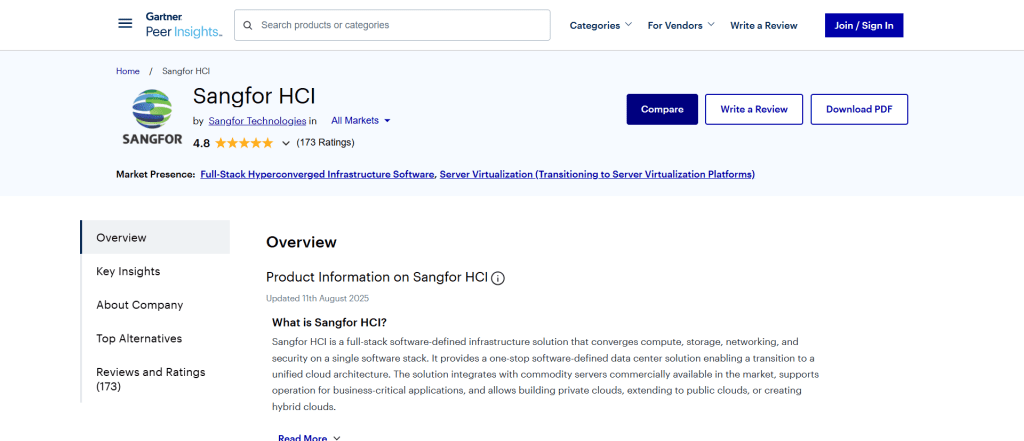
Gartner and G2 are such platforms where users rate Sangfor highly for its HCI solution: 4.7 out of 5 on G2 and 4.8 out of 5 on Gartner for HCI implementations. This is a testament to operational outcomes across industries, which reduce uncertainty for those looking to invest in long-term infrastructure transitions.

An example of success was when Sangfor HCI was implemented to support PT JFE Steel Galvanising Indonesia’s Manufacturing Execution System, operating 24/7. Compute, storage, and networking were consolidated into a single platform for this, and the company achieved simplified infrastructure management.

What kind of results can manufacturers expect after adopting HCI?

Sangfor HCI solutions ensure that manufacturers experience improved uptime, faster deployment cycles, and simplified IT management. The overall production efficiency and reliability improve.

This is a Defining Year for HCI in Manufacturing

Smart manufacturing in 2026 is defined by ambition, and this depends heavily on how well underlying systems perform under pressure. With that, the rise of HCI applications in manufacturing reflects that manufacturers aren’t just adopting technology; they are choosing systems that enable them to recover more quickly and scale smarter.

Sangfor’s role in such a scenario feels less like that of a vendor and more like that of an enabler, as it quietly reshapes how infrastructure supports production.


How A Smartphone Got Ghana’s Everyday Earners To (Finally) Trust Insurance

By Henry Nzekwe  |  May 21, 2026

Abraham, a construction worker in Ghana, had never held an insurance policy in his life. When a sudden illness landed him in hospital, he faced the difficult choice of missing work and losing income, or delaying treatment and risking his health.

What changed everything was a smartphone. When Abraham purchased his device through M-KOPA Ghana’s “More than a Phone” instalment plan in January 2025, he didn’t know it came bundled with hospital cash cover from Turaco. Months later, when sickness struck, the policy paid out, covering his hospital bills and providing daily cash to manage expenses during his recovery.

“I didn’t have an income during the days I was sick in the hospital. Because they covered my hospital bills, I had cash to take care of my daily expenses,” Abraham said, as detailed in M-KOPA Ghana’s latest impact report, released Wednesday.

Abraham is one of 556,000 Ghanaians who have accessed credit through M-KOPA since 2021, and part of a quiet revolution in how insurance reaches Africa’s low-income earners, according to the report, which found that 67% of insured customers accessed health coverage for the first time through M-KOPA’s partnership with Turaco.

For decades, selling insurance to Africa’s informal sector was considered a tough gig. Premiums were too high, distribution was too fragmented, and trust was virtually non-existent. Across the continent, insurance penetration remains at just 2.7% of GDP, which is less than half the global average of approximately 7%. In Ghana, where mobile technology now contributes GHC 94 B (~USD 8 B) to the economy, roughly 8% of GDP, millions remain locked out of formal protection.

M-KOPA is cracking the code by making insurance incidental. Individuals buy a smartphone on credit with the coverage baked in, eliminating the hurdle of shopping for a policy.

The January 2025 launch of “More than a Phone”, which bundles health insurance, affordable data, and device protection directly into every smartphone instalment, drove a fourfold surge in sales and expanded operations across all 16 regions of Ghana.

For many users, the services attached to the device now matter more than the device itself. Forty-four percent of customers accessed a formal product or service for the first time through M-KOPA, and 36% said their financed smartphone was the first phone they had ever owned.

“M-KOPA Ghana works to dismantle barriers to formal financial services, and this report shows what’s possible when Every Day Earners get access,” said Chioma D. Agogo, General Manager, M-KOPA Ghana.

“From first-time smartphone ownership to first-time health insurance, we’re proving that bundling meaningful services with connectivity changes what people can achieve.”

Forty-three percent of female customers said they chose an M-KOPA phone specifically for the health insurance, and 67% of insured customers now feel more confident handling health expenses, according to the report.

Before M-KOPA, 40% of insured customers relied on harmful coping mechanisms – borrowing money, selling assets, cutting back on food, or delaying treatment – to manage medical costs. Today, that vulnerability is being systematically dismantled, one smartphone at a time.

The model is now being replicated and scaled. Across M-KOPA’s five markets, the fintech is nearing 10 million customers and onboarding over 10,000 new users daily, according to a May 12 company announcement. Revenue grew more than 65% in 2024, with growth remaining profitable into 2025 and 2026.

Kenyan Court Kills ‘Rogue Employee’ Defence In Landmark Data Breach Ruling

By Staff Reporter  |  May 19, 2026

A Kenyan High Court ruling that ordered Safaricom to pay KES 9.9 M (USD 76 K) for a massive data breach has effectively killed the “rogue employee” defence, placing corporate Africa on notice that constitutional privacy obligations cannot be outsourced or delegated.

In a judgment delivered on May 13, Justice Bahati Mwamuye of the Constitutional and Human Rights Division found that the telecoms giant violated the rights of 11 subscribers whose personal and financial data, including betting histories, M-Pesa transaction records and geolocation information, was extracted by employees and sold to betting companies including Odibets between 2018 and 2019.

The breach compromised information belonging to more than 11.5 million subscribers, making it one of the largest known violations of subscriber privacy on the African continent.

Safaricom’s defence rested on what had previously been a reliable corporate shield, claiming rogue employees acted outside their authority. The company argued that because the individuals—including a manager of networks and M-Pesa systems who designed a bespoke algorithm to mine subscriber data—acted without authorisation, the institution itself should not bear constitutional responsibility.

The court rejected that argument entirely.

“The breach happened because of systemic failures inside Safaricom’s own infrastructure, poor data governance, weak internal oversight, and inadequate security controls,” the judgment found. “The rogue Safaricom employee could only do what they did because the system made it possible. That is on the company.”

Justice Mwamuye went further, ruling that Article 31 of Kenya’s Constitution, the right to privacy, imposes a “positive and non-delegable duty” on data controllers.

The court also found violations of Article 28, the right to dignity, and Article 46 on consumer protection, significantly expanding the definition of harm in data breach cases.

Under the ruling, a person whose data leaks does not need to demonstrate financial loss to have a valid claim. Reputational damage and psychological harm are sufficient.

Each of the 11 petitioners was awarded KES 900 K in general damages, with interest accruing from the date of judgment until payment in full. Safaricom was also ordered to bear the full costs of the petition.

But the real significance lies in what comes next. The court’s reasoning applies to every bank, telco, insurer, health provider and government body sitting on large volumes of personal data across the continent.

“If a breach happens and you cannot show clear documentation of who had access to what, what monitoring was in place, and how quickly you would have caught unusual activity, you are exposed,” the judgment warned. “The rogue employee story will not save you.”

Observers say the ruling establishes a binding precedent that will shape data protection litigation across Kenya and beyond.

Safaricom, which has not yet indicated whether it will appeal, is now staring down the barrel of cascading litigation. The court’s findings, that employees extracted and trafficked subscriber data to named betting firms over a sustained period, have opened the door for millions more affected subscribers to seek redress.

Tether Invests in LemFi to Promote Stablecoin-Powered Remittances _Partner_content
Press Release

Tether Invests in LemFi to Promote Stablecoin-Powered Remittances

By Partner Content  |  May 18, 2026

Tether, the largest company in the digital asset industry and issuer of USD₮, the world’s most widely used stablecoin, today announced an investment in LemFi, a financial platform serving millions of people who live and work across borders.  This investment aims to promote financial inclusion and expand access to efficient, borderless financial systems, while accelerating the use of stablecoin-powered solutions in emerging markets. 

LemFi is one of the most trusted financial platforms, connecting communities across the UK, US, Canada, and Europe with family and loved ones in Africa and Asia. For millions of people living and working across borders, LemFi has become the financial home that traditional banks never provided. Its mission is to make financial services fair, simple, and accessible, which requires infrastructure built to go where traditional rails cannot. Stablecoins are central to making that possible.

Tether’s investment aims to support LemFi’s integration of USD₮ as a settlement layer across its key corridors, replacing multi-day SWIFT chains with near-instant, low-cost settlement across Africa and Asia. Tether will also help accelerate LemFi’s stablecoin infrastructure, which will progressively extend across its broader product suite, delivering more stable, transparent, and accessible financial services to customers on both sides of each corridor.

This investment aligns with Tether’s broader mission to bridge the gap between traditional finance and digital assets by offering a stable, liquid digital payment solution powered by blockchain technology. Through collaborations with platforms like LemFi that address real-world financial challenges, Tether continues to advance the global use of stablecoins, making them more practical and accessible.

“At Tether, our goal is to promote financial inclusion, and we are committed to working with platforms building scalable financial solutions that address the real needs of our 585 million users globally,” Paolo Ardoino, CEO of Tether. “Our investment in LemFi reflects our shared vision on how money moves across borders, prioritising speed, cost, and transparency. By supporting LemFi’s growth and innovation roadmap, we are helping bring the benefits of a stable digital asset to more people who rely on remittances in their daily lives.”

“Tether’s investment is a significant milestone for us at LemFi, but more importantly, it is a validation of the direction we are heading. We have always believed that the financial system should work equally well for everyone, regardless of where they live or where they are sending money. Integrating USD₮ into our infrastructure brings us closer to that reality, enabling faster, cheaper, and more reliable financial services for the millions of people who depend on us every day,” said Ridwan Olalere, LemFi’s CEO & Co-founder.

By combining Tether’s deep liquidity with LemFi’s established presence in emerging markets, the two companies are setting a new standard for faster, more inclusive remittances designed for today’s interconnected world.

54 Collective’s Parent Sees Last-Ditch Effort To Save Itself Snuffed Out

By Staff Reporter  |  May 18, 2026

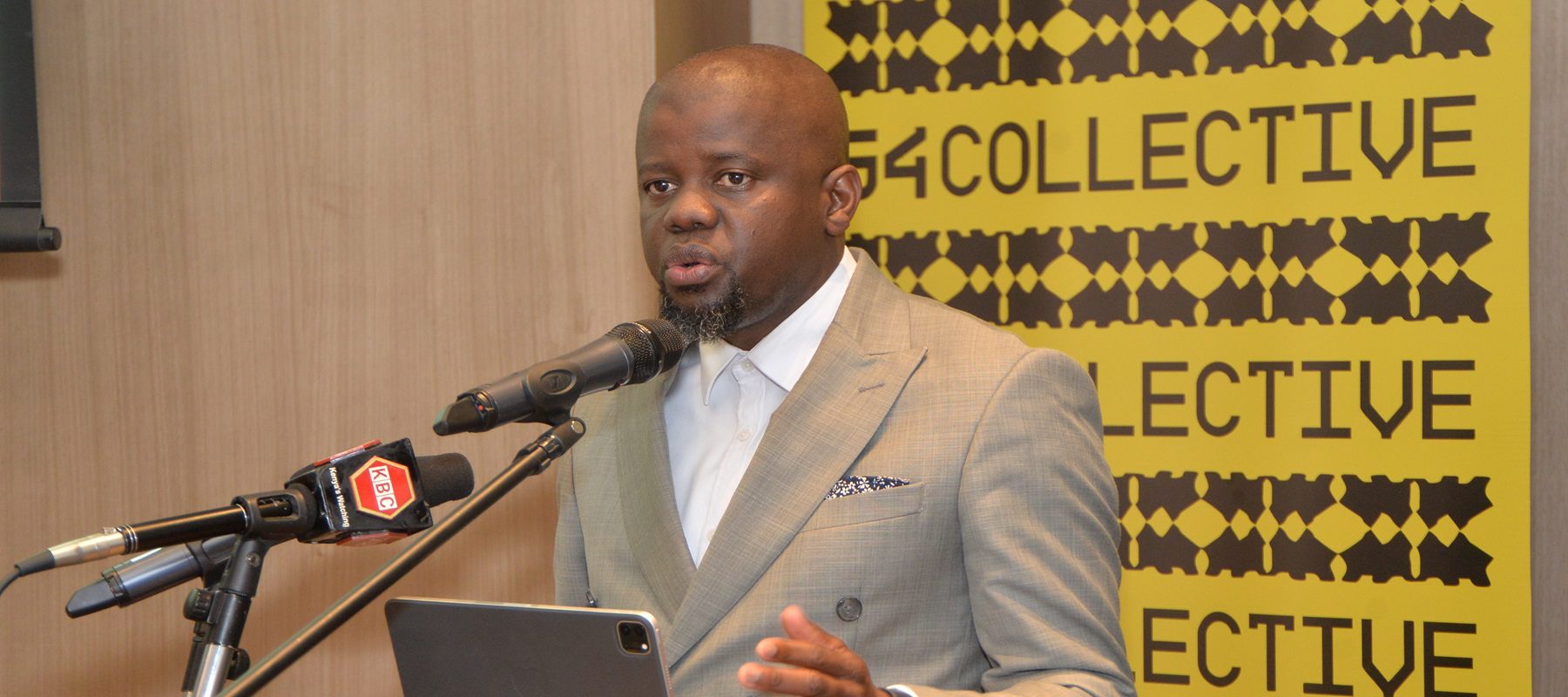
A last-ditch bid to rescue the embattled Africa Founders Ventures (AFV), the non-profit parent of Mastercard Foundation-backed startup network 54 Collective, which controversially shut down last year, has been halted in its tracks. This ends an 18-month legal battle that exposed the fragility of philanthropy-backed tech machinery.

The High Court in Johannesburg ruled on May 12 that the provisional liquidation order granted in July 2025 is not appealable, and that the business rescue practitioner’s challenge had “no reasonable prospect of success.” The decision is final, leaving AFV’s assets to be wound down and distributed.

The case has been closely watched across Africa’s venture scene because AFV was not a typical failed startup. It was structured as a non-profit designed to recycle philanthropic capital into early-stage founders. It had deployed millions into hundreds of startups across the continent before the liquidation proceedings began in mid-2025.

The exact trigger for the winding-up application has never been publicly disclosed, but sources familiar with the matter have pointed to governance disputes and questionable use of donor funds. The court’s refusal to entertain further appeals suggests that whatever internal fractures existed were deemed irreparable by the bench.

The liquidation also raises questions about the Mastercard Foundation’s due diligence and post-investment oversight. The foundation, which has committed billions to African youth and entrepreneurship, has not commented on the ruling. AFV’s business rescue practitioner did not immediately respond to a request for comment.

Legal analysts say the judgment sets a precedent that non-profit entities in South Africa are not immune to aggressive winding-up applications, and that mismanagement claims, even unproven, can stick if governance structures are weak.

For now, the 54 Collective brand has effectively ceased operations; its website is out of service. It’s understood that any remaining assets will be distributed according to the court’s order, with no further recourse for those who fought to keep the entity alive.

Profitable African Digital Bank Plots Going Public In USD 15 B IPO

By Staff Reporter  |  May 18, 2026

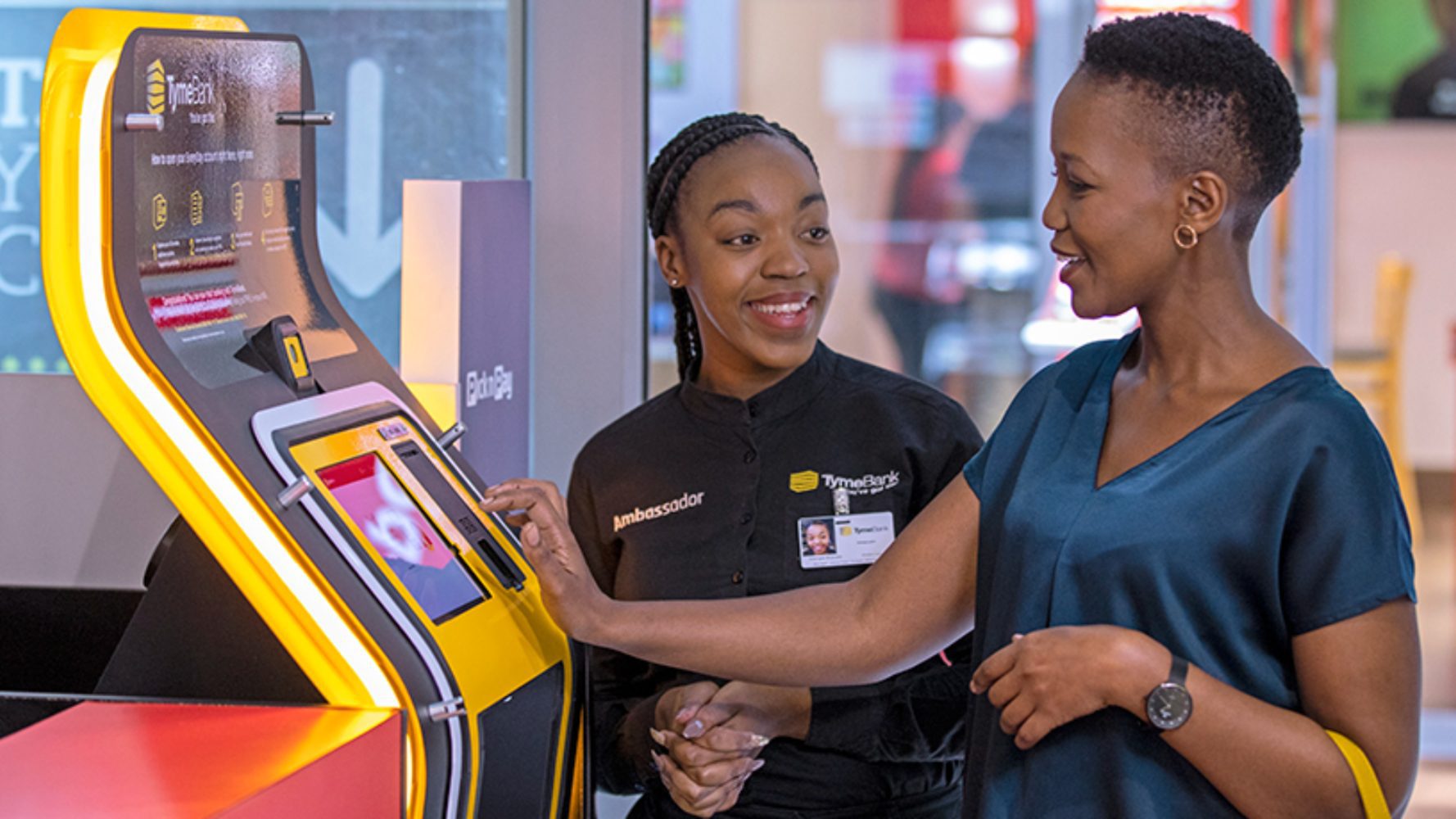
South African-born digital bank GoTyme has accelerated its timeline for a potential public listing, with executives now targeting a three-to-four-year window for an initial public offering that could value the Motsepe-backed fintech at as much as USD 15 B.

The shift in timeline marks a significant departure from the bank’s previous guidance of a listing sometime before 2030, Chief Executive Officer Cheslyn Jacobs said in recent remarks, as the lender adds about 450,000 new customers per month across its South African and Philippine operations.

GoTyme, valued at USD 1.5 B in a Series D round in December 2024 led by Brazil’s Nubank, now counts more than 21 million customers globally and describes itself as Africa’s first profitable standalone digital bank. The lender is majority-owned by Patrice Motsepe’s African Rainbow Capital Investments and also counts Tencent Holdings among its backers.

“The last number was USD 1.5 B—10x it. It would be lovely to list at USD 15 B. Wouldn’t that be amazing?” Jacobs said, while declining to provide an updated valuation ahead of the bank posting what he called a record profit for the year through June.

The lender is taking preparatory steps well ahead of any IPO. This month, GoTyme extended share ownership to all 2,000 employees globally, with Jacobs saying the goal is for staff to “behave like owners” as the bank remains in a hyper-growth phase.

Still, Jacobs struck a cautious note on timing, saying the bank would move forward only when conditions are right. “What we’ve realised is you struggle to predict these things, so now we talk about being listing-ready from a timeline perspective in three to four years from now. But we’re only going to do it if it makes sense,” he said.

A potential listing on the Johannesburg Stock Exchange would add a major fintech name to an exchange that has seen renewed tech activity. Dubai-based Optasia raised USD 345 M in a November IPO that gave the AI-lending platform a USD 1.4 B market capitalisation, while the JSE’s primary markets head has flagged a robust pipeline of listings through 2026.

The bank’s Philippines business, operated through a joint venture with the Gokongwei Group, has been a primary driver of growth, with the lender recently surpassing 9 million users in the market and targeting 12 million by the end of the year.

Jacobs said GoTyme would consider a listing anywhere globally closer to when it reaches 50 million clients “with the right kind of valuation”.

Fresh Effort To Toll Kenya’s EV Sector Clashes With Funding Boom

By Henry Nzekwe  |  May 15, 2026

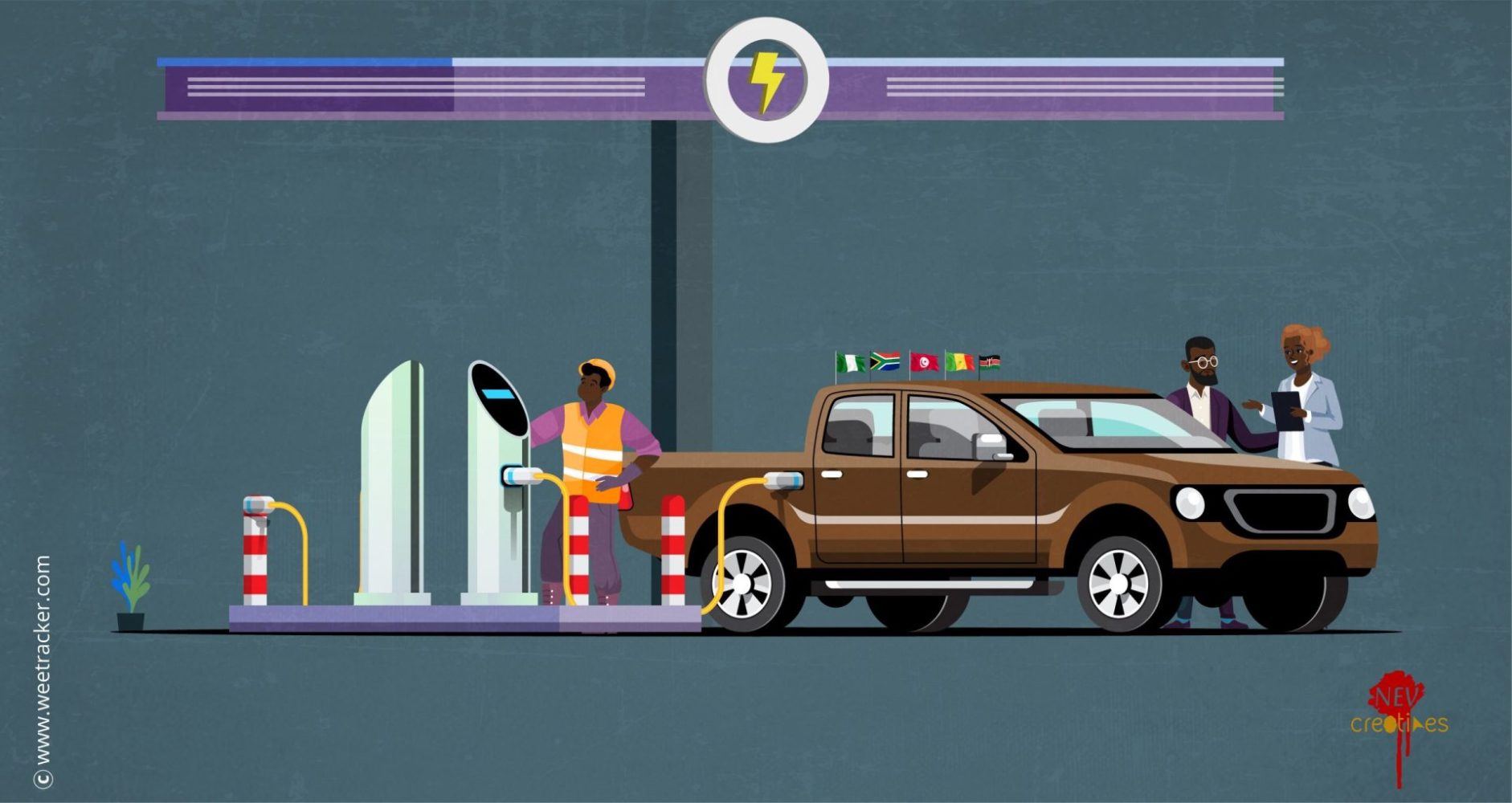
Kenya has emerged as Africa’s most dynamic electric mobility market, attracting hundreds of millions of dollars in venture capital and startup investment. Now, a sweeping tax proposal could undo much of that progress, exposing a troubling contradiction at the heart of the government’s green transport push.

The Finance Bill 2026 proposes extending the standard 16% value-added tax (VAT) to imported electric vehicles, lithium-ion batteries and electric bicycles, reversing tax breaks that have been central to the sector’s expansion. The move comes just months after a national e-mobility policy was launched with fanfare, promising expanded incentives and green number plates.

There are fears that the disconnect between policy rhetoric and fiscal reality could derail Kenya from being a continental leader where e-mobility companies have been known to draw the highest funding in Africa.

Kenya’s electric vehicle sector has grown at a blistering pace. Registered EVs surged from just 796 in 2022 to 24,754 by the end of 2025, a more than 3,000% increase over three years.

The government projects annual EV sales could reach 70,000 by 2030, supported by battery-swapping networks and expanding charging infrastructure. Electric two-wheelers, known as boda bodas, dominate the market with roughly 24,000 units in circulation, followed by a growing number of electric buses and cars.

Driving that growth has been a sustained influx of capital. In the past 15 months, development finance institutions and climate-tech funds have poured money into Kenya’s EV assemblers and mobility-focused venture firms.

Zeno, a Nairobi-based electric motorcycle startup, raised USD 25 M in Series A funding in March to expand production and its battery-swapping network across East Africa. Spiro, an electric bike operator active across seven African markets secured USD 50 M in debt financing from Afreximbank and other lenders, months after a USD 100 M facility, as it pushes to put 1 million e-bikes on Kenya’s roads; a plan Kenya’s president appeared to endorse.

The International Finance Corporation has also taken an equity stake in ARC Ride, another Nairobi-based electric motorcycle company, and BasiGo has expanded it electric bus fleet. Meanwhile, Roam and Ampersand have significantly expanded their operations in Kenya, with the former opening the region’s largest electric motorcycle assembly plant with the capacity to produce 50,000 electric bikes a year.

***

Electric motorcycles have gained traction across Kenya primarily because of their economics. Riders can reduce daily fuel and maintenance costs by as much as 40% compared to petrol-powered alternatives. Battery-swapping stations have emerged as the critical backbone of this transition, allowing commercial riders to exchange depleted batteries in under a minute without costly charging delays.

Infrastructure has followed capital. Charging and battery-swapping stations grew from 117 in April 2024 to 300 by June 2025, according to the Electric Mobility Alliance of Kenya, though 90% remain concentrated in Nairobi. Kenya Power reported that EV charging consumed 8.43 million kilowatt-hours in 2025, a 188% increase from the previous year, with revenue from e-mobility customers more than tripling to KES 190.8 M.

The proposed VAT reversal appears driven by urgent fiscal pressures rather than any policy rethink on climate. Kenya’s public debt has climbed to 67.6% of GDP, with the International Monetary Fund projecting the ratio could reach 71.6% in 2026 and 72.4% in 2027.

Persistent fiscal deficits estimated at 6.4% of GDP in both 2025 and 2026 have left the Treasury scrambling for revenue. President William Ruto is in talks with the IMF for a new multibillion-shilling loan to address a projected KES 1.14 T (USD 8.8 B) budget deficit for the 2026-2027 financial year.

The Finance Bill does not provide specific reasons for removing VAT relief on EV imports, but broader amendments targeting digital services, software and virtual assets make clear that the government is widening its tax net.

A 2025 industry study concluded that “all or almost all inputs for EVs are imported,” leaving the sector vulnerable to currency fluctuations, freight expenses, and import taxes.

***

Kenya’s lead is not guaranteed. A Berlin-based analysis by Agora Verkehrswende and the German development agency GIZ found that Ethiopia and Rwanda have overtaken Kenya in electric mobility adoption, backed by more decisive policy action and clearer incentives.

Ethiopia now has more than 115,000 EVs on its roads, about 8% of the national fleet, after banning new imports of petrol and diesel vehicles in 2024. Rwanda, while smaller, launched an e-mobility strategy in 2021 and has restricted registration of petrol-powered motorcycle taxis.

Generally, recent data suggest that the use of electric vehicles in Africa is surging, from 19,386 in 2024 to 44,358 in 2025 (over USD 200 M in shipments), as soaring prices and fuel shortages compel countries to opt for cleaner and cheaper transportation.

However, Kenya’s approach has been more fragmented, driven largely by private sector innovation while policy lagged. The national e-mobility policy was only finalised in February 2026 after years of delays.

The Finance Bill 2026 is still making its way through parliament, and industry groups are expected to lobby against the VAT provisions. But with the Treasury under intense pressure from creditors and the IMF, exemptions will be a hard sell.

The tax proposal, nevertheless, represents an existential moment for Kenya’s EV startups. The country’s renewable-rich grid – more than 90% of generation comes from geothermal, hydro, wind and solar – remains a unique advantage. Yet if imported batteries and vehicles become 16% more expensive, the economic case that convinced riders to switch begins to fray.

“What we are building is bigger than the next funding round,” said one Nairobi-based EV executive, who declined to be named while the bill is under consideration. “But if the government keeps moving the goalposts, investors will eventually notice.”

Jumia To Replace 200 Jobs With AI To Reach Profitability By End Of 2026

By Staff Reporter  |  May 14, 2026

Africa’s largest e-commerce platform, Jumia, is aiming to hit profitability at the end of the year, aided by plans to cut 200 jobs, about 10% of its workforce, as the company deploys artificial intelligence to slash costs and drive top-line growth, Chief Executive Francis Dufay said.

The reductions, part of a multi-year restructuring that has already trimmed headcount by more than half from 4,318 employees at the end of 2022, will be powered by AI automation across logistics, customer service, finance, and marketing. Dufay said the company is now running AI-driven workflows across multiple functions.

“We are able to automate across our business and increase revenue, lower operational and fixed-cost base,” Dufay said in a Bloomberg TV interview. “The coming two quarters, we are going to save on about 10% of headcount, mainly driven by AI.”

The push follows stronger-than-expected first-quarter results. Revenue rose 39% year-on-year to USD 50.6 M, beating analyst forecasts of USD 47.36 M, while gross merchandise value climbed 31% to USD 211.2 M. Nigeria, the company’s largest market, posted a 42% increase in physical goods GMV.

The adjusted EBITDA loss narrowed 32% to USD 10.7 M, putting the company on track for its target of breaking even on an adjusted core earnings basis and achieving positive cash flow in the fourth quarter, followed by full-year profitability in 2027.

“We cannot charge incredible margins,” Dufay said, referring to Jumia’s customer base of consumers earning between USD 200.00 and USD 300.00 per month. “If we want to make money, we have to be extremely efficient, cheap, lean in everything we do.”

Dufay moved offices and top executives from Dubai to African operations, exited non-core businesses including food delivery. Jumia now operates in eight markets, down from 14, after exiting South Africa, Tunisia and most recently Algeria, which accounted for roughly 2% of 2025 GMV. The company’s workforce has already fallen 8% since December 2024 to about 1,980 employees as of March 2026.

Despite the conflict in the Middle East, which has driven up fuel prices and logistics costs, Dufay said Jumia would still reach profitability in coming months boosted by its AI push.

“We are seeing about 20% price increases in the lower-end smartphones,” Dufay said. “Still, consumer demand remains strong in our markets, with Nigeria growing over 40%.”

Jumia’s accumulated losses stood at USD 2.2 B as of December 2025. Baillie Gifford has exited its stake, and Rocket Internet, the German incubator that founded Jumia in 2012, has also walked away.

Dufay said Jumia is automating many manual tasks using AI tools that now take only weeks to develop. “It works just as well and is actually more scalable,” he said.

The CEO also noted the supervisory board has tied management incentives directly to achieving the Q4 2026 breakeven target.

The job cuts place Jumia among a growing list of African technology companies turning to AI-driven restructuring. Flutterwave cut roughly half its Kenya and South Africa staff in mid-2025, while Sabi shed 20% of its team before pivoting into commodities.

The CEO’s bet is that with revenue growing more than 30% every quarter and AI reducing fixed costs, Jumia can finally escape years of cash burn. “This business has changed,” Dufay said in February. “It’s clear in the numbers that profitability is within reach.

‘Reverse Royalties’ Order In Developer’s Case Against Safaricom Sets Precedent

By Staff Reporter  |  May 14, 2026

A Kenyan court has ordered Safaricom to pay a local developer an indefinite percentage of its M-Pesa revenue, a novel remedy that legal experts say could reshape how intellectual property disputes are resolved between individuals and dominant corporations.

The High Court on May 8 directed Safaricom PLC to pay Peter Nthei Muoki and his company Beluga Ltd KES 1.4 B (about USD 10.8 M) in damages plus an ongoing royalty of 0.5 percent of gross M-Pesa revenue annually for as long as the company operates its parent-child wallet feature, M-Pesa Go, or any similar functionality.

The ruling marks the first time a Kenyan court has attached a recurring revenue share to a copyright infringement judgment against the telecoms giant.

It’s also the first time an individual developer has successfully sued the East African telecoms behemoth in a copyright dispute, while representing a rare victory for a solo innovator against a corporate giant in a region where such David-versus-Goliath legal battles almost never succeed. A separate case in 2025 ended in defeat for another developer who had sued over a “reverse call” feature, with the court ruling that ideas shared without a confidentiality agreement are not protected.

Justice Josephine Mongare, who delivered the judgment, noted the disproportionate scale between the parties. “Even David can prevail against Goliath,” she said, referring to the biblical narrative.

Muoki developed a concept called the M-Teen Mobile Wallet in October 2020, a system allowing parents to monitor and control teenagers’ spending through simple USSD menus compatible with basic phones. He registered the design with the Kenya Copyright Board before approaching Safaricom executives in early 2021.

After a meeting in June 2021 at a Nairobi restaurant, Sitoyo Lopokoiyit, then managing director of M-Pesa Africa, told Muoki the product was not workable because the intended teenage users lacked identification cards, requiring central bank approval.

Seventeen months later, in November 2022, Safaricom launched M-Pesa Go, a product with near-identical functionality targeting children aged 10 to 17.

Justice Mongare found that Safaricom had failed to produce critical internal design documents and that the company’s explanation of independent development through Huawei Technologies was not supported by credible evidence.

“It is not the duty of the CBK Governor to advise Safaricom on product features,” the judge stated, questioning why a major telecommunications firm would act on undocumented verbal instructions. The court also drew adverse inferences from Safaricom’s inability to produce material evidence of internal conception.

The royalty structure was calculated based on M-Pesa’s revenue growth following Muoki’s pitch. According to court documents, M-Pesa revenue rose from KES 82.65 B in the financial year before Muoki’s disclosure to KES 107.69 B in the following year, a 30 percent jump. The court reasoned that ongoing payments would fairly compensate the inventor without disrupting service for millions of users.

Justice Mongare described the KES 1.4 B award, equivalent to one percent of Safaricom’s M-Pesa revenue for the 2024 financial year, as a “negligible cost” to the company relative to its scale.

Safaricom has secured a 30-day suspension of the judgment and has said it will appeal. The company has not issued a public statement on the ruling.

The judgment comes as Safaricom reported record earnings for the financial year ended March 2026. M-Pesa revenue grew 13.4 percent to KES 182.7 B, contributing 45.6 percent of the company’s Kenya service revenue. Group net income reached 99.7 billion shillings, the highest in its history.

For independent developers in Kenya, the case provides a rare blueprint for protecting their work. Muoki’s success hinged on two key steps: registering his design with the copyright board before approaching Safaricom, and documenting his pitch in detail.

“If you submit an unsolicited concept without a confidentiality agreement, you have no claim,” said the judge in a separate 2025 case that dismissed a similar suit against Safaricom. “Copyright law protects the expression of ideas, not the ideas themselves.”

Muoki’s documented USSD menu flows and system structure qualified as protectable expression under Kenyan law, whereas a simple concept note did not.

Radical Pivot From Soaps To Stones Puts Upstart On Top In Nigeria

By Henry Nzekwe  |  May 13, 2026

Sabi, a Nigerian startup that began helping corner shops digitise their shelves, has vaulted to second place on the Financial Times ranking of Africa’s fastest-growing companies after a radical pivot into the traceable export of critical minerals.

The Lagos-based company reported revenue of  USD 46.5 M in 2024, up from USD 1.52 M in 2021, a compound annual growth rate of 212.56%, according to the FT ranking published on Tuesday. The jump makes Sabi Nigeria’s highest-ranked company on the list and the second fastest-growing in Africa behind Egyptian fintech Thndr.

Sabi was launched in 2020 by CEO Anu Adedoyin Adasolum and Ademola Adesina as a B2B digital commerce platform for informal retail merchants, offering inventory management and logistics services. By mid-2023, the company had amassed over 300,000 merchants and USD 1 B in annualised gross merchandise value. Around the same time, it raised a USD 38 M Series B round at a USD 300 M valuation.

But like many B2B e-commerce players across Africa, Sabi faced thin margins and capital-intensive operations. In June 2025, the company laid off roughly 20% of its workforce, about 50 employees, to refocus on commodity exports.

The shift was driven by an unexpected source of demand. Small-scale mineral traders facing the same market-access hurdles as corner shop owners began asking to use Sabi’s platform to sell their products. The company’s existing traceability and compliance tools, built originally for agricultural trade, proved adaptable to minerals.

“We realised that minerals were where Africa could make the biggest difference globally,” Adasolum told TechCabal last year. “The world was changing geopolitically, and minerals were becoming central to that change”.

Sabi launched TRACE (Technology Rails for African Commodity Exchange), a platform that verifies and tracks mineral shipments from mine to port using digital passports that log origin, labour practices, and environmental data.

The company now moves over 20,000 metric tons of lithium, copper, tungsten, and antimony each month, supplying buyers in the US, UK, Netherlands, Singapore, and Asia. It has facilitated the movement of more than 100,000 tons of lithium from Nigeria, ranking among the region’s top five lithium export enablers.

The pivot has positioned Sabi at the intersection of technology and Nigeria’s mining revival. President Bola Tinubu’s administration has attracted over USD 2.6 B in foreign direct investment into the solid minerals sector in the past 30 months, with reforms including a digital platform, stricter licensing and a crackdown on illegal mining that led to more than 350 arrests.

Solid minerals revenue rose to NGN 68.1 B (~USD 50 M) in 2025 from NGN 28 B in 2023. Four lithium processing plants are scheduled to open, backed by over USD 600 M in Chinese investment.

Sabi’s platform is now active in Nigeria, DR Congo, Tanzania, and Zambia, processing more than 20,000 tons of minerals monthly and targeting 5% of US imports in select mineral categories. The company has raised around USD 66 M in total funding.

“Traceability is the solution,” Adasolum said. “Every producer is verified, sites are audited, and every movement of material is logged”.

Sabi remains an outlier in a difficult environment for Nigerian businesses. The naira devaluation that began in May 2023 has depressed dollar revenues for locally reporting companies, dragging many off the FT list. Nigeria’s representation fell to 16 companies this year, behind Kenya with 17 and South Africa’s 51.

Mining still contributes less than 1% of Nigeria’s GDP, according to NEITI, but the government aims to raise that to 10% by the end of 2026.

“We’re doubling down on the part of our business seeing the most demand,” Adasolum said at the Moonshot conference in Lagos, referring to TRACE. Whether a startup built on soap and biscuits can help deliver that target remains a test for Nigeria’s broader ambitions.

Techstars-Backed Chimoney Shuts Down After Failing To Crack Distribution

By Staff Reporter  |  May 12, 2026

Chimoney, a fintech startup that built a unified API for cross-border payments across 41 currencies, is shutting down, Founder/CEO, Uchi Uchibeke, announced today.

The Nigerian-Canadian startup, which served hundreds of businesses across North America, Africa, and Latin America, raised under USD 1 M over its four-year lifespan, a sum Uchibeke now acknowledges was insufficient for its venture-scale ambitions.

“The product worked,” Uchibeke said in a candid post-mortem. “It was distribution. I spent too much of my time building and not enough time making sure people knew what we built.”

Chimoney emerged from Techstars and secured a FINTRAC MSB license, Uchibeke shared, later becoming one of the first companies in Canada to receive a Payment Service Provider license under the Bank of Canada’s new RPAA regime. It was also among the first production providers of Interledger, the open protocol for connecting disparate payment networks.

A U.S. company paying a freelancer in Lagos often faces the hassle of navigating multiple rails, currencies, and compliance checks. Chimoney wrapped those complexities into a single API supporting bank transfers, mobile money, stablecoins, and Interledger. But regulatory and audit costs across multiple jurisdictions proved unsustainable on flat revenue and thin capital.

Uchibeke explored strategic alternatives before deciding to wind down. “None of them closed on terms that made sense. So I chose to shut down cleanly instead of dragging the company forward on hope.”

He notified investors in February and clients in April. Every client wallet balance is being refunded through August 31, 2026, the founder announced, with migration playbooks published for developers who built on the API.

Notably, Chimoney’s corporate entity and PSP registration are being preserved. “That license is hard to get, and I believe it will only get harder. I am holding on to it,” Uchibeke said.

His takeaway for other founders: “Either raise properly or bootstrap with a profitable beachhead. I tried to do both and did neither well.”

Uchibeke is now building APort, a separate company focused on pre-action authorisation for AI agents, which has already created the Open Agent Passport.