As Tech Billionaires Back African Startups, A Novel Push Taps Local HNIs

By Henry Nzekwe  |  November 25, 2020

Barely a week has passed since the world got to know that the richest man on the planet, Jeff Bezos, has thrown the weight of his personal VC fund, Bezos Expeditions, behind an African startup.

The recent development sees Bezos take a spot on the cap table of an African startup, having participated in Chipper Cash’s USD 30 Mn Series B round. Founded in 2018 by Ugandan Ham Serunjogi and Ghanaian Maijid Moujaled, Chipper Cash is enabling P2P payment services in seven African countries.

And by backing the startup, Bezos became the latest entrant into what has quickly become a high-profile list of high-level tech billionaires and CEO who, through their actions, have portrayed some form of interest in African tech, and some of whom have demonstrated intent by going as far as backing African startups. 

That list has big tech names like Facebook’s Mark Zuckerberg, Microsoft’s Satya Nadella, Alibaba’s Jack Ma, Google’s Sundar Pichai, Twitter’s Jack Dorsey, and most recently, Amazon chief, Jeff Bezos. Better late than never, eh?

Big tech courts the big continent

On one hand, the interest and investment from these global tech leaders, who also happen to be some of the world’s wealthiest people, bodes well for the African tech scene.

In many ways, it’s an endorsement that spotlights the potential of the continent not only as a market but as a repository for innovation, talent, and vision-driven startups with the chops to become world-beaters.

But on the other hand, the growing list of global tech billionaires that are betting on African startups also amplifies a contrasting situation on the local front: the apparent apathy and indifference of Africa’s richest people towards local tech ventures.

Simply put, it’s the foreign billionaires who seem sold on African tech while locals who fit the high net-worth individuals (HNIs) profile seem to not be as enthusiastic.

Old money looks the other way

Besides the fact that much of the capital that fuels African tech is foreign-sourced due to insufficient local funding sources, African billionaires and HNIs largely continue to display a very small appetite for tech startups.

In fact, significant investments in the local scene from global tech titans like Facebook CEO, Mark Zuckerberg, have done little to get “old money” flowing into the ecosystem. 

Time and again, this sort of foreign investment has given a ringing endorsement to the African tech scene. But it has done little to loosen the purse strings of Africa’s super-rich class who command a deep but yet-untapped funding source. And the reason for this may not be far-fetched.

How so?

Unlike the global trend where six out of the world’s ten richest people amassed their fortunes through tech — and also have significant equities in several tech businesses — Africa’s wealthiest individuals are holders of the so-called old money.

The continent’s richest people are mostly industrialists and tycoons who built their fortune from traditional asset classes like the oil industry, banking, real estate, and other commodities. 

Indeed, only one out of the ten richest people on the continent grew rich from a business that is not exactly tech but is perhaps the closest thing to a technology service business owned by an African billionaire. That would be Egypt’s Naguib Sawiris’ who’s cut it in the telecommunications industry.

As such, the unfamiliarity and uncertainty of African billionaires with the asset class that is tech startups might be keeping them away from tech.

However, sparing a moment to look past the problem and propose possible panaceas for both the funding gaps in African tech and local HNI disillusionment, it turns out an elegant solution may already be taking shape in Africa.

Reimagining venture funding

Thanks to a new crop of African startup funding conduits that are democratising venture funding by unlocking previously out-of-the-equation funding segments, African startups are now able to get the sort of backing that was unavailable in the past.

Such new funding conduits as rolling funds and are making micro-limited partners (micro-LPs) out of individuals in the high net-worth, upper-class, and upper-middle-class segments of the economy.

Although the continent’s super-rich class made up of dollar billionaires in the elite category may still hard to reach, enabling other HNIs and reasonably wealthy persons to participate in profitable venture funding while solving some of the continent’s biggest problems is certainly a win for everyone.

One such novel funding initiative is the effort from Future Africa which recently announced investments in 9 African startups in the third quarter of 2020. The fund invested USD 1 Mn across these startups.

Co-founded by tech entrepreneurs Iyinoluwa Aboyeji, Olabinjo Adeniran, Adenike Sheriff, and Chuba Ezekwesili in 2019, Future Africa’s latest investments include fresh and follow-on funding for startups across fintech, health, service, and remittances subsectors. Future Africa says its portfolio now holds a total of 35 startups.

The firm also says it is pioneering new venture models in Africa by pooling funds from Future Africa Collective; a syndicate for angel investors, Future Africa Rolling Fund; an investment subscription product, and the Future Africa Fund; its own fund.

Switching up the model

Currently, Future Africa Collective boasts an existing syndicate of 125 angel investors. To simplify, the Collective is its community of co-investors who fund African startups.

That is, the initiative gives members the opportunity to invest in African startups alongside Future Africa on a deal-by-deal basis through investment syndicates. It’s like funding startups through a pool of capable, willing, and vetted persons.

Basically, such new initiatives collectivize the process of funding startups, up to the point where people with the pocket depth and the background can invest as individuals with the firm coordinating the process.

And the reception has been quite impressive since inception as deals from these sorts of initiatives are typically oversubscribed within minutes. In fact, just two days ago, on November 23, Future Africa Collective announced a new record: deal closed in 20 minutes and oversubscribed.

Another similar initiative, a rolling investment fund christened Nkali Fund, which was unveiled in August by Nigerian tech veteran, Victor Asemota, saw a similar rush.

This speaks to the availability of individual-borne pro-startup capital that has stayed latent for far too long. And this reimagined cum reinvented model might be the best shot at getting more African HNIs into venture funding.

Also, as high-profile exits begin to manifest (as in the much-celebrated recent deal that saw Silicon Valley’s Stripe acquire Nigeria-based Paystack), the scene appears to be getting more attractive. And it can be expected that this will encourage the increased participation of historically latent funding sources.

Update: A comment previously attributed to Olabinjo Adeniran of Future Africa in an earlier version of this article has been withdrawn to avert misunderstanding and misinterpretation.

Featured Image Courtesy: Joe Cummings/Financial Times
Africa’s BNPL Boom Collides With Messy Reality Of Debt Collection

By Henry Nzekwe  |  June 16, 2026

Moses had been a CDcare customer for three years, completing 21 orders without a single default. When he fell behind on a laptop instalment, he reached out to the company himself, offering to pay with interest or return the device. CDcare’s response was a single word: “Ok.”

The next day, an agent showed up at his home unannounced, spoke to his landlord, shared screenshots of Moses’s account, including his national ID number, he claimed, and told the landlord that CDcare had been calling Moses with no response, though call logs showed he often answered their calls, however briefly.

The incident, which sparked a furore on social media in April, highlights a growing tension across Africa’s buy now, pay later (BNPL) industry. BNPL has exploded across the continent, offering millions of cash-strapped consumers access to smartphones, appliances and other goods they could not otherwise afford. Nigeria’s BNPL market is projected to grow from USD 1.55 B in 2025 to nearly USD 4 B by 2031. Across Africa, the sector is forecast to expand from USD 5.2 B in 2025 to approximately USD 16.8 B by 2031.

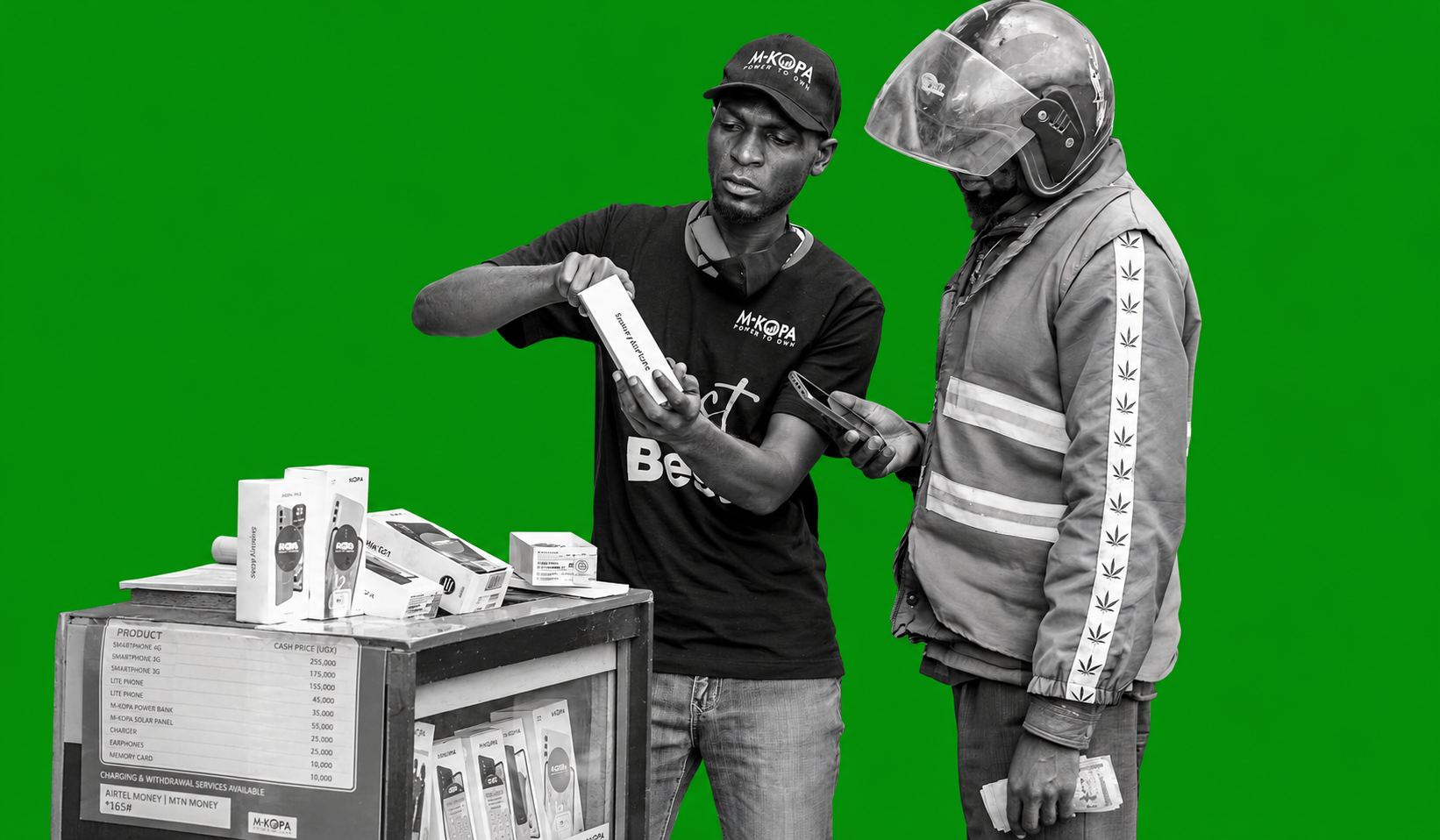
But the rapid growth has been accompanied by mounting complaints. In Nigeria, defaulting customers have reported intimidation, public embarrassment, and persistent harassment by agents enforcing payment. One dispatch rider in Ibadan told News Digest that agents who once called him “boss” now scream at him like a criminal. A food vendor in Bodija said agents contacted her guarantor and circulated her photograph after she missed two payments.

The problem extends beyond Nigeria. In Kenya, BNPL phone financing has drawn scrutiny for opaque terms, digital lockouts and aggressive collection tactics. Devices are remotely disabled after two to four missed payments, sometimes without notice. For informal workers whose livelihoods depend on their phones, a lockout means lost income. Customers describe devices locking despite recent payments.

Kenyan BNPL provider Lipa Later was placed under administration in March 2025 after months of financial strain. In South Africa, consumer advocacy groups have filed complaints over BNPL services preying on financially vulnerable consumers, with some providers charging high fees for even one day of late payment.

Regulators are scrambling to respond. Nigeria’s Federal Competition and Consumer Protection Commission set a January 2026 deadline for all digital lenders to register, banning harassment, name-calling, threats and public shaming of borrowers. The commission has placed more than 100 unregistered loan apps on its enforcement radar.

In Kenya, the Central Bank has licensed 227 digital credit providers as of April 2026, up from just 85 before 2025. The Treasury has proposed tougher rules extending oversight to BNPL, peer-to-peer lending and pay-as-you-go arrangements.

Despite the regulatory push, consumer advocates say enforcement remains weak. The underlying problem, they argue, is structural. Most BNPL providers in Africa operate without sharing data, allowing delinquent borrowers to cycle through multiple platforms simultaneously. In Kenya, default rates for small-ticket digital loans have reached 83%, with broader segments defaulting at up to 40%.

CDcare, for its part, published a detailed explanation of its process in April, stating that physical visits are a last resort after repeated unsuccessful engagement attempts and that agents are trained to maintain professional conduct. The company said it does not disclose customer financial information to third parties.

For Moses, the visit lasted minutes. He cleared his balance two days later. But the incident shows how a lending model built on trust can break down when the pressure to recover payments overrides customers’ sensibilities.

Tyms AI Launches AI Platform to Help Businesses Run Operations Faster and Smarter

Tyms AI Launches AI Platform to Help Businesses Run Operations Smarter

By Partner Content  |  June 15, 2026

Tyms AI today announced the launch of its human-first AI platform, built to help medium and enterprise businesses run their operations faster and smarter. The platform combines AI software and intelligent agents that handle day-to-day work across finance, sales, marketing, customer service, compliance, and more, freeing teams to focus on the judgment-driven work that drives business outcomes.

Tyms is designed around a single principle: people, not AI, bring the wisdom, judgment, and taste that move businesses forward. Where most AI products position the technology as a replacement for human workers, Tyms positions it as the engine that removes repetitive work and accelerates teams toward their goals.

“Our mission is to empower humanity to do its best work,” said Allan Rwakatungu, co-founder and CEO of Tyms AI. “I’m an entrepreneur from a developing country, and I believe business is the catalyst for progress. We built Tyms to help businesses around the world do their best work, with AI handling the drudgery and humans focused on the work that actually matters.”

Rwakatungu brings more than two decades in technology to Tyms. He was a software engineer and architect on MTN’s Mobile Money platform, founded mBet, the Ugandan startup that became betPawa, one of Africa’s largest sports-betting companies, and founded Xente, a pioneering licensed fintech that serves thousands of corporate customers and processes millions of dollars in payments.

He co-founded Tyms with Arron Cleary, a prolific angel investor behind African startups including Yobante Express, Asaak, Badili and Rocket Health, and an early backer of Xente. Together, the Ugandan founder and his Australian co-founder pair an operator’s and an investor’s view of what businesses need to put AI to work.

How Tyms works

Every person in an organisation, and every customer they serve, gets their own AI assistant. These assistants perform what Tyms calls “the invisible work” across a business: collecting, searching, analysing, synthesising, monitoring, reporting, executing background jobs, and more. Because the assistants bring real intelligence rather than mechanical execution, they move work forward not just quickly, but in the direction of each business’s specific goals. Humans then apply their judgment and taste to finish the work.

The platform is available today on the web, with mobile, chat, and integrations with workplace communication tools such as Microsoft Teams and Slack planned later this year.

“A lot of people in AI talk as if people will be replaced. We disagree,” Allan said. “People are the only ones with wisdom, judgment, and taste. AI doesn’t have those things, and that’s why humans are best placed to do business. Tyms is built around that conviction.”

More than a product

Recognising that successful AI adoption requires more than software, Tyms is launching two additional offerings alongside the platform:

  • Best Work Masterclasses: immersive AI training programmes for professionals in finance, compliance, sales, marketing, and other functions. The classes ground experts in the technology so they can accelerate in their domain.
  • AI Advisory: a consulting practice for medium and enterprise organisations covering AI readiness assessments, implementation support, and ongoing guidance to ensure successful deployment across people, processes, systems, and data.

“Handing your team an AI copilot is not a strategy,” Allan said. “Businesses need to prepare their people, processes, systems, and data for AI. We help them do that, and then we help them succeed with it.”

What’s next

Tyms is opening conversations with medium and enterprise businesses about pilots and deployments, and with model providers, data centres, cloud providers, and solution providers about strategic partnerships. The company is also opening its seed funding round.

How A USD 50 K Dispute Put A Prominent Nigerian Logistics Startup In Jeopardy

By Staff Reporter  |  June 15, 2026

A USD 50 K dispute over a former sales head’s unpaid wages sent the Dutch parent company of prominent Nigerian logistics startup Kwik into bankruptcy. A year later, the fight has moved to a new front involving a corporate restructuring that creditors say was a sneaky move to put key assets out of reach.

The trouble started in the Netherlands when a former employee, Adam Grant, won a settlement of USD 75 K over a wrongful termination dispute. Kwik paid the first USD 25 K installment but held back the rest, citing concerns over French income tax. The Amsterdam court rejected that argument. In May 2025, it declared Africa Delivery Technologies Holding B.V. (ADTH), the Dutch parent of the Nigerian logistics startup Kwik, bankrupt.

A court-appointed trustee stepped in to sell the parent company’s assets and raise money for 41 unsecured creditors, who, according to a liquidation report published early this month, are collectively owed roughly EUR 3.2 M (about USD 3.4 M). Those assets included intellectual property and full ownership of a French subsidiary, which in turn owned 99% of the Nigerian operating business.

But a twist came months after the bankruptcy was declared when management executed a move that changed everything. On October 16, 2025, ADTH’s French subsidiary issued 10,000 new shares to a Dublin-registered entity called Kwik Now Limited. It resulted in the bankrupt Dutch parent’s controlling stake of 100% being slashed to a paltry 14.1%.

Control of the operating company was effectively moved out of the court’s reach. When the trustee asked who owned Kwik Now Limited, management reportedly said the question was “not relevant,” according to a detailed liquidation report.

What began as a personal labour dispute had snowballed into an international legal battle. The initial bankruptcy petition was bolstered by other creditors, including Nigerian startup lender B54, which claims Kwik defaulted on a USD 50 K loan, and media company Guardian Nigeria, which sued over unpaid warehouse rent.

The Dutch court-appointed trustee is now investigating whether the share issuance was an unlawful “siphon” of value away from creditors. A key focus will be the directors of the bankrupt company, who could face personal liability under Dutch corporate law for failing to file financial accounts properly or for mismanagement.

The trustee’s investigation is also examining whether the founders failed to pay mandatory share capital and whether late or missing annual accounts create a presumption of mismanagement under Dutch corporate law. A further interim report is scheduled for July 29, 2026.

Throughout the entire process, Kwik’s founder and former CEO, Romain Poirot‑Lellig, has maintained that the company’s Nigerian operations are healthy and that the legal troubles are confined to the holding company. The company previously stated that it serves over 300,000 merchants and had recently raised fresh funding. However, the latest liquidation report paints a troubling picture for the creditors left behind in Europe.

Kora Joins IATA's Payment Network to Power Airline Settlements Across Africa

Kora Joins IATA’s Payment Network to Power Airline Settlements Across Africa

By Partner Content  |  June 12, 2026

Kora, the payment infrastructure platform, has joined the International Air Transport Association’s IATA Financial Gateway (IFG), connecting global airlines to Africa’s payment ecosystem through a single, reliable infrastructure layer.

IATA Financial Gateway is the airline industry’s dedicated payment orchestration and management platform. IFG brings together global, regional and local payment partners to provide airlines with the right mix of payment options to maximise acceptance, reduce cost, and better serve customers in every market. Through this integration, airlines and travel agencies using IFG can now accept payments across Africa via Kora, including cards, bank transfers, mobile money, and local alternative payment methods, without having to build or manage multiple complex integrations independently.

Africa is one of the fastest-growing aviation markets in the world. The continent is expected to add more than 300 million new passengers by 2050. Yet global airlines have long faced a fundamental operational challenge when entering African markets: fragmented local payment rails, FX complexity, disconnected settlement systems, and the burden of managing multiple payment service provider relationships across Nigeria, Kenya, Ghana, Egypt and South Africa. This partnership removes that friction. One connection through IFG gives airlines access to Kora’s full African payment infrastructure, with the settlement reliability and local compliance that enterprise operations require.

Dickson Nsofor, CEO of Kora, said, “Africa is not a market to figure out later. It is a growth opportunity that demands serious infrastructure today. Our partnership with IATA signals that the rails are ready. Global airlines no longer have to choose between expanding into Africa and managing payment complexity. With Kora inside IFG, they get both.”

IATA currently represents over 370 international airlines globally. With Kora now part of IFG, those airlines gain direct access to Africa’s payment stack across all markets where Kora operates.

IATA Financial Gateway (IFG) enables greater flexibility in travel payment processing for the world’s airlines and travel suppliers, helping them build a cost-effective travel payment strategy. Kora’s participation strengthens our ability to serve airlines operating in or expanding across African markets,” said Kamil Al-Awadhi, Regional Vice President, Africa and Middle East. 

Airtel Africa Mobile Money Transactions Hit USD 196 B Ahead Of Planned London IPO

By Staff Reporter  |  June 11, 2026

Airtel Africa’s mobile money business processed nearly USD 200 B in transactions over the past year as the telecoms operator expands financial services across 14 African countries, putting it on track for a London listing that analysts say could value the unit at up to USD 10 B.

The company’s Sustainability Report 2026, published on Wednesday, showed that Airtel Money’s transaction value climbed 44% to approximately USD 196 B in the financial year to March 31, driven by microloans, international transfers and merchant payments. The customer base grew 21% to 54.1 million users.

Chief Executive Sunil Taldar said expanding access to financial services and connectivity remains central to the company’s strategy. “Across Africa, access to connectivity, financial services and digital education is increasingly essential to economic opportunity,” he said in the report.

The growth positions Airtel Money for an initial public offering scheduled for the second half of 2026. Analysts at CLSA estimate the unit could raise between USD 1.5 B and USD 2 B at a valuation of up to USD 10 B, a fourfold increase from 2021, making it one of the largest fintech listings on a European exchange in recent years.

The mobile money business now has an EBITDA margin of 50.8%, above the broader Airtel Africa margin of 49.3%, and contributes 20% of the group’s regional revenue. However, penetration remains at only 29% of Airtel Africa’s 184 million mobile subscribers, with significant room for growth in Nigeria, where only 2.7 million customers currently use the service.

Airtel Africa has also expanded its digital infrastructure, with mobile network coverage reaching 81.9% of the population, including 73.1% in rural areas. Smartphone penetration rose to 49.5%, while data customers grew to 84.2 million.

The company’s agent network, which supports financial inclusion and local entrepreneurship, expanded by 39% to 2.4 million agents. Women account for 44.1% of Airtel Money customers, the report showed.

Beyond financial services, the Airtel Africa Foundation connected 3,043 schools to free internet through a partnership with UNICEF, up from 2,176 the previous year. The company also converted more than 950 network sites from off-grid to on-grid power, cutting diesel consumption by 9.1 million litres.

Feature Image Credits: Developing Telecoms

New Shifts Push South African SMEs From Firefighting To Cautious Growth

By Staff Reporter  |  June 11, 2026

South African small businesses are shifting from a survival mindset to more deliberate, disciplined growth strategies as economic conditions slowly improve, though lingering global uncertainties keep their optimism in check, a report released on Thursday shows.

The latest SME Pulse Report by SME funding startup, Lula, found that entrepreneurs are moving beyond short-term crisis management and focusing on operational optimisation after years of navigating power cuts, high inflation and steep interest rates.

“The story of SMEs in 2026 is no longer one of pure survival, but not yet one of full recovery either,” Lula Chief Executive Trevor Gosling said. “What we’re seeing instead is measured optimism. Businesses are becoming more deliberate about where they deploy capital, which opportunities they pursue, and how they protect cash flow.”

The report points to improving affordability for small businesses over the past 12 months, with easing inflation and greater energy stability restoring some predictability after prolonged pressure.

Business confidence has also improved. The RMB/BER Business Confidence Index rose to 47 in the first quarter of 2026, the highest level in nearly five years, building on gains in late 2025. Inflation has moderated from previous highs, and the South African Reserve Bank has begun cutting interest rates, with the prime lending rate at 10.25% by May 2026.

However, the report cautions that conditions remain fragile. Escalating conflict in the Middle East has driven up global oil prices, threatening to push inflation back up and delay or reverse further interest rate relief. Gosling said the external environment has already shifted rapidly since the report’s data was compiled earlier this year.

“SMEs are operating in a market that can change very quickly and often without warning,” he said. “Businesses cannot afford to become complacent.”

The report also noted a shift in how SME owners view funding. Many still rely on personal savings or credit, but there are growing signs that business funding is being seen less as a last resort and more as a strategic tool for growth. Some businesses are now using finance proactively to secure stock ahead of demand or expand operations rather than waiting for cash flow pressure to build.

“The future of SME finance will not simply be about access to capital,” Gosling said. “It will increasingly be about helping businesses make smarter decisions and giving them the confidence to act at the right time.”

South Africa’s SME sector faces a financing gap estimated at more than ZAR 350 B (USD 18 B), according to the OECD. The Lula report suggests businesses that embrace funding as a growth enabler rather than an emergency measure are better positioned to scale.

The report is based on Lula’s internal affordability, funding and operating environment data, alongside broader SME sentiment research conducted with News24.

Zipline’s African Drone Network Finds Gains Beyond Delivering Medical Supplies

By Henry Nzekwe  |  June 11, 2026

Zipline’s rise in Africa began with the promise of delivering blood and vaccines to remote clinics faster than any road could manage. Nearly a decade later, new peer-reviewed research shows the drones are doing far more than restock medical fridges.

Drone delivery networks operated by Zipline in Africa are linked to lower child mortality, higher farmer incomes and stronger local economic activity, according to three new studies examining operations in Rwanda and Ghana.

In a set of findings released on Wednesday, the autonomous logistics company documented that the same infrastructure built to bypass broken supply chains is now generating measurable returns in farming productivity, child nutrition, and household wealth.

One study, published in Frontiers in Veterinary Science, evaluated a programme in rural Rwanda that used drone-delivered, temperature-controlled pig semen combined with community training. The model increased farmers’ annual income by 17%, generating a 68% return on investment for smallholder pig producers, Zipline said.

Success rates for artificial insemination rose from 48.8% to 74.8% after drone logistics were introduced, the company reported, citing research data.

A separate study, focused on severe acute malnutrition, compared Zipline-served and non-served health facilities in Rwanda over five years. At sites where ready-to-use therapeutic food was delivered by drone, in‑hospital childhood deaths from severe malnutrition fell 22%, the findings show. Visits for severe anaemia in young children dropped 46%.

“The protocol for treating malnutrition has not changed. What changed was whether supplies were there when clinicians needed them,” said Pedro Kremer, Zipline’s head of impact and research. “That is the variable these studies are measuring.”

Another piece of evidence came from a third study examining Zipline’s GH3 distribution centre in northern Ghana. Researchers combined a household survey with satellite analysis of nighttime light intensity, a recognised proxy for local economic activity, and benchmarked the area against 82 comparable locations across the country.

It was found that households within two kilometres of the Zipline hub earned an additional USD 850.00 to USD 1.2 K per year. Liquid asset ownership fell about 27% with every additional 1.5 km from the hub, and improvements in drinking‑water access followed the same proximity pattern. Furthermore, nighttime light intensity near the hub was “significantly higher” than at the 82 comparable locations.

The results come as Zipline accelerates its buildout across the continent. In Nigeria, the company announced plans last month to grow from three distribution centres to 15 by 2028, potentially giving nearly 100 million people faster access to medical supplies. Rwanda is adding an urban delivery system, Platform 2, in Kigali, while Ghana, Kenya and Côte d’Ivoire continue to expand.

“This research shows what communities and governments across Africa have seen firsthand: when essential supplies reliably reach the people who need them, outcomes change,” said Caitlin Burton, Zipline’s chief executive for Africa and emerging markets.

However, an on-and-off debate over cost remains a sticky point. Ghana’s Health Minister Kwabena Mintah Akandoh told a press conference in Accra in December that an audit of Zipline’s contract revealed that only 12% of areas served qualified as “hard-to-reach” and only 4% of deliveries could be classified as emergencies.

The minister said the government owes Zipline GHC 174 M (USD 12.5 M) and has raised questions about whether high operational costs are justified.

Majority Leader Mahama Ayariga called the contract a “drain on national resources” and argued the health service should have developed its own drone capacity. Opposition has also come from Parliament’s Health Committee chairman, Dr. Mark Kurt Nawaane, who described Zipline as “a solution to a problem the country does not have” and said the real challenge is a shortage of voluntary blood donors, not transportation.

The company maintains that it runs one of the highest-impact, most cost-effective interventions ever studied, across multiple domains, including immunisations, maternal mortality, and nutrition. The Country Manager of Zipline Ghana, Daniel Kwaku Merki, pushed back against claims that the company’s drone delivery service is being misused to transport non-essential items, insisting that such non-medical deliveries are “extremely rare.”

Zipline’s CEO for Africa and emerging markets, said in Wednesday’s press release that the research shows measurable results across multiple sectors. “Zipline began by improving access to critical health supplies. Today, the same infrastructure is strengthening nutrition systems, agricultural productivity and local economies,” she said.

Egyptians Are Using AI For Shopping But Won’t Let It Touch Their Money

By Henry Nzekwe  |  June 10, 2026

Nearly all Egyptian consumers use artificial intelligence to help them shop, but only a fraction trust AI to complete a purchase on their behalf; a paradox that reveals a broader challenge facing the global payments industry as it rushes to build infrastructure for autonomous commerce.

A Visa study released Tuesday found that 91% of consumers in Egypt have used AI tools to assist with shopping, comparing prices, checking reviews and finding gift ideas. Fully 97% say the technology makes online shopping faster and easier. Yet when asked whether they would trust an AI agent to handle checkout, that figure collapsed to just 38%.

The findings, from the annual Stay Secure survey conducted by Wakefield Research, lay bare the gap between consumer appetite for AI-assisted discovery and their reluctance to cede control of the payment itself. The study surveyed 5,800 adults across 17 markets in Central Europe, the Middle East and Africa, including Egypt, Kenya, Nigeria and South Africa.

The trust gap is not unique to Egypt. In South Africa, only 23% of consumers would trust an AI agent to complete a purchase, according to the same study. In Kenya, that figure stood at 29%. Across the region, consumers are embracing AI for research, but they draw a firm line when money changes hands.

“Consumers see fraud protection as a shared responsibility, but they expect financial institutions, governments, and payment providers to take the lead,” said Leila Serhan, Visa’s senior vice president for North Africa, the Levant and Pakistan.

The study also revealed a rapidly shifting e-commerce landscape. Eighty‑five percent of Egyptian consumers have purchased products directly through social media platforms. But as commerce migrates to new channels, fraud follows. Among consumers who reported experiencing a financial scam in the past 12 months, some 36% of respondents, nearly half said the incident occurred on social media, more than on any other platform.

In 2025 alone, Egyptian authorities said they thwarted financial fraud operations worth an estimated EGP 4 B (approximately USD 77 M), according to statements from the Central Bank of Egypt. Across the continent, an Interpol‑coordinated operation in early 2026 involving 16 African countries resulted in 651 arrests and exposed scams tied to over USD 45 M in losses.

The findings arrive as Visa, Mastercard, and other payments giants race to prepare financial institutions for agentic commerce – autonomous transactions executed by AI agents with minimal human involvement. Visa has already begun enrolling banks in its Agentic Ready programme, which enables institutions to process such payments.

But as the Egypt data makes clear, the infrastructure is arriving ahead of consumer trust. Asked who should bear primary responsibility for fraud protection while shopping online, nearly half of Egyptian consumers pointed to government authorities. Only 13% believed consumers themselves should be primarily responsible.

The path forward remains uncertain for payments companies. Consumers have demonstrated they will use AI to discover products and compare prices. Whether they will ever trust it to spend their money remains an open question.

Feature Image Credits: Consultancy-ME

Nigeria Plans Salvage Job For Its eNaira Digital Currency Flop

By Staff Reporter  |  June 9, 2026

Nearly five years after its high-profile launch as Africa’s first central bank digital currency, Nigeria’s eNaira is being quietly repurposed. The Central Bank of Nigeria (CBN) has acknowledged in a new strategy document that adoption of the Central Bank Digital Currency (CBDC) has been slow, and is now repositioning it away from a consumer-facing payment tool toward a backend infrastructure for government disbursements and cross-border settlements.

The eNaira, launched in October 2021 to much fanfare, has struggled to gain traction. According to the CBN’s Payments System Vision (PSV) 2028 strategy, unveiled on June 1, the CBDC currently has “millions of wallets” but has processed only about NGN 22 B (USD 16 M) in transactions. This is a fraction of the nearly 1 quadrillion naira in total electronic payments processed in 2024, and well below the 300 million transactions the bank had envisioned for the digital currency by 2026.

In the PSV 2028 document, the CBN acknowledged that barriers to the eNaira’s success included “limited stakeholder engagement and buy-in” during its design and implementation. The bank conceded that adoption had been slow, with the CBDC offering little that existing bank apps, fintech wallets and mobile money platforms were not already providing more conveniently.

Rather than competing directly with these established platforms, the CBN now wants the eNaira to become part of the infrastructure that underpins Nigeria’s digital payments ecosystem. The strategy, which runs through 2028, places the CBDC alongside initiatives such as open banking, digital identity and cross-border payments frameworks.

The rethink comes amid a broader strategic shift at the CBN under Governor Olayemi Cardoso, who has prioritised stabilisation, trade facilitation and investor confidence.

The PSV 2028 framework, unveiled at a gathering of banking executives and fintech operators in Abuja on June 1, aims to position Nigeria among Africa’s leading payment ecosystems by promoting faster, safer digital transactions and strengthening cross-border payment systems under the African Continental Free Trade Area (AfCFTA).

The path forward for the e-naira will focus on government-to-person (G2P) payments, such as welfare disbursements and subsidies, as well as cross-border settlements. “Routing every government payment through the eNaira is where the plan argues with itself,” noted one analysis of the strategy, pointing to the tension between the CBDC’s past failures and its future ambitions.

The repositioning reflects a quiet admission that Africa’s first CBDC experiment, once hailed as a landmark step toward a cashless economy, has fallen short of its original promise. Now, the CBN is betting that a more utilitarian role can salvage the project.

The Inside View On Why African Startups Raise Billions But Can’t Raise Leaders

By Henry Nzekwe  |  June 8, 2026

Africa’s tech ecosystem had its best funding year since 2022 as startup investments rebounded last year, ending the slump of the previous two years, thanks to record debt financing and a steady recovery in equity markets. Kenya, South Africa, Nigeria and Egypt together accounted for much of the capital raised.

The money is back, but something else is quietly choking the continent’s startup ambitions. A common view among stakeholders suggests that it’s not a lack of ideas or market, but rather leadership.

When Moniepoint CEO Tosin Eniolorunda told a Lagos audience that his company had struggled to fill 500 vacancies because Nigerian candidates were “not up to global standards,” the internet exploded. Some called it an insult, others said he was telling an uncomfortable truth. But Marcia Ashong‑Sam, founder and CEO of the executive search and leadership advisory firm, TheBoardroom Africa, has a different take.

“The question was never whether African professionals are capable,” she tells WT. “It was whether the organisations they work within are built to draw that capability out.”

Ashong‑Sam sees a painful irony every other day. “Founders will tell you in one breath that talent is their biggest challenge, and in the next, allocate the smallest slice of their budget to developing it.” Why? “Because leadership development gets treated as a cost centre, not a strategic growth lever. When you are racing to hit targets or close a round, teaching your VP of Product how to make better decisions feels abstract. Product and customer acquisition feel real. So the money flows to what feels urgent.”

But there is a deeper structural bias. The capital that flooded Africa over the last decade was priced for speed and market capture. “Investors focused more on growth metrics than leadership capacity or organisational maturity,” Ashong‑Sam says. “So founders optimised for what they were measured on.”

Many also assumed talent could simply be hired rather than developed. “That assumption is where the model breaks down,” she warns. “You cannot hire your way out of every talent challenge. At some point, you have to build capability internally.”

So what separates the companies that actually do this from the ones that collapse under their own weight? High‑performing organisations, she explains, “do not just recruit talent. They systematically compound it.” Ashong-Sam holds the view that the organisations that fare better treat leadership development as an operational discipline, not something delegated entirely to HR.

“They build clear succession plans, conduct regular talent reviews, and give people early exposure to cross‑functional responsibilities. And they think several layers ahead. Building tomorrow’s leadership bench with the same intentionality they bring to building their product,” she explains

There’s another dimension that gets missed entirely. “Organisations frequently hire people because they are excellent at one specific thing,” Ashong‑Sam notes. “The assumption is that technical excellence will advance a career. It rarely does on its own.”

What actually determines who grows into leadership is the ability to lead people, translate strategy into action, and navigate uncertainty, she asserts. “Those are human skills, and they have to be developed with genuine commitment. A well‑rounded career requires a well‑rounded professional.”

So how do you know if your company is hitting a leadership ceiling instead of a product or market problem? Ashong‑Sam says the most reliable early warning is decision velocity.

“When a company that was once agile becomes slow, when simple decisions require multiple sign‑offs and teams are waiting weeks for clarity, that is a leadership architecture problem.”

Another signal is what happens to high‑potential people. “High turnover among strong performers,” she tells WT, “particularly when they are leaving not for better compensation but because they do not feel they are growing or being heard, is a leadership culture signal that precedes deeper difficulty.”

In her view, boards often miss this because they are watching revenue, churn and burn rate, but those only tell you what has already happened.

“What boards should be tracking is succession depth, voluntary attrition, and the gap between what the organisation says its strategy is and how it actually behaves day to day.” She recommends a simple test: “Who runs this if you step away for six months? If the honest answer is that it falls apart, the board is sitting on a leadership risk.”

The debate that erupted over Moniepoint’s CEO’s comments stopped at exactly the wrong place, Ashong‑Sam argues. “A person can have full competency on paper and still be set up to fail if the organisation has not invested in building their capacity to lead.”

The leadership guru also criticises the tendency of many organisations to expect world‑class performance without world‑class development structures. “When outcomes disappoint, the individual gets the blame rather than the environment. That misdiagnosis is costly,” she says, “both for the person whose reputation suffers unfairly and for the organisation that learns nothing and repeats the same conditions with the next hire.”

Africa’s workforce is young, growing and ambitious. Sub‑Saharan Africa is expected to add 620 million people to the global workforce by 2050. That is either a dividend or a disaster, depending on who is building the systems to lead them.

Ashong‑Sam’s final lesson for the tech ecosystem is urgent. “Pipeline building does not have to wait for maturity or scale. The intent has to be present early, built into the culture before the organisation is large enough to feel the absence of it.” The capital is back. The question is whether the leadership will follow.