It’s a Thursday morning in Nairobi’s CBD, and the matatu stage is unusually quiet. Not because there are fewer bikes—there are plenty—but because the deafening roar of two-stroke engines is absent as the soft hum of electric motors fills the air.
On one corner, a rider in a yellow helmet unlocks his Roam Air from a swap station. On another, a Bolt passenger climbs onto an Ampersand, barely noticing the absence of vibrations shaking her spine. This is the sound of Kenya’s electric vehicle revolution. And it’s moving faster than anyone predicted.
From a paltry 700 EVs in 2022, Kenya now boasts nearly 25,000 registered electric vehicles, according to the just-launched National Electric Mobility Policy. That’s a 3,000 percent explosion in three years. Most of these are motorcycles, the ubiquitous boda bodas that form the circulatory system of Kenya’s economy.
The government wants credit, and to be fair, it has earned some. Zero VAT on electric bikes and lithium-ion batteries. Reduced import duties. And, as of February 2026, green number plates that make EVs instantly recognisable.
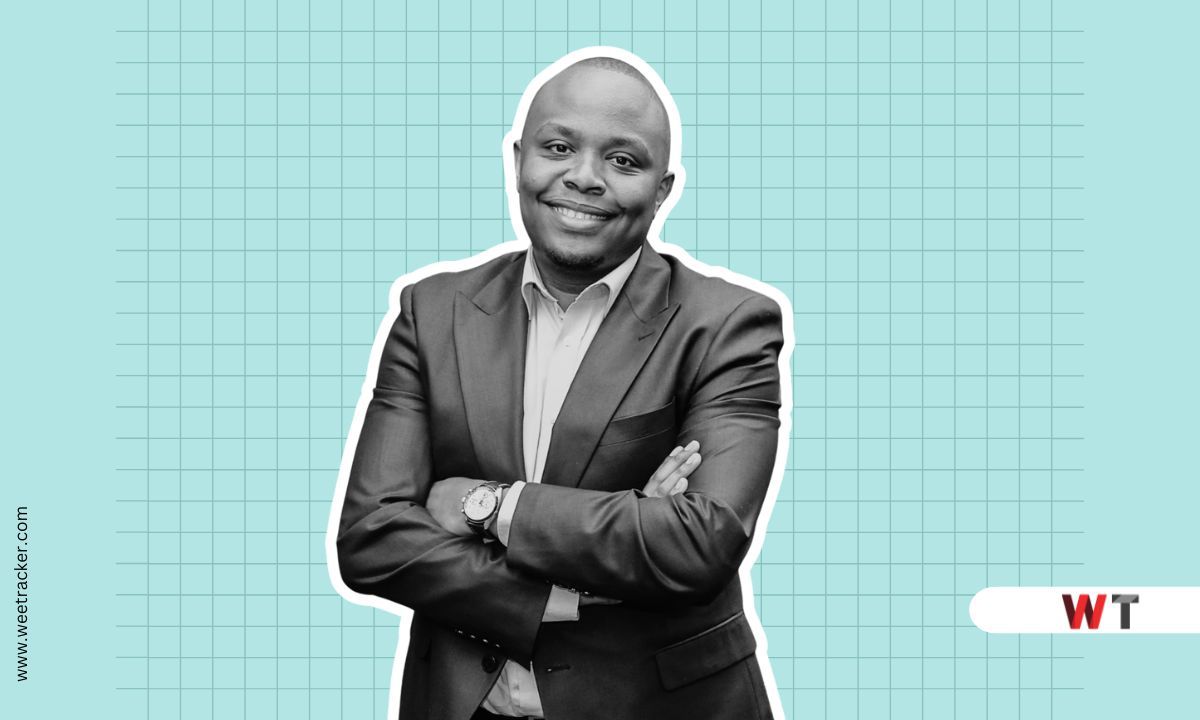
“If you’re an electric bike in a stage, there’s a higher likelihood a customer will go for it,” Brian Njao, General Manager of M-KOPA Mobility, told WT. Visibility, it turns out, matters.
But beneath the feel-good environmental narrative lurks a paradox that keeps policymakers awake. The same revolution saving riders money is quietly blowing a hole in Kenya’s budget.
The maths of more money in your pocket
Here’s the part that matters to the man on the bike: electric works because it pays, not necessarily because it’s better for the environment, though that’s a welcome coincidence.
Njao, who formerly led Uber’s East Africa operations, breaks it down without jargon. A boda boda rider on a petrol bike typically pockets USD 20.00 to USD 40.00 a day before expenses. Switch to electric, and after financing repayments, swap fees, and everything else, the take-home jumps by an extra five dollars daily. Over a month, that’s groceries, school fees, or, in one rider’s case, moving a child to a better school.
M-KOPA has financed over 5,000 e-bikes since 2023 through its pay-as-you-go model, the same approach that put solar panels in millions of homes. Riders pay daily via mobile money. Miss a day, the bike locks. No accumulation of crippling debt.
“If that bike is not active on the road, that customer will not pay us,” Njao said. “We have a symbiotic relationship.”
He also shared that the repayment rates on the e-bike book sit above the market average, which is in line with M-KOPA’s other product lines. “That tells us the credit model we have built translates well into electric mobility,” he said.
Where the charger meets the policy
Bolt, the ride-hailing giant, now has 5,808 EVs on its platform, accounting for nearly a quarter of all electric vehicles in Kenya. More strikingly, 40 percent of Bolt’s two-wheeler fleet is already electric.
Njao described M-KOPA’s partnership with Bolt as straightforward; riders on the platform pay less for their loans, Bolt gets guaranteed supply, and the customer wins twice via lower asset costs and steady trip income.
Yet the infrastructure keeping those wheels turning belongs to the OEMs. Roam, Ampersand, and Spiro. They own the swap stations. They manage the batteries. M-KOPA just finances the bikes.
This division of labour creates a delicate dance. “It’s a chicken and egg scenario,” Njao admitted. “If you bring a thousand bikes without swapping stations, you’re stuck. If you spend on a thousand stations without bikes, your capex is gone.” The balance is precarious, and right now, demand is outpacing both.
The billion-dollar question nobody’s answering
Now for the part the government doesn’t put in press releases.
Kenya funds its roads through a fuel levy, KES 25.00 (19 cents) per litre of petrol. More EVs mean less fuel consumption. Less fuel consumption means collapsing revenue. The numbers suggest the EV transition already caused a KES 2 B (USD 15.4 M) shortfall in 2025. By 2043, that gap balloons to KES 89.5 B (~USD 688 M).
The Ministry of Roads projects fuel tax collections will start declining by 2037, just as the government needs more money for the very roads these EVs use. It’s a structural conundrum. Every electric bike Kenya celebrates inches the country closer to a fiscal cliff.
Transport Caninet Secretary Davis Chirchir acknowledges the problem, vaguely promising “alternatives” like road-use charges or electricity levies. But for now, the policy framework accelerating EV adoption contains no concrete plan for replacing the fuel money evaporating with every swapped battery.
Can Nairobi scale without breaking?
Njao is pragmatic. When asked about replicating Kenya’s model across Africa, he didn’t mention tax breaks or green plates first. He said: “Policy consistency. If governments commit to long-term local assembly incentives that hold for ten years or more, that would be transformative.”
The translation is that investors can survive high taxes, but not governments changing rules every budget cycle.
M-KOPA’s next moves are already mapped towards densifying Nairobi, launching Mombasa properly, then eyeing Uganda, Nigeria, and Ghana. The solar and smartphone business proved that the pay-as-you-go model works across borders. Njao believes mobility will follow.
“If we can have smartphones working in five countries, we can have electric mobility working there too,” he said.
Kenya’s mobility revolution is afoot. Thousands of EVs, USD 108 M in economic activity from ride-hailing platforms, thousands of riders earning more. The green transition is happening on muddy roads and crowded stages.
But revolutions consume their parents. The fuel taxes that maintain Kenya’s roads are evaporating, and no one has admitted what will replace them. The country is racing toward an electric future with a revenue model built for petrol.
For the rest of Africa watching—Nigeria with its oil addiction, Ghana with its gradual pilots, Ethiopia with its radical combustion engine ban—the task is to solve for tomorrow’s problems while celebrating today’s growth.
Njao is aware that riders aren’t thinking about fiscal policy, however. They’re calculating daily earnings, watching their savings climb, and quietly moving children to better schools. That’s the revolution they see.
The other revolution—the one involving USD 688 M in missing road money—will announce itself soon enough. By 2042, when Kenya projects EV sales will match petrol vehicles, the music stops. The question is whether anyone will have built a new chair.