Nigerian Markets Take A Hit Amid Trump’s Threat Of Military Action
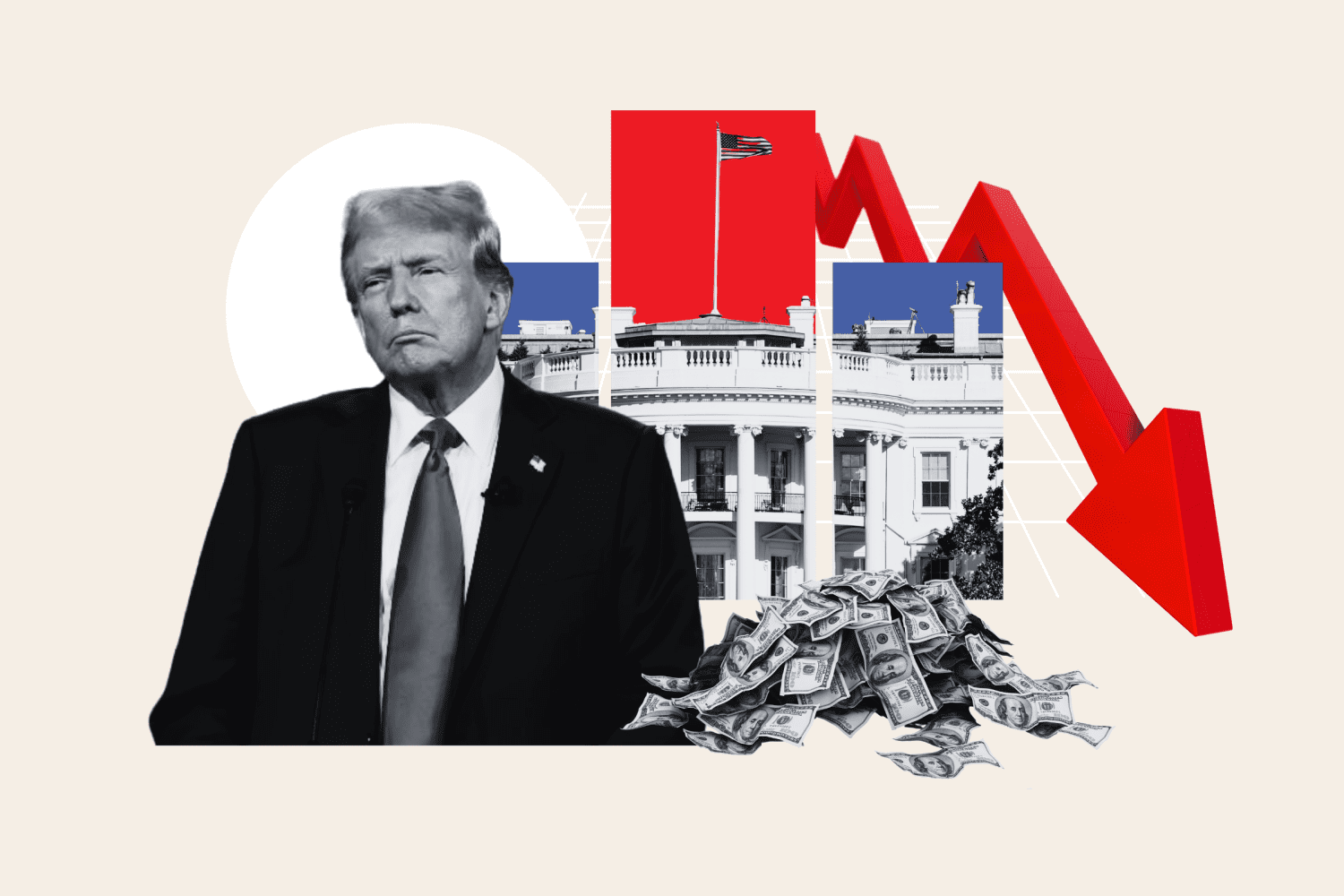
Financial markets in Africa’s most populous nation reeled Monday after U.S. President Donald Trump threatened military action against Nigeria over claims of Christian persecution, sending the country’s currency and dollar bonds tumbling in their worst performance across emerging markets.
The naira dropped 1.2% to NGN 1,442.80 per dollar, its largest intraday decline since June and the biggest fall among all emerging-market currencies on Monday, per Bloomberg. The selloff reflected immediate investor jitters over stability in the OPEC member country, which remains a major crude producer.
The financial turbulence followed Saturday’s dramatic social media posts from Trump, who threatened to “immediately stop all aid and assistance to Nigeria, and may very well go into that now disgraced country, ‘guns-a-blazing'” over claims of Christian persecution.
Trump announced he was designating Nigeria “a country of particular concern”; a formal designation under the 1998 International Religious Freedom Act that could lead to sanctions, including a potential ban on all non-humanitarian aid. He stated he had instructed the newly renamed Department of War “to prepare for possible action” in the West African country .
Defense Secretary Pete Hegseth responded on X: “Yes sir. The killing of innocent Christians in Nigeria—and anywhere—must end immediately. The Department of War is preparing for action.”







Nigerian President Bola Ahmed Tinubu swiftly rejected Trump’s characterisation, asserting that the claims “ignored the consistent and sincere efforts of the government to safeguard freedom of religion and beliefs for all Nigerians.”
“Religious freedom and tolerance have been a core tenet of our collective identity and shall always remain so,” Tinubu stated Saturday on social media. “Nigeria opposes religious persecution and does not encourage it.”
A presidential spokesman suggested the threats might be part of “Trump’s style of going forceful in order to force a sit-down and have a conversation.”
***
The religious demographics in Nigeria present a more complex picture than Trump’s claims suggest. Nigeria is roughly divided between Muslims and Christians, with various estimates showing a pretty even split. Muslims predominantly inhabit northern regions, Christians the south, with significant mixing in the Middle Belt.
While some analysts note that the majority of victims of armed groups in Nigeria’s Muslim-majority north have been Muslim amid significant Christian casualties, the persecution of Christians at the hands of Islamic religious extremists is well documented. Nigeria has experienced long-standing religious violence, particularly in recent decades. The country has faced an ongoing Boko Haram insurgency that aims to establish an Islamic state in Muslim-majority North Nigeria. The conflict has led to thousands of deaths and displacements.
Recent high-profile cases if religious violence and extremism include the 2022 lynching of Deborah Yakubu, a Christian student in Sokoto by a Muslim mob, followed by attacks on Christian sites. That same year, a massacre at St. Francis Xavier Church in Owo left over 50 parishioners dead.
The U.S. Commission on International Religious Freedom had recommended Nigeria’s designation as a “country of particular concern” since 2020, though the Biden administration had lifted this designation in 2023, seemingly to improve bilateral relations
As of Monday afternoon, the selloff showed no signs of reversing despite Tinubu’s pushback against Trump’s claims. The average spread on Nigeria’s sovereign dollar bonds over U.S. Treasuries had plunged to about 400 basis points from nearly 1,000 basis points in 2023, a level that typically indicates debt distress.
Some portfolio managers suggested the reaction might be temporary. Other analysts expressed more caution about the potential escalation. The situation remains fluid, with markets likely to respond to further developments between the U.S. and Nigerian governments. The USD 1 B in annual U.S. aid that Trump threatened to cut represents another significant point of leverage.
Trump’s threat comes at a delicate time as the Tinubu administration attempts to stabilise the economy after implementing difficult reforms that had seen investors grow more positive on Nigeria.