The USD 5 B Invisible Lending Machine That Is Rwanda’s Oldest Fintech

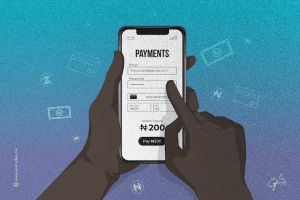
For several years, Martin Mbonu and his team at ComzAfrica have been operating in the background. While headlines chased flashy fintech unicorns and their massive funding rounds, this Rwanda-based company quietly processed over USD 5 B in small digital loans. Now, as the African tech scene grapples with a reset and asks what comes after growth-at-all-cost, their long-game philosophy is having its moment.
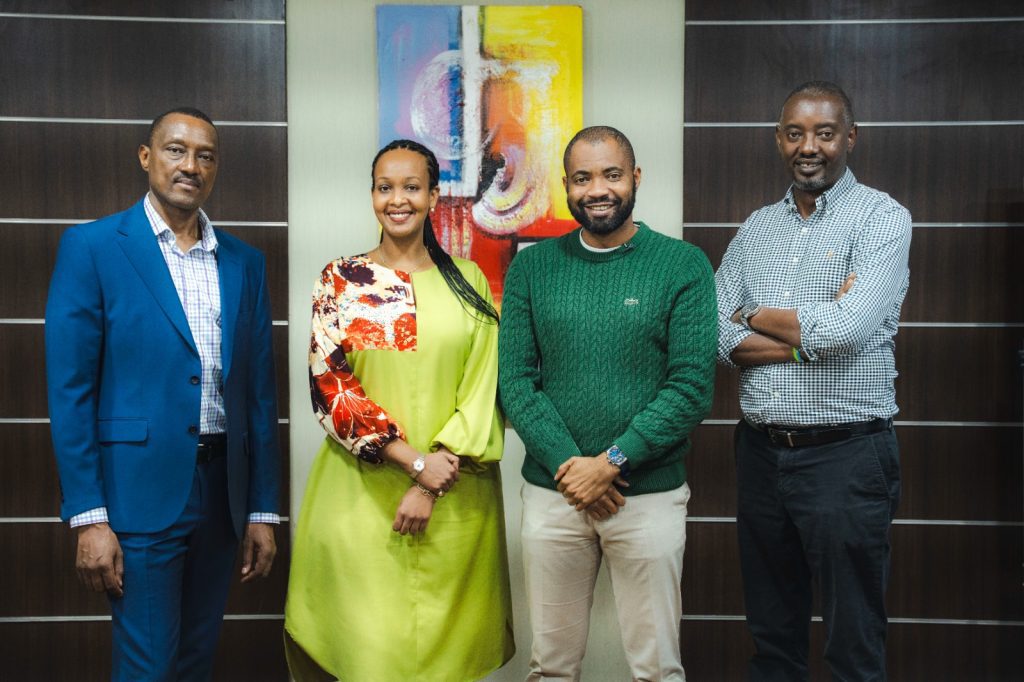
“Financial inclusion was the foundation, not the destination,” Mbonu tells WT, articulating a view he has held since 2010. His question has always been the one many are only now asking: “After people are financially included, what next?”
ComzAfrica, founded in 2010 by Gilles Richard Mulihano, Jeff Gasana, and Keza Bunyenyezi, and now led by Mbonu since 2024, set out to build embedded finance before the term was popular. Instead of building another app for consumers, they built tools for telecom companies and other large platforms. This allowed millions of people to borrow small amounts of airtime or data directly through their mobile phones, using channels they already knew.
“Our primary objective was to address challenges faced by both consumers and telecommunications providers,” Mbonu explains. “Consequently, introducing the solution as a telecommunications product was a logical decision, and we acted as the enablers using technology.”
The company’s origin is a relatable story of everyday frustration. In 2008, one of the founders found himself locked out of his home late at night, out of airtime to call for help, and unable to buy a recharge card. This trivial yet universal pain point revealed a massive gap.






It was that mundane problem that led to a simple solution: a way to borrow small amounts of airtime instantly. The real insight, however, was about distribution, not just credit “We realised it was a distribution problem,” Mbonu says. “How will this product get into the hands of the consumers?”
The scale they achieved is measured in staggering volume—billions of dollars in micro-loans—but also in daily impact. “We process over USD 700 K daily in loans,” he claims. “These are people who landed at an airport, need data to continue roaming, and they quickly dial the short code and borrow.”
“It could be someone who really needed airtime but maybe is out of cash on mobile money,” he says, describing the typical, urgent need the service meets.
***
In an ecosystem obsessed with user counts and venture capital, ComzAfrica stands as a contrarian. Bootstrapped and independent for a decade and a half, it has never taken outside investment. “We got into business to solve a problem and make money. We didn’t start ComzAfrica to raise money at the time,” Mbonu states.
This independence shapes his critical view of industry myths, particularly the tense relationship between fintechs and traditional banks. “That partnerships with banks do not work. That banks are too slow and are too rigid,” he says, dismissing a common narrative.
“We have worked with banks in the last 15 years, and we will continue to work with Banks.” He sees them as essential partners, with fintechs solving for speed and distribution where banks provide trust, regulation, and capital.
Mbonu describes his team as “missionaries” on a vocation to provide access. He likens the company’s personality to “Ragnar Lothbrok, the Viking hero, but with lots of kindness,” defined by curiosity, leadership, rebellion, and duality.
This resilience was forged in challenging markets. When asked about the hardest country to enter, his answer is succinct: “Iran, lots of reasons.” The experience taught him that “achieving success in a different environment requires openness to unlearning previous approaches.” He applies the same lesson to tough African markets, noting that “Nigeria presents considerable challenges as a market; without careful planning, initial investments may be depleted.”
Looking forward, Mbonu’s vision is fixed on the next logical step. With digital wallets and accounts now widespread, he believes the industry’s obsession must shift from inclusion to prosperity. “Now that individuals possess wallets and bank accounts, maintain digital footprints, and have credit scores, the next step is to empower them to build wealth,” he says.
For ComzAfrica, this means continuing to be the hidden engine within larger ecosystems, enabling credit and other complex financial services in the platforms where people already live their digital lives. The next conquests, he says, are North Africa and Asia.
As the African tech narrative matures from a chase for users to a pursuit of sustainable value, Mbonu’s 15-year journey offers a tested blueprint.
CORRECTION (5th Feb, 2026; 11:40 WAT): This article was updated to show the co-founders of ComzAfrica and the origins of the personal encounter that led to its founding.