Nigerians Return To Feature Phones As Smartphone Affordability Crisis Worsens
Nigeria’s smartphone market is undergoing a sharp reversal as rising device prices push consumers back to basic feature phones, with industry data showing the country’s smartphone shipments fell 11% in the second quarter of 2026 while demand for cheaper handsets surged.
The decline marks a significant shift in Africa’s largest mobile market, where affordability has emerged as the single biggest barrier to internet access. According to GSMA, the global telecom industry body, 63% of Nigerians remain offline not because of a lack of network coverage but because they cannot afford smartphones.
Smartphone prices have been climbing steadily as rising memory and semiconductor costs, driven partly by surging demand for artificial intelligence infrastructure, squeeze manufacturers’ margins. The average selling price of smartphones in Africa increased by USD 41.00 year-on-year to USD 202.00 in the second quarter, reversing a trend of aggressive price reductions seen in 2025.
“We’re witnessing a forced upward shift in the African market,” said Manish Pravinkumar, principal analyst at Omdia. “Vendors can no longer profitably manufacture USD 75.00 smartphones, while consumers who need connectivity are increasingly having to stretch their budgets towards USD 200-plus devices”.
The impact has been most severe at the lower end of the market. Shipments of smartphones priced below USD 100.00 fell 34% year-on-year across Africa, representing a decline of nearly 3 million devices. In Nigeria, where more than four in five smartphones sold in 2025 were priced below USD 200.00, the shift has been particularly pronounced.
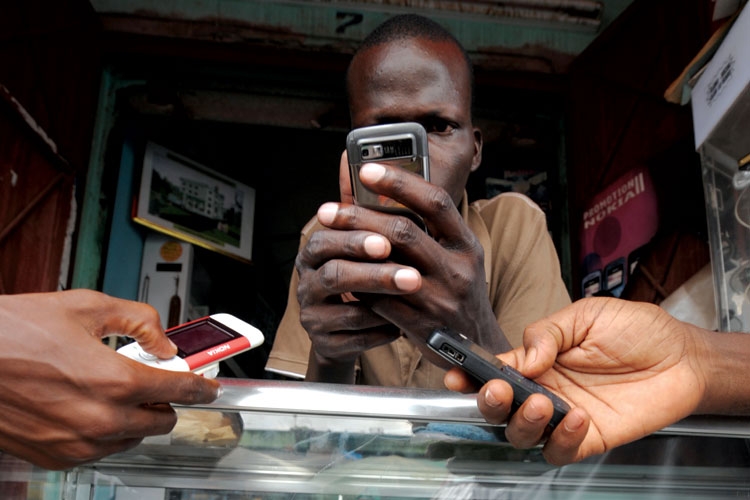
Retailers report a growing exodus from smartphones to basic feature phones, known locally as “palasa” or torchlight phones. Unlike smartphones, these devices rely strictly on traditional voice calls and text messages, protecting users from costly data consumption.
“I had to drop my Android phone in my drawer,” said Idris Abubakar, a 35-year-old auto mechanic in Lagos. “Every time I turn on my mobile data, the apps swallow NGN 1 K worth of data within hours on background updates. I cannot choose between feeding my family and feeding a smartphone”.
The price pressure shows no signs of easing. Analysts project smartphone prices in Nigeria could rise by another 15% to 30% through the remainder of 2026 as component costs remain elevated. Memory components account for 15% to 20% of the bill of materials for a mid-range device, and RAM prices have surged by as much as 250% recently.
The market leader Transsion, whose brands include TECNO, Infinix and itel, saw shipments fall 14% in the second quarter due to its heavy exposure to the sub-USD 100.00 segment. Samsung, by contrast, grew shipments 15% as the market shifted toward higher price bands.
Device financing has emerged as a critical lifeline. M-KOPA, a pan-African fintech company, has deployed more than NGN 231 B (USD 170 M) in credit to over one million Nigerians since entering the market in 2019, enabling 290,000 people to own a smartphone for the first time.
“Once you finance solar home solutions, you start to ask yourself what you missed,” said Babajide Duroshola, M-KOPA Nigeria’s general manager. “That is when you figure out that everybody needs to be in the digital economy, and access to a smartphone solves this”.
Other players are following suit. Vivo signed a financing agreement with Credit Direct in April, allowing customers to pay a 20% deposit and spread the balance over six months. The GSMA, in partnership with mobile operators, is also piloting USD 40.00 4G smartphones across six African markets, including Nigeria.
But financing spreads the cost over time rather than reducing the underlying price. For millions of Nigerians, the calculation is no cakewalk. A USD 100.00 smartphone currently costs about NGN 135 K, nearly two times the minimum wage of NGN 70 K (USD 52.00).
Omdia forecasts a 26% decline in Africa’s smartphone shipments for the full year of 2026, ending three years of consecutive growth, making things complicated for both manufacturers and consumers who have come to rely on smartphones as the gateway to banking, commerce and work.
Feature Image Credits Times Hugher Education