How Madica Found Five Startups In Africa’s Biggest Funding Blind Spots
Louai Djaffer spent years running Emplotic, a recruitment platform he built in Algeria. Somewhere along the way, the problem he kept tripping over stopped being hiring and became everything that happened after; think payroll, records, the paperwork that mid-sized companies across Francophone Africa still handle by hand.
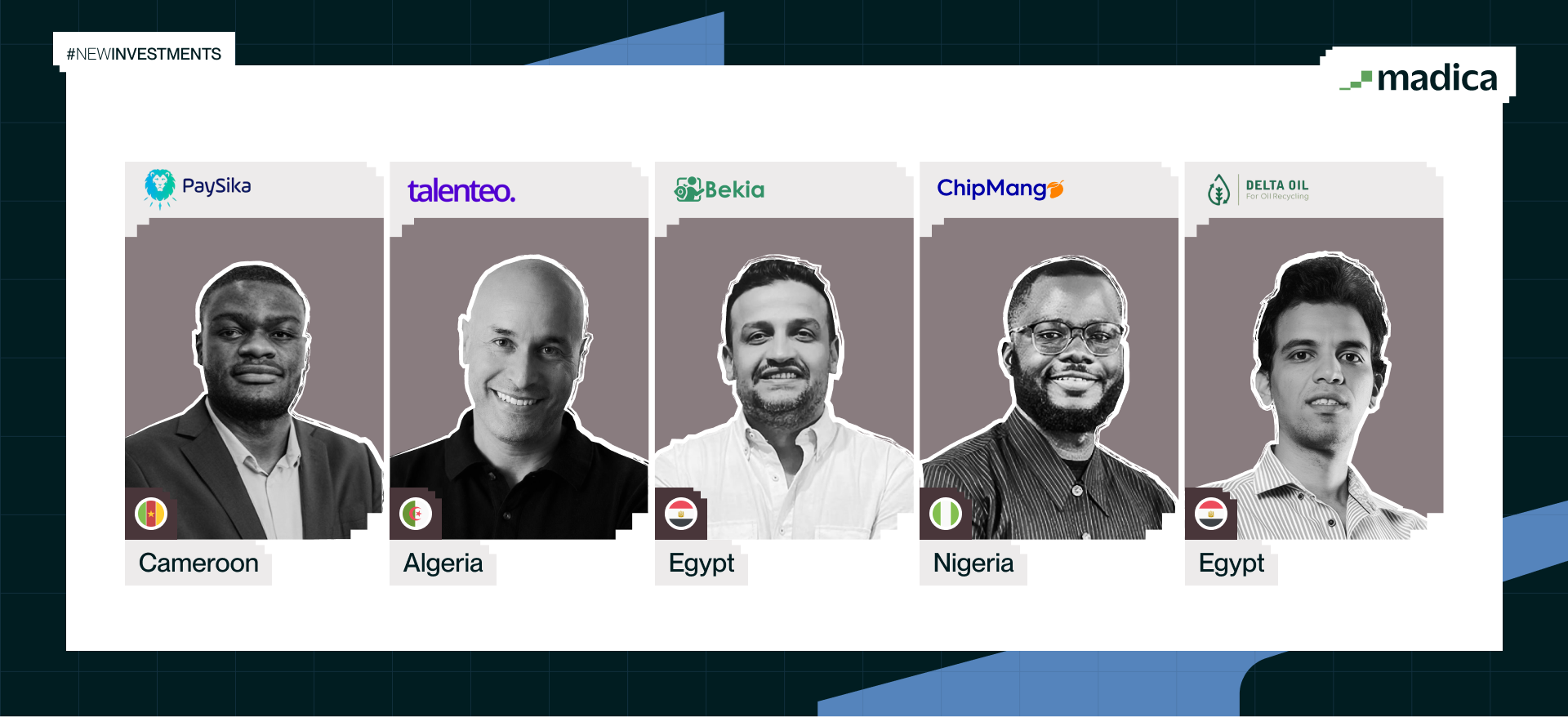
That observation, more than any pitch deck, is what got Talenteo funded. Talenteo is one of five startups Madica announced today, and its first investment in Algeria. The pre-seed investor — the earliest stage of institutional money a company can raise, before it has proven much of anything — also made its first bet in Cameroon, on Paysika, a digital bank for consumers and small businesses across Central Africa. Madica has now written checks in 10 African markets.
African venture capital has long pooled in four places: Nigeria, Kenya, South Africa and Egypt. Founders elsewhere describe a funding desert that shapes everything downstream — how fast they hire, how far they can stretch before revenue arrives, whether they can survive a competitor with a bigger war chest.
“We’ve been very impressed with founders like Louai and Roger and Stezen, who have depth of experience in their various sectors and are solving huge pain points, and are only limited by access to funding compared to their counterparts in the Big 4 markets,” Emmanuel Adegboye, who heads Madica, told WT.
Paysika‘s founders, Roger Nengwe and Stezen Bisselou, are targeting a problem Adegboye described as “significant” not just in Cameroon but across the CEMAC region, the six-nation currency bloc. Their neobank, a bank without branches, run through an app, issues virtual and physical cards that work for international transactions.
The five bets are deliberately scattered. In Nigeria, ChipMango, which recently closed a USD 1.9 M seed round, designs semiconductors and teaches chip engineering. In Egypt, Delta Oil collects used cooking oil and sells it abroad as feedstock for renewable fuel, while Bekia pays households and businesses for recyclable waste. None of these look like the fintech-heavy portfolios that dominated African venture for a decade.
Adegboye frames the timing as continuity rather than a shift. “Madica’s thesis has always been to catalyse funding into markets, sectors and founder profiles that are typically underfunded in Africa,” he said. He named Senegal, Côte d’Ivoire and Uganda as next in line.
The funding climate complicates that ambition. African startup funding remains well below its 2021–2022 peak, and later-stage rounds are taking longer to close. Adegboye insists the downturn hasn’t changed what counts as investable but then describes changes that sound like it has.
Madica now spends more time building co-investment networks, so founders can line up follow-on money earlier. It pushes cash-flow discipline and regular investor updates. And in sparser markets, it now wants “slightly more track record” before backing a company.
For a pre-seed fund, that’s a notable bar. The whole premise of pre-seed is to fund founders before track record exists. Madica hasn’t abandoned that — Talenteo and Paysika were backed largely on their founders’ operating histories — but the bar has moved.
On founder profiles, Adegboye pointed to one group the market continues to underfund. “Female-led companies still get a very small share of venture funding compared to their male counterparts, even though male-founded startups don’t perform any better,” he said. Madica aims for at least half its portfolio to include a female co-founder, a target he said it has met or exceeded.
The operational question is whether a small team can genuinely support founders spread across 10 markets and four sectors. Adegboye’s answer is that most of the programme was built remote-first, with mentorship and expert access delivered virtually, and a mentor roster chosen to reflect that spread. Twice a year, Madica flies its founders somewhere in person; the next gathering is in Cape Town in November, timed around the Africa Early Stage Investor Summit.
Each company gets up to USD 200 K and 18 months of support. Whether that is enough to build a semiconductor business in Lagos or a recycling network in Cairo is a question the portfolio will answer in public, over the next few years, in markets where the next check has historically been the hardest one to find.