Mobile Money Fees To Get Costlier As Kenya Pushes Digital Taxes, Operators Warn
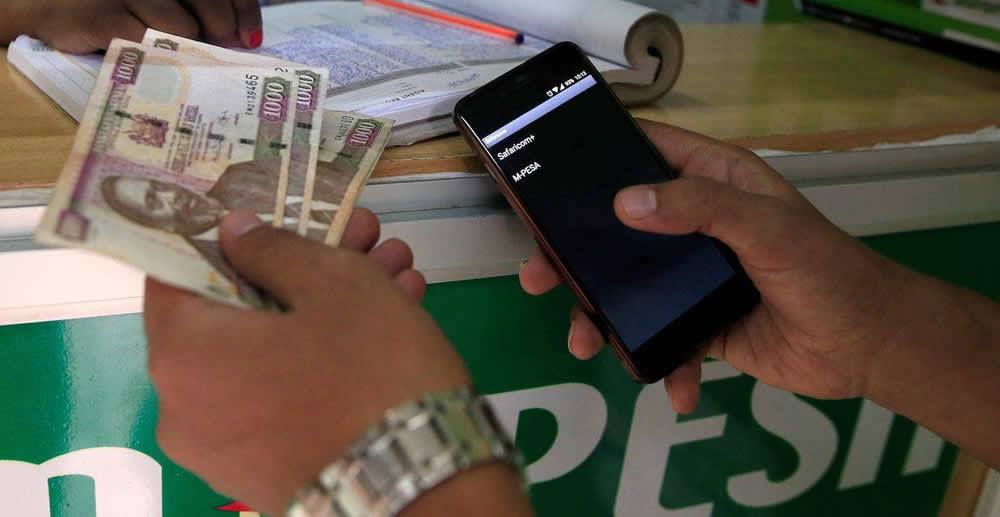
Mobile money users in Kenya could see transaction costs rise by up to 18.4% under proposed tax changes, industry players have warned lawmakers, potentially reversing years of hard-won gains in financial inclusion.
The warnings come from two of Kenya’s most prominent digital payments players—the operator of the dominant mobile money network, M‑PESA, and global card giant Visa—as Parliament considers the sweeping Finance Bill 2026.
Safaricom, which owns M‑PESA, appeared before parliamentarians to oppose a clause in the bill, which would slap a 16% value‑added tax (VAT) on digital payment platforms on top of an existing 15% excise duty already charged on mobile money transfers.
The telco calculated that the two levies would push the effective tax burden on an M‑PESA transaction from 15% to 33.4%, translating directly into higher costs for Kenya’s 51 million mobile money users. On a typical transaction, fees could climb by as much as 18.4%, the company said.
“What I’m foreseeing happening is us going back to instances where people would have money stuck underneath their mattresses,” Kiema Onesmus, KPMG East Africa Associate Director for Tax and Regulatory Services, told CapitalFM, warning that the shift could push users back to cash-based transactions.
Treasury Cabinet Secretary John Mbadi has defended the digital tax push. “The person who supplies ICT to enable payments is the one subject to VAT,” a Treasury official said, stressing that the levy targets platform fees, not the money being transferred directly.
But analysts and payment firms say that argument misses how mobile money works. Fees earned by PSPs come from user charges, they point out, and the additional 16% VAT will simply be passed on in the form of higher costs to the customer.
Visa has also stepped into the fray. The global payments company is tracking proposals to impose withholding tax on interchange and merchant service fees on every card transaction. Visa’s detailed modelling found that for a typical KES 10 K (about USD 77.00) purchase, a merchant currently receives KES 9.8 K. If the bill passes in its current form, that same merchant would receive just KES 9.768 K, a KES 32.00 (USD 0.25) hit on a single transaction.
The Kenya Bankers Association (KBA) has lodged formal opposition, warning that the compounding tax burden could push total digital financial transaction costs from 15% to 58.4%, potentially reversing the country’s celebrated status as a global leader in mobile money adoption.
The stakes are starkly illustrated by M‑PESA’s recent performance. The platform moved KES 41.68 T (USD 323 B) in the last financial year, with active merchants expanding 71% to 3.1 million. A meaningful hike in those transaction costs could dent a digital economy built on low‑cost, high‑volume transfers.
“The proposals, if they sail through as they are, will set us back way more, almost like a thousand steps,” Onesmus warned, urging a rethink of a revenue strategy that could ultimately shrink the very tax base it aims to expand