AvadaPay: The Best Payment Provider for Digital Platforms in Africa

By Partner Content  |  September 28, 2026

You’ve built the platform. Customers can register, place an order, book a service, subscribe, request financing, or use whatever product sits at the center of your business.

Now they need to pay.

Whether you’re building a SaaS product, a marketplace, a mobility platform, a digital lending product, or another online service, payments are essential to the customer experience. But they’re rarely the reason the product exists.

This leaves many digital platforms with a decision to make: spend engineering time connecting payment methods, setting up collections and payouts, and adding transaction notifications. Or work with a payment partner that already has that infrastructure.

Building these capabilities in-house takes development time and ongoing maintenance. Using several providers can create even more integrations and systems to manage.

AvadaPay offers a simpler setup, making it easier for digital platforms to manage collections, payouts, and Bulk SMS via a single integration.

About AvadaPay

AvadaPay is a payment platform helping businesses accept and manage digital payments across African markets. Through a single integration, digital platforms can connect to local payment methods, manage collections and payouts, track transactions, and use Bulk SMS for customer communication.

This makes AvadaPay particularly useful for platforms launching in or expanding across Africa, where payment methods and customer preferences can differ significantly between markets.

As Maurice Bisungo, Key Accounts Manager at AvadaPay, explains:

“Digital platforms already have a lot to build and manage. Having a payment partner that can take care of collections, payouts and the supporting infrastructure gives teams more room to focus on their product and customers.”

With the payment infrastructure taken care of, businesses can focus their engineering resources on the platform and customer experience they’re actually building.

One Integration to Local Payment Methods

Customers pay with the methods they already trust, and those methods change from market to market.

According to the GSMA, around $1.4 trillion moved through mobile money in Sub-Saharan Africa in 2025, roughly two-thirds of the global total.

A platform entering Kenya needs M-Pesa. In other markets, customers may reach first for MTN Mobile Money, Airtel Money, Orange Money, or another local payment method.

‘’One thing we see across African markets is how strongly payment preferences differ from one country to another. Making familiar local payment methods available gives customers an easier experience and helps platforms adapt as they enter new markets,” says Winnie Odede, Regional CEO, AvadaPay East Africa:

AvadaPay offers businesses different ways to make these local payment methods available to customers. For online payments, platforms can integrate AvadaPay’s API directly into their website or app, generate payment links or use STK Push. For in-person collections, merchants can accept mobile money payments using a unique QR code that customers scan, enter the amount and authorize from their phone.

Collections In. Payouts Out.

Plenty of platforms need money to move in both directions.

A marketplace collects from buyers and pays sellers; a mobility platform collects from riders and pays drivers; and a lending platform disburses loans and collects repayments.

AvadaPay supports both collections and payouts, allowing businesses to build payment flows around how their platform actually works.

And because both run through the same platform, businesses get a single view of the money moving in and out.

Payments Need Communication Too

Then there’s everything that happens around the transaction:

Payment received.

Your OTP is 4821.

Your payout has been processed.

Your payment is due.

AvadaPay also offers Bulk SMS for OTPs, payment confirmations, transaction alerts, reminders, onboarding messages, and other customer communication.

That means businesses can set up the payments and the messaging around them without adding yet another provider to the stack.

Build Once. Expand Further.

The value of this approach becomes even clearer when the next market appears on the roadmap.

Without regional payment infrastructure, expansion can mean starting the integration process again: new payment methods, new connections, new technical work.

As Florien Maniraho, CEO of AvadaPay Rwanda, explains:

“Expanding into a new market should not mean rebuilding your payment infrastructure from the beginning. If the foundation already connects you to the local payment methods you need, your team can spend more time on launching and growing the product.”

AvadaPay provides local payment methods, collections, payouts, Bulk SMS, and transaction visibility through one integration across supported African markets.

For a new platform, that’s far less to build before the first payment comes in.

For an existing platform expanding into Africa, it means adding the local payment methods customers expect without starting from scratch.
A Nigerian Entrepreneur’s Unusual Bet On A Blockchain Phone No One Knows They Need

By Henry Nzekwe  |  September 28, 2026

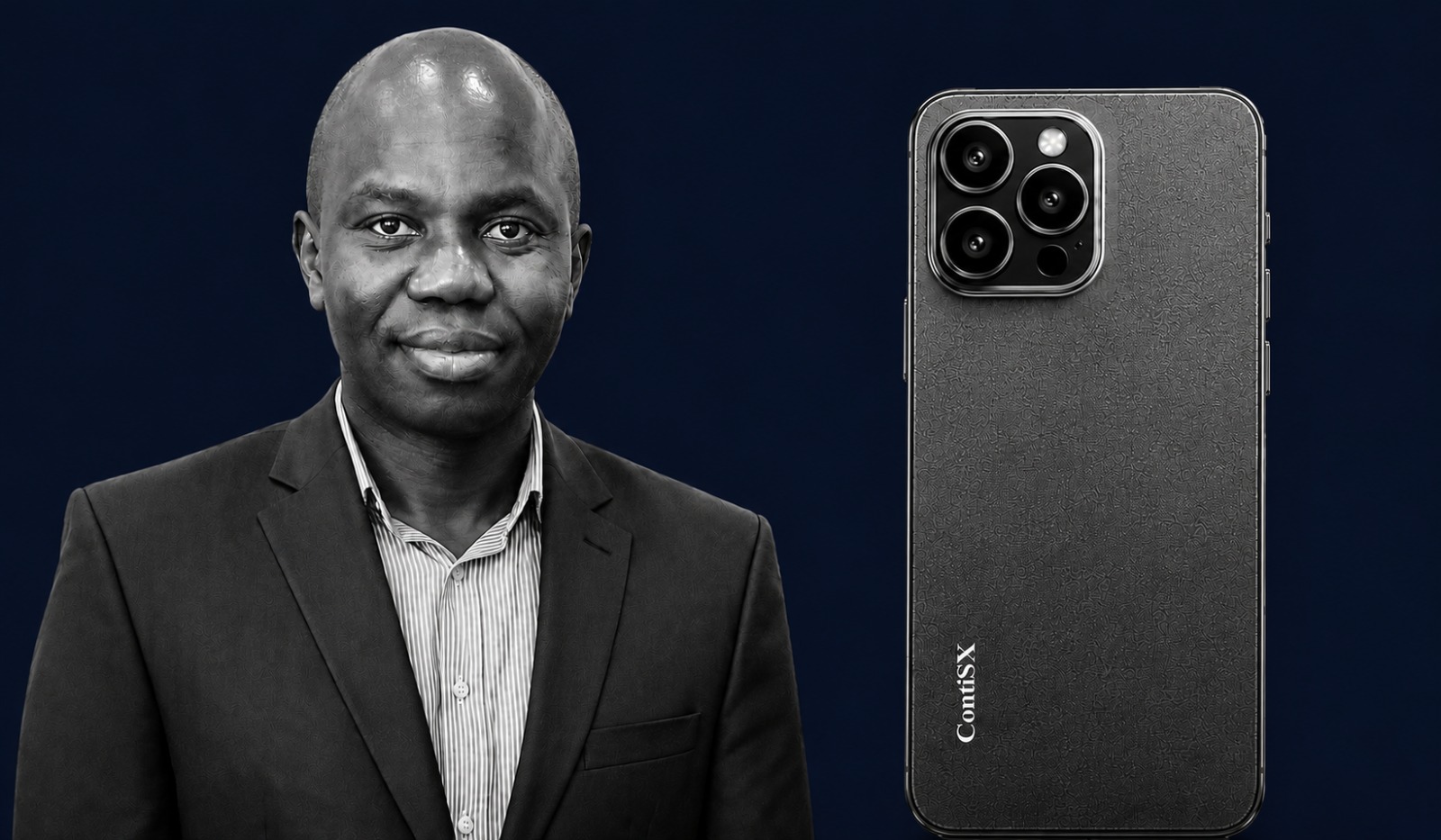
Ndubuisi Ekekwe has spent his career building things that end up inside other people’s products. At Analog Devices, he helped design the accelerometer that went into early iPhones, as his colourful biography captures. Other feats attributed to him include a PhD research project in wafer-level chip packaging that still earns him U.S. government royalties, two doctorates, four master’s degrees, and a patent on medical robotics microchips that the U.S. government acquired rights to.

Now the storied educator cum entrepreneur is rolling out a phone he developed; a peculiar kind which he calls Africa’s first blockchain phone. Ekekwe’s ContiSX Securities Exchange Plc has opened preorders for the ContiSX Phone, a blockchain-native handset priced at NGN 550 K, around USD 400.00 at current rates.

Shipments are scheduled to begin October 19, the same day Ekekwe plans an event at the State House Banquet Hall in Abuja’s Presidential Villa. The phone runs neither Android nor iOS. It cannot install WhatsApp, Instagram, or Facebook. It is a walled garden, and Ekekwe is betting that Nigerian institutions will pay to live inside it.

The pitch

The device’s core proposition includes encrypted messaging, voice, and video calls at the blockchain level, with cryptographic keys isolated in a dedicated secure enclave and biometric authorisation on device. ContiSX says the phone’s encryption is guaranteed against eavesdropping and tampering. The company has not published independent security audit results.

The phone’s real hook is what it connects to. ContiSX received Approval-in-Principle from Nigeria’s Securities and Exchange Commission in April 2026 to establish a full-service securities exchange targeting equities, bonds, ETFs, and commercial paper. The AIP is an early-stage regulatory clearance, and it does not yet permit full operations. ContiSX had initially targeted a September 2026 launch and has since pushed to October.

For one year after purchase, preorder customers get zero-rated data access to ContiSX’s exchange and central securities depository. Ekekwe says the company has prepaid participating Nigerian telecommunications companies to cover those data costs.

“When we launch ContiSX Securities Exchange, you will not need data to buy stocks, FGN bonds and other investment products within our ecosystem,” Ekekwe wrote on LinkedIn. “Our philosophy is Investment Inclusion, and we want to remove barriers that prevent citizens from participating in capital markets.”

The market reality

Nigeria’s smartphone market is brutally price-sensitive. The average selling price in Q1 2026 was USD 134.00, up just 2% year-on-year. Phones below USD 150.00 account for more than 60% of volumes. Roughly 90% of devices sold in the country are imported. Omdia forecasts African smartphone shipments could decline in 2026 amid rising memory costs and currency volatility.

At NGN 550 K, the ContiSX Phone costs roughly four times the average selling price. It is not competing with Tecno and Infinix but with mid-range Samsung and Apple devices, which collectively hold a significant share of the Nigerian market.

But Ekekwe’s target buyer is not the mass market. It is Nigerian institutions, government agencies, and businesses that value sovereignty over cost. The phone ships with ContiSX Shield for security alerts, Boardroom for corporate governance, and a Business Suite covering accounting, payroll, and inventory management.

The regulatory backdrop has shifted in Ekekwe’s favour. In July 2026, President Bola Tinubu signed an executive order establishing a Virtual Asset Council chaired by the Central Bank of Nigeria, with the SEC as vice-chair. The order explicitly aims to close gaps that unregistered operators have exploited, while enabling “responsible innovation” through a CBN regulatory sandbox.

Whether Ekekwe can convert that goodwill into a functioning exchange with actual issuers, investors, and financial institutions is the open question. Ekekwe has spent decades building components that other people put their names on. This time, the name on the box is his, and he’ll be hoping for tailwinds.

Airtime Lending Turf War Rocks South African Fintech Quietly Dominant In Nigeria

By Staff Reporter  |  September 25, 2026

A regulatory turf war between two Nigerian agencies briefly cut off airtime credit for an estimated 40 million mobile subscribers in April, exposing how a single South African fintech had quietly become critical infrastructure for Nigeria’s poorest phone users.

The Federal Competition and Consumer Protection Commission (FCCPC) extended its Digital, Electronic, Online or Non-Traditional Consumer Lending (DEON) regulations to cover airtime credit services in April 2026. The Nigerian Communications Commission (NCC), which licenses value-added service providers, was not consulted. Caught between the two regulators, MTN Nigeria, Airtel Nigeria, Globacom and 9mobile suspended their airtime lending products on April 15.

The Federal High Court in Abuja issued an interim injunction on April 24 restraining the operators from cutting off access to Nairtime Nigeria Limited, Optasia’s local subsidiary. Services were fully restored on June 24. But the financial damage was already done.

Nigeria accounted for approximately 14% of Optasia’s group revenue in its 2025 financial year. By the second quarter of 2026, that figure had fallen to under 4%. Optasia’s H1 2026 revenue still grew 58% to USD 185.3 M, driven by expansion in Ghana, Pakistan, Indonesia and Congo-Brazzaville. Chief Executive Salvador Anglada said the group had delivered growth “across all parameters” despite the Nigerian disruption.

The broader investment signal is harder to dismiss. Foreign capital inflows into Nigeria’s telecom sector fell to USD 7.24 M in the first quarter of 2026 from USD 80.78 M a year earlier, according to the National Bureau of Statistics. The Association of Licensed Telecommunications Operators of Nigeria (ALTON) disputes the figure, noting operators invested NGN 2.13 T in capital expenditure in 2025 and plan NGN 1.86 T for 2026. But the timing of the regulatory clash coincides with the sharpest quarterly drop in recorded foreign telecom investment in recent years.

The Federal High Court in Lagos delivered a landmark judgment on July 20, ruling that the FCCPC can regulate competition and consumer protection in airtime lending but cannot issue telecommunications licences. That authority remains exclusively with the NCC. Justice Ambrose Lewis-Allagoa summarised the principle in a single line: “Concurrency means coexistence, not displacement”.

President Bola Tinubu had already moved before the judgment. In June, he directed the FCCPC to dismantle Optasia’s 12-year dominance and approved nine Nigerian fintechs to compete in a market estimated at NGN 3 T in annual transaction value. The FCCPC argued the exclusive arrangement facilitated capital flight while contributing minimally to local tax revenues or employment.

Optasia rejects the monopoly framing. Its Nigerian subsidiary, Nairtime Nigeria Limited, is “fully locally incorporated, locally staffed and locally led,” the company said. Anglada has called the suspension “a little bit aggressive”.

Meanwhile, the Wireless Application Service Providers Association of Nigeria has appealed the July 20 judgment, asking the Court of Appeal to suspend enforcement of the DEON regulations pending determination. ALTON has called for a formal coordination protocol between the FCCPC and the NCC. The NCC has yet to publicly stake out its position.

Airtime credit is not a niche product, offering a lifeline to millions of Nigerians who borrow a few hundred naira in airtime when their balance runs out. It is how traders, artisans and workers at the base of the economy stay connected when formal credit is unavailable. When the service goes dark, they feel it immediately.

In the same vein, when the regulatory environment goes dark, investors feel it for years. and it’s unlikely that Nigeria can afford another regulatory turf war in a sector it wants to lead globally.

Feature Image Credits: Cardtonic

The Kiosk That Taught Kenya To Trust Digital Money Is Dying

By Henry Nzekwe  |  September 24, 2026

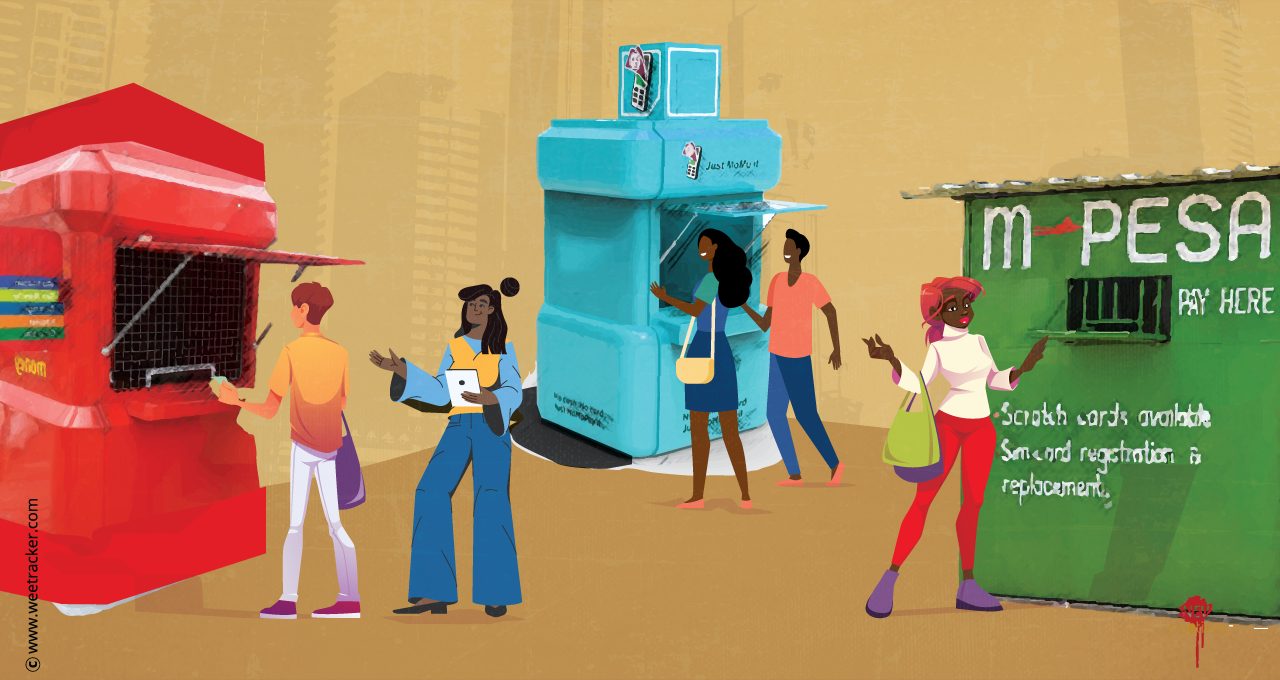
It’s not uncommon to hear that Kenya’s mobile money revolution has about as much to do with technology as with hundreds of thousands of small shops, kiosks, and street corners where a generation of Kenyans learned to trust digital money, one deposit and withdrawal at a time. That network is now shrinking.

Communications Authority of Kenya data show registered mobile money agents fell 5.6% between March and June, from 602,470 to 568,463. The decline came even as mobile money subscriptions climbed to 54.01 million, pushing penetration to 101.3%. More Kenyans are using mobile money than ever, but fewer are using agents to do it.

The two numbers tell the same story from opposite ends. Mobile money is succeeding so thoroughly that it is beginning to make its own physical infrastructure redundant. For nearly two decades, agents were the human API connecting cash to digital wallets, especially where bank branches were scarce. Now smartphones, interoperability, and merchant payment systems are letting customers bypass that step entirely.

Central Bank of Kenya data show active agents processed 212.45 million cash-in and cash-out transactions worth KES 682.46 B (~USD 5.26 B) in June alone. That is still a lot of money moving through the agent network. But the direction of travel is changing.

The value of cash handled by agents fell by a record KES 430.3 B (USD 3.3 B) in the first eleven months of 2025, the sharpest drop in Kenya’s history. The Central Bank attributed the decline to shifting usage patterns rather than reduced relevance, noting that users increasingly consolidated transfers into fewer, higher-value payments and adopted merchant payment channels instead of withdrawing cash.

***

The economics of being an agent are also getting harder at exactly the moment the network has grown more crowded. Safaricom’s M-Pesa agent base expanded 11.4% to 333,011 in the year to March 2026. Total commissions paid to agents rose just 0.3% to KES 37.4 B (USD 288.6 M) over the same period. Average annual commission per agent fell 10% to KES 112.2 K (USD 866.41), or roughly KES 9.353 K (USD 72.20) a month.

The commission pot is growing at 1.3% while the agent count grows at 20%. That dilution is the quiet crisis beneath the headline decline. “The average agent is now generating gross revenue of less than KES 10 K per month,” noted one analysis of Safaricom’s half-year disclosures. “For a standalone shop paying rent and electricity, this is statistically a loss-making venture.”

When M-Pesa launched in 2007, agents were the only way to convert cash into digital value. Interoperability between networks since 2022 has weakened the lock-in that once made a single agent’s location a competitive moat.

Merchant payment systems like Lipa na M-Pesa and Pochi la Biashara now let customers pay directly from their wallets without withdrawing cash first. Pochi la Biashara revenue grew 86% in the year to March 2026, while withdrawal revenue actually declined 0.7% even as total M-Pesa revenue grew 14%.

Agents are processing more transactions for less money. Total M-Pesa transaction volume grew 26.5% in the same half-year period, but transaction value grew only 5%. More small transactions mean more time serving customers and more liquidity rebalancing trips, without a proportional increase in commission income.

Some agents are adapting. A growing number now offer agency banking services for institutions like Equity Bank, KCB, and Co-operative Bank alongside mobile money, and others operate both M-Pesa and Airtel Money outlets to widen their customer base.

The Central Bank’s planned 57% cut in mobile money transfer fees by 2028, part of its National Financial Inclusion Strategy, will further compress the commission pool unless transaction volumes rise enough to compensate. Analysts at FSD Kenya estimate that 90,000 agents could close, mainly in sparsely populated regions.

Phone Costs & Power Cuts Keep 906 Million Africans Offline Despite Coverage Gains

By Henry Nzekwe  |  September 23, 2026

Africa has spent a decade and billions of dollars building mobile networks. The result is a continent where 92% of the population lives within reach of a mobile broadband signal. Yet only 36% of Africans use the internet at all, leaving roughly 906 million people in a strange limbo. They are covered, but they are not connected.

The GSMA and the Partnership for Digital Access in Africa call this the usage gap, and a new roadmap released this week argues it is now the central challenge for the continent’s digital future.

The coverage gap, the 122 million people beyond any network, is shrinking, but the usage gap is not. In Sub-Saharan Africa, the gap between coverage and actual use is more than double the global average, according to the GSMA’s State of Mobile Internet Connectivity 2026 report.

The roadmap, developed by GSMA Intelligence and launched at the United Nations General Assembly, focuses on three priorities. The most immediate is migrating the more than 600 million mobile connections still running on 2G and 3G networks onto 4G and 5G smartphones.

But the cost barrier is significant. An entry-level internet-enabled smartphone now costs the equivalent of 76% of average monthly income in Sub-Saharan Africa, up from 44% for the poorest 20% of people in low and middle-income countries globally. Rising memory and chipset prices have pushed smartphone shipments across Africa down seven 7% year on year, with the crucial sub-USD 100.00 segment collapsing by 34%.

“Africa has already built much of the network foundation for its digital future,” said John Giusti, GSMA Chief Regulatory Officer. “The urgent task now is to close the usage gap by making smartphones and services affordable, equipping people with practical skills, building trust, and ensuring connectivity delivers visible value in people’s daily lives.”

The second priority is energy. Nearly 600 million Africans lack reliable electricity. A network tower without power is useless, and a smartphone without a charge is a brick. The roadmap calls for treating electrification and connectivity as a single investment agenda, using telecom towers as anchor customers for renewable mini-grids that can also power schools, clinics, and community hubs.

Meanwhile, extending networks to sparsely populated areas is commercially difficult, so the roadmap pushes for shared infrastructure, outcome-based universal service funds, and using public institutions like schools and health facilities as anchor demand to make rural buildouts viable.

Halving the usage gap across the 11 countries studied would bring 245 million people online. Closing it entirely by 2030 could add USD 700 B to Africa’s GDP. But the roadmap is clear that no single intervention will get there, as it recommends that governments must cut taxes on entry-level devices, operators must expand device financing and infrastructure sharing, and development partners must fund the adoption side of the equation, not just the build.

“The goal is ambitious, but it is achievable,” said Ellen Johnson Sirleaf, former President of Liberia and PDAA Co-Chair. “If we bring together connectivity, electrification, affordable devices and digital skills, we can ensure that the continent’s digital transformation leaves no community behind.”

The Push To Close The Gap As Africa’s SMEs Embrace AI But Fail To Reap The Rewards

By Henry Nzekwe  |  September 22, 2026

Ask a room of Nigerian business owners how many have genuinely changed how their business runs using AI, Gori Yahaya says, and you might get ten hands. Ask who has used it to write a product caption or tidy up a message to a customer, and most hands go up.

That gap, between using AI and running on it, is the one Yahaya, founder and CEO of UpSkill Universe, is trying to close. HP and his firm are launching the AI Skills for Business Programme, which will put 55,000 SMEs in Nigeria and South Africa through free, practical AI training on HP LIFE, the HP Foundation’s platform. It follows a pilot that reached 40,000 business owners.

Only 9% of small and medium businesses have embedded AI into day-to-day operations, strategy and decision-making, a recent study found, and nearly 70% are still figuring it out. Yahaya doesn’t read that as an access problem. “People are not short of access,” he tells WT. “What they are short of is a clear view of where in their business AI would make the most difference.”

Two things hold people back, according to Yahaya. Fear, because one automated message quoting the wrong price can lose a customer one spent years earning. And relevance, because nobody has shown a tailor in Aba or a trader in Onitsha what this looks like for a business like theirs. Research he cites finds AI adoption at 75% among large firms and just 24% among firms with fewer than ten staff.

Africa has been here before. Mobile internet reached most people long before most people used it. Only 9% of Africans are outside network coverage, but 63% live inside it and still don’t use the internet; a usage gap seven times wider than the coverage gap. Affordability, relevance and confidence appear to be the blockers, not the network. Yahaya argues AI is tracking the same curve.

What separates businesses getting real gains? Yahaya’s read is that they know which steps of their week could be handled by a machine. “You cannot automate something you have never described,” he says. “They adjust quickly when the naira moves or a supplier disappears. And they’re honest about what the tools get wrong.”

Those who get it right save two to four hours a week. But Yahaya says that number means little on its own. His bigger worry is that one person in a business uses AI well and nobody else ever finds out. “The business has gained almost nothing.”

He expects marketing to change first, because a one-person brand can now produce ad copy and images for Instagram, WhatsApp, TikTok and email in an afternoon, in more than one language, without hiring an agency. Then customer messages, since about a third of online shopping in sub-Saharan Africa happens on social platforms. “WhatsApp is the shop, not the marketing channel. Enquiries arrive at 11 pm and on Sunday afternoons,” he quips.

Then the boring, valuable stuff: stock decisions, pricing when the currency moves mid-month, and turning a year of messy records into accounts a bank will actually accept, he predicts, adding that many Nigerian businesses have years of trading history and no paperwork to prove it, which gets read as unbankable when the real problem is undocumented.

Fully automated customer service, he argues, is oversold. Nigerian customers switch between English and pidgin, and the big global models handle that badly. One benchmarking test done by Intron put a leading global model at a 53.8% error rate across African languages, against 34.3% for a model built for the region. “When half of what your customer says is being misread, nobody is saving any time.”

Against the prevailing sentiments, however, a January study by Google and Ipsos found 88% of Nigerian adults had used an AI chatbot, against a global average of 62%. And 80% were using AI to explore a new business idea or career change, against 42% worldwide. Nigerians are using AI at nearly twice the global rate to figure out what to build next.

Language is where Yahaya sees the opening. “ChatGPT recognises only 10% to 20% of sentences written in Hausa, a language with 94 million speakers. Read that as a gap and it looks bleak. Read it as an opening, and it’s the most valuable ground on the continent, because whoever builds tools that hear African languages properly owns the layer everything else sits on. Regional models are already beating the global giants on African speech,” he emphasises.

What would prove Africa has moved past awareness? Yahaya points away from fintech and startups entirely, instead making the case for poultry farms, building materials, printing, haulage, private schools, and pharmacies.

“If in two years it is still concentrated in Yaba and Sandton, we will not have travelled very far.”

African Online Shoppers Demand Local Payments, Global Brands Slow To Adapt

By Staff Reporter  |  September 21, 2026

African consumers are ready to spend online, but the infrastructure to let them pay the way they want is not, new data from a key industry player suggests.

A new survey from payments platform dLocal, released Wednesday, found that 97% of Nigerian shoppers said the ability to use a local payment method on an international site would make them more likely to buy from a foreign brand. That is the highest figure across the seven emerging markets surveyed, ahead of Brazil at 96%, where the Pix instant payment system has already transformed online shopping.

The finding in dLocal’s latest research report titled, ‘The Next Wave of Global Consumers,’ exposes a widening mismatch between consumer demand and retail supply. While global brands debate how to integrate African payment rails, shoppers are already working around them. Nigeria and Kenya are the only two markets in the survey where faster shipping beats lower shipping costs as the top purchase driver. Everywhere else, cost wins. That inversion suggests African consumers are chasing certainty more than discounts.

Microsoft reported in August that one in five Nigerian internet users has lost money or personal data to scams, while about 84% of Nigerian adults encountered at least one scam over the past year. TransUnion data shows African consumers now rank protection of personal information as the single most important factor when deciding which businesses to trust online.

Kenya illustrates the supply gap most sharply. dLocal’s survey finds that 59% of Kenyan shoppers cite the unavailability of Buy Now, Pay Later as their single biggest barrier to buying online, nearly 14 points above any other market surveyed. The demand is not being met. Kenya’s BNPL market is projected to grow from USD 1.39 B in 2026 to USD 3.69 B by 2031, but that growth is driven by financing for productive assets like smartphones and motorcycles, not consumer checkout options for international brands.

The payment rails that do work are domestic by design. Africa remains the world’s largest mobile money market, accounting for 67% of global transaction value and 74% of volumes in 2025, according to the GSMA. Sub-Saharan Africa processed USD 1.4 T in mobile money transactions last year, up 26% from 2024. Yet the architecture was built for person-to-person transfers, not cross-border e-commerce. The average cost of sending USD 200.00 within sub-Saharan Africa remains 7.9%, more than double the United Nations target of 3%.

Pilot programmes are testing solutions. Visa, M-Pesa and cross-border payments company Onafriq launched a stablecoin settlement pilot in the Democratic Republic of Congo in July. Mastercard and Safaricom announced a partnership back in 2024 to improve cross-border remittances for M-Pesa’s 636,000 merchants in Kenya.

But the gap remains wide. “International brands and retailers waiting for emerging markets to adapt global payment methods risk entering them when they are already saturated,” said Horacio Raviolo, head of commercial partnerships at dLocal.

“Everyone expects world-class shopping experiences, fast shipping and great customer service, however differentiation in these markets comes in the form of local currencies and payment methods.”

Africa’s Hottest IPO Broke Fintech Apps, But Jury Is Out On Whether It’s Worth It

By Henry Nzekwe  |  September 17, 2026

Nigeria’s leading fintechs are high on Africa’s hottest IPO and seeing a surge in users, so much so that some buckled under the weight, but the jury is out on whether the hype is worth it.

Some of the country’s major fintech players, including Bamboo, Cowrywise, Flutterwave, Moniepoint, Paga, and PiggyVest, spent weeks telling their users to buy a piece of Africa’s biggest refinery. When the doors opened on Monday, some of the apps themselves could not get through.

Bamboo, one of the country’s largest digital investment platforms, opened more than 236,000 new accounts in the week before the Dangote Petroleum Refinery’s initial public offering. Traffic on its app surged to ten times normal levels within thirty minutes of the offer going live. “To be very, very honest, our system broke,” Bamboo co-founder Yanmo Omorogbe told Reuters. Cowrywise and InvestNaija reported similar failures.

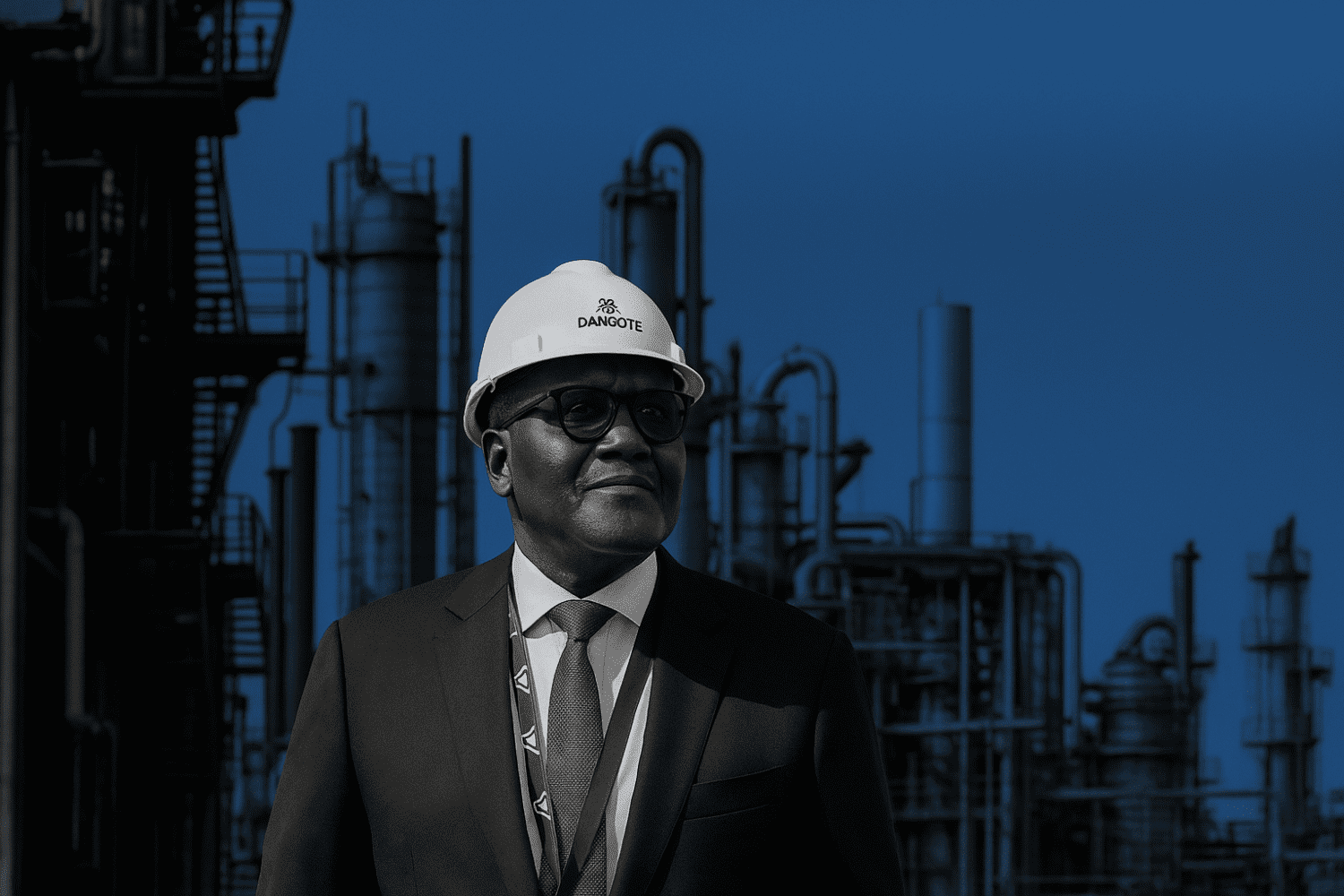
The disruption has been framed as a success problem. That framing suits the offering’s promoters, who have marketed it as a “people’s IPO” with a minimum buy of ten shares at NGN 525.00, or roughly USD 4.00. Aliko Dangote, Africa’s richest man, told local television he expects ten million Nigerians to buy shares. The Nigerian Exchange recorded NGN 1.5 T (USD 1.12 B) in subscriptions on the first day alone, about 70% of the total offer.

But the numbers in the prospectus tell a more complicated story. For some analysts, the investment case, when separated from the national pride attached to Dangote’s name, raises questions that the app crashes have pushed to the margins. The most detailed public critique comes from Feyi Fawehinmi, a notable accountant and long-time critic of Dangote’s business practices, whose analysis “Is This IPO Halal” has circulated widely among Nigerian market watchers.

***

Fawehinmi’s central argument is that the refinery’s national importance and the merits of buying its shares at NGN 525.00 are separate questions. His findings point to curious discrepancies in reported figures, such that the same six-month period yields materially different pictures of operations, capital spending and financing depending on which section of the prospectus one reads.

The prospectus, Fawehinmi points out, presents USD 1.513 B of cash generated from operations in the reporting accountant’s extract for the first half of 2026, but USD 1.273 B in the historical summary. Cash purchases of property, plant and equipment are shown as USD 162.2 M in one presentation and USD 33.4 M in another.

Furthermore, finance income moves from USD 498.5 M to USD 49.6 M. Both presentations arrive at the same USD 2.106 B profit before tax because the differences are somehow offset elsewhere, but the prospectus does not provide a numerical bridge explaining why the same six months produce materially different pictures of operations, Fawehinmi says.

There’s also the question of whether the profit can last. The refinery swung from a loss in the first half of 2025 to a USD 2.106 B pretax profit in the first half of 2026. But 98.4% of that improvement came from a USD 2.35 B rise in gross profit, driven by product volumes and prices that benefited from exceptional market conditions linked to the Iran war.

Although stable full-capacity operations only began in March 2026, the prospectus estimates a 2026 gross refining margin of about USD 24.20 per barrel but cautions that market conditions can change. Fawehinmi contends investors are being asked to price a company whose recent profitability was forged in a geopolitical crisis, not a steady-state market, tethered to a lofty promise that the refinery would double capacity by 2029, on schedule, through a USD 14.3 B expansion program.

***

Then there is the question of what this refinery means for Nigerians at the pump. On this particular point, which is probably the one Nigerians care about most, Fawehinmi’s broader work on Dangote’s business model is relevant.

The prospectus commits to import-parity pricing, meaning Dangote’s fuel is priced against what it would cost to import, not against the cost of refining it locally. The World Bank found that as of March 2026, imported petrol was about 12% cheaper than Dangote’s ex-depot price. It could thus be deduced that the refinery sold as a solution to Nigeria’s dependence on costly imported fuel is pricing its output in a way that does not necessarily deliver cheaper fuel to the Nigerians buying its shares.

This pattern is especially emphasised by critics who have tracked Dangote’s rise. Academic research on Dangote Cement describes a business built on a Backward Integration Programme that made it possible for him to invest aggressively while competitors faced higher barriers.

Critics have accused the group of predatory pricing and of benefiting from import bans, concessions, and restrictions in sectors where it operates while opting not to transmit the gains of favourable policies to the local market. A study on Dangote’s business model described the relationship between the conglomerate and the Nigerian state as one built on crony capitalism.

Then there is the research supporting the offer. Fawehinmi examined reports from Renaissance Capital, Chapel Hill Denham and CardinalStone, all of which are named in the prospectus as joint issuing houses. CardinalStone’s report discloses that it was communicated to Dangote Refinery and approved for publication by the company, and that the analyst responsible holds personal positions in the refinery’s shares.

Renaissance Capital’s report states it is not independent investment research. Fawehinmi also identifies a calculation error in Chapel Hill Denham’s comparable-company analysis that inflated its peer average from 6.4 to 9.5, reducing its valuation by roughly USD 2.21 B when corrected. CardinalStone’s own comparable-company method values the refinery at USD 27 B, below the IPO valuation, yet it more than doubled its headline target.

The critique also pointed out an overlap of directors and funds across the refinery and multiple other Dangote sister companies as potential governance risks, concluding that none of these means the refinery is a bad investment but that the investment case should be evaluated on its numbers, not on the patriotic appeal of owning a piece of Africa’s biggest industrial asset.

It thus stands to reason that just as some fintech platforms didn’t prove robust enough to handle the demand they spent weeks generating, investors might want to examine whether the prospectus they are subscribing through those apps is any more robust.

Kenya Startup Failures Worsened By Flameout Of Once-Celebrated B2B Star

By Henry Nzekwe  |  September 16, 2026

Twiga Foods raised USD 185 M to fix Kenya’s broken food supply chain. Last month, the company entered administration after nearly three years of job cuts and mounting debt, with creditors now lining up to recover what they can after an implosion that is the latest piece of a broader puzzle in Kenya’s tech scene.

The country’s startup ecosystem has something of a paradox at its core, as it has long been arguably the most stable of Africa’s four largest tech markets, with resilient infrastructure and a more predictable business environment, yet it has produced some of the continent’s most spectacular flameouts.

For one, Kenya has raised more venture capital than any other African market in recent years, yet clear successes of the scale and stature of some of the prominent startups in other top markets have not emerged, while a unicorn startup has also failed to materialise. This is unlike its peers, Nigeria, South Africa, and Egypt, which boast multiple billion-dollar companies. Kenya, despite its relative stability and investor appeal, has found this hard to come by.

Kenyan startups raised USD 984 M in 2025, outpacing Egypt, South Africa, and Nigeria, and accounting for nearly a third of all African venture funding that year. But a closer look reveals a lopsided ecosystem.

Debt made up 60% of that total, or USD 582 M. Equity funding, the kind that typically fuels hypergrowth and unicorn valuations, was less than USD 400 M. Four energy companies, d.light, Sun King, M-KOPA, and BURN Manufacturing, alone accounted for nearly 70% of the country’s venture funding. It could thus be deduced that Kenya is well-placed as a climate and asset-financing hub with a thin layer of other bets on top, not a broad-based startup powerhouse.

That concentration perhaps explains why unicorns remain elusive. Unicorns are typically born from equity-fueled scale, not debt-financed asset purchases. They emerge when consumer internet, fintech, or software companies achieve viral growth and high margins. Kenya’s funding profile tells a different story. Capital flows to solar home systems and electric motorcycles, capital-intensive businesses with long payback periods and modest valuations.

***

The Twiga case illustrates the deeper structural problem. Twiga raised USD 185.4 M from blue-chip investors including Goldman Sachs and the IFC, yet still could not find a profitable path in Kenya’s fragmented retail supply chain. The company tried to scale a capital-intensive logistics model in a market with low margins and informal competitors. When the venture capital tap tightened, the debt became unsustainable.

Twiga is not alone, however. At least seven high-profile Kenyan startups have closed, entered administration, or scaled back in the past 16 months, according to PwC.

Copia Global, a rural e-commerce platform that raised USD 123 M and served over a million households through 30,000 agents, ended up in trouble and entered administration in May 2024 after failing to secure a critical USD 20 M injection. Copia ran an asset-heavy delivery network in low-density rural markets where logistics costs outpaced revenue.

Koko Networks, a clean-cooking company backed by Microsoft’s Climate Innovation Fund and a USD 179 M World Bank guarantee, shut down in January 2026 and laid off all 700 employees after the government blocked its carbon credit sales, cutting off a revenue stream that funded its subsidised bioethanol model.

Lipa Later, a buy-now-pay-later fintech that raised over USD 16 M and reached a valuation near USD 100 M, entered administration in March 2025 after failing to raise fresh funding. Sendy, a logistics startup valued at over USD 80 M, became insolvent in 2023 after a key investor pulled out of a down round.

Gro Intelligence, an AI-powered agriculture data company that raised USD 117 M and reached an USD 850 M valuation, closed in May 2024 after missing payroll and cutting 60% of its workforce. MarketForce, a notable well-funded B2B e-commerce player, also had to close shop after a string of challenges.

There is also the view that the funding environment is not the only issue, as Kenya lacks the kind of domestic capital that cushions startups in other markets. Local institutional investors have largely stayed on the sidelines, leaving foreign VCs to dominate deal flow. That dependency makes the ecosystem vulnerable to global sentiment shifts, as the 2024 funding drop demonstrated. Venture funding to Kenyan startups fell 33% that year to USD 318 M, after political unrest and new taxes spooked investors.

A self-reinforcing cycle appears to be at work. Without local capital, Kenyan startups cannot weather downturns. Without exits, local investors have little incentive to enter. Without equity-heavy scaling, unicorns never materialise. Twiga’s administration is the latest signal that the cycle won’t break on its own.

Brutal Hidden Data Show How Uber ‘Self-Harmed’ & Lost Its Way In Nigeria

By Henry Nzekwe  |  September 15, 2026

A Nigerian Uber driver completed about 130 rides over seven months. A South African Uber driver completed 1,142 in the same window.

That 8.8x gap is where the story of Uber’s Nigeria exit actually begins, according to some troubling new data, which shows Uber lost money on a large share of its Nigerian rides for reasons that had nothing to do with competition from Bolt or inDrive. Rather, it was paying drivers more than riders paid it, on short trips, in a market with roughly one-ninth the per-driver volume of South Africa.

That is the central finding of a new report from Obi, a California-based ride-hailing data aggregator that analysed 20,298 trips across 308 drivers between January and July 2026, the final months of Uber’s 12-year run in Africa’s most populous country. The report, titled “The Real Reasons Why Uber Left Nigeria,” offers the most detailed public accounting yet of how a company that helped create Nigeria’s app-based transport market ended up exiting it.

The numbers show a business that was structurally underwater on short rides. On trips under roughly 20 kilometres, Uber paid drivers more than it charged riders, by as much as 23% on some distance bands. At 5 to 9 kilometres, driver pay exceeded the customer fare by 23 percent. At 9 to 13 kilometres, the gap was 19%. Only past 20 kilometres did the fare finally overtake driver pay.

In other words, Uber was subsidising short trips to keep drivers accepting them. That subsidy might have been survivable in a high-volume market. Nigeria’s was not. Over the seven-month window Obi tracked, Nigerian Uber drivers averaged 130 total rides, or about 3.9 rides per active day. In South Africa, Uber drivers averaged 1,142 rides over the same kind of window, roughly 9.9 rides per active day. That is an 8.8x gap in per-driver activity between the two markets.

Low volume plus a per-ride subsidy is a lethal combination. And Uber had almost no room left to fix it through commissions. Nigerian drivers on both Uber and inDrive were already keeping roughly 80 to 90% of the fare throughout the period Obi measured.

Uber’s own cut was thin before the short-trip subsidy was layered on top. Raising commissions would have provoked the kind of driver backlash the company had already seen in Nigeria in 2017, 2023, and again in March 2026, when drivers across Uber, Bolt and inDrive staged a three-day strike over low fares and high commissions.

Pricing was not the answer either. Uber’s per-kilometre fare climbed 71% between January and July, from NGN 574.00 to NGN 983.00. That is a steep increase by any measure, and it still did not close the gap on short trips. Essentially, the platform raised prices by 71% and still needed to subsidise a large share of its rides, which proved to be a structural hole it couldn’t price its way out of.

The macroeconomic backdrop made everything worse. President Bola Tinubu’s removal of the fuel subsidy and changes to the naira exchange rate sent petrol, imported spare parts and vehicle maintenance costs soaring. Fuel prices in Lagos rose from about NGN 800.00 per litre in late February to between NGN 1.3 K and NGN 1.33 K by mid-April, a 60% jump in six weeks. Drivers absorbed that cost without corresponding fare adjustments on most platforms.

Obi surveyed 93 Nigerian Uber drivers the day after the exit was announced. Their responses back up the trip-level data. Asked why Uber left, 57% pointed to currency and inflation pressure, 51% to regulatory or government issues, and 44% to fares and commissions being too low to sustain. Just 25% cited losing to local competition.

Most drivers had already hedged. 80% were multi-apping before the exit was even announced, with 45% pairing Uber with Bolt, which has over six-times more users in Nigeria than Uber, and 19% with inDrive. Only 20% drove exclusively for Uber. Nearly half, 49%, now expect to lose 50% or more of their monthly income. 11% percent expect to lose more than 75%.

“I bought fuel at NGN 1.4 K per litre,” said Peter Obasi, a ride-hailing operator in Lagos, in an interview with The Guardian Nigeria, as fares displayed on the inDrive platform no longer cover his operating costs.

The driver survey also captured something the trip data alone could not. Despite everything, 71% rated their overall experience driving for Uber as very good and another 26% as good. If Uber returned to Nigeria, 90% said they would drive for it again without hesitation. Just 1% said no.

Uber’s exit is not just a Nigeria story. The company has also left Côte d’Ivoire, Tanzania, and Uganda in the past year. It is redirecting capital toward autonomous vehicles, pledging more than USD 10 B to deploy robotaxis and aiming to operate driverless services in at least 15 cities by the end of 2026. Nigeria’s per-trip economics, where gross bookings per trip lagged far behind Uber’s global average, could not compete with that calculus.

Bolt and inDrive are now absorbing the drivers Uber left behind. Bolt, which entered Nigeria in 2016, had already captured an estimated two-thirds of the ride-hailing market by some measures. InDrive, with its negotiable fares and lower commissions, saw a three-fold spike in driver applications within 48 hours of Uber’s exit announcement. Shuttlers, a local startup known for its bus sharing platform, has also moved to fill the void with its new car sharing service.

The ride-hailing market in Nigeria is valued at around USD 450 M and projected to reach USD 879 M by 2031, with over 200,000 drivers, and growing. But the structural pressures that pushed Uber out have not disappeared.

How Madica Found Five Startups In Africa’s Biggest Funding Blind Spots

By Henry Nzekwe  |  September 15, 2026

Louai Djaffer spent years running Emplotic, a recruitment platform he built in Algeria. Somewhere along the way, the problem he kept tripping over stopped being hiring and became everything that happened after; think payroll, records, the paperwork that mid-sized companies across Francophone Africa still handle by hand.

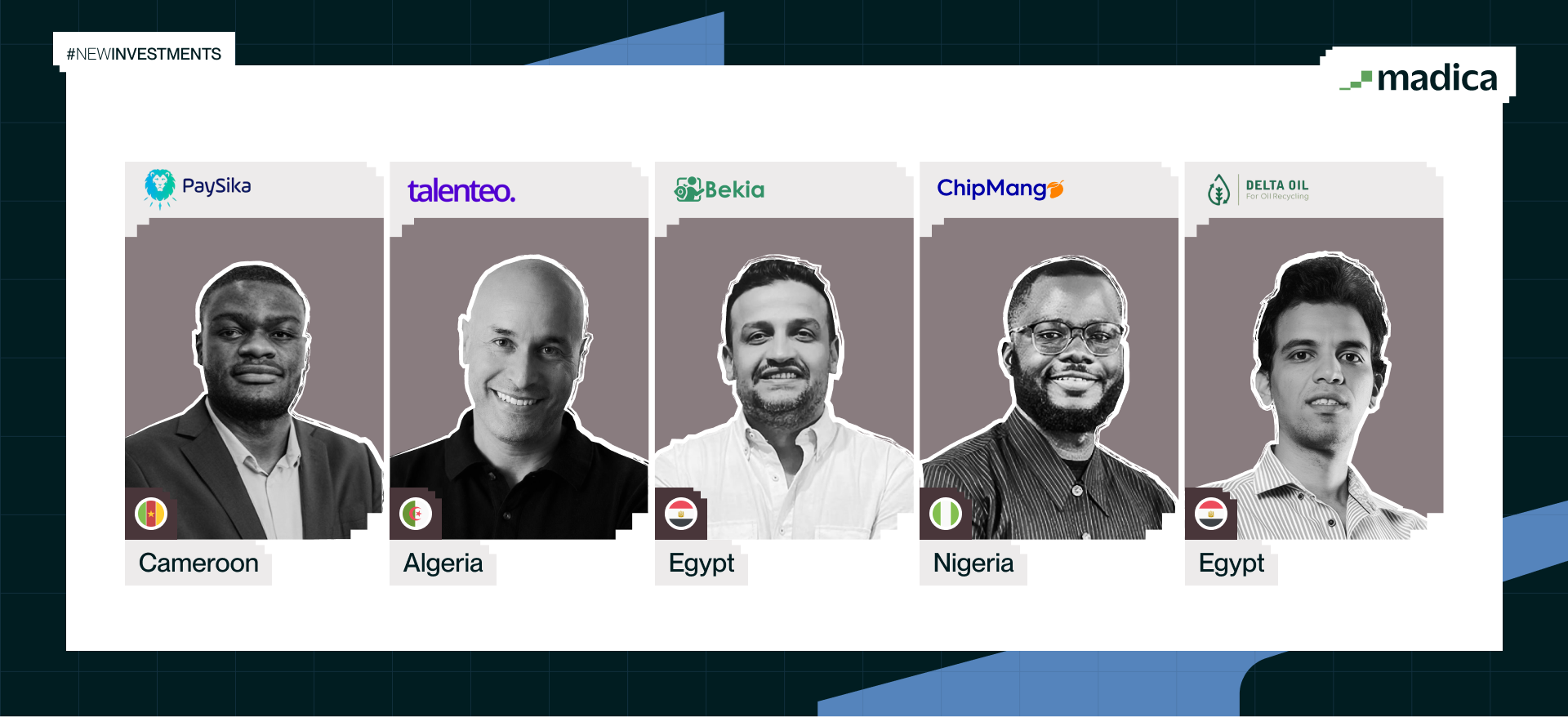
That observation, more than any pitch deck, is what got Talenteo funded. Talenteo is one of five startups Madica announced today, and its first investment in Algeria. The pre-seed investor — the earliest stage of institutional money a company can raise, before it has proven much of anything — also made its first bet in Cameroon, on Paysika, a digital bank for consumers and small businesses across Central Africa. Madica has now written checks in 10 African markets.

African venture capital has long pooled in four places: Nigeria, Kenya, South Africa and Egypt. Founders elsewhere describe a funding desert that shapes everything downstream — how fast they hire, how far they can stretch before revenue arrives, whether they can survive a competitor with a bigger war chest.

“We’ve been very impressed with founders like Louai and Roger and Stezen, who have depth of experience in their various sectors and are solving huge pain points, and are only limited by access to funding compared to their counterparts in the Big 4 markets,” Emmanuel Adegboye, who heads Madica, told WT.

Paysika‘s founders, Roger Nengwe and Stezen Bisselou, are targeting a problem Adegboye described as “significant” not just in Cameroon but across the CEMAC region, the six-nation currency bloc. Their neobank, a bank without branches, run through an app, issues virtual and physical cards that work for international transactions.

The five bets are deliberately scattered. In Nigeria, ChipMango, which recently closed a USD 1.9 M seed round, designs semiconductors and teaches chip engineering. In Egypt, Delta Oil collects used cooking oil and sells it abroad as feedstock for renewable fuel, while Bekia pays households and businesses for recyclable waste. None of these look like the fintech-heavy portfolios that dominated African venture for a decade.

Adegboye frames the timing as continuity rather than a shift. “Madica’s thesis has always been to catalyse funding into markets, sectors and founder profiles that are typically underfunded in Africa,” he said. He named Senegal, Côte d’Ivoire and Uganda as next in line.

The funding climate complicates that ambition. African startup funding remains well below its 2021–2022 peak, and later-stage rounds are taking longer to close. Adegboye insists the downturn hasn’t changed what counts as investable but then describes changes that sound like it has.

Madica now spends more time building co-investment networks, so founders can line up follow-on money earlier. It pushes cash-flow discipline and regular investor updates. And in sparser markets, it now wants “slightly more track record” before backing a company.

For a pre-seed fund, that’s a notable bar. The whole premise of pre-seed is to fund founders before track record exists. Madica hasn’t abandoned that — Talenteo and Paysika were backed largely on their founders’ operating histories — but the bar has moved.

On founder profiles, Adegboye pointed to one group the market continues to underfund. “Female-led companies still get a very small share of venture funding compared to their male counterparts, even though male-founded startups don’t perform any better,” he said. Madica aims for at least half its portfolio to include a female co-founder, a target he said it has met or exceeded.

The operational question is whether a small team can genuinely support founders spread across 10 markets and four sectors. Adegboye’s answer is that most of the programme was built remote-first, with mentorship and expert access delivered virtually, and a mentor roster chosen to reflect that spread. Twice a year, Madica flies its founders somewhere in person; the next gathering is in Cape Town in November, timed around the Africa Early Stage Investor Summit.

Each company gets up to USD 200 K and 18 months of support. Whether that is enough to build a semiconductor business in Lagos or a recycling network in Cairo is a question the portfolio will answer in public, over the next few years, in markets where the next check has historically been the hardest one to find.