Nigeria’s Importers Are Desperate For Dollars—This Startup Says It Has The Answer

By Henry Nzekwe  |  July 14, 2026

A particularly stressful episode involving some Nigerian car importers from a few years back was the encounter that radicalised Sheriff Adedokun, so to speak.

They had won the auction, beaten the competition, and secured the vehicle. The money was sitting in their naira accounts, and the supplier was waiting. The only thing standing between them and the deal was a payment that had to cross a border before a deadline.

“Watching businesses scramble to find alternative routes, rely on intermediaries or worry about whether a payment would arrive before the deadline made me realise how much unnecessary uncertainty had become part of international trade,” said Adedokun, founder and CEO of Clea, a Nigerian startup using stablecoins to help importers pay foreign suppliers. “It shouldn’t take that much effort for a legitimate business to pay a legitimate supplier.”

His frustration reflects a broader crisis. Cross-border payments into Sub-Saharan Africa cost an average of 8.78% for a USD 200.00 transfer in the first quarter of 2025, nearly three times the United Nations’ target of 3%.

In Nigeria, less than 50% of manufacturers could access foreign exchange from the official window in the third quarter of 2025, despite recent reforms. The manufacturing sector shed 18,935 jobs in the first half of 2025, up 74% from the second half of 2024. About 800 companies shut down last year.

Adedokun’s answer to this mess is Clea, a platform that lets Nigerian importers pay in naira and settle with international suppliers in US dollars within hours, using stablecoins as the settlement rail. Before Clea, Adedokun spent several years building businesses that served customers across different markets, so cross-border payments became part of the day-to-day experience.

“Over time, I realised that moving money internationally is never just about sending funds from one account to another. Every payment sits behind a commercial decision that someone is waiting on. It could be a supplier releasing goods, a business replenishing inventory or a customer expecting delivery,” he told WT.

Adedokun explained that working so closely to those transactions changed his thinking on cross-border payments. “I came to appreciate how much confidence businesses place in the financial system every time they agree to trade. When that confidence is shaken, the effects ripple through the entire business. That perspective has stayed with me and continues to shape how we think about building Clea.”

During its pilot phase, Clea processed over USD 4 M in cross-border transactions. The company is now expanding across all 36 Nigerian states, targeting importers trading with suppliers in the United States, China and the UAE.

***

Clea is one of dozens of African fintechs betting that stablecoins—cryptocurrencies pegged to assets like the US dollar—can bypass a financial system that was never designed for Africa’s trade volumes.

The bet is not without evidence. Between July 2023 and June 2024, Nigeria processed nearly USD 22 B in stablecoin transactions, making it the continent’s largest market. Sub-Saharan Africa received USD 205 B in on-chain value between mid-2024 and mid-2025, a 52% increase from the prior year. Stablecoins now account for 43% of all crypto transaction volume in the region, while deposits in Nigeria have surged 9,000% between 2018 and 2025.

“What convinced me was that we were not looking at stablecoins as speculation. We were looking at them as settlement infrastructure,” Adedokun said. “A lot of the conversation around crypto has been about trading, hype, and price movement. That is not what interested me. What interested me was the ability to move value faster, more transparently, and across borders without waiting days for traditional rails to settle.”

The shift is being noticed at the highest levels. Nigeria’s Central Bank mentioned stablecoins at least 68 times in its newly released Payments System Vision 2028. In October 2025, Central Bank of Nigeria Governor Olayemi Cardoso announced the creation of a working group to study how the country could adopt stablecoins. The bank has since reaffirmed its commitment to shaping global regulatory frameworks for digital assets.

This marks a remarkable turn for a regulator that, in February 2021, ordered banks to close accounts associated with crypto transactions and, not that long ago, detained two executives of Binance, the world’s largest crypto exchange.

But the path is not straightforward. Regulators remain cautious. South Africa’s central bank governor has warned that stablecoins could undermine monetary sovereignty by allowing users to effectively “manufacture” dollars outside traditional systems. In Central Africa, the regional bank has ruled out dollar-backed stablecoins entirely.

And then there are the banks. “The hardest ‘no’ usually comes from banking or infrastructure partners who see Africa, cross-border payments, and stablecoins in the same sentence and immediately assume the risk is too high,” Adedokun said. “Sometimes they do not even fully understand the use case at first. We are not trying to move anonymous funds. We are helping verified businesses pay verified suppliers, with documentation and audit trails.”

***

That tension between innovation and institutional caution defines the space Clea is trying to occupy. The African Development Bank estimates unmet demand for trade finance in Africa ranged from USD 74 B to USD 92 B in 2024. With African imports exceeding USD 1 T annually, the gap between what businesses need and what the financial system provides is vast.

Adedokun believes the answer lies in treating stablecoins not as a destination but as infrastructure, a step in the evolution of how money moves. “If you look at Africa over the last twenty years, we’ve consistently adopted technologies that make commerce easier,” he said. “Mobile money wasn’t successful because people wanted digital wallets. It succeeded because it solved a real problem. I think stablecoins should be viewed through the same lens.”

The real test, however, is whether this works for the businesses that matter most; the SMEs that cannot afford to wait days for a payment to clear.

“For an importer, sending money abroad is emotional. It is not just a button in an app. It may represent their entire working capital,” Adedokun said. “They need more than a good rate. They need to believe the money will get there, the supplier will recognise it, the documentation will be correct, and someone will support them if there is an issue.”

The tech entrepreneur contends that the importers who sparked his thinking were not looking for a revolution but simply a payment that would arrive on time. Whether stablecoins can deliver that reliably, and whether the regulators and banks will let them, remains the open question.

What is no longer in doubt is that African businesses are already voting with their wallets. Nearly USD 22 B worth of stablecoin transactions in a single year suggests the infrastructure gap is too big to ignore.


African Governments Draw New Line In The ‘Cloud’ In Data Sovereignty Push

By Staff Reporter  |  July 13, 2026

For years, the economics of African cloud infrastructure followed a simple pattern. Data generated on the continent was processed and stored elsewhere, mostly in Europe or the United States, while subscription fees and processing costs flowed out. One estimate suggests that Nigeria alone loses approximately USD 850 M annually to foreign cloud infrastructure.

That pattern is now being disrupted. Across the continent, governments are introducing data localisation frameworks, establishing national AI agencies and backing locally owned data centres. The goal, it appears, is not just to keep data within borders but to build the infrastructure that will underpin the next generation of digital economies.

More than 36 African countries now have data protection legislation in place or in advanced stages, according to industry tracking. Nigeria’s Data Protection Act, enacted in 2023 and implemented in March 2025, now requires major data processors to undergo annual compliance audits. The Central Bank of Nigeria has gone further, mandating that all payment transaction data generated in the country must be stored and managed locally from January 2027.

Kenya has published a cloud policy requiring government data to be stored within its territory. Rwanda, which already enforces strict data residency rules, has also approved the creation of a National Artificial Intelligence Agency, one of the first dedicated AI bodies on the continent.

“We cannot build an AI economy on foreign soil,” Joe Mucheru, Kenya’s former Cabinet Secretary for Information, Communications and the Digital Economy, told Panapress earlier this year. “The infrastructure must be here.”

That infrastructure is beginning to take shape. In March 2026, two Kenyan firms launched Servernah Cloud at the iXAfrica facility in Nairobi, presenting it as the country’s first sovereign-hosted AI cloud platform. The platform is designed to run AI workloads close to where African data is generated, shifting the region from an AI consumer to an AI producer.

***

In Nigeria, Kasi Cloud is positioning itself as the country’s first indigenous hyperscale data centre. The facility is aligned with Nigeria’s National Cloud Policy 2025 and aims to reduce the estimated USD 850 M annual outflow to foreign cloud providers.

Nigeria’s data centre market, valued at roughly USD 288 M in 2025, is projected to surpass USD 1 B by 2031. MTN has announced a more than USD 240 M investment into a new Lagos data facility designed to support AI and cloud demand.

Equinix committed USD 22 M to develop its LG3 data centre in Lagos, scheduled to open in early 2026. Rack Centre brought online a 12MW LGS2 data centre in Lagos, touting it as hyperscale and AI-ready. Open Access Data Centres approved a USD 240 M investment to expand its Lekki facility to 24MW by 2027. Across Africa, the data centre sector is expected to attract an additional USD 8.76 B in investment by 2031.

These are not isolated experiments. The African Union’s Continental AI Strategy, built on five pillars, puts data governance and sovereignty at the centre. The strategy acknowledges that Africa generates vast quantities of data from agricultural satellite imagery to patient health records, yet much of it is stored and processed outside the continent.

Still, the shift is not without complications. Africa holds less than 1% of global data centre capacity, and foreign servers handle an estimated 80% of the continent’s internet traffic. Building local capacity requires significant investment in energy, connectivity and specialised talent. Reliable electricity supply remains one of the biggest constraints on large-scale data centre expansion in Nigeria, where operators often rely heavily on backup generation and hybrid power systems.

“Data centres are becoming critical infrastructure for Africa’s economic future, but none of this growth happens without energy,” said NJ Ayuk, Executive Chairman of the African Energy Chamber.

The political logic is that if African data must remain in Africa, foreign cloud providers will be compelled to establish local infrastructure. It remains to be seen, however, whether African governments can build quickly enough to capture value from the data their citizens generate, or whether foreign providers will arrive first, this time on African soil.

Nigeria’s Stock Market Is Booming. Its Startups Still Won’t List There.

By Henry Nzekwe  |  July 10, 2026

Nigeria’s stock market is on a historic run. The benchmark index has returned 67% in dollar terms this year to become the world’s best-performing equity market. Financial stocks have led the charge, with one insurer returning about 1,400%. Foreign portfolio investment on the exchange surged 274% year-on-year in April. The naira has gained 4% against the dollar.

Yet, in the midst of this record-breaking rally, Nigeria’s more prominent, eligible tech startups, some of which have been tipped to make the jump, remain conspicuously absent.

Three years after the Nigerian Exchange launched a dedicated Technology Board in 2022, designed to attract high-growth startups and deepen capital markets, the platform has yet to record a single initial public offering. Not one venture-backed technology company has crossed the line to list shares on the local bourse.

While Nigeria’s tech ecosystem has produced unicorns like Flutterwave and Moniepoint, raised billions of dollars in venture capital, and contributed nearly 20% to GDP, its most valuable companies are choosing to list elsewhere. OPay recently hired Citigroup, Deutsche Bank and JPMorgan for a potential US IPO. Flutterwave is reportedly weighing a London or New York listing. Tizeti, which had announced plans to list on the NGX, delayed its IPO.

A report by venture law practice TLP Advisory, which surveyed 36 founders, identified a combination of structural barriers. Currency mismatch is the most significant. Some 76.5% of funded startups raise capital in dollars but earn revenue in naira, creating a “fundamental economic tension” that makes a naira-denominated exit less attractive. Foreign investors who invest dollars demand returns in dollars.

Liquidity is another major concern. Compared to global markets such as NASDAQ and the London Stock Exchange, Nigeria’s capital markets are considered shallow, with founders worrying about whether shareholders will be able to trade their shares easily. The NGX’s total market capitalisation of about USD 62 B is roughly 0.2% of the New York Stock Exchange’s USD 32 T.

Awareness is also a problem. The report found that 53% of founders lack sufficient understanding of the NGX listing process. Compliance costs, fears of undervaluation, and high listing thresholds—NGN 50 M for the Growth Board and NGN 420 M for the Technology Board—create further uncertainty.

Perhaps most critically, the standard Delaware–London–Lagos structure common among venture-backed African companies means the holding company and intellectual property typically sit outside Nigeria, giving investors a more stable legal jurisdiction and clearer exit options. Even when businesses generate most of their revenue locally, they remain technically foreign entities with limited incentives to pursue a local listing.

“There isn’t a lot of high-frequency trading activity,” Richmond Bassey, CEO of Bamboo; a Nigerian wealthtech startup, said recently. “Our market is still very young, and there are many challenges to solve. There are not so many options; there are no derivatives. There are many opportunities to grow the market.”

The irony is that Nigeria’s stock market has never been more attractive. Foreign investors are piling in. The country is on S&P Dow Jones’ 2027 watchlist for a possible upgrade from “Standalone” to “Frontier” market status. Dangote Refinery’s upcoming listing could deepen the market further. Yet the companies building Nigeria’s digital future remain on the sidelines.

Creditors Bleed Losses As Major African Climate Tech Flop Faces Asset Firesale

By Staff Reporter  |  July 8, 2026

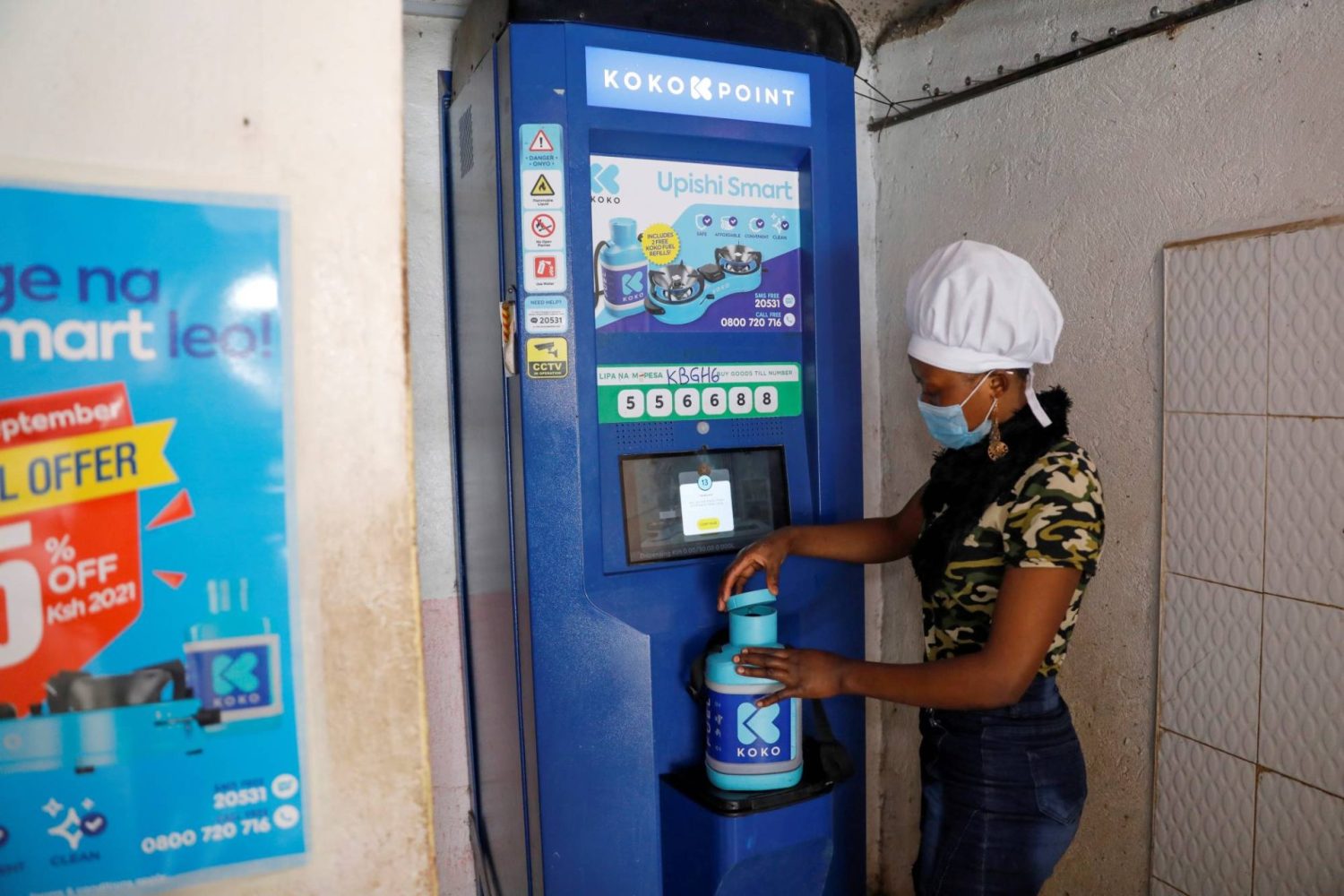
The administrators of Koko Networks have begun marketing the company’s core ethanol cooking technology and an Indian manufacturing plant, in the first major step toward winding down one of Africa’s highest-profile climate technology failures.

The sale follows the company’s collapse in January after the Kenyan government rejected a Letter of Authorisation needed to sell carbon credits internationally. Without that approval, Koko lost access to the revenue stream that subsidised ethanol fuel prices for more than one million Kenyan households.

PwC, which is overseeing the administration, is seeking buyers capable of transactions exceeding USD 15 M, inviting expressions of interest by July 17 for Koko’s integrated ethanol cooking technology and manufacturing platform.

The assets include the company’s intellectual property portfolio—patents, hardware designs and software technologies developed over more than a decade—as well as its stove and canister manufacturing plant in Sanand, Gujarat, India. The fuel distribution and retail platform that supported more than 3,000 automated fuel stations across Kenya is also up for sale.

Founded in 2013 by Gregg Murray, Koko was backed by Microsoft’s Climate Innovation Fund, Mirova, Verod-Kepple and Rand Merchant Bank. The World Bank’s Multilateral Investment Guarantee Agency also backed the business with a USD 179.6 M guarantee. The company had invested more than USD 300 M in building its network.

But investors are now staring at massive losses. Creditors of the collapsed startup face losses of up to KES 22 B (USD 170 M) after the company’s assets were deemed insufficient to meet its obligations.

New filings by the Kenya-based company’s UK parent show total debts of GBP 127.2 M (USD 170 M) against assets of just GBP 1.45 M (USD 1.9 M) available to preferential creditors. The bulk of the claims comes from Koko’s affiliate entities, including Koko Networks Carbon Finance UK (GBP 44.2 M; USD 59 M) and Koko Networks Kenya (GBP 43.7 M; USD 58.4 M).

Koko’s collapse exposed the vulnerability of climate startups whose business models are built on carbon credit revenue rather than direct consumer margins. The company was betting on access to compliance carbon markets, where airlines use credits to offset their carbon footprint.

But the Kenyan government declined to issue the Letter of Authorisation required to sell those credits, with officials saying Koko’s scale of issuance risked absorbing most of Kenya’s available international carbon quota.

The irony is that Koko had spent over a decade building one of Africa’s most extensive clean-cooking distribution networks. It served about 1.5 million low-income households, significantly reducing indoor air pollution for urban and peri-urban families. It employed more than 700 people.

Now, that network is being broken up. Koko’s collapse has left more than one million households without supply and raised doubts about whether carbon-subsidised utility models can scale without direct fiscal support or higher end-user pricing. The shutdown has also exposed Kenyan taxpayers to potential liability to the tune of billions of shillings through a political risk guarantee issued by the World Bank, which insures against government breach of contract.

Feature Image Credits: Reuters

Kenya’s Plan To Double Ride-Hailing Fares Sparks Standoff With Uber And Bolt

By Staff Reporter  |  July 8, 2026

Kenya wants ride-hailing drivers to earn more per trip. The government is proposing a minimum fare that could more than double what passengers currently pay. The platforms say that will kill demand.

The Ministry of Roads and Transport has published draft regulations that would require Uber, Bolt and other ride-hailing companies to guarantee drivers a minimum payment for every trip before commissions, taxes and other deductions are applied.

While the government has not disclosed the proposed figures, industry sources say consultations have pointed to a minimum of between KES 400.00 and KES 500.00 (USD 3.10 to USD 3.90) per trip, up from the current base fare of about KES 220.00 (USD 1.70).

The regulations would apply regardless of distance, duration, dynamic pricing or promotional discounts. Platforms would be barred from offering discounted pricing that pushes driver pay below the mandated floor. The proposed minimum rates would be tiered by engine capacity, with different payouts for motor vehicles between 501cc and 1,500cc and those above 1,500cc.

The 18 licensed ride-hailing platforms were given a July 6 deadline to submit their views as part of a public participation process. Several firms reportedly refused to participate, arguing that the government had withheld the proposed rates and that the new pricing model would reduce demand.

“The minimum compensation model being fronted by the State is flawed and will kill demand and harm the drivers,” a senior executive of one of the ride-hailing platforms told Business Daily.

“The present base charge on fare is about KES 220.00, and the State’s move would see this rise significantly. They have declined to make an official disclosure of the rate, though word is that it may be set at between KES 400.00 and KES 500.00. This would be disruptive because very few passengers would afford it, and the demand side of the equation will suffer heavily.”

The government has defended the move as a response to years of driver complaints about earnings that fail to cover insurance, maintenance and wear and tear. In May, President William Ruto directed the National Transport and Safety Authority to fast-track minimum fare regulations following concerns raised by drivers over declining earnings. “We need urgent regulations that have already been developed,” the President said.

***

Driver earnings have been squeezed by rising fuel costs, insurance premiums and maintenance expenses. An Ipsos report released in March 2026 found that Kenya’s digital ride-hailing and logistics ecosystem is valued at approximately KES 132 B (USD 1.02 B), supporting over 1.5 million participants nationwide. The average ride-hailing driver earns about KES 63 K (USD 488.00) per month before expenses. After deducting fuel, maintenance and platform commissions, net earnings are considerably lower.

But experts warn that sharply higher fares could backfire. Digital economy entrepreneur Moses Kemibaro noted that a move from KES 220.00 to KES 500.00 would represent an increase of about 127%.

“That is not a routine fare adjustment. It is a major intervention in one of Kenya’s most important digital marketplaces.” He argued that the debate should focus not on how much drivers earn per trip but on how many trips they can complete. “Ultimately, the passenger is the source of the revenue everyone else is trying to divide.”

The ministry has invited stakeholders and the public to submit comments on the draft regulations by July 30. It will then review the feedback before deciding whether to gazette and implement the new rules.

The move follows the Transport Network Companies, Owners, Drivers and Passengers Regulations, 2022, which capped platform commissions at 18%. The government says it intends to benchmark Kenya’s approach against regulatory frameworks in South Africa, the European Union, the United Kingdom and Singapore.

The question is whether higher fares will translate into higher driver earnings, or whether passengers will simply switch to matatus, boda bodas and tuk-tuks. Kenya has about 35,000 registered ride-hailing drivers completing roughly 175,000 trips daily. If demand falls, drivers could end up completing fewer trips despite earning more per ride. That is not a trade-off anyone asked for.

Nigeria Wants Big Tech To Pay Up For News Content Their AI Is Tapping

By Staff Reporter  |  July 7, 2026

Nigeria’s President, Bola Tinubu, has directed Nigeria’s competition regulator to investigate Meta, Alphabet, X and generative AI platforms operating in the country over allegations that they are exploiting Nigerian news content without fair compensation.

The probe, announced late on Monday by the Federal Competition and Consumer Protection Commission (FCCPC), follows a joint petition by the Nigerian Press Organisation (NPO), an umbrella body representing the country’s major media groups. The media organisations have accused global tech companies of engaging in anti-competitive practices that threaten their commercial viability.

At the heart of the investigation is whether tech companies should pay for the news content they use to train their AI models, a question being asked in newsrooms around the world.

The FCCPC said it will examine whether copyrighted news articles, broadcast materials and other original journalistic content have been “extracted, scraped, ingested or commercially used” without authorisation to develop and train generative AI systems. The commission will also investigate whether Nigerian publishers have been denied “meaningful opportunities to negotiate fair compensation” for the use of their content.

The investigation aims to examine how Big Tech companies are taking advantage of Nigerian-generated content, from news reports to other locally created digital content.

The inquiry covers allegations of abuse of market dominance and anti-competitive conduct. FCCPC Executive Vice Chairman Tunji Bello said the commission would conduct an independent, evidence-based investigation. “We recognise the strategic importance of the media to Nigeria’s democracy and the equally significant role of technology in driving innovation and economic growth,” Bello said.

For Nigeria’s media industry, which has watched advertising revenue migrate to digital platforms for years, the matter is existential. The NPO argued that the practices of big tech companies have “weakened the commercial viability of news publishers and undermined the rights of journalists and content creators”.

The probe aligns Nigeria with a growing global movement. Australia’s News Media Bargaining Code, introduced in 2021, forced Google and Meta to negotiate payment deals with news publishers, resulting in about USD 1 B in payments. Canada’s Online News Act, passed in 2023, pushed Google into a USD 73 M annual payment agreement. In South Africa, Google agreed to pay ZAR 688 M (about USD 40 M) annually for between three and five years following an investigation by the country’s competition commission.

This is not Nigeria’s first confrontation with big tech. In 2025, the FCCPC secured a settlement after a legal battle with Meta over data privacy violations.

The investigation signals that the era of freely scraping Nigerian content may be coming to an end for Meta, Google and the AI platforms now in Nigeria’s crosshairs.

Kenya’s Delivery Apps Face Higher Fees As Regulators Tighten Grip On Platform Economy

By Staff Reporter  |  July 7, 2026

Kenya’s app-based delivery platforms are facing a significant cost increase after the country’s communications regulator created a new licence category that will see companies like Uber, Bolt and Glovo pay substantially higher fees to operate.

Under the new framework, which takes effect on July 29, digital delivery platforms will pay a licence application fee of KES 5 K (USD 38.68) an initial licence fee of KES 100 K (USD 773.69), up from KES 30 K, and an annual operating fee of KES 100 K or 0.4% of their audited annual gross turnover, whichever is higher. They will also contribute a universal service levy of 0.5% of annual gross turnover.

The Communications Authority of Kenya (CA) says the reforms are intended to align regulation with the rapid growth of app-based courier services, which have become an integral part of Kenya’s e-commerce, food delivery and last-mile logistics ecosystem. The government argues that the current regulatory framework has not kept pace with technological changes in the courier industry, where digital platforms increasingly coordinate deliveries without falling under traditional postal licensing requirements.

The new framework introduces a Courier-Hailing Service Provider licence for digital platforms that connect customers with licensed courier operators. Until now, such platforms operated under the National Courier Operator licence, the same category used by traditional courier companies. The distinction is significant because it recognises that app-based delivery has become a distinct business rather than a modern version of a courier company.

Platforms such as Glovo have expanded merchant partnerships across Kenya, while Bolt Food has entered supermarket delivery through Quickmart. Uber has also applied for a National Courier Operator licence, signalling its intention to expand into parcel logistics.

However, there are concerns that the higher fees could increase operating costs for delivery platforms, potentially prompting companies to review their pricing models or commission structures. The 0.4% turnover fee means that for a platform generating substantial annual revenue in Kenya, the compliance cost could run into millions of shillings.

For now, the expectation is that large multinational firms will absorb the additional costs. But smaller and emerging operators may face greater compliance challenges as the market becomes more tightly regulated.

The licensing move follows other regulatory actions targeting Kenya’s platform economy. The Kenya Revenue Authority has already moved to tighten tax compliance by linking eTIMS, its electronic tax invoicing system, to receipts of Little Cab, a ride-hailing platform. Kenya’s digital ride-hailing and logistics ecosystem is valued at approximately KES 132 B (USD 1.02 B), actively supporting over 1.5 million participants nationwide.

The proposed licensing framework also reflects the government’s broader push to formalise Kenya’s digital economy. In recent months, authorities have introduced new regulations targeting ride-hailing operators, online taxi services and digital commerce platforms as part of efforts to strengthen consumer protection, improve tax compliance and create sustainable regulatory frameworks for technology-driven businesses.

The immediate impact is likely to be limited, but the new framework could increase regulatory scrutiny of digital delivery platforms and lay the groundwork for future rules on platform accountability, consumer protection, data reporting and service standards. If companies do pass on the costs to consumers, the question is whether Kenya’s app-based delivery market can sustain higher prices without losing users to less formal alternatives.

Mobile Apps Are Bringing A New Generation Of Investors To African Stock Markets

By Henry Nzekwe  |  July 6, 2026

A previously unlikely revolution is quietly underway across Africa’s stock markets. For decades, trading was the preserve of pension funds, asset managers and wealthy individuals. Today, a new generation of investors is buying shares from their phones, with amounts that would once have been considered too small for traditional brokers to serve profitably.

In Nigeria, domestic retail investors traded NGN 2.86 T (USD 2.07 B) worth of equities between January and May 2026, according to Nigerian Exchange data. That is a 138.76% increase year-on-year, with retail investors now accounting for 36.22% of all trading activity on the exchange. Over 151 days, they traded an average of USD 18.94 B naira (USD 13.72 M) in stocks daily.

In Kenya, Ziidi Trader, a mobile platform launched in February by Safaricom in partnership with the Nairobi Securities Exchange, has crossed KES 1 B (~USD 7.7 M) in cumulative turnover within four and a half months. The platform recorded 351,440 individual trades, with an average transaction size of just over KES 3 K (USD 24.00). By contrast, the wider market’s average deal size over the same period was KES 72.7 K.

The apps powering the boom

The growth is being driven by mobile-first investing platforms that are lowering the barriers to entry. In Nigeria, Bamboo, Trove, Risevest and Cowrywise allow users to buy shares from their phones with small amounts.

Bamboo, which launched access to Nigerian stocks in May 2024, overtook CardinalStone, an institutional investment firm, to become the exchange’s largest broker by weighted market share in April 2026. It executed 542,582 trades that month, giving it an 11.13% market share. The average trade size on Bamboo was just NGN 71.6 K (USD 52.00), compared with CardinalStone’s NGN 2.57 M.

“In April of this year, we became the number one broker on the NGX,” Richmond Bassey, co-founder and chief executive of Bamboo, told TechCabal recently. He added that 73% of Bamboo’s users are between 18 and 34 years old.

In Kenya, Ziidi Trader is embedded directly into the M-PESA app, allowing users to buy and sell shares without opening a traditional brokerage or Central Depository System account. About 511,000 investors signed up within weeks of launch, with 84,000 actively trading in the first two months. The platform played a key role in the Kenya Pipeline Company IPO, with 36,000 of the 73,000 individual investors placing orders through M-PESA.

A continental shift

South Africa’s EasyEquities has long been a pioneer in low-cost retail investing, while Egypt’s Thndr was ranked the fastest-growing company in Africa by the Financial Times in 2026. In Nigeria, Chaka recently rebranded to Hisa, expanding its retail investment offering across Nigeria and Kenya. Afrinvest is rolling out direct IPO subscriptions and exploring cross-border investing.

Traditional financial institutions are responding. Stanbic IBTC has launched BluNest, and Meristem offers Meritrade. The Nigerian Exchange introduced NGX Invest, an e-offering platform, in 2024.

Despite the boom, African stock markets remain shallow. Nigeria’s exchange is valued at just USD 109.3 B, compared with South Africa’s Johannesburg Stock Exchange, which is worth roughly USD 1.46 T.

“There isn’t a lot of high-frequency trading activity. Our market is still very young, and there are many challenges to solve,” Bassey said.

Mobile investing has succeeded in bringing more Africans into the market. Whether it can help transform these exchanges into deeper, more liquid markets now depends on whether there will be more listings and new products to match the growing appetite of retail investors.

Nigeria’s Population Boom Draws Investor Rush In Billion-Dollar Data Centre Bet

By Staff Reporter  |  July 2, 2026

Nigeria’s data centre expansion is being driven by demographics as much as technology, with investors betting that the country’s rapidly growing population will transform it into one of the world’s largest digital economies over the next three decades, the African Energy Chamber said in a report.

Africa’s most populous nation is already home to more than 240 million people, with U.N. projections indicating the country could surpass 400 million by 2050, making it the world’s third most populous country after India and China. Nigeria’s median age of around 18, combined with internet penetration above 50%, is creating a rapidly expanding base of mobile-first consumers entering the digital economy each year, the report said.

That demographic trajectory is reshaping the long-term case for digital infrastructure investment. Nigeria’s data centre market, valued at roughly USD 288 M in 2025, is projected to surpass USD 1 B by 2031, according to the report. Other estimates put the market at USD 322.65 M in 2025, forecasting growth to USD 782.82 M by 2031.

Major players, including Equinix, MTN, Rack Centre and Open Access Data Centres, are scaling infrastructure to capture what they see as long-term structural growth rather than a short-term market cycle, the chamber said.

In 2025, MTN announced a more than USD 240 M investment into a new Lagos data facility designed to support AI and cloud demand. Equinix committed USD 22 M to develop its LG3 data centre in Lagos, initially scheduled to open in early 2026.

Rack Centre brought online a 12MW LGS2 data centre in Lagos, touting it as hyperscale and AI-ready. Open Access Data Centres approved a USD 240 M investment to expand its Lekki facility to 24MW by 2027. Recent reports suggest nearly USD 1 B in broader data centre investments flowing into Nigeria as companies race to expand cloud and AI infrastructure capacity.

Still, the opportunity comes with challenges. Reliable electricity supply remains one of the biggest constraints on large-scale data centre expansion in Nigeria, where operators often rely heavily on backup generation and hybrid power systems.

“Data centres are becoming critical infrastructure for Africa’s economic future, but none of this growth happens without energy,” said NJ Ayuk, Executive Chairman of the African Energy Chamber.

“Countries like Nigeria are seeing rising demand because of demographics, connectivity and digital adoption, but investors also need confidence that long-term power supply can support that expansion”.

Nigeria’s population growth alone does not guarantee digital infrastructure success, the chamber said. But when combined with rising internet penetration, fintech adoption, cloud usage and AI-driven computing demand, it creates a scale opportunity few emerging markets can match.

Feature Image Credits: Data Centres Africa

LemFi Acquires Wealth8 to Expand into Wealth Management and Investment Services

LemFi Acquires Wealth8 to Expand into Wealth Management and Investment Services

By Partner Content  |  July 2, 2026

LemFi, the financial platform for people living and working across borders, has secured approval from the UKʼs Financial Conduct Authority (FCA) for its acquisition of investment platform Wealth8. The approval paves the way for LemFi to add wealth-building and investment to its product ecosystem, marking the companyʼs entry into wealthtech and a significant step in its evolution into a full financial-life platform

LemFi is the trusted platform helping people move money across borders, access credit, and save money across the UK, Europe, North America and Australia. The Wealth8 acquisition adds a missing piece: the ability to grow money over the long term. It continues an arc familiar to millions of people: build life in a new country, support family back home, save, establish a credit footprint, and ultimately invest in a more secure future. With Wealth8, LemFi can now support that journey on a single platform.

That momentum is already underway. In 2025, LemFi launched its Instant Access Savings Account, powered by ClearBank: a high-yield product that lets customers earn daily interest, paid monthly, on balances they can access at any time. With promotional rates reaching 5.00% AER, it was a deliberate move to shift from just enabling customers to move money to helping customers keep and grow it. But Savings is only the first step in building lasting wealth; investing is also key, and it is precisely this crucial part of the financial ladder that newcomers are most excluded from.

The opportunity is significant. While investing remains one of the UK’s most powerful drivers of long-term wealth, participation remains uneven. Most UK adults with more than £10,000 in investible assets (61%) hold at least three-quarters of it in cash rather than investments. The barriers are sharpest for communities that have arrived from abroad. Research from the London School of Economics, published in late 2025, found that the UK’s ethnic wealth gap has widened over the past decade. Runnymede Trust research revealed that for every £1 of wealth, several minority communities hold as little as 10-20p. The gap reflects unequal income, but also access to the assets that compound into wealth over time.

Wealth8 was founded to address exactly this divide, with a mission to make investing simple, affordable, and accessible to communities that mainstream platforms have overlooked, offering minimum investment amounts as low as £8 and diversified portfolios. Under LemFi, that mission will broaden to reach the wider community of people who live and work across borders, combining Wealth8ʼs investment expertise with LemFiʼs scale, technology and 2 million+ customer base.

The FCA’s approval reflects LemFi’s growing regulatory footprint and governance capabilities, building on existing authorisations in the UK and approvals across North America, Europe, Australia and key remittance corridors in Africa and Asia.

Ridwan Olalere, co-founder and CEO of LemFi, said: “We started LemFi by helping people send money because that was the most urgent need. But financial progress doesn’t stop at the transfer. This approval allows us to help customers save, access credit and now invest, supporting them as they build long-term financial security wherever they call home.”

This acquisition is the latest milestone in LemFiʼs expansion from a remittance specialist into a multi-product financial platform, following its move into credit, connectivity and savings, as well as a series of market and regulatory approvals over the past year. The company has committed to deepening its presence in the UK, which it sees as a leading global hub for cross-border finance.

How An Undergraduate Thesis Drove Nombank’s MD To Rethink SME Credit In Nigeria

By Henry Nzekwe  |  July 1, 2026

Seun Osunkeye’s interest in banking traces back to his undergraduate thesis, where he examined how microfinance institutions support the survival and growth of small businesses through access to capital.

It was research at the time, but the question stayed with him through a career that moved through finance roles at HotelOga and NightsBridge, co-founding Carnegie Venture Partners, and eventually into Nomba, first as Senior Finance Associate, then Financial Controller.

Working closely with Nomba’s merchant base deepened the conviction. The pattern was consistent: viable, even thriving, businesses locked out of the formal financial system because the products available to them were never designed with how they actually operate in mind. When Nomba acquired a microfinance bank licence and rebranded it as Nombank, the company tapped Osunkeye to lead it.

Today, Nombank sits as the regulated banking infrastructure behind Nomba’s merchant network, the entity authorised to mobilise deposits and extend credit using transaction data from a business that has scaled fast.

Daily transaction volume on the platform has grown from NGN 7 B in May 2025 to roughly NGN 250 B in May 2026, a jump that says as much about merchant trust as it does about growth; more businesses are comfortable leaving their money on the platform than ever before.

In this Q&A, Osunkeye discusses his path to the role, what differentiates Nombank from Nigeria’s other fintech-led microfinance banks, and where he believes the country’s lending gap still runs deepest. 

You reportedly wrote your undergraduate thesis on the role of microfinance banks in financing SMEs. You now run one. Walk me through the career between those two points: key roles, turning points, and what drew you closer to the banking side of fintech.

My interest in this space goes back to my undergraduate thesis, where I examined how microfinance banks support SMEs and how access to capital determines whether a small business survives or grows. It was just research at the time, but it stayed with me.

After graduation, I moved through a few finance roles: HotelOga, then NightsBridge, where I built financial models and set up payment controls for a hospitality business expanding into Nigeria. I also co-founded Carnegie Venture Partners, where we worked with early-stage startups across fintech, edtech, and proptech and supported them through their fundraising journeys. That gave me a different lens, seeing how investors size up a business, and how much of that judgement comes down to the quality of the numbers underneath.

By the time I joined Nomba, first as Senior Finance Associate and later as Financial Controller, I had spent years looking at this problem from multiple angles. Working closely with merchants deepened it further. You see it constantly: SMEs and MSMEs struggling to access financial products that fit how they actually operate, not how a bank theorist imagines they operate. Businesses that are viable, even thriving, but locked out of the formal financial system because the products were never designed with them in mind.

That is exactly what Nombank exists to fix. So when the conversation about leading it came up, it did not feel like a pivot. It felt like everything before it, the thesis, the accounting work, the investor side, Nomba, had been pointing here. The thread was always the same question: how does capital actually reach the businesses that need it?

What does your background as an ICAN-certified accountant and former Financial Controller at Nomba bring to running Nombank that a more traditional banking executive might not?

Most banking executives come up through credit or relationship management. That shapes how they see a business. My training is different. As an accountant, I was taught to look at risk, controls, and numbers first, before strategy, before narrative, before anything else.

As Financial Controller at Nomba, I wasn’t looking at numbers from a distance. I was inside the business: treasury, fundraising, planning, reporting. I knew exactly what it cost to serve a merchant, where the money was tight, and where the business was genuinely strong. That operational intimacy, understanding the real unit economics rather than the polished version, gives you a very different instinct for how to build a financial institution.

A traditional banking executive understands balance sheets. What they often don’t have is a feel for how a fast-moving, fintech-native business runs day to day: the decisions made at speed, the places where discipline can slip if nobody is watching, the difference between growth that is sustainable and growth that just looks good on a deck. I’ve lived all of that.

So I’m not running Nombank to chase deposit numbers for a slide. I want to build a regulated institution that is structurally sound and built to last. That’s how I was trained to think about any business I’m responsible for, and it’s how I’m thinking about this one.

Nomba acquired a bank and rebranded it as Nombank. What was the original thesis behind that decision, and has it evolved since?

The original thesis centred on infrastructure. For Nomba to grow into a full commercial financial ecosystem, we needed direct control over our own banking rails. Relying on external partners is a reasonable early-stage strategy, but it introduces friction and limits how much you can innovate. Securing a microfinance licence let us hold deposits and deploy savings products within our own regulated framework.

Since then, our thinking has shifted. We no longer see Nombank purely as a utility sitting underneath Nomba. We see it as a distinct, high-value product in its own right, with a specific customer segment and a value proposition that goes beyond simply supporting the broader ecosystem.

Most people who use Nomba don’t think too much about Nombank. What is the relationship between the two, and why does the distinction matter?

The distinction is fundamental, even if it’s mostly invisible to the end user. Nomba is the distribution and technology layer: the POS hardware, the merchant software, the transactional rails. Nombank is the regulated banking infrastructure underneath it, the CBN-licensed entity authorised to mobilise deposits and extend credit. When merchants use our savings features, those funds sit with Nombank. When they draw credit, it comes from Nombank.

That distinction matters for transparency and institutional trust. Operating as a regulated bank comes with obligations, capital adequacy ratios, deposit insurance, that go beyond what a standard payments processor has to meet. As we scale our deposit base and our lending book, it’s important that our stakeholders understand the structural integrity and regulatory oversight behind their money.

What is Nombank’s moat? What makes it structurally different from other MFBs in Nigeria right now?

Our advantage is data. Nomba processes roughly NGN 250 B in daily transaction volume across a large network of Nigerian businesses. That volume gives us a granular view into how those businesses actually operate: liquidity patterns, seasonal swings, operational trajectories that are invisible to conventional banks and credit bureaus.

That depth of information shapes how Nombank underwrites credit and structures capital in ways legacy microfinance institutions simply cannot replicate. A licence is a commodity. The institutional trust and the years of transaction data we’ve built up serving merchants are not.

What does Nombank offer to startups and businesses that a legacy MFB can’t or won’t?

Speed and context. Traditional microfinance institutions typically ask for multi-year audited statements, physical collateral, and rigid documentation. None of that fits how our merchant base actually operates: high-velocity, often informal, but capital-efficient.

Because we already have the transaction data, we can skip most of that documentation burden and assess credit in near real time. That lets us build facilities that mirror a business’s actual working capital cycle, rather than the abstract models that traditional banking theory tends to produce.

What are the most interesting use cases or customer stories you’ve seen so far, and what surprised you about how people are actually using Nombank?

The most interesting thing happening at Nombank right now isn’t just how merchants use us directly. It’s how businesses are embedding us into their own products to serve their customers.

The future of banking isn’t a super-app that does everything for everyone. It’s banking that disappears into the products people already use. Commerce and banking are converging, and businesses that understand their customers best, logistics platforms, trade networks, sector-specific fintechs, increasingly want to offer financial services as a natural extension of what they already do. Nombank is powering that.

Take one of our oil and gas technology partners operating in the midstream space. They connect suppliers and fuel stations across a complex supply chain. Through Nombank, they’ve embedded virtual account collections directly into their platform, so fuel stations can settle transactions without leaving the ecosystem they already work in. Because we can see the transaction behaviour flowing through that network, we can extend credit during operational downtimes, exactly when those businesses need liquidity and exactly when a traditional lender would walk away.

That model is repeatable across sectors: a food delivery platform offering its riders savings accounts and credit, a remittance company launching savings products for its customers, a logistics network that needs working capital embedded into its dispatch flow. Nombank can power all of it, the accounts, the compliance infrastructure, the credit layer, compliantly and at scale.

What surprised me is how quickly partners grasped what was possible once we showed them the model. Businesses have always wanted to serve their customers more completely. They just didn’t have a credible, regulated partner to build with. That’s the gap Nombank is filling.

Nigerian fintechs have been moving toward MFB licences, Paystack, Moniepoint, OPay. What’s driving this, and how do you see Nombank positioned within that wave?

Every significant Nigerian fintech eventually hits the same ceiling: you can move money, but you can’t hold it. An MFB licence removes that ceiling, and that’s what’s driving the wave. But I’d push back on the idea that these moves are equivalent, because the context behind each one matters.

Nombank isn’t a reaction to what anyone else is doing. We’ve been operating as the banking infrastructure behind Nomba for three to four years. While others are now acquiring licences and figuring out what to build, we’ve already been building quietly, with a live customer base stress-testing the product the whole time. The merchants using Nombank today weren’t acquired after we got a licence. They were already there.

That sequencing is the real differentiator. We didn’t get regulatory authorisation and then go looking for a market. We built the market first, understood what it needed, and the bank was the answer to a question our customers were already asking. That shows up in the depth of our data, the maturity of our credit thinking, and the trust we’ve already established with the businesses we serve.

What’s your honest read on the state of fintech-native banking in Nigeria right now? Where is the gap still wide?

The landscape is genuinely compelling, but it’s still early. The foundational infrastructure, regulatory licensing, API connectivity, switching networks, has improved dramatically. The SME credit gap is where the real challenge remains.

A lot of microfinance institutions, including the fintech-led ones, still operate mainly as deposit-mobilisation vehicles. The harder, more important work is building credit instruments that actually perform at scale for underserved businesses. That takes granular data, real risk discipline, and sustained commitment, and not everyone in the market has built that combination yet.

What does leading the banking arm of a company on a unicorn trajectory actually feel like from the inside?

It feels like building institutional infrastructure at full speed. The pace is relentless. Decisions that would normally take a quarter in a legacy bank get made in days. But that speed is anchored by serious regulatory discipline. A licensed bank isn’t a place to run startup experiments. We’re custodians of public capital, and that shapes our risk posture and our strategy.

The ambition of the wider group and the discipline of banking aren’t in tension. They reinforce each other. My job is to make sure Nombank has the structural strength to support where Nomba is going.