A Guide To Morocco’s Startup Ecosystem

By Team WeeTracker  |  May 8, 2018

Morocco’s startup ecosystem is still in its development phase but is fast approaching an inflection point to become a fast-growing tech landscape. Startup investment is making a comeback to North Africa. Morocco, along with Egypt is leading the entrepreneurial revolution in the region.

According to African Funding Report 2017 by WeeTracker, Morocco saw about USD 3.2 Mn being invested, coming in at sixth place. It was ranked 65th in the world and 2nd in North Africa, scoring 29.2 points in the 2018 Global Entrepreneurship Index (GEI). The North African kingdom has been heavily garnering foreign investment and has made significant improvements to its infrastructure. The country is also home to startup spaces throughout the capital Rabat, the economic center of Casablanca, and even sleepy seaside towns like Taghazout.

The adoption of the auto-entrepreneur framework in 2014, similar to the one in place in France, Morocco has put in place a lever to integrate the informal economy into a legal framework. More than 40,000 ‘auto entrepreneurs’ are now benefiting from simplified taxation and access to microloans as well as to social security.

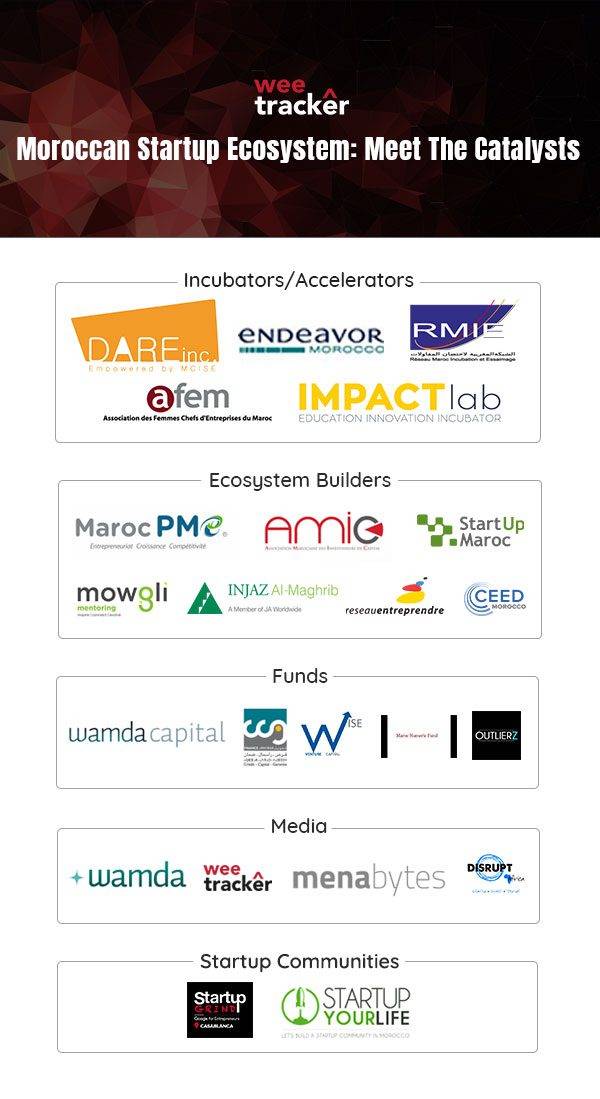
WeeTracker Research brings to you a comprehensive map of all the key players involved in shaping up the Moroccan startup ecosystem. Everything from incubators, accelerators, government-led initiatives, startup communities to angel and venture funds.
Venture Funds

Maroc Numeric Fund– Managed by MITC Capital, the Maroc Numeric Fund is a public-private investment fund launched in 2010 and is dedicated to financing Moroccan technology startups. It provides seed funding to innovative startups headquartered in Morocco. It also launched an Angel Fund in 2011.

MNF launched MNF Angel Fund in 2011. The angel fund includes around ten investors who fund startups from the Information and Communication Technology, green tech or biotech sectors. The ticket size ranges from USD 10 K to USD 100 K.

Key people: Dounia Boumehdi

Fund Size: Fund 1 – USD 12 Mn, Fund 2 – USD 21.4 Mn

Ticket Size: USD 500K to 1 Mn

Focus Sector: Information and Communication Technologies, 20 percent share allocated to green tech, biotechnology, or any other innovative generalist sector.

Key Startups: Netpeas, Greendizer, Soukaffaires.ma and MyDeal.ma, Epicerie.ma


Innov Invest Fund– was launched by Morocco’s Central Guarantee Fund. It plans to disburse the capital to 100 seed stage companies against equity and smart debt in 300 companies in the next five years.

Fund Size: USD 75 Mn (USD 51 Mn has come from World Bank)

Ticket Size: USD 30 K to USD 1 Mn


Wise Venture Capital– is a wholly owned subsidiary of SEAF (Small Enterprise Assistance Funds), which was awarded the management of a USAID-supported investment initiative program in Morocco.

Fund Size: USD 3.73 Mn

Ticket Size: from USD 53 K to USD 530 K

Key People: Mouad Bouirig


Wamda Capital This is counted as one of the most active startup investors in the MENA region. It launched its first fund in 2015 and typically invests in Series A. Investors in the fund include Abraaj Group, Zain Group and International Finance Corporation, which spent USD 14 million and is part of The World Bank Group.

Fund size: USD 70 Mn

Key Startups: Careem, The Luxury Closet, Mumzworld

Key People: Khaled Talhouni, Fares Ghandour, and Fadi Ghandour

Focus Sector: Sector agnostic


Outlierz Ventures is a seed investment firm based in Casablanca. It counts amongst its backers Y Combinator’s Michael Seibel and 500 Startups’ Hassan Haider and will invest in pre-seed and seed stage companies.

Key people: Kenza Lahlou

Ticket Size: USD 20k-USD 100k – for idea stage startups and; from USD 50K – USD 200K for seed/series A in growing companies.

Incubators/Accelerators

Impact Lab is a Casablanca based incubator founded in 2014 by Leyth Zniber for high social and environmental impact innovation and entrepreneurship in Morocco and the region. It has partnered with NUMA, a European accelerator to launch five-month long acceleration programmes wherein they take 5% equity in exchange for access to office space, one on one sessions with experts, workshops, tutorials and more. Its ticket size would range from USD 50 K to USD 150 K.

Endeavor Morocco was launched with the support of the United States Agency for International Development in Morocco, which has provided a grant to start Endeavor Morocco through its Morocco Economic Competitiveness (MEC) program with the aim of advancing youth entrepreneurship. Under the leadership of Linda Rottenberg, Co-founder & CEO, Endeavor Morocco is Endeavor’s sixth affiliate in the MENA region. The initiative provides these entrepreneurs a range of services including mentoring, access to key networks and introductions to sources of smart capital.

Morocco Incubation and Spin-off Network (RMIE) was established by the National Support Programme in 2002. The RMIE comprises 17 active incubators out of which 12 university-based incubators that receive financial support from the National Centre for Scientific and Technical Research (CNRST) with ticket size up USD 63 K.

AFEM: Morocco-based, Association of Women Entrepreneurs of Morocco supports Moroccan women in taking initiatives for starting and further developing their businesses. Established in 2000, AFEM launched the network Maroc Pionnières. From 2006 to 2012, the AFEM also helped create 70 enterprises and had four operational incubators in the country – Casablanca, Rabat, El Jadida, Tangier.

Dare Inc, is an incubation and acceleration program based in Rabat launched in 2015, by Moroccan Centre for Innovation and Social Entrepreneurship (Moroccan CISE). It aims to support social start-ups active in various fields such as energy, recycling and agriculture right from their establishment. The average ticket size is MAD 30 K (USD 3 K). Since its launch, it has supported 80 projects and incubated 43 start-ups. Startups backed by Dare Inc. which include Eco-Heat, Shems for Lighting, Seaskin and Amendy Foods.

Ecosystem Builders

Maroc PME also known as National Agency for the Promotion of Small and Medium Enterprises is an initiative by the government of Morocco to promote startups and SMEs. An industrial Acceleration plan was released in July 2015 and since then has launched multiple initiatives and framework to support Entrepreneurs. The three main agendas of the Maroc PME initiative is to create sustainable jobs, develop efficient ecosystems and to promote an environment conducive to entrepreneurship.

StartUp Maroc– Started in 2014, in Morocco, aims to prepare a new generation of entrepreneurs, to contribute to the creation of better conditions for the development of fundable startups. It organizes two flagship events: “Maroc Startup Cup,” the largest business model competition for the most promising Moroccan startups and “Startup Weekend Morocco,” a nationwide roadshow of Startup Weekend Events.

CEED Morocco was founded in 2013 and headquartered at Casablanca. It was founded by Small Enterprise Assistance Funds with the primary purpose to build and develop SMEs in Eastern and Southeastern Europe as well as the MENA Region. It claims to train entrepreneurs in about 13 countries with USD 7 Mn investments poured.

Mowgli Mentoring Founded in London in 2008, Mowgli Mentoring is a not-for-profit organization covering over 14 countries and driving inclusive economic in the Middle East and Africa. Mowgli has an alumnus with over 1650 members and has matched over 750 entrepreneurs with trained mentors also offer three distinct programs: Entrepreneur Mentoring Program, Mentor Training Program and MFI Mentor Training Program.

Réseau Entreprendre– Réseau Entreprendre is a network of business leaders’ associations specialized in entrepreneurial support since 1986. Founded in marcq-en-baroeul, France, it has about 120 partners in 10 different countries with its average ticket size being USD 36 K.

Injaz-Morocco was created in 2007 under SNI Group to enable young Moroccans to become a new generation of entrepreneurs. INJAZ has its flagship program Entrepreneurship Masterclass. This pilot project was of a 13-month period with the aim of developing it in other regions of Morocco. In Another unique program for Social Entrepreneurship, INJAZ Al-Maghrib and the SNCF Foundation signed a partnership agreement; it aims for citizenship education for about 3,600 young people from Tangiers, Kenitra and Rabat.

Moroccan Association of Equity Investors (AMIC)– Became operational in 1993, AMIC has now about 21 management companies under it, raised a total of about MAD 16.6 Bn (USD 1.77 Bn) at the end 2016 and also invested 183 companies. AMIC provides training, data collection, statistical analyses and conducts market research that it distributes to its members and investors.

Startup Communities

Startup Grind is a global community for entrepreneurs designed to educate, inspire and connect entrepreneurs, regularly organizes events for the purpose. The cornerstone of the community is monthly events featuring successful local founders, innovators, educators, and investors who share lessons learned on the road to building great companies. The Moroccan chapter is quite active with over 870 members.

StartupYourLife is a select community of young Moroccan entrepreneurs that has brought together enthusiasts, angels, and potential investors together. It hosts the annual Level Up Morocco meetup in association with organizations like SeedStars World and Jordanian accelerator Oasis500, apart from hosting regular events to share resources and experiences.

Media

WeeTracker, Wamda, MenaBytes and Disrupt Africa are the media covering the tech and startup landscape in Morocco apart from other tech geographies.


With a whole host of enablers present in the Moroccan startup Ecosystem, it will certainly be interesting to see where it is headed and how will the journey shape up. So keep watching this space – we are soon coming up with a piece on another critical element of the entrepreneurial ecosystem in this North African nation – the co-working spaces.


Also, if you too are an organisation dedicated to nurturing startups here and have been missed out, feel free to drop us a line at [email protected].
Breadfast Co-Founder Breaks Protracted Silence Amid Investor Controversy

By Henry Nzekwe  |  March 3, 2026

For nine years, Muhammad Habib built Breadfast without ever writing a public post about the company. Not for marketing. Not for defence. “Not my style,” he said. But this week, the co-founder and COO of one of Egypt’s most valuable startups broke his silence.

In a lengthy Facebook statement posted Sunday, Habib addressed a controversy that has engulfed the e-grocery platform since it announced a USD 50 M pre-Series C funding round in February.

Critics on social media targeted Japanese investor SBI Investment, citing its ties to Vertex Israel, a Tel Aviv-based venture firm, arguing that companies operating in Arab markets should avoid indirect financial links to Israel amid the ongoing war in Gaza.

“We have refused money more than once when it conflicted with our moral boundaries,” Habib wrote, revealing that Breadfast had previously turned down capital from investors directly connected to the Israeli state. Those decisions, he said, were made unanimously by the founders in locked rooms where no one was watching.

The statement offered a rare window into the ethical calculations facing startups in a region where geopolitics and venture capital increasingly collide. Habib argued that international funds operate diversified portfolios across hundreds of countries and sectors, funding hospitals in Brazil, tech companies in India, and infrastructure in Europe.

When they invest in Egypt, he said, it signals confidence in the Egyptian market, not endorsement of a political position.

He also drew a distinction often lost in online boycott campaigns. “A boycott is for a company that has servers directly operating the occupation army, a company providing surveillance technology used against Palestinians, or a company with factories in settlements,” he wrote. “These companies directly contribute to the killings and displacements.”

Breadfast, founded in 2017 by Habib, Mostafa Amin, and Abdallah Nofal, has grown from a subscription bread delivery service into a vertically integrated commerce platform offering groceries, pharmaceuticals, and financial services. Private-label goods now account for roughly 40% of grocery sales, a strategy that has helped the company improve margins in Egypt’s high-inflation environment.

The USD 50 M round, led by Novastar Ventures through its People and Planet Fund III, included backing from Mubadala Investment Company, The Olayan Group, SBI Investment, Asia Africa Investment & Consulting, Y Combinator, IFC, EBRD, and 4DX Ventures. According to disclosures from Swedish investment firm VNV Global, which holds a 7.5% stake, Breadfast’s valuation has risen to approximately USD 403 M.

Habib emphasised that all investors hold minority stakes and that the company remains founder-led and Egyptian-controlled. “If you want Egypt to take its place in the world economy,” he wrote, “we must accept that global capital moves in an interconnected network.”

The controversy arrives at a sensitive moment for Egypt’s startup ecosystem. Over the past two years, currency devaluations, inflation, and reduced global venture appetite have created funding slowdowns and valuation pressure across North Africa [citation. Against that backdrop, Breadfast’s raise, and its reported valuation growth, stands out as a rare bright spot.

Breadfast is not alone in facing scrutiny over its investor lineup. In January, Nigerian defence-technology startup Terra Industries announced an USD 11.75 M seed round led by 8VC, the Silicon Valley firm co-founded by Joe Lonsdale, a co-founder of Palantir Technologies; a data-analytics company whose software is widely used by Western military and intelligence agencies. Alex Moore, a defence partner at 8VC and a Palantir board member, joined Terra’s board shortly after .

The connection drew criticism on social media, with some questioning whether a Nigerian company protecting critical infrastructure, including hydropower plants, mines, and industrial assets valued at approximately USD 11 B, should accept capital from investors with deep ties to U.S. defence and intelligence establishments.

Critics argued that foreign board members gain insight into Nigeria’s security vulnerabilities, infrastructure locations, and surveillance data, creating potential strategic vulnerabilities.

Terra’s co-founder and CEO Nathan Nwachuku has spoken about building “sovereign intelligence” and reducing African dependence on Western powers for security support.

Yet the company’s reliance on capital with ties to foreign intelligence, including an additional USD 22 M extension in February that brought total funding to USD 34 M, with participation from Flutterwave CEO Olugbenga Agboola, has sparked debate about whether financial sovereignty can coexist with foreign investor control

Habib acknowledged that not everyone will agree with his position. “I understand that everyone can look at this subject differently, and I completely respect this,” he wrote. “Each of us has a conscience and makes his decisions based on what he sees is right. My conscience is comfortable: I believe before God that what we are doing is the right thing.”

The company plans to use the funding to expand across Egypt, strengthen supply chain infrastructure, and explore new markets in North and West Africa, ahead of a larger Series C round expected in the first half of 2026. A potential global IPO remains a long-term ambition.

MTN’s Rebound In Nigeria Masks Growing Pains In Fintech Push

By Staff Reporter  |  March 2, 2026

MTN Nigeria has staged a dramatic financial recovery, reporting a full-year profit after tax of NGN 1.11 T (USD 810 B) for 2025, reversing the NGN 400 B (USD 292 M) loss it suffered the previous year.

The telecom giant’s revenue surged 54.9 percent to NGN 5.2 T (USD 3.79 B), fueled by a landmark 50 percent tariff hike approved in January 2025 and a long-awaited swing to foreign exchange gains.

For the first time since 2022, MTN posted a net foreign exchange gain—NGN 90.27 B (USD 66 M) for the full year, a sharp reversal from the NGN 925 B (USD 675 M) loss that had battered its books in 2024.

The naira’s relative stability, appreciating from NGN 1.535 K per dollar in December 2024 to NGN 1.475 K by September 2025, provided breathing room for a company long exposed to currency volatility.

“The 2025 financial year was described as a remarkable period of recovery and resilience for the firm,” CEO Karl Toriola said, noting that the turnaround enabled “accelerated network investment to enhance quality of service.” MTN invested over NGN 1 T in capital expenditure during the year, expanding base stations and fibre infrastructure.

But beneath the headline recovery, the company’s fintech ambitions tell a more complicated story.

On paper, MTN’s fintech division, which houses MoMo Payment Service Bank, appears to be firing on all cylinders. Revenue surged 72.5 percent in the first nine months of 2025 to NGN 131.6 B, roughly NGN 43 B per quarter. If spun off as a standalone entity, analysts noted, the unit would already command unicorn valuation.

Yet the growth in revenue has not translated seamlessly into user engagement. Active MoMo wallets declined 6.1 percent to 2.7 million in the first half of 2025 compared to December 2024, raising questions about the stickiness of the company’s financial services. The decline was even steeper earlier in the year; active wallets fell to just 2.1 million in the first quarter, a 55.6 percent year-on-year drop.

While the company added approximately 562,000 new wallets in the second quarter, suggesting a rebound, the dip exposed the challenge of converting MTN’s massive subscriber base—85.4 million customers and 51.1 million active data users—into habitual fintech users.

The fintech revenue growth itself requires closer examination. Industry analysts note that nearly all of the increase is driven by Xtratime, an airtime lending product where MTN lends subscribers credit to make calls when they run out. While classified as fintech revenue, it functions more as a high-margin convenience loan than a disruptive payment service.

Once airtime lending is stripped out, the rest of the fintech business—the part meant to compete with dominant players like Moniepoint and OPay—brought in just NGN 6.8 B in the first nine months of 2025. For a company reporting NGN 5.2 T in total revenue, that figure is hardly significant.

Notably, MTN’s mobile money business operates with restrictions. Its Payment Service Bank license allows it to accept deposits and move money but not to lend, the profitable core of fintech economics. This limitation puts MoMo at a structural disadvantage against pure consumer fintech competitors.

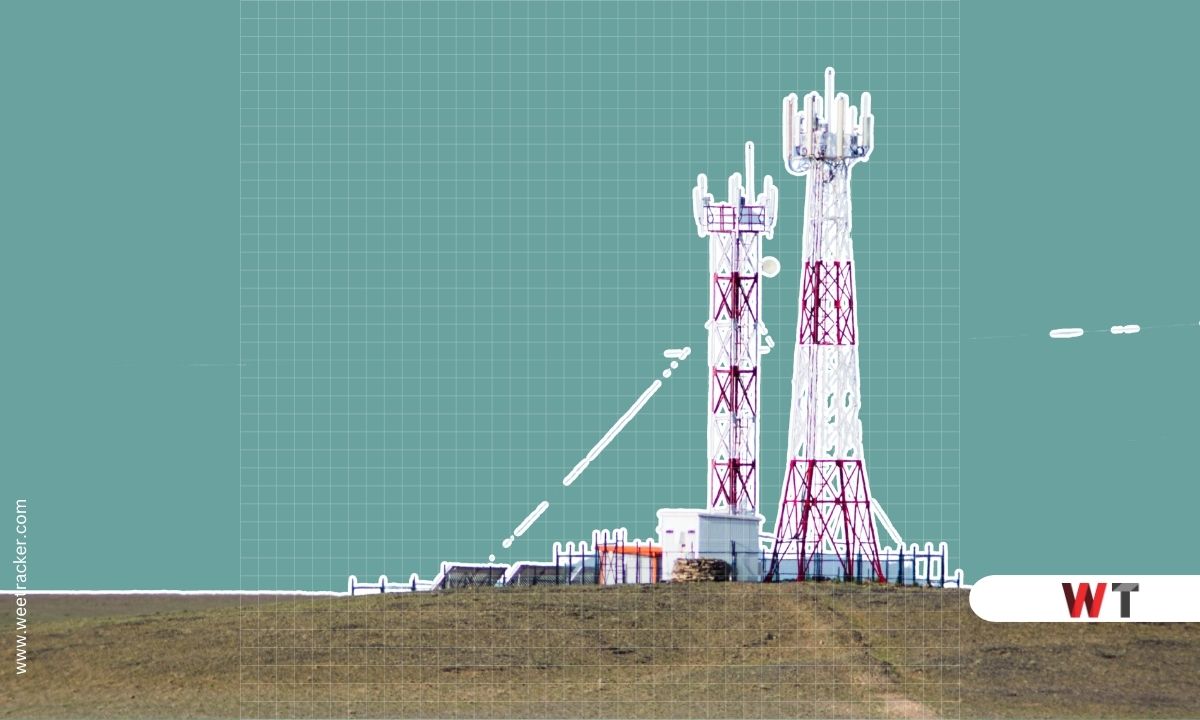
For the average Nigerian, the investment numbers matter less than the bars on their phone. A year after the 50 percent tariff hike, service quality remains erratic. Operators recorded over 40,000 network disruptions in 2025, including 19,000 fibre cuts and 3,200 equipment thefts.

“Last year, I spent NGN 5 K a month on data. Today, I spend NGN 8 K for the same volume, yet I still have to stand on my balcony to make a clear WhatsApp call,” Tunde Adeoye, a digital entrepreneur in Yaba, told The Guardian recently.

NCC Executive Vice Chairman Aminu Maida has signalled that 2026 will be “the year of consequences,” moving from encouraging investment to enforcing performance.

Moniepoint’s Mammoth Lending Machine Meets Messy Reality Of Two Big Defaults

By Henry Nzekwe  |  February 27, 2026

In January 2025, Alerzo, one of Nigeria’s most prominent B2B e-commerce startups, secured a NGN 5 B (~USD 3.6 M) working capital loan from Moniepoint Microfinance Bank.

The logic was sound. Moniepoint processes over 80% of in-person payments nationwide. Its terminals sit inside thousands of shops that Alerzo supplies. The fintech could see the merchants’ cash flows in real time: revenue, frequency, velocity. If data ever guaranteed a loan, this was it.

Twelve months later, Moniepoint was in court seeking permission to freeze Alerzo’s accounts. The outstanding balance stood at NGN 4.38 B (~USD 3.2 M), with interest still accruing. A Federal High Court in Lagos granted a Mareva injunction restraining every bank from releasing funds linked to the company or its principals. Videos surfaced online showing rows of Alerzo-branded vehicles parked at its Ibadan facility, reportedly being prepared for sale.

The founder, Adewale Opaleye, insists the company remains in operation and that only faulty vehicles are being cleared. “In fact, we still have over 400 vehicles that we are currently running,” he told local media. But when a court orders account freezes and asset disclosures, even routine fleet maintenance begins to look like triage.

Alerzo is not alone. Around the same time, Moniepoint’s microfinance arm quietly went to court seeking an order restraining every bank from dealing with funds held by Retail Supermarkets Limited, owners of the ShopRite franchise in Nigeria, over a NGN 2.4 B (~USD 1.7 M) working capital facility that had gone unpaid, notable tech insider Olumuyiwa Olowogboyega revealed.

That case, which unfolded late last year with far less public attention, targeted one of the country’s most recognisable retail chains with physical stores, steady foot traffic, and years of operating history.

Two borrowers, two different models, one lender now in court for both.

Moniepoint’s position is complicated. The unicorn, which raised over USD 200 M in its Series C round last year from investors including Development Partners International, Google’s Africa Investment Fund, and Visa, has built its lending model around payment data.

It disbursed more than NGN 1 T (~USD 735 M) in loans to small businesses in 2025, targeting provision stores, supermarkets, and building material traders that traditional banks typically ignore. Businesses that accessed credit, the company claims, recorded average growth of 36% after receiving loans.

The logic, analysts point out, is that if Moniepoint process a merchant’s payments, it knows their cash flow. If it knows their cash flow, it can lend against it. Payment data reveals capacity to repay.

But capacity is only half the equation. The other half, as Olowogboyega points out insightfully, is priority: whether, under pressure, a borrower will repay before other obligations.

“Payment data shows what merchants want you to see. It does not show what they route through other banks, what they owe elsewhere, or how a founder’s personal spending habits might drain the business when margins tighten,” he writes. In the ShopRite case, a well-known retail brand with decades of history still found itself unable to meet its obligations to a lender that had visibility into its operations.

Alerzo built its model on high-volume, low-margin distribution, supplying inventory directly to small retailers across Lagos, Oyo, and Ogun states.

The company raised roughly USD 20 M during the funding boom of 2020–2022, expanding aggressively. But B2B commerce in Nigeria is unforgiving. Maintaining hundreds of vehicles, paying drivers, warehousing goods, and absorbing fuel volatility created a cost base that proved difficult to sustain once venture funding slowed and the economy soured.

By 2023, Alerzo had laid off staff. By 2025, it needed bank debt to survive. Now, it faces a legal battle that will determine whether restructuring is possible or whether the company becomes another cautionary tale about the limits of debt in Nigeria’s startup economy.

Meanwhile, Moniepoint, while declining to comment, seems unlikely to soften its recovery stance. Allowing a high-profile default to slide would weaken its credit culture and invite similar behaviour from other borrowers.

The company continues to lend across retail, food services, and trade sectors. But each new loan carries the risk that the data powering the decision might be the ultimate until the moment it isn’t.

Alerzo insists it will release an official statement soon. Retail Supermarkets has not publicly commented on its case. With accounts frozen and assets under scrutiny, the question hanging over both borrowers is whether Moniepoint’s data-driven lending model can survive contact with the messy, unpredictable reality of Nigerian business.

Controversial Crypto Founder In Yet Another Ouster Echoing Past Scandals

By Henry Nzekwe  |  February 27, 2026

Ray Youssef, the controversial cryptocurrency entrepreneur who built two of Africa’s notable peer-to-peer trading platforms, has stepped down as CEO of NoOnes just over two years after founding it, the company confirmed this week, citing ongoing legal matters that remain undisclosed.

NoOnes, which Youssef launched in 2023 following the collapse of his previous venture, Paxful, announced on Thursday that its founder “does not participate in the management, operations, or decision-making of the platform.” The statement emphasised that “any legal matters involving Ray Youssef are personal and unrelated to NoOnes,” without elaborating on the nature of the proceedings.

Youssef had first announced his exit a week earlier on X, describing it as a difficult decision but offering no explanation. When contacted for comment, he had not responded to requests.

The departure marks the second time in three years that Youssef has left a company he founded under opaque circumstances. Paxful, once one of the world’s largest peer-to-peer bitcoin marketplaces boasting 1.5 million Nigerian users and USD 1.5 B in annual trade volume, shut down abruptly in 2023 amid regulatory scrutiny and a bitter legal battle with co-founder Artur Schaback.

At the time, Youssef blamed “key staff departures” and intensifying U.S. regulatory pressure on the peer-to-peer sector. But court filings later revealed a lawsuit between the co-founders, with allegations including mismanagement and governance failures. U.S. regulators, including FinCEN and the Department of Justice, subsequently fined Paxful for compliance lapses and handling transactions linked to suspicious activity.

The controversies surrounding Youssef extend beyond corporate governance. In 2016, he and a co-founder were arrested on charges of possessing firearms and cocaine, though the long-term disposition of that case remains unclear. Industry observers have also noted past allegations of substance use affecting leadership decisions, claims Youssef has never publicly addressed.

Since leaving Paxful, Youssef positioned NoOnes as a fresh start, a community-driven trading ecosystem targeting Africa, Latin America, and Southeast Asia, where currency instability and limited banking access fuel demand for crypto alternatives. The platform grew rapidly, reporting over 2 million users and recording more than USD 4 M in daily trading volume shortly before his departure.

But in recent months, Youssef’s X feed has taken a markedly different turn. His posts have shifted toward overtly political and religious themes, including warnings about U.S.-Iran tensions, anti-Israel rhetoric, and references to divine protection, leading to questions about whether his focus had drifted from the company’s operations.

NoOnes has not named a successor or detailed its strategic direction post-Youssef. In a brief statement, the company said it remains “focused on delivering innovative crypto trading products while maintaining a secure, reliable, and user-centric environment.”

For the millions of African users who relied on Youssef’s platforms to move money across borders, the exit carries an uncomfortable echo. Paxful’s collapse left many scrambling for alternatives. Whether NoOnes can sustain its trajectory without its founder, and what legal clouds may yet surface, remains uncertain.

Cash Is Dying In Nigeria’s Nightlife Where Moniepoint Processed Over USD 600 M

By Henry Nzekwe  |  February 25, 2026

On a recent Sunday night at Amuludun Kitchen in Ipaja, a Lagos suburb, the plastic tables filled early. Olorunrinu, who owns the spot, watched her staff move between packed benches, delivering plates of pepper soup and cold bottles of water.

She had spent years building this spot into one of the neighbourhood’s busiest nightlife venues, but what she noticed now had less to do with food and more with how people paid.

“It’s rare to see cash,” she said. “We prefer transfer, or you can make payments with your card. The cash kind of exposes the staff to theft and all that.”

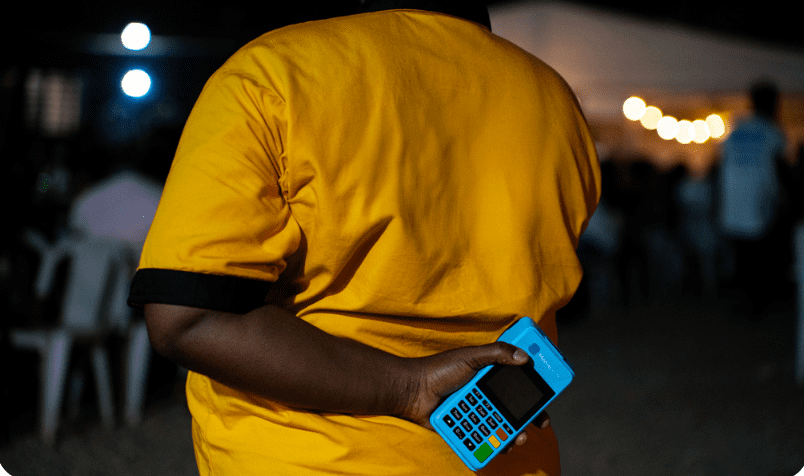
Her experience is increasingly the norm across Nigeria’s sprawling community nightlife sector. A new data-driven study by Moniepoint Inc., drawn from transaction records of more than 27,000 clubs, bars, and lounges on its payment network, reveals a sharp reversal of the wider informal economy’s cash dependency. While about half of all payments in Nigeria’s informal sector are still made in cash, the nightlife economy has gone digital.

In 2025, Moniepoint processed over NGN 900 B (~USD 665 M) for clubs, bars, and lounges, revealing the scale of the economic life that begins after sunset.

According to its latest study, bank transfers now dominate payments during peak nighttime hours, outpacing card transactions by nearly two million across Moniepoint’s network. Cash is actively discouraged, driven largely by operators’ security concerns. After dark, when crowds gather and attention scatters, carrying currency becomes a liability.

***

The data also reveals a precise rhythm to spending. Transaction volumes climb sharply from 8 p.m., peak before midnight, and then decline steadily even as venues remain full. For operators, the economic night ends earlier than the social one. The most critical window for staffing, restocking, and cash flow management falls between midnight and 6 a.m., when purchasing has already slowed but operational demands continue.

At De Synergi Lounge in Akonwonjo, manager Richard sees this pattern play out weekly. On usual nights, the existing team handles the flow. But during December, when crowds swell, “we get like two or three extra people to serve.” Across Nigeria, conservative estimates suggest at least 54,000 people work in nightlife-related roles every night, with local bars expanding their workforce by 30 to 50 percent on peak nights.

The sector’s geography defies easy assumptions. Lagos leads with 4,856 nightlife establishments on the network, followed by the Federal Capital Territory, Rivers, Delta, and Edo. But Katsina records the highest payment value for nighttime food trucks, pulling in over NGN 130 M (~USD 96 K) in the past year, while Kwara leads in transaction count. Nigeria’s night economy, the study shows, is distributed rather than concentrated in elite urban enclaves.

Tosin Eniolorunda, co-founder and group CEO of Moniepoint, said the findings should reshape how the sector is viewed. “Nigeria’s local bars and nighttime operators are not peripheral to the economy; they are a critical part of its architecture,” he said. “We see a substantial and sustained economic sector that employs hundreds of thousands of Nigerians every night and deserves the same attention we give to agriculture, healthcare, and retail”.

For operators like Olorunrinu, the shift to digital payments has also brought unexpected clarity. Real-time settlements mean she can track revenue as it happens, and Moniepoint’s POS terminals, each assigned a dedicated bank account number, provide instant audio confirmation when payments land, as there are no screenshots to verify, no alerts to wait for.

“That small ping changes everything,” the report highlights. The night can continue.

PayPal Promised Nigerians A Fresh Start — Users Say It Feels Like The Past

By Henry Nzekwe  |  February 24, 2026

When Precious received a USD 380.00 payment from a client in mid-February, she thought the long wait was finally over. The data analyst had linked her PayPal account to Paga weeks earlier, after the Nigerian fintech pioneer announced a landmark partnership with the U.S. payments giant, finally allowing users in the country to receive money after two decades of restrictions.

Then PayPal restricted her account.

“After filling everything, when money came in, PayPal still restricted the account,” Precious, who goes by @Prithee_p on X, posted on Feb. 19. “Now, they said they would hold the money till March 9 before releasing it despite filling out all their paperwork.”

She shared screenshots of her PayPal dashboard showing the hold. Her warning to fellow freelancers was blunt. “Avoid PayPal and Paga at all costs. Not only will you encounter unexpected issues, you’re at the risk of never receiving your funds.”

The same week, another user, Abdulaziz, who posts as @Utdpunter, received USD 290.00 from a client. PayPal closed his account immediately. When he appealed, the decision was final. His account was permanently deactivated, and his funds were caught in the company’s compliance machinery.

Tayo Oviosu, Paga’s founder and group CEO, responded directly to Abdulaziz on X. “We’ve had the opportunity to review with PayPal what happened and the decision made. While we cannot share the exact reasons, we are satisfied that the decision is a valid risk-based decision due to the behaviour observed on the account.”

For many Nigerians watching this unfold, the pattern felt painfully familiar.

PayPal first restricted Nigerian users in 2004, citing fraud concerns. For 22 years, Nigerians could only send money, never receive it; a policy that shut countless freelancers, digital creatives, and small businesses out of the global economy.

Over that period, workarounds emerged. Some used VPNs to mask their location. Others relied on friends abroad to receive payments and send funds through informal channels. Many simply lost opportunities.

The company attempted re-entry before. A 2014 partnership with First Bank enabled only outbound payments. A 2021 integration with Flutterwave helped businesses, but left individual users untouched.

This time, the company partnered with Paga, a 16-year-old Nigerian fintech that processed NGN 17 T (USD 12 B) in transactions in 2025. The promise was that Nigerians could finally link their PayPal accounts to a local wallet, receive international payments, and withdraw in naira. Oviosu had first pitched the idea to PayPal in 2013. It took 13 years to materialise.

Within hours of the January 27 launch, users reported the same problems that have plagued PayPal’s Africa operations for two decades. One user described logging in to test with a one-dollar payment. His account was immediately restricted. Another claimed to have submitted verification documents and was banned for life. Yet another described losing thousands of dollars between 2019 and 2021 after PayPal held his funds.

Oviosu pushed back against claims that the problems are widespread. “There is no widespread issue,” he told WT. “The complaints we’ve received so far largely relate to verification hiccups or immediate restrictions following initial deposits. In many cases, this suggests that PayPal’s internal compliance checks and automated risk monitoring systems are flagging certain activities for review.”

He noted that tens of thousands of users have successfully linked accounts and transacted without issue. “The average user has already withdrawn twice in just a few weeks,” he said. “The results are exceeding the initial expectations set by both our companies.”

***

Paga has set up a dedicated email address for fully verified users experiencing issues. “We’re working with the PayPal team to support users who have unresolved issues actively,” Oviosu said.

The fintech vet also pointed out that the dual compliance process requiring both PayPal and Paga verification is designed to reduce risk flags while keeping the platform aligned with local regulations. PayPal’s global risk-scoring systems remain in operation, he added, as an industry-standard measure to protect users.

“Users experiencing blocks are usually prompted to submit documents and complete identity verification steps inside the PayPal app or dashboard. One of the issues we have seen are people taking the picture of an image of an ID versus the physical ID itself. That action is seen to be dubious and we are educating the public to not do so,” he told WT. In a separate post, he admonished users to desist from requesting money from strangers.

He added that Paga is investing in user education, and both companies have created dedicated resolution teams. For fully verified users with unresolved issues, the company is working with PayPal to escalate cases. Oviosu encouraged impacted customers to reach out via email for assistance.

But for some users, the damage is already done. “PayPal should be transparent with their procedures,” Precious, the data analyst from earlier, wrote. “Don’t make users think their account is okay, then limit or hold funds once received.”

The frustration is amplified by context. During PayPal’s long absence, Nigerian fintech companies built systems that work without mass account freezes. Paystack, which Stripe acquired for USD 200 M in 2020, processes billions in payments. Flutterwave, now valued at over USD 3 B, powers cross-border transactions across the continent. These companies filled the gap PayPal left behind.

Oviosu acknowledged the scepticism but defended the partnership. “Payment companies do their best to balance security and access, but this can sometimes result in unintended difficulties,” he said in a public note. “This partnership is about building a better path forward.”

For now, the path forward remains uneven. Some users are moving money smoothly. Others are watching funds sit frozen, waiting for a resolution that, based on two decades of history, may be slow to come.

Feature Image Credit:  NurPhoto via Getty Images

Nigeria’s Banks Finally Clear Massive USSD Debt After Four-Year War With Telcos

By Henry Nzekwe  |  February 23, 2026

Nigeria’s banks have fully repaid nearly NGN 300 B (~USD 200 M) in outstanding debt to telecommunications operators for Unstructured Supplementary Service Data (USSD) services, closing a four-year dispute that threatened the stability of the country’s digital financial ecosystem, the Association of Licensed Telecommunications Operators of Nigeria said.

The resolution removes a long-running friction point between two of Nigeria’s most vital sectors. USSD codes—the short numbers like *123# that allow mobile phone users to transfer money, check balances, and pay bills without smartphones or internet access—have become essential infrastructure for financial inclusion in Africa’s most populous nation.

At its peak, the unpaid debt had grown into a systemic risk, according to ALTON Chairman Gbenga Adebayo, who credited Nigerian Communications Commission leadership with steering both industries toward resolution.

“When Dr. Maida assumed office, he inherited significant industry challenges. One of the most difficult was the USSD debt crisis—a debt burden that grew over four years to nearly NGN 300 B,” Adebayo said during a visit to NCC Chairman Idris Olorunnimbe. “It had become a systemic risk to our sector and the digital financial ecosystem. Through firm leadership, structured engagement, and decisive coordination, Dr. Maida and his team resolved this issue”.

The debt clearance was achieved alongside a fundamental restructuring of how USSD services are paid for. Under the new End-User Billing model implemented in mid-2025, the 6.98 naira charge per 120-second session is now deducted directly from users’ mobile airtime rather than from bank accounts, removing banks from the payment chain entirely.

Previously, banks collected charges from customers but often failed to remit them to telecom operators. By June 2025, 13 banks had cleared 95 percent of the debt, totalling about NGN 171 B, with the remaining balance now fully settled.

The resolution coincides with stabilising foreign exchange conditions and follows last year’s approval of a 50 percent tariff adjustment, the first major pricing review in 13 years, which operators argued was necessary to offset inflation, currency depreciation, and rising energy costs.

“For 13 years, the industry maintained static pricing despite rising inflation, currency volatility, ageing infrastructure, and escalating energy costs,” Adebayo said. “Our tariffs fell significantly below cost. Investment slowed”.

Industry observers say the debt clearance removes a significant overhang from operator balance sheets and restores predictability to a sector critical to Nigeria’s digital economy. “When investors see stability in cash flow and policy direction, confidence follows,” Adebayo noted.

NCC Chairman Olorunnimbe pledged continued regulatory consistency, stating that “investors commit capital where rules are transparent, decisions are data-driven, and the regulatory environment is predictable”.

For ordinary Nigerians who rely on USSD codes for banking, particularly those without smartphones, the new model offers clearer billing with consent prompts before each deduction and safeguards against double-charging.

While some consumer advocates have expressed concern about the impact on low-income users, operators maintain that the previous system was unsustainable and that the new framework ensures the long-term availability of USSD services critical to financial inclusion.

The resolution marks the end of years of accusations and counter-accusations between banks and telecom operators that had threatened service continuity for millions of Nigerians dependent on mobile money.

Kenya’s Card Payments Creep Higher, Encroaching On Mobile Money & Cash

By Staff Reporter  |  February 19, 2026

Kenya’s card payments at point-of-sale terminals reached KES 297 B in 2025, a modest but telling increase from KES 291.9 B the previous year that underscores how plastic money is slowly embedding itself deeper into the country’s formal retail landscape.

The number of card transactions rose 4.1 percent to 61.7 million, while point-of-sale machines increased to 54,454 by December 2025 from 48,653 at the end of 2024, according to Central Bank of Kenya data. These incremental gains reflect years of patient merchant onboarding and gradual behavioural shifts.

Cards have long occupied a narrow corridor in Kenya’s payment ecosystem, present in supermarkets, hotel lobbies, and airline counters—places that felt formal and slightly removed from the street economy.

That corridor is widening. Terminals now appear in fuel stations, pharmacies, mid-tier restaurants, and neighbourhood stores. Banks have pushed devices outward, merchant by merchant, estate by estate, and the numbers reflect that slow territorial expansion.

***

The latest figures mark another milestone in a long climb that began with KES 43.6 M in 2010, when the Central Bank first published full-year card usage data. By 2015, the value had reached KES 70.7 B. Over the past decade, that base has multiplied more than four times.

Cash remains dominant. The 2024 FinAccess Household Survey shows 79.8 percent of daily expenses are still paid in cash, with mobile money accounting for 13.1 percent and cards trailing behind both. Kenya built its global reputation on mobile wallets, but cash still circulates freely in open-air markets and matatus, while card payments continue their upward creep.

Mobile money agent data adds texture to the picture. The value of cash handled by agents declined 5.3 percent last year to KES 8.2 T from KES 8.7 T in 2024, while transaction volumes rose 2.5 percent to 2.6 billion. Smaller, more frequent transactions are becoming common. The average ticket is thinning.

Cards inhabit a different lane. They are used where formality meets record-keeping. Merchants absorb interchange and bank fees, so consumers feel no direct charge at the till. That structure matters. When payment feels costless to the buyer, friction fades, and behaviour shifts incrementally.

***

The only interruption in the upward march came in 2020, when card payments fell to KES 157.7 B from KES 177.3 B as lockdowns closed physical retail spaces and POS machines sat idle. By 2021, as restrictions eased, card usage rebounded to KES 194.3 B, resuming its pre-existing trajectory.

Card usage is typically tethered to physical retail; it thrives in supermarkets, restaurants, and travel desks. When those sectors contract, card payments follow.

Merchants absorb card fees for reasons beyond mere acceptance. Reduced cash in drawers lowers theft risk, reconciliation becomes easier, and accounting systems integrate card records with relative ease.

For medium and large retailers, these efficiencies offset interchange costs. Banks have leaned into this logic, expanding merchant onboarding campaigns and rolling out chip-and-pin cards, contactless capability, and tighter fraud controls.

Yet cards have not penetrated open-air markets or small kiosks in meaningful numbers. Infrastructure costs, settlement timelines, and merchant fees still act as barriers.

Until that friction eases, the majority of low-value daily transactions will remain outside the card system. This creates a layered payments landscape where high-frequency, low-value exchanges stay mobile or cash-based, while higher-value retail purchases increasingly pass through cards.

The decline in mobile money agent cash value alongside rising transaction counts hints at internal recalibration. Consumers appear to be distributing transactions differently, with larger retail purchases migrating toward cards and smaller, routine transfers continuing through wallets. There is no open conflict between channels. Banks issue cards and often partner with mobile platforms. Consumers move between systems depending on context.

***

Over time, the economics could sharpen. If card acceptance widens further and merchants negotiate lower fees at scale, cards may capture more mid-range retail spending. Conversely, if wallet providers adjust pricing or integrate deeper with merchant systems, they could consolidate their hold. Policy will influence the direction. Fee caps, interchange regulation, and digital taxation debates have already surfaced in regulatory forums.

The open question is whether that position remains secondary. If POS machines continue rising and transaction values keep inching upward, the compound effect over another five years could be substantial.

Yet the gravitational pull of cash and mobile money remains strong. Cash is free to use and universally accepted. Mobile wallets are embedded in social and commercial life. Cards operate within a narrower corridor of formality and infrastructure.

The latest figures do not rewrite the hierarchy of payments, but they do show that plastic money has carved out durable space in a market once thought to belong almost entirely to mobile wallets.

Kenya Says No To TikTok Ban, Opts For Strict Rules & Creator Payments

By Staff Reporter  |  February 19, 2026

Kenyan lawmakers have rejected calls for a blanket ban on TikTok, instead backing sweeping new regulations that would force the platform to store user data locally, overhaul its content moderation systems, and introduce direct payments to creators.

Parliament’s decision, following a petition urging a nationwide ban over concerns about explicit content, child exploitation, and national security, positions Kenya among a growing number of countries seeking to tame global social media giants through structural oversight rather than prohibition.

“The motion before the House is not for banning TikTok; it is for the regulation of TikTok,” Speaker Moses Wetang’ula said during the debate, pushing back against misinformation surrounding the proceedings.

Dagoretti South MP John Kiarie urged colleagues to treat the matter as a policy issue rather than a moral crusade. “This motion must be seen as a policy debate, not a moral panic,” he said.

The platform’s popularity in Kenya has soared alongside enforcement challenges. Between July and September 2025, TikTok removed more than 580,000 videos posted in Kenya for violating its community guidelines, with 99.7% taken down proactively before any user reported them and 94.6% deleted within 24 hours.

Around 90,000 livestreams were interrupted during the same period for breaching content standards, representing about 1% of all streams.

The regulatory framework endorsed by MPs targets several key areas. Platforms would be required to establish local infrastructure so Kenyan user data is stored within the country, addressing sovereignty and national security concerns as most data currently sits on overseas servers.

TikTok’s AI moderation systems would face audits, with requirements that algorithms be trained in local languages and dialects, addressing complaints that automated systems miss offensive vernacular content.

Lawmakers also urged TikTok to roll out direct monetisation features in Kenya, allowing creators to earn from their content. Currently, only brand collaborations and gift features are available.

In TikTok’s first year of commercial operations in Kenya, over 200 local creators collectively earned more than USD 350 K through brand deals, though the platform’s Creator Rewards Program remains unavailable in Sub-Saharan Africa. Some Kenyan creators now earn between KES 50 K and KES 300 K monthly through brand partnerships and live gifts.

The Ministry of Interior and the Ministry of ICT have been directed to implement the framework within four months, with amendments planned to the Kenya Information and Communications Act to empower the Communications Authority as the lead regulator. The Office of the Data Protection Commissioner will audit compliance with Kenya’s Data Protection Act.

The approach stands in contrast to Australia’s world-first ban on under-16s, which has already led to the deactivation of millions of accounts, while Egypt is considering a similar move. But Kenyan lawmakers deliberately chose a different path, arguing that banning platforms merely pushes problems elsewhere while forfeiting economic opportunity.

Employee Fraud & Workplace Corruption Are Bleeding Nigeria’s Small Businesses Dry

By Staff Reporter  |  February 18, 2026

Nigeria’s micro, small and medium enterprises are losing between NGN 5 T and NGN 10 T (USD 3.7 B to USD 7.4 B) annually to employee fraud and workplace corruption, a policy think-tank has warned, describing the losses as a “hidden tax” silently crippling the country’s entrepreneurial economy.

The Centre for the Promotion of Private Enterprise (CPPE) said in a recent statement that internal fraud has evolved beyond a routine management issue into a systemic economic threat undermining business sustainability, investor confidence, and national growth.

“Employee corruption and occupational fraud constitute one of the largest hidden drains on Nigeria’s entrepreneurial economy,” said Muda Yusuf, CPPE’s chief executive officer.

The losses, equivalent to roughly 2-4% of Nigeria’s GDP, manifest in multiple forms, including theft of cash and inventory, diversion of sales proceeds, payroll manipulation, procurement kickbacks, and falsification of financial records.

The CPPE noted that most Nigerian MSMEs operate on extremely thin profit margins, often below 15% of turnover. Fraud losses of 5-10% of revenue can therefore eliminate profits entirely, deplete working capital, and accelerate business closure.

“This dynamic contributes to the high mortality rate of small businesses, where studies suggest up to 80% fail within five years and over half fail within the first year, with employee fraud being a significant contributory factor,” Yusuf said.

The think-tank identified retail and wholesale trade, hospitality, agribusiness, transport, and small manufacturing as the most vulnerable sectors due to their cash intensity, weak documentation, and dispersed supervision.

Many small businesses operate with limited internal controls, informal accounting systems, and high-trust management structures, making them especially susceptible to financial misconduct. Heavy dependence on cash transactions, limited audit capacity, and low detection and recovery rates compound the problem.

Beyond profitability, the ripple effects include reduced retained earnings, weakened investment capacity, job losses, and slower inclusive growth. “Occupational fraud is therefore not merely a governance issue but a national welfare concern,” Yusuf added.

The CPPE urged business owners to strengthen basic internal controls, separate cash handling from record-keeping, conduct routine reconciliations, and reduce cash dependence through digital payments.

“Digitalisation is one of the most powerful low-cost anti-fraud tools available to MSMEs,” the statement noted, as digital payment channels create transaction traceability that makes diversion and concealment far more difficult.

At the policy level, the CPPE called for a national MSME internal-control framework linked to credit and government programmes, accelerated digital financial inclusion, stronger legal enforcement, and expanded governance education.

The warning comes as Nigeria ranked 142nd in Transparency International’s 2025 Corruption Perception Index, reflecting the country’s long-standing struggle with systemic corruption despite repeated reform commitments.