Nigeria’s newest bank has a simple pitch. Rex Africa says it is the country’s first “AI-native” lender, built around artificial intelligence from the ground up rather than bolted on to an existing model. The company, which launched in late October 2026, offers savings, credit, payments and an AI financial agent called Rex Atlas that reads transaction history and offers conversational guidance on spending and saving.
On paper, it addresses a real gap. EFInA’s 2026 survey found that formal financial inclusion rose to 73% of Nigerian adults, yet only about 25% are financially healthy, meaning most banked Nigerians still lack real financial security. Rex is betting that intelligence, not just access, can close that gap.
But the launch materials leave basic questions unanswered. The company says it operates through Rex Microfinance Bank, yet its website shows no CBN licence number, as one publication pointed out. Its app store listing names RexCredit Limited as provider and Rex Financial Technologies Ltd as copyright holder, and records show it began life as Savyt in 2021 with a reported seed round of about USD 370 K. The same observation notes that the app has also been live since March 2024, which makes the October launch look more like an AI-led relaunch than a new bank.
Deposit protection is another gap. NDIC covers up to NGN 2 M (~USD 1.48 K) per depositor at microfinance banks, against NGN 5 M (~USD 3.7 K) at commercial banks, so a Rex saver with a large balance is only partly insured. Atlas also advises on borrowing while Rex sells loans through RexFlex, a tension the company has not addressed. And the site carries no privacy policy or terms, leaving unclear how Atlas uses customer data or whether it trains models on it.
Rex has not published customer numbers, deposits, loan books or default rates, and says only that it has attracted thousands of individuals and hundreds of businesses. It also offers investment guidance without saying what registration it holds for that, and no Nigerian rule yet sets a standard for AI that advises ordinary people on money. None of this means Rex cannot deliver. But for a firm asking customers to hand over their financial history, the burden of proof sits with the company.
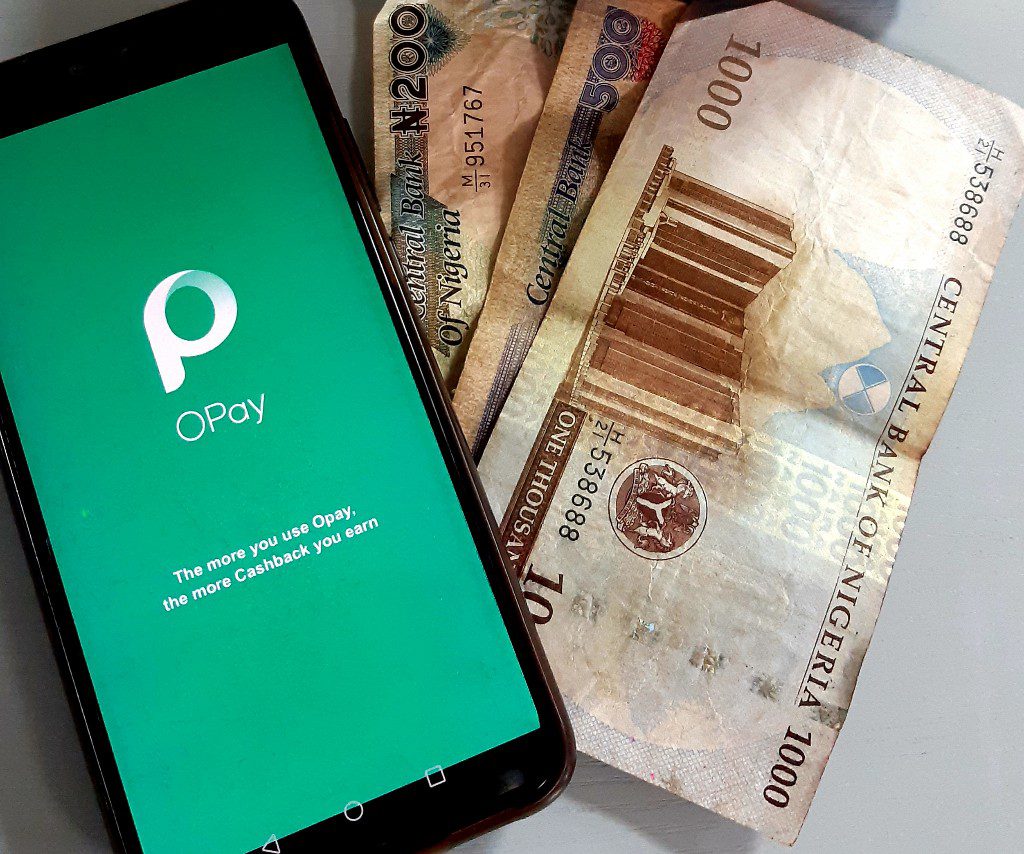
Besides, Rex is entering one of Africa’s most crowded and well-capitalised retail banking markets. Fintech apps, not traditional banks, already dominate Nigerian smartphones. OPay is installed on 69% of devices surveyed by KPMG and Orange, PalmPay on 29%, Moniepoint on 14%, and Kuda on 8%. The best-performing legacy bank app, Access Bank, sits at 16%. These rivals are not standing still. Kuda has spent years building AI into advice and fraud tools, and Moniepoint processed NGN 412 T (USD 3-5.4 B) in payments in 2025.
The legacy banks are also mounting a costly counteroffensive. Nigeria’s ten largest lenders increased IT spending by 30.8% to NGN 177.91 B (USD 131.8 M) in the first quarter of 2026 alone, with Zenith Bank nearly doubling its technology budget to NGN 43.83 B (USD 32.4 M). That money is going into cloud infrastructure, cybersecurity and AI, precisely the ground Rex claims as its own.
Rex, by contrast, is a microfinance bank, not a commercial bank, operating under a different licence class with different limits. Competing with OPay’s balance sheet and Zenith’s IT budget will require far deeper pockets.
The regulatory backdrop adds another layer of execution risk. The Central Bank of Nigeria has upgraded fintech and microfinance licences to national status, raising minimum capital requirements to NGN 5 B (USD 3.7 M) for national operators. It has also set a January 2027 deadline for banks and fintechs to store payment transaction data on local servers, a costly compliance burden for smaller players. These are not minor operational details for a young microfinance bank trying to scale an AI platform.
Rex’s timing is sound because the financial health gap is real and policymakers are talking about it. But the gap between access and outcomes is exactly where fintechs and legacy banks are already fighting hardest.
Founder Yinka Odeleye says banking “should go beyond moving money to understanding customers”. That is a credible thesis. The harder question is whether a microfinance bank with limited capital can out-execute rivals that already own the customer relationship, the distribution and the technology budget. In Nigeria’s banking market, being first to a label is far easier than achieving durable scale, and it remains to be seen whether AI’s novelty alone would be enough.