MaxAB-Wasoko Secures Egyptian Banking License In Fintech Pivot
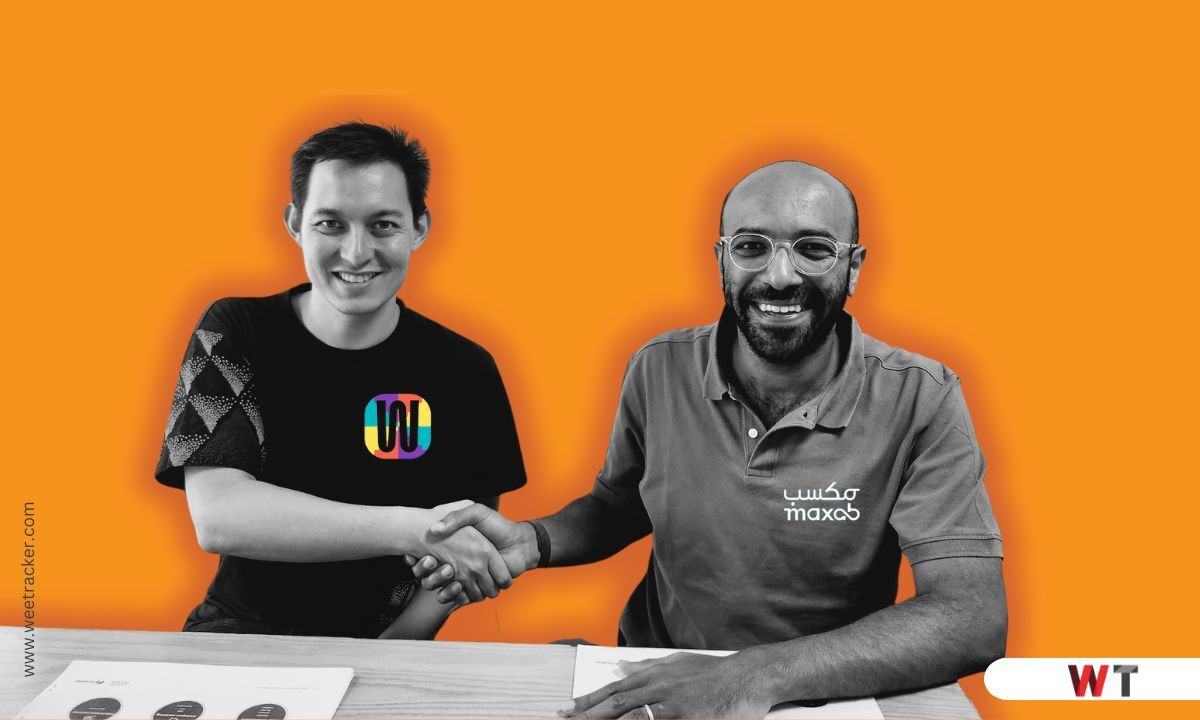
Egypt’s Central Bank has granted MaxAB-Wasoko a pivotal financial services licence, enabling cash deposits and withdrawals for informal retailers through its mobile app.
The approval, secured via partnerships with Banque Misr and Egyptian Banks Company as shared in a post, transforms the merged B2B giant into a quasi-banking channel for thousands of merchants, accelerating its retreat from traditional e-commerce logistics.
The license represents a tactical evolution for Africa’s largest B2B platform. Retailers may now access bank and telecom wallets through MaxAB’s interface, extending the company’s fintech infrastructure beyond its established USD 20 M working capital loan portfolio. Egypt’s fintech operations already generate over USD 180 M annually for the group, with repayment rates exceeding 99% on loans underwritten via transactional data.
““We’ve seen our fintech services in Egypt more than double in the past year,” said Daniel Yu, co-CEO of MaxAB-Wasoko and founder of Wasoko.
“It’s become our strongest value driver and will remain our top priority across all markets for the next 12 months.”




His disclosure aligns with the group’s quiet scaling back of Moroccan e-commerce operations, where executives now prioritise “developing fintech activities” before relaunching any marketplace.
“Strategically, we are currently focusing our efforts on developing our fintech activities in Morocco and preparing for the launch of our marketplace,” said Othmane Benzakour, CEO of MaxAB’s Moroccan subsidiaries, ABmaxCo and MaxPay.
“During this transition phase, we have decided to slow down our e-commerce activities.
A banking license enables MaxAB-Wasoko to circumvent margin-sapping physical logistics, while transaction histories enable real-time credit scoring. Partnerships with Banque Misr/EBC avoid infrastructure costs
The move mirrors wider African B2B recalibrations. Nigeria’s OmniRetail reached profitability by embedding its OmniPay lending tool (processing USD 95 M monthly) within a third-party logistics network. Similarly, MaxAB’s recent acquisition of Egyptian fintech Fatura, projected to contribute 25% of local revenue, brought embedded lending infrastructure across 600 wholesalers.
Despite bullish metrics, Sweden’s VNV Global, one of the early backers, has marked down its MaxAB-Wasoko stake on multiple occasions, with the latest such move in Q1. The writedown signals lingering concerns about African B2B’s fundamental economics, where warehouse-dependent models have collapsed under 2-5% FMCG margins.
EFG Holding’s venture arm, which took a board seat after backing the Fatura deal, remains publicly bullish. CEO Aladdin ElAfifi calls the integration “transformational” for digitising informal retail. Yet MaxAB-Wasoko’s all-stock merger involved no fresh capital, forcing operational triage. Profitability remains confined to three of its five markets.
The Egyptian licence crystallises a sector-wide truth that physical distribution alone is unlikely to sustain venture-scale returns. As Kenya’s MarketForce abandoned its RejaReja platform after confronting “perfect competition,” and Sabi pivoted to commodity exports, MaxAB-Wasoko’s banking move signals fintech as the main viable moat.
Yu’s admission that fintech services “more than doubled” in Egypt, becoming the group’s “strongest value driver,” foreshadows further withdrawals from inventory-heavy markets. With 450,000 merchants and USD 230 M in funding, the company now processes USD 15 M monthly in digital credit flows, a figure poised to expand through planned buy-now-pay-later products.