The Five Best-Performing Stock Markets In Africa (2025 Scorecard)

In 2025, an exciting narrative permeated global finance in the shape of several African stock markets delivering some of the world’s highest returns for foreign investors, decisively outperforming major global benchmarks. This surge, tracked by the investable indices of Morgan Stanley Capital International (MSCI), signals a growing recognition of the continent’s economic potential.
MSCI indices are the leading global benchmarks for international investors. The ranking below is based on the USD-denominated returns for 2025 from the specific African markets included in the MSCI Frontier and Emerging Markets Indices.
A Look at the Top Performers
1. Egypt
Egypt’s stock exchange was the uncontested leader, delivering a stellar 99% dollar return in 2025. This phenomenal performance was powered by double-digit share price growth in major companies like Commercial International Bank (CIB) and a 6.2% appreciation of the Egyptian pound against the US dollar, which amplified gains for foreign investors. Momentum has continued into 2026, with the MSCI Egypt Index showing strong gains in early January.
2. Kenya
 Free Reads
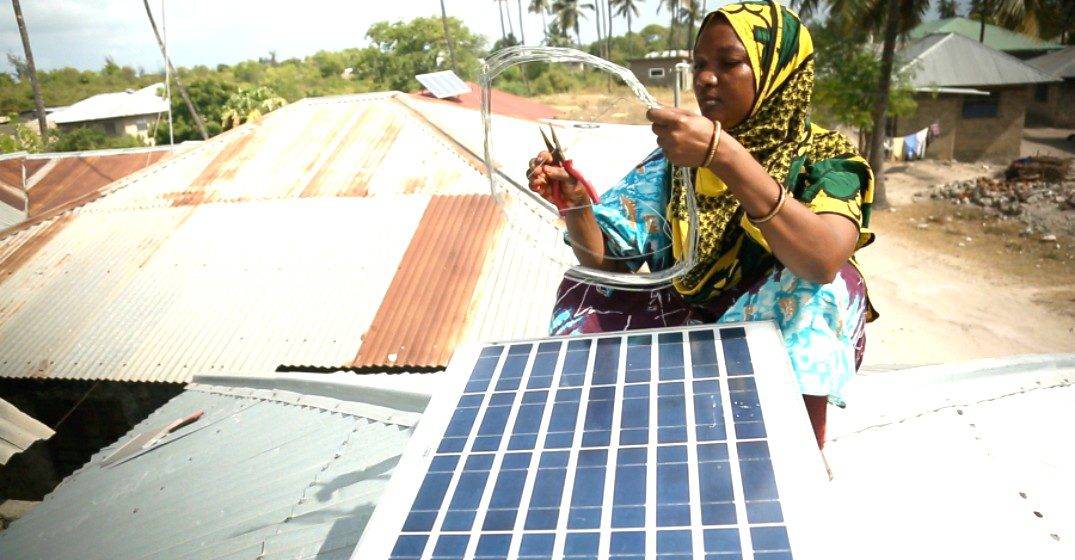
Zambia’s Women-Led Clean Energy Distributor WidEnergy Secures Investment From GreenTec Capital

 Free Reads
Would You Drink Wine That Came From Space? A Startup Just Sent 12 Bottles To Age In Outerspace




The Nairobi Securities Exchange (NSE) secured second place with a 52.2% return, building on its position as Africa’s top-performing MSCI market in 2024. Unlike Egypt, Kenya’s gains came almost entirely from share price appreciation, as the Kenyan shilling was largely stable against the dollar. Performance was driven by heavyweights like Safaricom (+66.3%) and KCB Group (+58.1%), as well as spectacular surges in small-cap stocks such as Kenya Power.
3. Nigeria
Nigeria’s market closed 2025 on one of its strongest notes in nearly two decades. The MSCI Nigeria Index posted a 47.2% gain, reflecting a broader market rally fueled by macroeconomic stabilisation, banking sector recapitalisation, and significant market reforms. The total market capitalisation approached a landmark NGN 100 T, underscoring the surge in investor confidence.
4. & 5. Zimbabwe and Côte d’Ivoire
Rounding out the top five, Zimbabwe and the regional Bourse Régionale des Valeurs Mobilières (BRVM), which serves Côte d’Ivoire and other West African Economic and Monetary Union states, posted very similar returns of 44.5% and 43.6%, respectively. Their performance highlights strong investor interest in diverse frontier markets across the continent.
Why Weren’t Other High-Flying Markets on This List?
Reports of even more explosive returns in other African markets have made waves. For instance, the Malawi Stock Exchange soared nearly 248% in 2025, and Ghana’s exchange delivered over 154% for dollar investors.
These markets do not appear in the MSCI top five because they are not currently included in the specific MSCI Frontier and Emerging Markets Indices that the ranking is based on. MSCI indices are designed to be investable benchmarks for international investors, and they include markets based on criteria like size, liquidity, and openness to foreign ownership.
MSCI tracks a specific, investable basket of large and mid-cap stocks in 10 African countries, serving as a practical benchmark for global institutional capital. Other rankings often use local, broad-market indices (like the Malawi Stock Exchange All Share Index), which include all listed companies and can be driven by a handful of high-flying stocks in very small, illiquid markets.
In short, MSCI’s list shows where large-scale, international money flowed in 2025, while other lists may capture dramatic local rallies in smaller, more specialised markets.
What This Means for Investors
While the growth is impressive, it’s important to understand the scale. African equity markets, while progressing, remain small and concentrated compared to global peers. The entire continent’s listed companies represent only about 0.4% of global market capitalisation. Activity is heavily concentrated in a few nations like South Africa, Egypt, Nigeria, and Morocco, and markets often face challenges with liquidity and high trading costs.
Nevertheless, the 2025 performance is a powerful signal. It demonstrates that with the right reforms and stable conditions, African capital markets can offer compelling risk-adjusted returns, attracting the attention of global investors looking for the next generation of growth.
The strong showing from frontier markets like Kenya, Nigeria, and Côte d’Ivoire suggests growing depth and resilience beyond the continent’s larger, more established emerging markets like Egypt and South Africa.