MTN’s Rebound In Nigeria Masks Growing Pains In Fintech Push

MTN Nigeria has staged a dramatic financial recovery, reporting a full-year profit after tax of NGN 1.11 T (USD 810 B) for 2025, reversing the NGN 400 B (USD 292 M) loss it suffered the previous year.
The telecom giant’s revenue surged 54.9 percent to NGN 5.2 T (USD 3.79 B), fueled by a landmark 50 percent tariff hike approved in January 2025 and a long-awaited swing to foreign exchange gains.
For the first time since 2022, MTN posted a net foreign exchange gain—NGN 90.27 B (USD 66 M) for the full year, a sharp reversal from the NGN 925 B (USD 675 M) loss that had battered its books in 2024.
The naira’s relative stability, appreciating from NGN 1.535 K per dollar in December 2024 to NGN 1.475 K by September 2025, provided breathing room for a company long exposed to currency volatility.
“The 2025 financial year was described as a remarkable period of recovery and resilience for the firm,” CEO Karl Toriola said, noting that the turnaround enabled “accelerated network investment to enhance quality of service.” MTN invested over NGN 1 T in capital expenditure during the year, expanding base stations and fibre infrastructure.

 Free Reads
600 K+ Ghanaian Companies Stand The Chance Of Being Erased From The Country’s Business Database
 Free Reads
South Africa Leads Africa In Number Of FDI Flows Projects Despite Low Investor Confidence


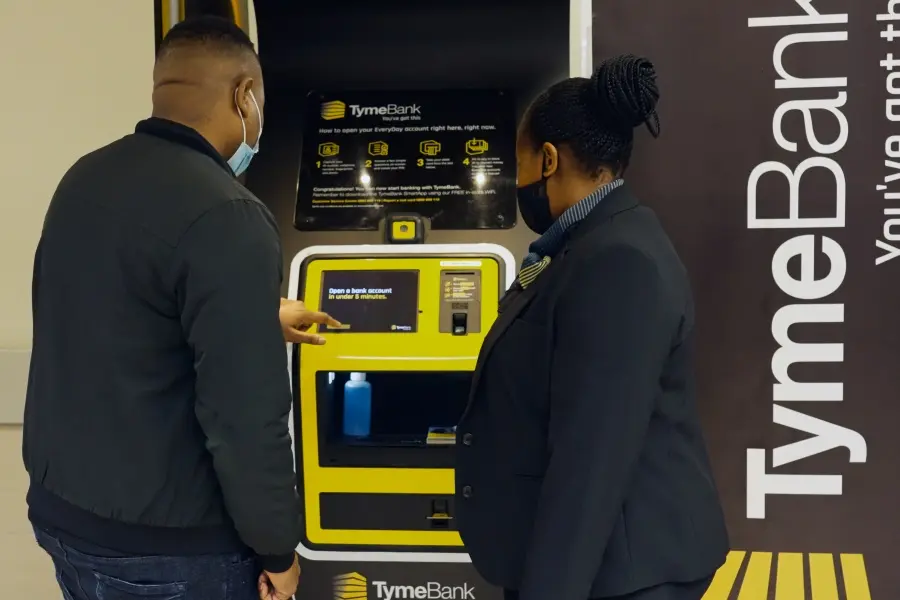


But beneath the headline recovery, the company’s fintech ambitions tell a more complicated story.
On paper, MTN’s fintech division, which houses MoMo Payment Service Bank, appears to be firing on all cylinders. Revenue surged 72.5 percent in the first nine months of 2025 to NGN 131.6 B, roughly NGN 43 B per quarter. If spun off as a standalone entity, analysts noted, the unit would already command unicorn valuation.
Yet the growth in revenue has not translated seamlessly into user engagement. Active MoMo wallets declined 6.1 percent to 2.7 million in the first half of 2025 compared to December 2024, raising questions about the stickiness of the company’s financial services. The decline was even steeper earlier in the year; active wallets fell to just 2.1 million in the first quarter, a 55.6 percent year-on-year drop.
While the company added approximately 562,000 new wallets in the second quarter, suggesting a rebound, the dip exposed the challenge of converting MTN’s massive subscriber base—85.4 million customers and 51.1 million active data users—into habitual fintech users.
The fintech revenue growth itself requires closer examination. Industry analysts note that nearly all of the increase is driven by Xtratime, an airtime lending product where MTN lends subscribers credit to make calls when they run out. While classified as fintech revenue, it functions more as a high-margin convenience loan than a disruptive payment service.
Once airtime lending is stripped out, the rest of the fintech business—the part meant to compete with dominant players like Moniepoint and OPay—brought in just NGN 6.8 B in the first nine months of 2025. For a company reporting NGN 5.2 T in total revenue, that figure is hardly significant.
Notably, MTN’s mobile money business operates with restrictions. Its Payment Service Bank license allows it to accept deposits and move money but not to lend, the profitable core of fintech economics. This limitation puts MoMo at a structural disadvantage against pure consumer fintech competitors.
For the average Nigerian, the investment numbers matter less than the bars on their phone. A year after the 50 percent tariff hike, service quality remains erratic. Operators recorded over 40,000 network disruptions in 2025, including 19,000 fibre cuts and 3,200 equipment thefts.
“Last year, I spent NGN 5 K a month on data. Today, I spend NGN 8 K for the same volume, yet I still have to stand on my balcony to make a clear WhatsApp call,” Tunde Adeoye, a digital entrepreneur in Yaba, told The Guardian recently.
NCC Executive Vice Chairman Aminu Maida has signalled that 2026 will be “the year of consequences,” moving from encouraging investment to enforcing performance.