A Founder’s Unusual Case For Ditching Africa’s Noisy ‘Big Four’ For Contrarian Bets
Nigeria and Kenya built African fintech’s first decade. The argument that they’ll define the second is getting harder to make, suggests an industry operator who has an inside view into where adoption, transaction flows, and market gaps are actually emerging.
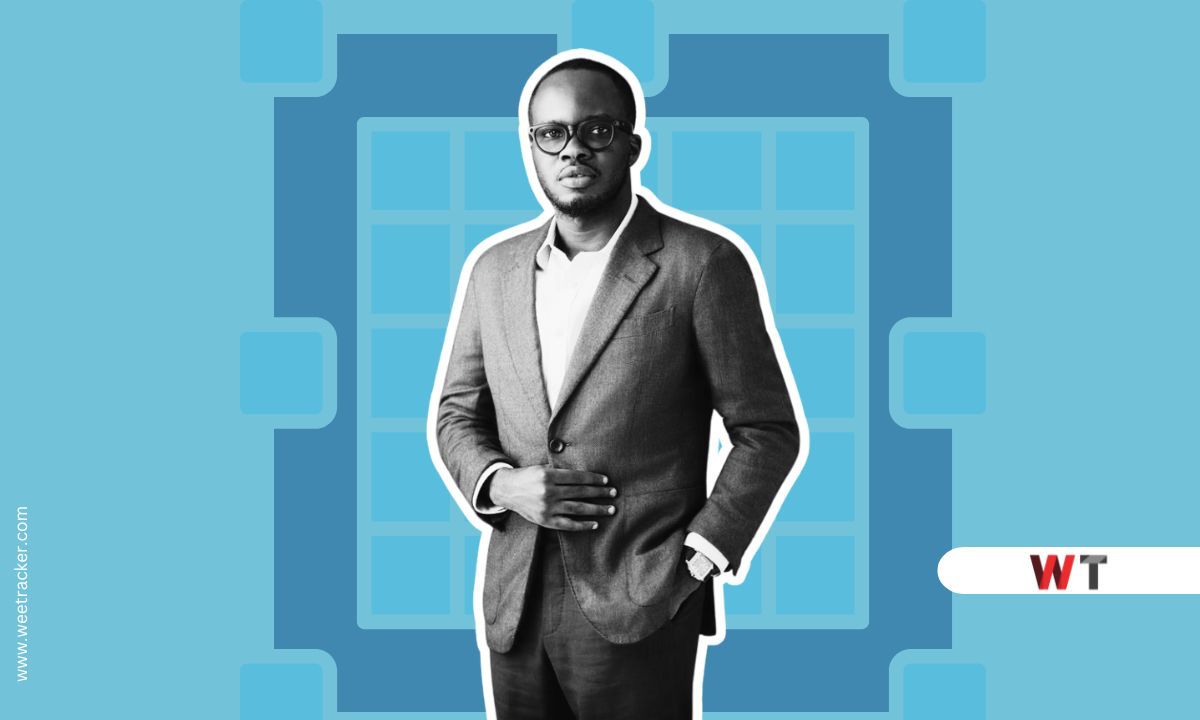
Ifelade Ayodele, founder of cross-border payments company Blaaiz, has a front-row view of where the action is actually moving. He moves money across multiple African corridors daily. And he’s convinced the next wave of category-defining fintechs will emerge from some of Africa’s overlooked markets.
African fintech raised USD 640 M in the first half of 2025 alone. The overwhelming share went to the same four markets: Nigeria, Kenya, South Africa, and Egypt. Nigeria now hosts over 430 fintech companies, equivalent to 28% of all African fintechs, despite representing just 15% of the continent’s population. Kenya, meanwhile, raised only USD 23 M in H1 2025, compared to over USD 100 M each for its Big Four peers.
Ayodele argues that the conditions that produced transformative returns no longer exist there as margins are compressed, customer acquisition costs are soaring, and the low-hanging fruit has been picked.
“What convinces me this time is genuinely different is the quality of the institutional foundations that are beginning to emerge” across overlooked markets, Ayodele tells WT in an interview. “Historically, fintech companies had to build products while simultaneously solving for regulation, payments infrastructure, customer trust, and distribution. Increasingly, that’s no longer the starting point.”
He points to several markets reaching inflection points that resemble earlier stages of the Nigerian and Kenyan fintech stories.
Ethiopia is perhaps the most striking example. State-owned Ethio Telecom’s mobile money platform, Telebirr, now serves over 54 million users, more than half of the country’s population. In the 2024/25 fiscal year alone, Telebirr facilitated transactions worth over ETB 2.38 T. Cumulative transactions since launch have reached nearly ETB 5 T ( approximately USD 31 B).
The government has laid out a National Digital Payments Strategy and is rolling out a national instant payment system designed to improve interoperability. “We’re moving from market creation to ecosystem development,” Ayodele says. “Historically that’s where some of the most valuable companies get built.”
The Democratic Republic of Congo tells a similar story. Mobile money active users exploded from 8 million to 23 million between 2020 and 2024. The GSMA estimates mobile payment transaction value will reach USD 3.85 B in 2025, reflecting a compound annual growth rate of about 19%.
With 85% of the population unbanked and 90% of transactions happening in US dollars, there is a significant opportunity. Visa recently launched its Visa Pay mobile solution in the DRC, while Onafriq is bridging Visa’s card network with millions of mobile money wallets, including M-Pesa, Airtel Money and Orange Money.
Francophone West Africa presents perhaps the most intriguing opportunity. Nearly 400 million people in the region remain underserved by traditional banking. The BCEAO has created a harmonised payments environment through a shared currency and common regulatory framework, reducing friction across multiple markets.
Furthermore, Visa is deploying USD 1 B across Africa and has identified Francophone countries—Côte d’Ivoire, Senegal, Benin—as the next frontier. “Contrary to some assumptions, the region is not lagging,” Visa’s Loïc Aplogan said last year. “It’s just a matter of scale”.
***
If Ayodele had USD 10 M to deploy outside the Big Four today, he’d spend most of his time in Francophone Africa. But not on a consumer-facing fintech.
“Consumer products tend to attract attention, but infrastructure tends to capture value over time,” he says. “I would be more interested in the layer that connects institutions, payment providers, lenders, and businesses, making it easier for the ecosystem to scale. The opportunity is not necessarily creating another wallet; it is enabling interoperability.”
That’s precisely what Ayodele is building with Blaaiz. The company started as a cross-border payments app, launched via a Telegram bot in 2023, with Ayodele checking app store downloads obsessively. Today, Blaaiz has pivoted to white-label payment infrastructure serving banks, fintechs, and financial institutions. The company now operates across multiple corridors, supporting trade, remittances, welfare transfers, and mobility financing. It has partnered with PAPSS, Afreximbank’s pan-African payment settlement initiative.
The pivot came from a crucial realisation that “Payments are not fundamentally a technology problem; they are a distribution of trade partnership, liquidity, and trust problem,” says Ayodele.
For a long time, he assumed the winners would be the companies with the best products. “In reality, many of the most successful payment businesses won because they solved the physical and economic constraints around moving value. They built agent networks, managed liquidity efficiently, earned regulatory trust, and embedded themselves into the daily flow of commerce.”
Ayodele also comments on the biggest misconception founders from Nigeria and Kenya have when expanding into newer markets.
“The assumption that digital penetration translates into digital transaction behaviour,” he says. “You look at smartphone numbers and data on the ground and conclude the market is ready for the product you built in Lagos. But cash isn’t a legacy habit in these markets; it’s the transaction medium of people whose livelihoods depend on immediacy, liquidity, and zero transaction cost.”
The fintech operator points out that the founders who’ve actually scaled across Africa didn’t win by replacing cash. “They won by building a functional bridge between cash and digital value, with physical agents at both ends. If your product strategy doesn’t account for the cash-in and cash-out layer, it’s not ambitious, it’s just incomplete,” he reiterates.
***
Where do transactions still break down in ways that would surprise outsiders? Not because of technology, according to Ayodele, who argues that “they break down because liquidity, settlement, and trade flows across the continent remain fragmented.”
Intra-African trade accounts for only about 15-18% of total African trade. More than 80% of trade is still conducted with partners outside the continent. Payment systems were designed to connect African economies to Europe, the United States, and China—not to one another, he explains. Hence, moving money from an African country to Europe can sometimes be more straightforward than moving it to a neighbouring African country.
“The payment message can move instantly. The challenge is ensuring that liquidity, currency, and settlement infrastructure are aligned on both sides of the transaction.”
On the question of whether we are likely to see one African payments market emerge, or dozens of disconnected national markets, Ayodele says, we’re still looking at dozens of distinct national markets. “The regulatory frameworks, currencies, consumer behaviours, and financial infrastructures differ significantly from one country to another. What works in Nigeria doesn’t automatically work in Senegal,” he notes.
But the industry exec also points out that a continent-wide opportunity is beginning to emerge above those markets. “The bigger opportunity lies in enabling trade, business payments, supply chains, and capital flows across markets. In the long term, the real breakthrough may come from a shared settlement layer rather than from trying to make every national market look the same.”
That’s the bet. Not another wallet in Lagos, nor another lending app in Nairobi. But the invisible infrastructure connecting the markets where millions of Ethiopians are suddenly transacting digitally, where millions of Congolese are using mobile money for the first time, where a harmonised Francophone bloc of 140 million people shares a single currency.
Ayodele is steadfast in his view that the next decade of African fintech won’t look like the last one, and that the companies that define it may not come from where one would expect, just as he is convinced they probably won’t be the ones people see, but rather the ones underneath, making everything else possible.