Nigeria’s Massive Yet ‘Invisible’ Economic Engine Is Running On Empty
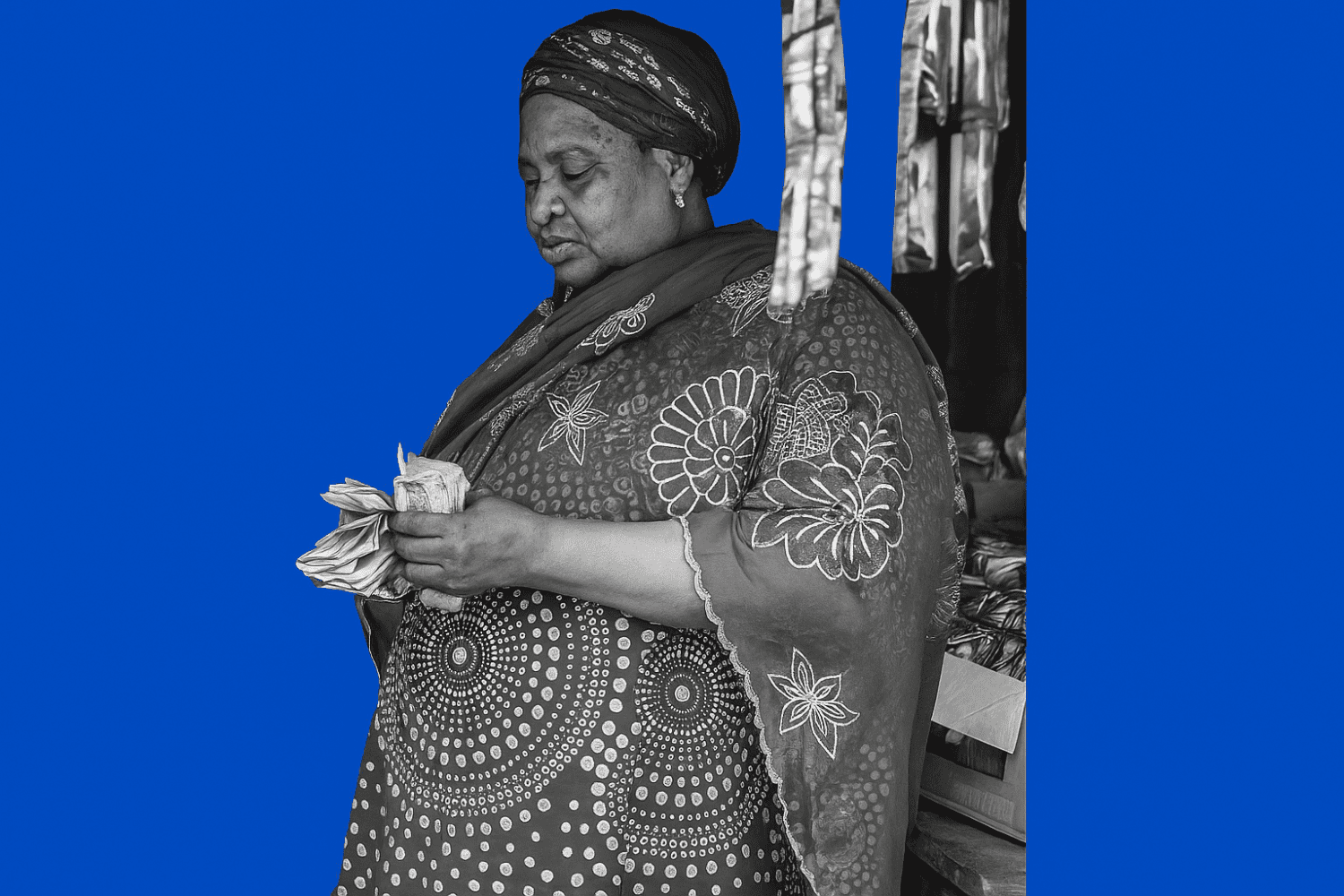
Look past the glossy headlines about Nigeria’s digital boom and you’ll find the real economy. It’s Murtala, a qualified graduate charging phones for a living under a tarpaulin sheet. It’s Mary, selling soy milk she can barely afford to make. It’s Yiteovie, a fisherwoman whose savings vanish before they can grow.
These individuals are among the 38% of Nigeria’s informal business owners who, unfortunately or fortunately, started their business because of unemployment. Together, they contribute around 65% of GDP and provide more than 80% of all jobs in the country.
They are the 65 million-strong informal sector, and according to a sweeping new report from fintech giant Moniepoint, they are caught in a brutal economic trap where they are selling more but keeping less, trapped in a cycle of profitless growth that threatens the very foundation of Africa’s largest economy.
The Moniepoint Informal Economy Report 2025, one of the deepest dives ever into this invisible market, reveals that while two-thirds of these businesses saw revenues climb, less than half saw their actual profits rise.
It has the look of a great squeeze happening in real time, such that businesses known to be shock absorbers for the entire country are being compressed to their breaking point. It appears the Nigerian hustle is working overtime just to stay afloat as he story is less potential and increasingly of resilience pushed to its absolute limit.
The culprit is a perfect storm of inflation. A staggering 79% of businesses reported a skyrocketing cost of operations, from supplier price hikes to transport costs turbocharged by the depreciating Naira. Mary, the soy milk seller, encapsulates the crisis. Her revenue is up because her prices have soared from NGN 150.00 to NGN 400.00 a bottle. But her margin vanished, eaten by the same costs she passes on to her equally struggling customers.
This has created a nation of entrepreneurs living on the razor’s edge. The Moniepoint study, drawn from contact with thousands of informal businesses and combined with internal data from over 5 million business owners, found that 44% of informal business owners make less than NGN 20 K (~USD 13.00) in daily revenue.
A stunning 42% of business owners, like the fisherwoman Yiteovie, have such meagre savings that they would be unable to survive for more than a month if their income stopped. “I save with akawo,” Yiteovie says, referring to a traditional savings circle, “but I need money to feed my family, so the savings don’t grow.”
The report also captures the state of the rapidly digitising cashless society. Despite a decade of fintech innovation, cash remains king, with 51% of all payments still made in physical Naira. Business owners prefer it, distrusting a system where POS terminals are hard to get and network failures are a constant threat.
Yet, in a telling twist, when these same business owners buy their own goods, they prefer bank transfers. It’s a silent admission that the formal system has its uses, even as they remain locked out of its real benefits, like credit.
Fear of debt is now the default. Over half of all informal business owners refuse to take loans, terrified of a debt spiral they know they can’t escape. This risk aversion is a rational response to an economy that offers no safety net.
The message from the streets and markets is that Nigeria’s celebrated entrepreneurial spirit is being tested like never before. The report suggests that without a radical simplification of formalisation and policies that move beyond speeches to tangible support, the engine of the Nigerian economy risks stalling completely.