TikTok’s Uneasy Role In Kenya’s Online Debate: Caught Between Control And Creativity

TikTok removed nearly 600,000 videos in Kenya between April and June 2025, its highest takedown figure yet, as the platform faces growing pressure from the government over content moderation.
According to the company’s Community Guidelines Enforcement Report for the second quarter of 2025, 592,037 videos were deleted in Kenya during that period, a sharp rise from 450,000 in the first quarter and 360,000 in Q2 2024. The increase reflects a platform responding to political scrutiny and a state keen to assert more control over what Kenyans see and share online.
The escalation followed a March 2025 directive from the Communications Authority of Kenya (CA), which issued five demands after a BBC investigation accused TikTok of failing to protect minors from exploitation in livestreams. The CA ordered the company to remove all such content, investigate moderation lapses, and strengthen public education on online safety.
In response, TikTok highlighted its proactive measures. It reported that 92.9% of removed videos were taken down before they were viewed, and 96.3% within 24 hours of posting, figures meant to show compliance and efficiency.
Yet, as enforcement ramps up, the debate around Kenya’s approach to digital regulation is shifting. Authorities say tighter oversight is necessary to protect children and curb harmful content. Critics, however, argue that this push is part of a broader campaign to control online expression, especially amid growing public dissent and social unrest.
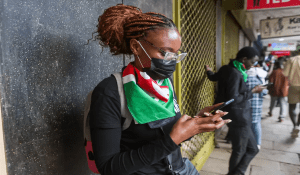
Over the past year, the country has witnessed several rounds of youth-led demonstrations, many of which gained momentum on social media. In June 2024, protesters took to the streets over proposed tax increases in the Finance Bill, leading to clashes that left several people dead and hundreds injured.
Similar demonstrations resurfaced in mid-2025, spurred by the death of a blogger, Albert Omondi Ojwang, in police custody and renewed concerns over the cost of living.
The crackdown on dissent has since extended into the digital space, where online criticism of the government often faces swift retaliation, sometimes in the form of takedowns, account suspensions, or investigations.
Against this backdrop, Kenya’s hardening stance on TikTok appears less about moderation and more about managing public discourse as lawmakers have floated the idea of banning the app outrightly.
Meanwhile, some creators and digital rights advocates have voiced apprehension that strict enforcement could stifle creativity and public discourse. They warn that algorithms designed to flag harmful content can also remove legitimate criticism or satire, particularly when moderation policies are interpreted broadly.
Government representatives, however, maintain that their intent is not to limit free expression but to ensure accountability in a rapidly evolving digital landscape. The Information and Communication Technology (ICT) ministry has emphasized that Kenya’s goal is to foster “a safe, inclusive, and productive online space” while still encouraging innovation in the creative economy.
That dual focus has also shaped ongoing talks between policymakers and creators. In October 2025, officials, including Dennis Itumbi, met with Kenyan TikTok influencers to explore ways of improving content monetization, including the potential integration of M-Pesa, lowering follower thresholds for payouts, and supporting training initiatives for creators.
Globally, TikTok removed 189.5 million videos during the same quarter, representing 0.7% of all uploads, alongside 76.9 million fake accounts and 25.9 million underage users. The company attributes these removals to advanced AI systems and a network of human moderators, claiming that 99% of violative content is detected proactively.
The platform’s enforcement efforts have also expanded into live content, with 2.3 million livestreams and 1.04 million creators penalized for breaking monetization rules. TikTok says these measures promote “authentic and safe” content, though some observers warn that aggressive moderation can easily slide into self-censorship, particularly in politically charged environments.
TikTok maintains that “safety, well-being, and integrity” remain central to its policies, while the CA continues to stress that effective regulation is essential to protect users, particularly minors. For now, the relationship between the two remains cautious but collaborative, reflecting a country navigating the complex intersection of technology, expression, and governance.