M-PESA App Blocked In Ethiopia, Intensifying Dispute Over “Unfair Competition”
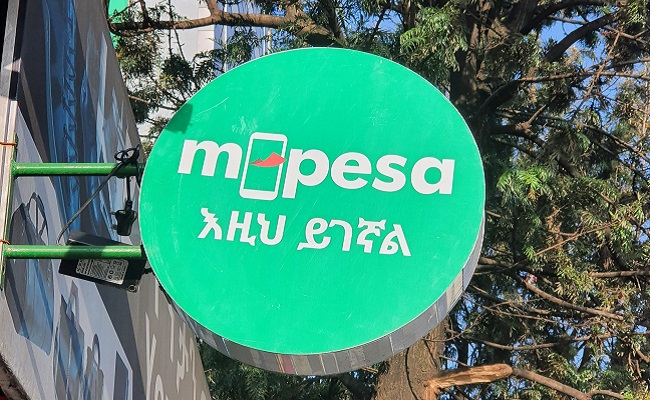
A public statement from M-PESA Ethiopia on December 5th claimed that Ethio Telecom, the state-owned incumbent, was preventing its customers from accessing the newly launched app, sparking the latest clash in a market where regulators warn the playing field is not level.
Days after launching a new mobile money application designed to work across any network, M-PESA Ethiopia has publicly accused the state-owned incumbent, Ethio Telecom, of blocking customer access to the service. The allegation marks a new flashpoint in a bitter market battle and directly echoes warnings from a recent World Bank report about anti-competitive structural advantages enjoyed by the dominant operator.
The incident raises urgent questions about the reality of Ethiopia’s telecom liberalisation, a flagship reform under Prime Minister Abiy Ahmed, and the future of foreign investment in one of Africa’s last untapped markets.
M-PESA Ethiopia, the financial services arm of Safaricom Ethiopia, launched “M-PESA Lehulm” last week. The application was designed to be telco-agnostic, meaning it could operate on smartphones using any mobile network provider, a strategic move to break from reliance on Safaricom’s own infrastructure.
However, within days, the company issued a public statement alleging that customers relying on Ethio Telecom’s mobile data services were completely unable to log in, transact, or retrieve funds through the new app. M-PESA Ethiopia stated the service had received full approval from the National Bank of Ethiopia and the Information Network Security Administration (INSA) and called on regulators to intervene.
Ethio Telecom has not issued a public response to the allegation. This incident is not isolated; the World Bank’s October 2025 Ethiopia Telecom Market Assessment explicitly cited the “alleged blocking of access to Safaricom applications, including M-PESA” as a troubling practice that undermines competition and innovation.
***
The dispute over app access is symptomatic of deeper, systemic imbalances documented by international observers. The World Bank report concluded that while liberalisation has begun, the market is “liberalised in name, but not in practice”.
A notable point of contention is the unequal starting conditions. Safaricom Ethiopia consortium paid approximately USD 1 B for its operating license. In contrast, Ethio Telecom, which has operated for decades, was not subject to a similar fee, granting it a massive initial financial advantage.
The regulator has designated Ethio Telecom as holding Significant Market Power (SMP) in six key market segments, compared to just one for Safaricom. This dominance is entrenched in infrastructure: Ethio Telecom controls the national backbone fibre network, forcing Safaricom to lease capacity at a reported cost of USD 3 M per year while also building nearly 60% of its own sites.
The report details how Ethio Telecom prices voice calls below the regulated Mobile Termination Rate (MTR). This forces Safaricom to lose money on every call its customers make to Ethio Telecom’s network, as it must match the below-cost prices to remain competitive. The World Bank estimated this practice alone was costing Safaricom up to USD 1.6 M per month.
***
The competitive landscape has exacted a heavy financial toll on the newcomer, even as it drives broader market growth.
Safaricom Ethiopia’s operation remains deeply unprofitable, reporting a service revenue of KES 6.19 B (USD 47.9 M) for the six months to September 2025—more than double the previous year—but still recording a steep negative EBIT of KES 20.2 B. These losses are amplified by a severe currency depreciation, with the Ethiopian Birr falling 16.9% against the US dollar in the last half-year.
Despite this, Safaricom is gaining customer traction. Its active customer base in Ethiopia soared 83.7% to 11.15 million, while its M-PESA active users surged approximately 175% year-on-year to 3.4 million.
Telebirr’s integration into government services and its pre-installation on devices give it a formidable, state-backed edge. Meanwhile, M-PESA is attempting to compete through innovation, such as its super-app hosting 28 mini-apps and its new Errif digital lending platform.
Observers note that the ongoing clash transcends a corporate rivalry as it serves as a litmus test for Ethiopia’s commitment to creating a transparent, competitive market for foreign direct investment.
The World Bank and other analysts warn that prolonged unfair practices and regulatory uncertainty will deter future investors. This concern appears validated; Ethiopia recently suspended the process for issuing a third telecom license after potential bidders sought improved conditions.
For Safaricom, the Ethiopia venture is a high-stakes strategic play for long-term growth, buffered by its exceptionally profitable home operations in Kenya, where half-year net income recently hit a record KES 42.8 B.
The company maintains a long-term view, planning to invest a further USD 1.5 B over three years in network expansion. But question marks remain about whether Ethiopian regulators will enforce the rules to ensure such capital continues to flow.
Feature Image Credits: Mobile World Live