Fresh Effort To Toll Kenya’s EV Sector Clashes With Funding Boom
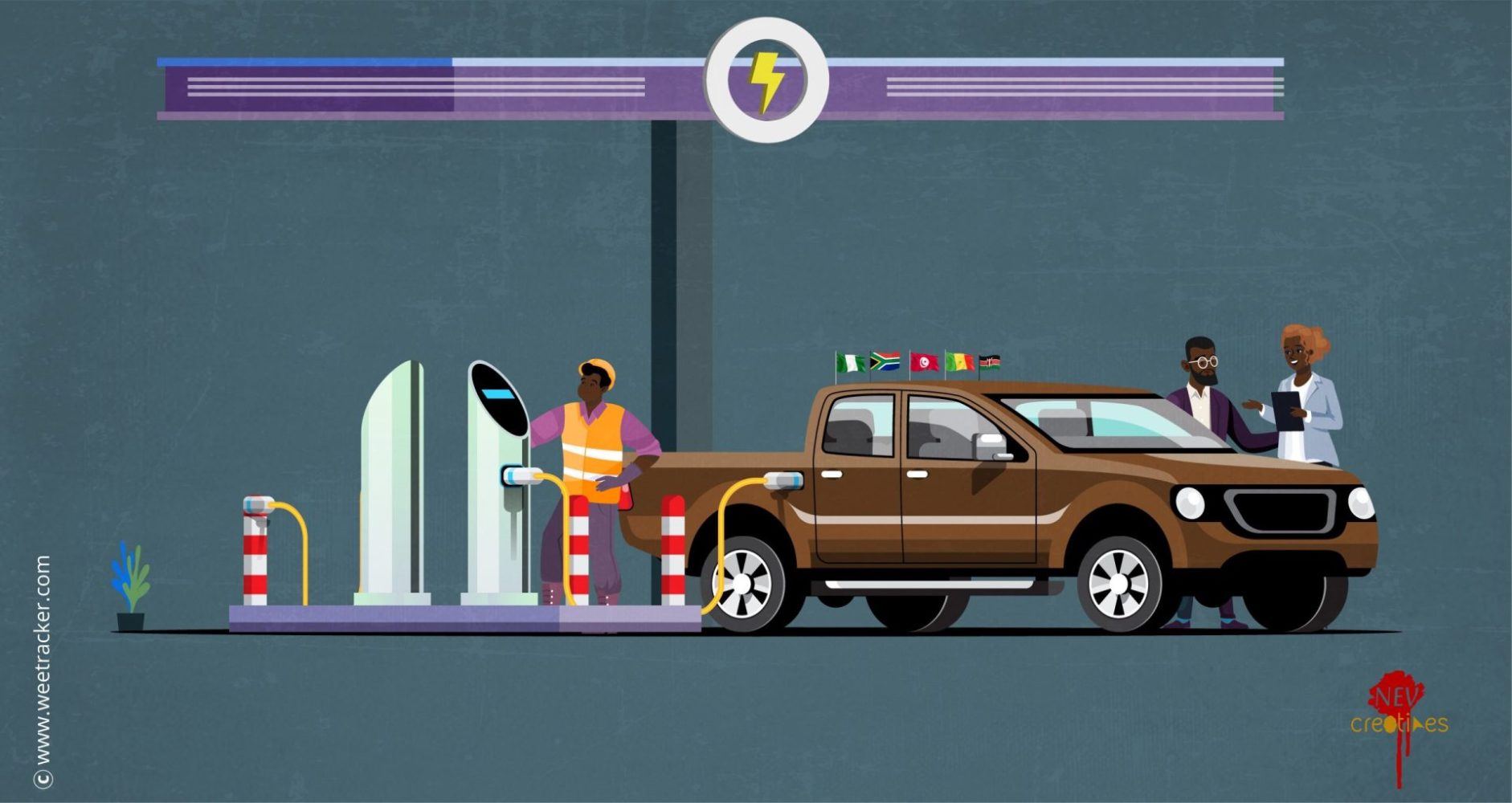
Kenya has emerged as Africa’s most dynamic electric mobility market, attracting hundreds of millions of dollars in venture capital and startup investment. Now, a sweeping tax proposal could undo much of that progress, exposing a troubling contradiction at the heart of the government’s green transport push.
The Finance Bill 2026 proposes extending the standard 16% value-added tax (VAT) to imported electric vehicles, lithium-ion batteries and electric bicycles, reversing tax breaks that have been central to the sector’s expansion. The move comes just months after a national e-mobility policy was launched with fanfare, promising expanded incentives and green number plates.
There are fears that the disconnect between policy rhetoric and fiscal reality could derail Kenya from being a continental leader where e-mobility companies have been known to draw the highest funding in Africa.
Kenya’s electric vehicle sector has grown at a blistering pace. Registered EVs surged from just 796 in 2022 to 24,754 by the end of 2025, a more than 3,000% increase over three years.
The government projects annual EV sales could reach 70,000 by 2030, supported by battery-swapping networks and expanding charging infrastructure. Electric two-wheelers, known as boda bodas, dominate the market with roughly 24,000 units in circulation, followed by a growing number of electric buses and cars.
Driving that growth has been a sustained influx of capital. In the past 15 months, development finance institutions and climate-tech funds have poured money into Kenya’s EV assemblers and mobility-focused venture firms.
Zeno, a Nairobi-based electric motorcycle startup, raised USD 25 M in Series A funding in March to expand production and its battery-swapping network across East Africa. Spiro, an electric bike operator active across seven African markets secured USD 50 M in debt financing from Afreximbank and other lenders, months after a USD 100 M facility, as it pushes to put 1 million e-bikes on Kenya’s roads; a plan Kenya’s president appeared to endorse.
The International Finance Corporation has also taken an equity stake in ARC Ride, another Nairobi-based electric motorcycle company, and BasiGo has expanded it electric bus fleet. Meanwhile, Roam and Ampersand have significantly expanded their operations in Kenya, with the former opening the region’s largest electric motorcycle assembly plant with the capacity to produce 50,000 electric bikes a year.
***
Electric motorcycles have gained traction across Kenya primarily because of their economics. Riders can reduce daily fuel and maintenance costs by as much as 40% compared to petrol-powered alternatives. Battery-swapping stations have emerged as the critical backbone of this transition, allowing commercial riders to exchange depleted batteries in under a minute without costly charging delays.
Infrastructure has followed capital. Charging and battery-swapping stations grew from 117 in April 2024 to 300 by June 2025, according to the Electric Mobility Alliance of Kenya, though 90% remain concentrated in Nairobi. Kenya Power reported that EV charging consumed 8.43 million kilowatt-hours in 2025, a 188% increase from the previous year, with revenue from e-mobility customers more than tripling to KES 190.8 M.
The proposed VAT reversal appears driven by urgent fiscal pressures rather than any policy rethink on climate. Kenya’s public debt has climbed to 67.6% of GDP, with the International Monetary Fund projecting the ratio could reach 71.6% in 2026 and 72.4% in 2027.
Persistent fiscal deficits estimated at 6.4% of GDP in both 2025 and 2026 have left the Treasury scrambling for revenue. President William Ruto is in talks with the IMF for a new multibillion-shilling loan to address a projected KES 1.14 T (USD 8.8 B) budget deficit for the 2026-2027 financial year.
The Finance Bill does not provide specific reasons for removing VAT relief on EV imports, but broader amendments targeting digital services, software and virtual assets make clear that the government is widening its tax net.
A 2025 industry study concluded that “all or almost all inputs for EVs are imported,” leaving the sector vulnerable to currency fluctuations, freight expenses, and import taxes.
***
Kenya’s lead is not guaranteed. A Berlin-based analysis by Agora Verkehrswende and the German development agency GIZ found that Ethiopia and Rwanda have overtaken Kenya in electric mobility adoption, backed by more decisive policy action and clearer incentives.
Ethiopia now has more than 115,000 EVs on its roads, about 8% of the national fleet, after banning new imports of petrol and diesel vehicles in 2024. Rwanda, while smaller, launched an e-mobility strategy in 2021 and has restricted registration of petrol-powered motorcycle taxis.
Generally, recent data suggest that the use of electric vehicles in Africa is surging, from 19,386 in 2024 to 44,358 in 2025 (over USD 200 M in shipments), as soaring prices and fuel shortages compel countries to opt for cleaner and cheaper transportation.
However, Kenya’s approach has been more fragmented, driven largely by private sector innovation while policy lagged. The national e-mobility policy was only finalised in February 2026 after years of delays.
The Finance Bill 2026 is still making its way through parliament, and industry groups are expected to lobby against the VAT provisions. But with the Treasury under intense pressure from creditors and the IMF, exemptions will be a hard sell.
The tax proposal, nevertheless, represents an existential moment for Kenya’s EV startups. The country’s renewable-rich grid – more than 90% of generation comes from geothermal, hydro, wind and solar – remains a unique advantage. Yet if imported batteries and vehicles become 16% more expensive, the economic case that convinced riders to switch begins to fray.
“What we are building is bigger than the next funding round,” said one Nairobi-based EV executive, who declined to be named while the bill is under consideration. “But if the government keeps moving the goalposts, investors will eventually notice.”